
Every day in history carries a story worth remembering, and May 27 is no exception. From groundbreaking global events and political milestones to the birth and passing of influential figures, this date has left a lasting mark across centuries. Exploring “On This Day: May 27” offers a fascinating glimpse into the moments that shaped nations, cultures, science, entertainment, and human progress.
In this article, we take a closer look at the key historical events that occurred on May 27, along with notable birthdays and deaths of prominent personalities. Whether you are a history enthusiast, researcher, or curious reader, this comprehensive overview brings together the most significant happenings from around the world on this remarkable day.
The Bangalee Sphere
The historical narrative of the Indian subcontinent on this day is defined by profound loss, anti-colonial resistance, and enduring cultural legacies. May 27 marks pivotal moments in the struggle for independence and the subsequent growing pains of nascent nations.
Historic Milestones and Conflicts
The events of this day highlight the turbulent journey from British colonial rule to independent sovereignty, marked by mass movements and, tragically, wartime atrocities. Below is a detailed breakdown of the critical historical events that occurred on May 27 in this region.
| Year | Event | Significance |
| 1971 | The Bagbati Massacre | During the Bangladesh Liberation War, Pakistani forces and local collaborators murdered over 200 unarmed civilians, primarily Bengali Hindus, in the Sirajganj District. It remains a stark reminder of the systematic violence endured during the struggle for an independent Bangladesh. |
| 1930 | Salt Satyagraha Unrest | Following the arrest of Mahatma Gandhi, massive civil unrest and riots swept through Bombay and other major Indian cities. This marked a significant escalation in the Indian independence movement, proving that the resistance could sustain its momentum even without its primary leader. |
Famous Births & Notable Deaths in South Asia
This date also witnessed the passing of one of modern India’s most crucial architects and the birth of a sporting legend. Here are the prominent figures from the Bangalee and broader Indian sphere associated with May 27.
| Figure | Year | Contribution & Legacy |
| Jawaharlal Nehru (Death) | 1964 | India’s first Prime Minister and a central figure in Indian politics before and after independence. He was the primary architect of the modern, secular, and sovereign Republic of India, leaving an indelible mark on its foreign policy and democratic institutions. |
| Kandukuri Veeresalingam (Death) | 1919 | Revered as the father of the modern Telugu language. He was a prominent author, social reformer, and a fierce champion of women’s education and widow remarriage in India. |
| Ravi Shastri (Birth) | 1962 | Former Indian international cricketer and highly successful head coach of the Indian national cricket team. He was famously crowned the “Champion of Champions” in the 1985 World Championship of Cricket. |
International Observances & Global Holidays
Beyond historical events, May 27 serves as a day of national reflection, celebration, and quirky observances around the world. These holidays range from crucial civil rights anniversaries to the celebration of youth and innovation.
Major International and National Days
The observances on this date reflect a global commitment to reconciliation, human rights, and cultural heritage. The following table highlights the diverse array of holidays celebrated worldwide on May 27.
| Observance | Region | Purpose & Significance |
| National Reconciliation Week (Begins) | Australia | An annual period for Australians to learn about shared histories, cultures, and achievements, and to explore how to contribute to national reconciliation. It begins on the anniversary of the landmark 1967 referendum. |
| Children’s Day | Nigeria | A state-recognized public holiday dedicated to celebrating children, promoting their welfare, and bringing awareness to their rights and access to education across the nation. |
| Abolition Day | Guadeloupe | A regional public holiday commemorating the official abolition of slavery in this French overseas region, honoring the struggle for freedom and human dignity. |
| National Cellophane Tape Day | United States | A quirky observance celebrating the invention of transparent adhesive tape by Richard Drew in 1930, an innovation that revolutionized packaging and everyday life. |
Global History
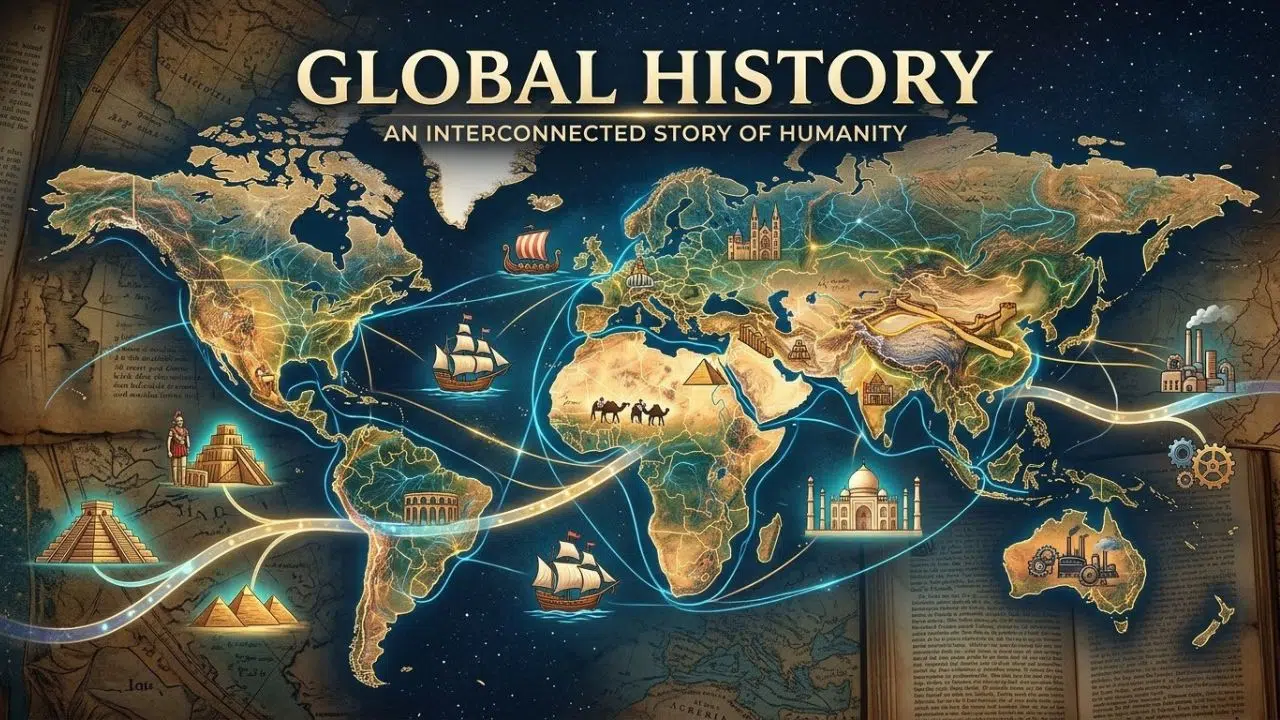
The global stage on May 27 is characterized by monumental feats of engineering, decisive military engagements, and the founding of great cities. From the icy waters of the North Atlantic to the bustling streets of San Francisco, the events of this day reshaped borders and advanced human capability.
United States: Engineering and Entertainment
In the United States, May 27 is synonymous with the completion of an architectural marvel and early milestones in American pop culture. These events reflect the nation’s drive toward modernization during the 1930s.
| Year | Event | Significance |
| 1937 | Golden Gate Bridge Opens | The iconic suspension bridge connecting the San Francisco peninsula with Marin County officially opened to pedestrian traffic. At the time, it possessed the longest main suspension bridge span in the world and remains a triumph of civil engineering. |
| 1933 | Release of Three Little Pigs | Walt Disney released this Academy Award-winning animated short film. Its wildly popular song, “Who’s Afraid of the Big Bad Wolf?,” became an anthem of resilience during the Great Depression. |
Russia & Europe: Empire and Resistance
European history on this date is defined by the ambitious expansion of the Russian Empire and the perilous acts of resistance against totalitarian regimes during the Second World War.
| Year | Event | Significance |
| 1703 | Founding of Saint Petersburg | Tsar Peter the Great officially founded the city, shifting the Russian Empire’s focus westward. It would serve as the imperial capital for over two centuries and a major cultural hub of Europe. |
| 1942 | Operation Anthropoid (Czech Republic) | Czech resistance fighters ambushed and fatally wounded high-ranking Nazi official Reinhard Heydrich in Prague. The assassination of one of the main architects of the Holocaust led to brutal, widespread reprisals by the SS. |
| 1941 | Sinking of the Bismarck | Following a relentless pursuit, British naval and air forces sank the formidable German battleship Bismarck in the North Atlantic, a crucial victory for the Allies in World War II. |
United Kingdom: Legislative Cornerstones
In the UK, May 27 marks a critical development in the history of common law and individual liberty, establishing principles that would influence democratic systems worldwide.
| Year | Event | Significance |
| 1679 | Habeas Corpus Act Passed | The English Parliament passed this critical piece of legislation. It severely limited the monarch’s ability to arbitrarily detain subjects, cementing a person’s right to contest unlawful arrest before a judge. |
| 1199 | Coronation of King John | John was crowned King of England. His disastrous reign would eventually force him to seal the Magna Carta in 1215, laying the groundwork for constitutional law. |
Australia & Canada: Referendums and Skirmishes
For the Commonwealth nations of Australia and Canada, this date holds significance regarding Indigenous rights and early territorial conflicts with the United States.
| Year | Event | Significance |
| 1967 | Australian Referendum (Australia) | The historic referendum passed with a record 90.77% “Yes” vote. It amended the constitution to count Aboriginal and Torres Strait Islander peoples in the census and allowed the federal government to make laws regarding them. |
| 1813 | Capture of Fort George (Canada) | During the War of 1812, American forces launched an amphibious assault and successfully captured Fort George in Upper Canada (present-day Ontario), temporarily gaining control of the Niagara River. |
Rest of the World: Asia, Africa, and South America
Across the rest of the globe, May 27 signifies hard-won independence and the violent struggles associated with democratic uprisings.
| Year | Event | Significance |
| 1921 | Afghan Independence (Afghanistan) | Afghanistan was officially declared independent from British control, marking the end of a long period of foreign influence over its foreign affairs. |
| 1980 | End of the Gwangju Uprising (South Korea) | Airborne and army troops violently retook the city of Gwangju from civil militias. The brutal suppression resulted in hundreds of civilian casualties but ultimately fueled the movement that led to South Korean democracy. |
| 2006 | Java Earthquake (Indonesia) | A massive 6.4 magnitude earthquake devastated parts of Java. It claimed over 5,700 lives and left an estimated 1.5 million people homeless, highlighting the region’s intense seismic vulnerability. |
Notable Births and Deaths Across the Globe
The individuals born or lost on May 27 have shaped the fields of literature, diplomacy, environmental science, and theology. Their legacies continue to influence contemporary global discourse.
Famous Births on May 27
This day introduced several high-impact figures to the world, ranging from pioneering scientists to controversial statesmen. Here are some of the most notable individuals born on May 27.
| Name | Year | Nationality | Legacy |
| Rachel Carson | 1907 | American | Pioneering marine biologist and author of Silent Spring. Her work exposed the dangers of synthetic pesticides, directly catalyzing the global environmental movement and the creation of the EPA. |
| Henry Kissinger | 1923 | American | Highly influential and controversial diplomat. As US Secretary of State, he shaped Cold War foreign policy, orchestrated the opening to China, and won the Nobel Peace Prize, though his legacy remains heavily debated. |
| Christopher Lee | 1922 | English | Legendary actor known for his towering presence and iconic, deep-voiced portrayals of villains, including Count Dracula, Saruman in The Lord of the Rings, and Count Dooku in Star Wars. |
| Vincent Price | 1911 | American | Iconic actor known for his distinctive voice and performances in classic horror films, becoming synonymous with the macabre genre in the mid-20th century. |
Famous Deaths on May 27
History also bid farewell to profound thinkers, musical virtuosos, and political giants on this date. The following table details the significant figures who passed away on May 27.
| Name | Year | Nationality | Legacy |
| John Calvin | 1564 | French | A highly influential theologian, pastor, and reformer during the Protestant Reformation. His teachings, known as Calvinism, deeply impacted the religious and cultural landscape of Europe and the Americas. |
| Niccolò Paganini | 1840 | Italian | One of the most celebrated violin virtuosos of his time. His immense technical skill and charismatic performances left a lasting mark on classical music and the concept of the solo virtuoso. |
| Gil Scott-Heron | 2011 | American | A soul and jazz poet, musician, and author. His spoken-word performances, particularly “The Revolution Will Not Be Televised,” are frequently cited as vital early influences on the development of hip-hop. |
| Joseph Swan | 1914 | English | Physicist and chemist who independently produced an early electric incandescent lightbulb and invented the dry photographic plate, significantly advancing both illumination and photography. |
Fascinating Trivia & Did You Know Facts
History is not just about grand treaties and tragic wars; it is also filled with eccentricities and unexpected beginnings. Here are three lesser-known, fascinating facts associated with May 27.
-
The Accidental Birth of “Spam”: On May 27, 1978, the first recorded bulk unsolicited commercial email was sent by Gary Thuerk, a marketer at Digital Equipment Corporation. He sent it to 400 ARPANET users to promote a new computer model, unwittingly giving birth to the modern concept of email spam.
-
A Journey into the Stratosphere: On this day in 1931, Swiss physicist Auguste Piccard and his assistant Paul Kipfer ascended in a pressurized aluminum sphere attached to a hot air balloon. Reaching an altitude of 51,793 feet, they became the first humans to enter the stratosphere and visually observe the curvature of the Earth.
-
The “Discovery” of Troy’s Gold: In 1873, the zealous (and controversial) archaeologist Heinrich Schliemann discovered a massive cache of gold and artifacts in Hisarlik, Turkey. He boldly—and somewhat inaccurately—declared it to be “Priam’s Treasure” from the legendary city of Troy, though later dating proved the artifacts were centuries older than the Homeric king.
Quote of the Day: Voices from May 27
Words spoken by those born on this day often carry the weight of their profound contributions to society. Today’s quote comes from a scientist whose writings fundamentally changed how humanity views its relationship with nature.
“Those who dwell, as scientists or laymen, among the beauties and mysteries of the earth, are never alone or weary of life.”
— Rachel Carson (Born May 27, 1907)
The Lingering Echoes of May 27
As we review the annals of May 27, it becomes evident that history is not a static record, but a continuous dialogue between the past and the present. The opening of the Golden Gate Bridge reminds us of humanity’s capacity to overcome formidable geographical barriers through engineering and sheer will. Conversely, the memory of the Bagbati Massacre and the assassination of Reinhard Heydrich force us to confront the darkest capabilities of human nature and the heavy price of resistance against tyranny.
The figures born and lost on this day—from the environmental foresight of Rachel Carson to the political complexities of Jawaharlal Nehru—continue to dictate the terms of modern political and ecological debates. By archiving these events with precision and acknowledging both the Bangalee sphere and the wider international context, we ensure that the lessons of May 27 are neither marginalized nor forgotten. The echoes of this day challenge us to build better bridges, protect our fragile ecosystems, and remain vigilant in the defense of fundamental human rights.