Feeling like the internet is changing faster than ever? Web3 is shaking up many industries in ways most people don’t expect. From supply chains to gaming, blockchain technology is transforming how businesses operate.
Stick around to uncover 10 surprising industries being disrupted by Web3!
Supply Chain and Logistics
Smart contracts streamline supply chain management. They automate payments and order fulfillment, cutting errors and delays while boosting efficiency. Platforms like VeChain improve traceability by tracking item histories with blockchain technology, reducing fraud risks.
Blockchain boosts transparency in processes, giving stakeholders clear insights into operations.
Reducing intermediaries lowers costs and increases profits for businesses like Amazon Logistics or Costco. This eliminates administrative overhead linked to manual paperwork. Despite its benefits, adopting blockchain faces challenges due to limited understanding and resources among distributors or suppliers.
Content Creation and Distribution
Traditional platforms like YouTube and Spotify often take significant revenue shares from creators. They also impose restrictions on content and maintain control over monetization.
Web3 changes this dynamic by allowing creators to retain full ownership of their work using blockchain technology and non-fungible tokens (NFTs). These tools help artists directly monetize digital art, music, or videos without intermediaries.
Decentralized platforms such as Audius introduce token-based economies that reward both creators and fans. Through these systems, subscribers can support independent artists while receiving exclusive perks.
Despite these benefits, cryptocurrency volatility adds uncertainty to earnings for many users. Intellectual property enforcement also becomes difficult due to the inherent nature of blockchains managing digital rights differently than traditional methods.
Gaming and Virtual Worlds
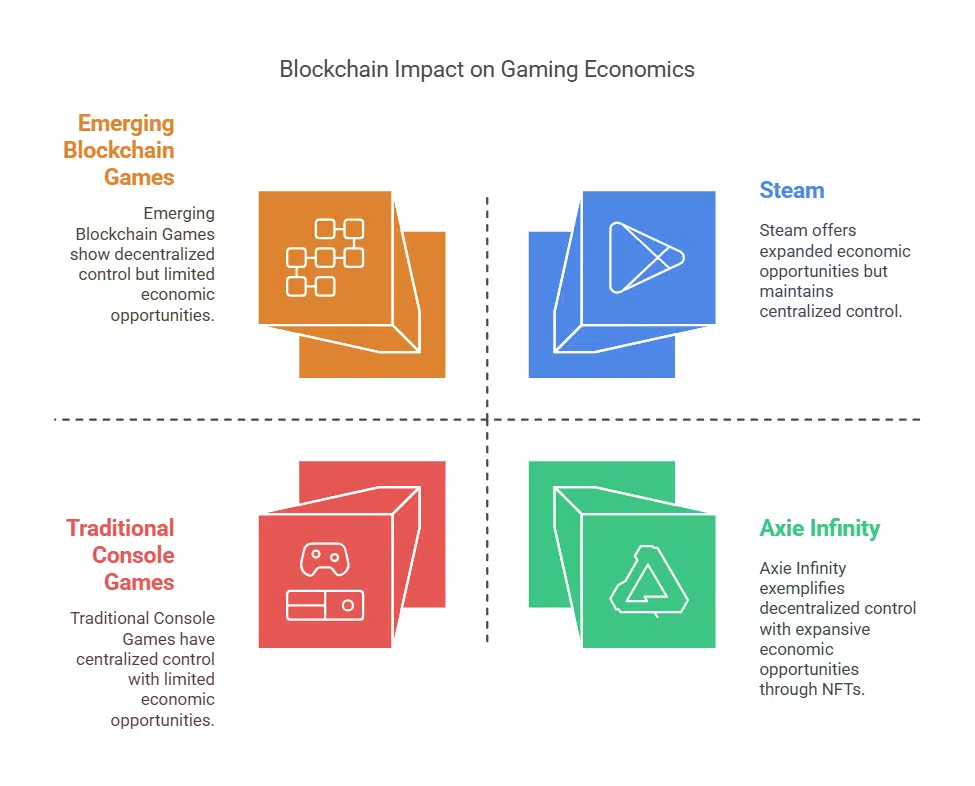
Blockchain technology is transforming gaming and virtual worlds by giving players ownership of in-game assets. Platforms like Steam and PlayStation rely on centralized systems, limiting user control.
Games such as Axie Infinity use NFTs to let players buy, sell, and trade unique characters while earning cryptocurrency. This model allows gamers to profit from their activities in ways never before possible.
In-game tokens and smart contracts create new revenue paths for developers and users alike. Players can move digital items between platforms or marketplaces without restrictions. Legal challenges with cryptocurrency regulations remain an obstacle but have not stopped this shift in monetization models.
While opportunities grow, concerns about declining asset values could hurt game economies over time.
Real Estate Transactions
Smart contracts are reshaping real estate deals by cutting out middlemen and speeding up processes. Tokenization enables fractional ownership of properties, providing opportunities for smaller investors.
Experts predict the tokenized real estate market will grow to $4.2 trillion by 2025.
Blockchain technology enhances transparency while reducing fraud risks in transactions. Data privacy is essential as Web3 tools manage personal buyer and seller information. Despite benefits, security concerns remain, with smart contract breaches projected to rise by 300% in 2023.
Healthcare and Medical Data
Blockchain technology is transforming the health care system by improving Electronic Health Records (EHRs). Patients gain ownership of their data, ensuring security and immutability.
Blockchain unifies fragmented records into complete medical histories, making treatment plans more effective. This innovation enhances privacy while streamlining access for doctors and patients alike.
AI-powered diagnostics are increasing accuracy in detecting diseases like cancer and diabetes. Predictive modeling identifies high-risk patients early, helping reduce hospital readmissions.
Virtual health assistants provide personalized support, improving patient engagement through automated solutions. Decentralized clinical trials improve transparency while lowering risks of fraud or data manipulation.
Education and Learning Platforms
Smart contracts simplify course enrollments and certification processes. Decentralized platforms ensure secure sharing of educational resources while protecting student data privacy.
Blockchain technology enables the verification of academic credentials, reducing fraud in education.
Token-based systems incentivize students to complete courses and encourage educators to contribute content. Platforms like ResearchGate connect researchers to share knowledge transparently.
These innovations improve access and trust in learning environments worldwide.
Music and Entertainment Industries
NFTs are changing how musicians and filmmakers protect their work. They help address intellectual property issues while tackling piracy. Snoop Dogg and Steve Aoki have embraced NFTs to connect with fans in creative ways.
Coachella introduced tokens that gave buyers exclusive perks, adding value beyond event tickets.
Decentralized platforms like Audius let artists distribute music without middlemen. Token-based economies encourage fans to directly support creators, creating new revenue streams for performers.
Virtual concerts bring audiences closer by allowing real-time interaction through digital avatars, turning events into immersive experiences.
Tourism and Travel Experiences
Airbnb is embracing blockchain technology to enable cryptocurrency payments. This move simplifies transactions while boosting security for users. Travel companies like Marriott and AirBaltic are also integrating NFTs into their services.
These tokens could revolutionize loyalty programs or create tradeable airline tickets, offering flexibility to travelers.
Smart contracts lower costs by reducing the need for intermediaries in bookings and reservations. A survey found 74% of travel experts plan to adopt Web3 as a marketing tool, showing its growing importance in tourism.
These innovations aim to improve customer experiences while streamlining business operations globally.
Retail and E-commerce

Retail and e-commerce industries are shifting rapidly with Web3 innovations. Blockchain technology enables secure, direct transactions without relying on centralized intermediaries like credit card companies.
Decentralized Finance (DeFi) makes cross-border payments faster and cheaper by reducing interchange fees. More than 85% of American merchants predict cryptocurrencies will become common payment methods within five years.
NFTs are transforming how online retailers engage customers through unique digital assets tied to brands or products. Platforms like Etsy could integrate these tools to enhance customer segmentation strategies and offer personalized experiences.
While challenges such as public acceptance remain, businesses investing in blockchain today position themselves ahead of future trends in online retail.
Social Media and Community Platforms
Social media platforms increasingly adopt blockchain technology to enhance user privacy and data control. Digital identity management allows users to own their information without relying on centralized entities like Meta.
Decentralized Autonomous Organizations (DAOs) reshape how community-driven platforms operate by enabling transparent governance models for groups.
Token-based economies within these platforms reward participation and content creation with digital tokens instead of traditional ad revenue models. Peer-to-peer transactions eliminate intermediaries, reducing fees and risks like chargebacks or cyberattacks.
These tools foster direct connections, improving trust between participants while disrupting traditional business practices online.
Takeaways
Web3 is shaking up industries in ways few expected. Smart contracts and blockchain technology are breaking barriers, from content creation to retail. These changes empower users, boost efficiency, and open new opportunities.
As adoption grows, businesses must rethink their strategies to stay ahead. The decentralized internet is here, and it’s transforming how we work and live.
FAQs on Surprising Industries Being Disrupted By Web3
1. What is Web3, and how does it disrupt industries?
Web3 uses blockchain technology and decentralized internet protocols to change how businesses work. It removes middlemen, improves transparency, and boosts efficiency across industries like fintech, retail, and supply chain management.
2. How is the supply chain industry being disrupted by Web3?
Web3 enables smart contracts for better supply chain optimization. It ensures accurate tracking of scarce resources while reducing costs through decentralized systems.
3. Can content creation benefit from Web3 innovations?
Yes, content creators can use decentralized platforms to avoid subscription fees or intermediaries. This gives them more control over pricing and ownership of their work.
4. How does artificial intelligence connect with Web3 disruptions?
AI tools like speech recognition, sentiment analysis, and recommender systems combine with blockchain data analysis to improve problem-solving in areas such as transcription services or customer predictions.
5. Is the retail industry affected by Web3 technologies?
The retail sector benefits from transparent pricing models powered by smart contracts on blockchain networks. These changes also enhance rebate programs and subscription-based services.