

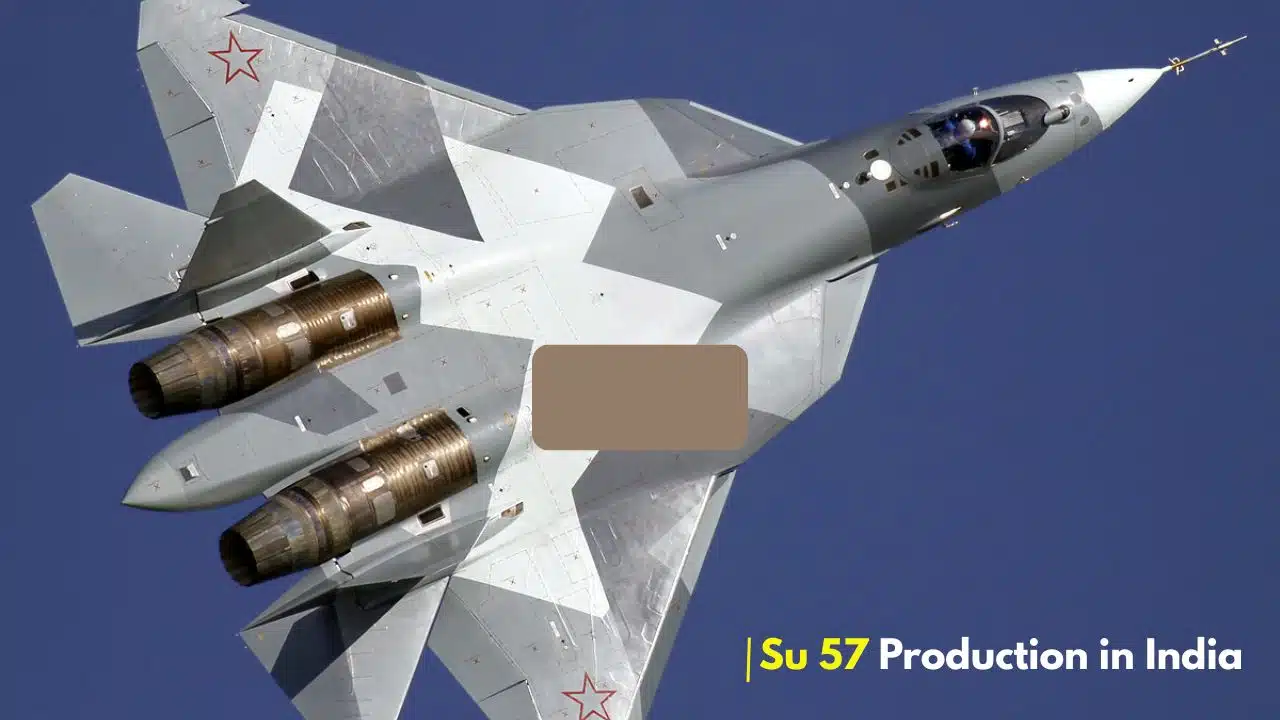
Russia has made a landmark offer to India for the local production of its advanced Su-57 fifth-generation stealth fighter jets, marking a new era in Indo-Russian defense cooperation. The proposal, unveiled ahead of Russian President Vladimir Putin’s recent visit to India, includes full licensed production in India, unrestricted transfer of technology, and access to sensitive systems such as engines, avionics, and stealth materials. This move is seen as a game-changer for India’s strategic autonomy and its ambition to become a global hub for defense manufacturing.
The Su-57 Proposal: What’s on the Table
Russia’s offer to India is unprecedented in the history of international defense deals. Unlike previous agreements where technology transfer was limited or restricted, Moscow is proposing complete access to the Su-57 ecosystem, including source codes, engine technology, AESA radar, artificial intelligence integration, low-signature materials, and modern air weapons. The plan is to begin with the supply of Su-57E fighters manufactured in Russia, followed by a gradual shift to full-scale production within India, allowing Indian engineers and manufacturers to master every aspect of the aircraft’s design and assembly.
The proposal extends beyond mere assembly from imported kits. Russia is willing to share the entire fifth-generation fighter ecosystem, enabling India to not only produce but also upgrade, modify, and export the Su-57 in the future. This would give India capabilities that Western nations have repeatedly denied, including access to advanced stealth, sensor fusion, and electronic warfare technologies.
Strategic Context: Why India Needs the Su-57
The Indian Air Force (IAF) is grappling with a severe squadron deficit, with only around 30 operational squadrons compared to the sanctioned strength of 42. Air Chief Marshal AP Singh has repeatedly stressed the need to induct 35 to 40 new fighter aircraft annually for the next two decades to close this gap and maintain air superiority. The Su-57 offer arrives at a critical juncture, as India’s own Advanced Medium Combat Aircraft (AMCA) program is still years away from operational deployment, with initial service entry expected only by 2034–2035.
The Su-57’s advanced stealth capabilities, supersonic cruise, and network-centric warfare features make it an attractive option for India’s evolving security needs. With China’s rapid military modernization and Pakistan’s growing defense ties with other powers, India’s quest for a credible air deterrent is more urgent than ever. The Su-57 would not only bolster India’s immediate air power but also accelerate its technological learning curve in fifth-generation aviation.
Technology Transfer and Local Manufacturing
One of the most significant aspects of Russia’s proposal is the promise of full technology transfer, including the ability to integrate Indian avionics, weapons, and sensors into the Su-57 platform. This would allow India to customize the fighter to its operational requirements and potentially export upgraded variants to friendly nations. The transfer of source codes and access to classified systems is particularly noteworthy, as it would empower Indian defense companies to undertake deep modifications and upgrades.
Production is expected to be localized through a public-private partnership model, with Hindustan Aeronautics Limited (HAL) likely to play a central role alongside private sector partners. The government has already shifted from the initial Special Purpose Vehicle (SPV) concept to an industry partnership model, where private companies will be responsible for development, production, and lifetime maintenance of the aircraft and its engines. This approach aims to leverage the strengths of both public and private sectors, fostering innovation and efficiency.
Broader Defense and Strategic Partnership
The Su-57 offer is part of a broader push to deepen Indo-Russian defense collaboration. The two countries have agreed to expand joint research, co-development, and co-production of advanced defense technologies under India’s Make-in-India initiative. This includes not only fighter jets but also the manufacturing of spare parts, components, and aggregates for Russian-origin arms, as well as the development of joint ventures for exports to third countries.
Other major defense deals on the table include updates on S-400 deliveries, discussions on S-500 cooperation, expansion of joint production of Su-30MKI aircraft and T-90 tanks, and upgrades to the BrahMos missile program. The partnership is being reoriented from a traditional buyer-seller relationship to one of true co-development and co-production, reflecting India’s aspirations for strategic autonomy and technological self-reliance.
Geopolitical Implications
The Su-57 offer comes at a time of shifting global alliances and increasing pressure on India to align more closely with Western powers. Russia’s willingness to share its most advanced military technologies with India is a strategic counterweight to Western restrictions and a demonstration of trust in the bilateral relationship. The deal could also have significant implications for India’s relations with the United States and other Quad members, as it strengthens India’s position as a balancing power in the Indo-Pacific.
However, the deal is not without challenges. There are concerns about potential interference from rival countries, particularly those with competing defense interests in the region. Additionally, the complexity of fifth-generation technology transfer and the need for robust intellectual property safeguards will require careful negotiation and implementation.
Economic and Industrial Impact
Local production of the Su-57 is expected to have a transformative impact on India’s defense industry. It would create thousands of high-skilled jobs, boost the domestic aerospace sector, and foster innovation in areas such as advanced materials, electronics, and software engineering. The transfer of technology and know-how would enable Indian companies to participate in global defense supply chains and potentially export upgraded variants of the Su-57 to friendly nations.
The deal is also likely to accelerate India’s efforts to achieve self-reliance in defense manufacturing, reducing its dependence on imports and enhancing its strategic autonomy. By leveraging Russian expertise and Indian industrial capacity, the partnership could set a new benchmark for international defense cooperation.
Future Prospects and Challenges
While the Su-57 offer presents immense opportunities, its successful implementation will depend on several factors. These include the ability of Indian industry to absorb and master complex technologies, the establishment of robust quality control and certification processes, and the creation of a conducive ecosystem for innovation and collaboration. The government will need to provide strong policy support, including funding, infrastructure, and regulatory reforms, to ensure the smooth execution of the program.
Moreover, the deal will require close coordination between Indian and Russian stakeholders, as well as effective management of intellectual property and technology transfer issues. The success of the Su-57 program could pave the way for future collaborations in other advanced defense technologies, further strengthening the Indo-Russian strategic partnership.
Final Words
Russia’s offer to India for the local production of Su-57 fighter jets represents a historic opportunity to transform India’s defense industry and enhance its strategic autonomy. By providing unrestricted access to advanced fifth-generation technologies and fostering a true partnership in co-development and co-production, Russia is signaling its commitment to India’s long-term security and technological advancement. As India navigates an increasingly complex global landscape, the Su-57 deal could prove to be a cornerstone of its defense modernization and a testament to the enduring strength of Indo-Russian relations.





















