

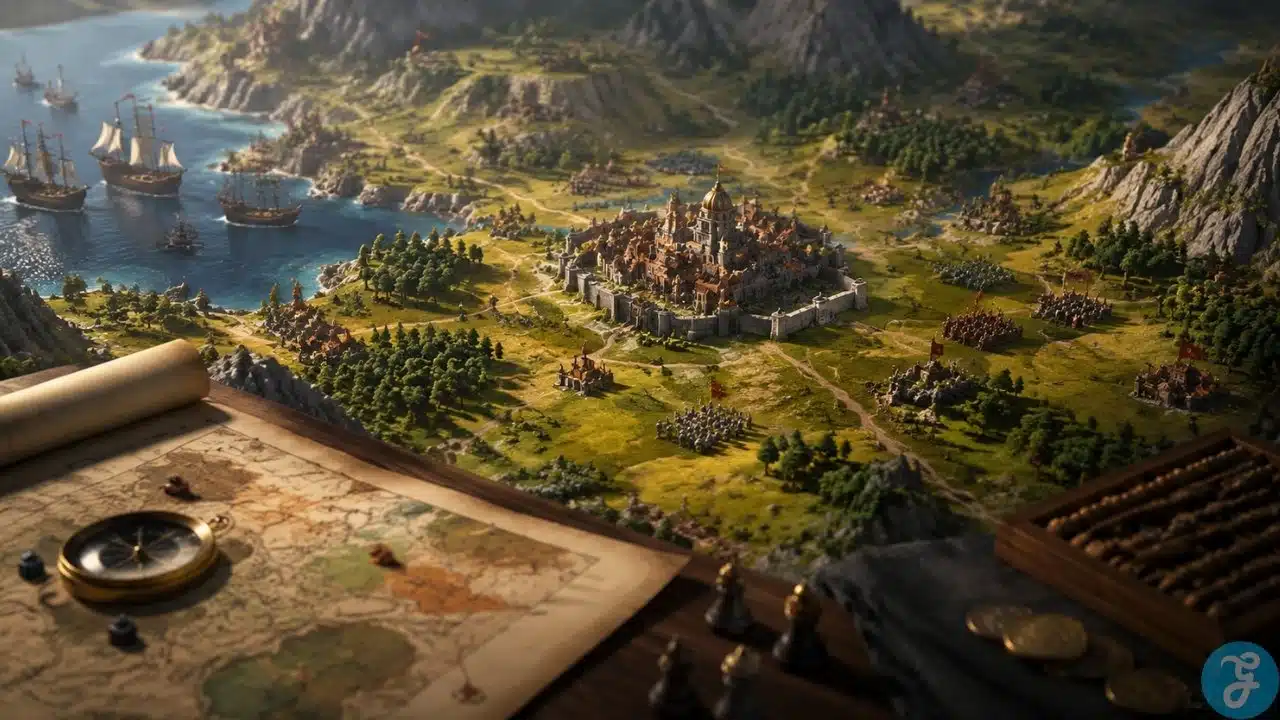
Strategy games don’t reward speed; they reward thinking. Strategy games are slow in a way most other genres just aren’t. In shooters or action games, your hands usually decide the outcome before your brain even finishes the thought. But in strategy games, it’s the opposite.
You sit there and everything you do quietly stacks up into the future. One small mistake early on can sit in the background for 30–40 minutes and then suddenly ruin everything without much warning.
I grew up on Age of Empires and Age of Mythology, and honestly, they kind of ruin you for other games. You learn pretty quickly that having a big army feels good, but it doesn’t mean much if your economy is a mess behind it. I’ve lost so many matches thinking I was ahead just because I had units on the screen, only to realize I forgot the basics back home. The genre really teaches patience the hard way.
Two Flavors of Strategy Games: Fast Chaos vs Slow Thinking
Most strategy games fall into two camps, and they feel almost like different hobbies.
Real-Time Strategy (RTS)
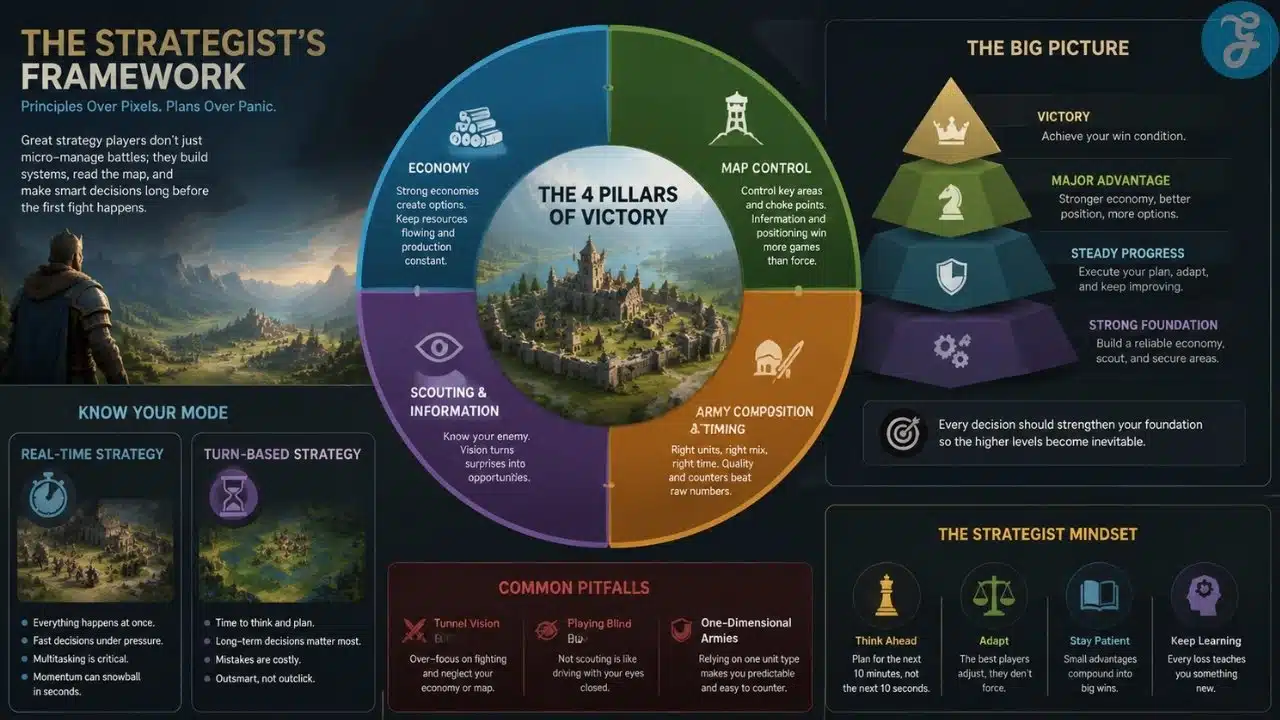
Games like StarCraft or Age of Empires don’t wait for you. Everything is happening at once. You’re trying to collect resources, build units, scout the map, and not fall behind, all while someone else is trying to do the same thing faster than you. It’s not just about being smart. It’s about staying calm when everything is going wrong at the same time.
Turn-Based Strategy (TBS)
Games like Civilization or XCOM are the opposite. You get time to think. You can sit there and plan everything step by step. But the funny thing is, that extra time doesn’t really save you from bad decisions. Once you hit end turn, whatever you planned either works or it doesn’t. There’s no reflex to fix it afterward.
What Actually Wins Games (Spoiler: It’s Not Big Battles)
Most new players focus on fights. They want the big moment where armies clash and everything explodes. But that’s usually not where games are decided.
Economy First, Always
You don’t start strong. You start with a few workers chopping wood or gathering food. If your economy is slow, everything else falls apart. Your army becomes weak without you even noticing it happening. Good players spend a lot of time making sure their resource flow never stops, even when nothing exciting is happening.
Map Control Matters More Than Kills
Holding parts of the map is often more important than winning fights. If you control key resources or choke points, you basically control how the match flows. You decide where fights happen, not your opponent.
Unit Composition Beats Raw Numbers
A common beginner mistake is building one huge army of the same unit and hoping it works. It usually doesn’t. Strategy games are full of hidden counters. A smaller, well-built army can easily beat a larger, poorly mixed one.
Common Mistakes New Players Keep Making
- Spending too much on army too early and crashing the economy behind it
- Not scouting and basically playing blind while the opponent does whatever they want
- Sticking to one “favorite” unit and refusing to adapt when it stops working
None of these feel like big mistakes in the moment, which is why they hurt later.
Why Strategy Games Feel So Mentally Heavy
The weird thing about strategy games is that you’re never just playing the current moment. You’re always thinking ahead. Even when you’re winning a fight, there’s usually something else developing somewhere else on the map that you should have checked.
That’s why the community splits. Some players just want to relax and build at their own pace. Others optimize everything down to tiny details. People call them “sweats,” but both sides are still playing the same game, just differently.
Cheat Codes and Old-School Strategy Game Chaos
Older strategy games had a different vibe. Cheat codes weren’t hidden or secret, they were part of the fun.
Typing LUMBERJACK for instant wood or spawning ridiculous units wasn’t about competition. It was about breaking the game just to see what happens. A lot of people spent more time experimenting with cheats than actually finishing campaigns.
Why Strategy Games Still Hold Up Today
Strategy games don’t rely on graphics or reflexes. That’s why they age so well. The core loop never changes: plan, fail, adapt, repeat.
And when it finally works, it’s not because of reaction speed or luck. It’s because something you planned a long time ago finally clicks.






















