

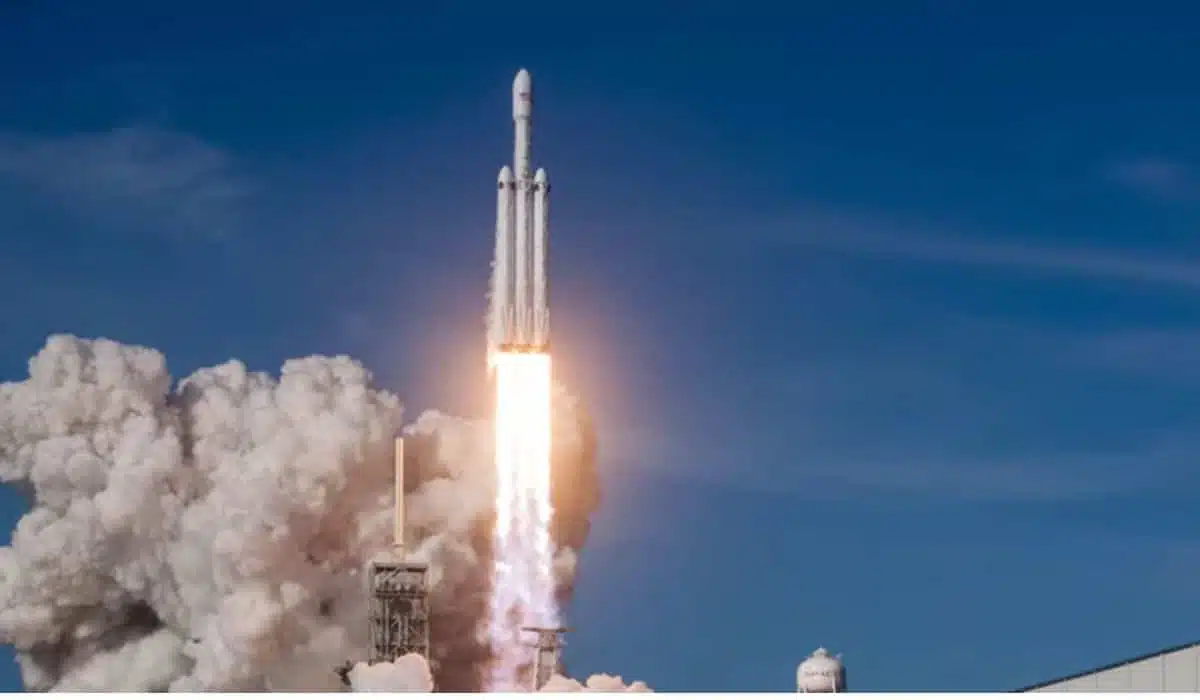
One day after launching from the Kennedy Space Center in Florida, SpaceX’s Crew Dragon spacecraft successfully docked with the International Space Station (ISS) on Sunday. The mission carried a NASA astronaut and a Russian cosmonaut to the space station, where they will spend five months alongside the existing crew. However, the successful docking was followed by news from SpaceX that the Falcon 9 rocket, which carried the Crew Dragon, experienced an upper-stage malfunction. This has led SpaceX to temporarily suspend future launches while an investigation is conducted.
Falcon 9 Upper Stage Malfunction
Following the separation of the Crew Dragon from the Falcon 9 rocket, the rocket’s second stage misfired, resulting in an off-target re-entry into the Earth’s atmosphere. Instead of performing as planned, the second stage of the Falcon 9 underwent an “off-nominal deorbit burn,” which caused it to land in the Pacific Ocean outside of the designated area. SpaceX confirmed this issue in a post on the social media platform X (formerly known as Twitter) on Saturday night.
Although the second stage landed safely, it missed its intended re-entry zone by a significant margin, prompting SpaceX to suspend Falcon 9 launches until the problem can be fully investigated. SpaceX stated that it would “resume launching after we better understand the root cause.” The company did not provide further details about the malfunction, but this marks the second time in less than three months that Falcon 9 rockets have experienced upper-stage problems, raising concerns about potential impacts on upcoming critical missions.
Previous Falcon 9 Launch Failures
The recent upper-stage issue is not an isolated incident. SpaceX has faced several challenges with its Falcon 9 rockets in recent months. In July, during the launch of 20 Starlink internet satellites, the Falcon 9’s second stage failed to complete its burn to reach the proper orbit. As a result, all 20 satellites re-entered the atmosphere prematurely and were destroyed.
This failure led to a brief suspension of SpaceX flights while the Federal Aviation Administration (FAA) launched an investigation. SpaceX was able to identify and resolve the issue quickly, and the company was permitted to resume launches shortly after the investigation began. However, the July incident raised questions about the reliability of SpaceX’s Falcon 9 rockets, especially considering the company’s ambitious launch schedule and its role in several upcoming NASA and European Space Agency (ESA) missions.
In August, SpaceX faced another setback when a Falcon 9 first stage, which was descending to land on an off-shore drone ship, crashed into the deck of the ship. This marked the third major issue in less than three months. While SpaceX did not provide detailed information about what went wrong in that incident, it resumed launches just three days later. These recurring issues have raised concerns about SpaceX’s ability to maintain its rapid launch cadence while ensuring the safety and reliability of its rockets.
SpaceX’s Response and Commitment to Safety
Despite these setbacks, SpaceX remains committed to investigating the root causes of these failures and ensuring that future launches proceed smoothly. The company’s ability to recover quickly from previous incidents has earned it a reputation for resilience and innovation in the aerospace industry. Following the most recent anomaly, SpaceX is expected to conduct a thorough review of its Falcon 9 rockets and make any necessary adjustments to prevent similar issues from occurring in the future.
One of the key aspects of SpaceX’s rocket program is the recovery and reuse of its Falcon 9 first stage boosters. These boosters are designed to return to Earth after launching payloads into space, either landing on solid ground or on off-shore drone ships. However, the second stages of the rockets are not recovered. Instead, SpaceX performs controlled deorbit burns to ensure that the second stages re-enter the atmosphere and break apart harmlessly over the ocean, far from populated areas or shipping lanes. This practice is part of SpaceX’s commitment to preventing space debris and ensuring that its rockets do not pose a risk to other spacecraft or satellites in low-Earth orbit.
Impact on International Space Station Mission
Despite the issues with the Falcon 9’s second stage, the Crew Dragon’s mission proceeded as planned. After a 28-hour journey, the spacecraft successfully rendezvoused with the ISS, docking at 5:30 p.m. EDT on Sunday. The spacecraft was carrying NASA astronaut Nick Hague and Russian cosmonaut Alexander Gorbunov. The two astronauts were greeted by Starliner commander Barry “Butch” Wilmore, pilot Sunita Williams (who is currently serving as the ISS commander), and Soyuz MS-26/72S crew members Aleksey Ovchinin, Ivan Vagner, and NASA astronaut Don Pettit.
Hatches between the Crew Dragon and the space station were opened about an hour and a half after docking, once flight controllers verified that the connection between the two spacecraft was secure and airtight. The arrival of Hague and Gorbunov marks the beginning of a five-month tour of duty aboard the ISS. They will replace the Crew 8 team, which is scheduled to return to Earth around October 7 after spending 217 days in space.
The Crew 9 mission is a significant step for SpaceX, as it continues to demonstrate the reliability of its Crew Dragon spacecraft in ferrying astronauts to and from the ISS. The Crew Dragon has become a cornerstone of NASA’s Commercial Crew Program, providing a safe and efficient means of transportation for astronauts since its first crewed mission in 2020. Despite the challenges faced by the Falcon 9 rocket, the Crew Dragon’s performance has remained consistent, showcasing SpaceX’s capability to adapt and overcome technical obstacles.
Starliner Mission Complications
The arrival of Hague and Gorbunov also brings some relief for NASA and Boeing, who have faced their own set of challenges with the Starliner spacecraft. Starliner, which is Boeing’s contribution to NASA’s Commercial Crew Program, has experienced several delays and technical issues since its first uncrewed test flight in 2019. The spacecraft was originally slated to fly with a crew of two astronauts—Barry Wilmore and Sunita Williams—on a short test flight to the ISS in June 2024.
However, during the Starliner’s approach to the ISS, multiple helium leaks were detected in the spacecraft’s propulsion system. Additionally, five of the spacecraft’s maneuvering thrusters failed to operate properly. These issues prompted NASA and Boeing to delay the crewed mission and conduct extensive tests and analyses to determine whether the Starliner could safely return its crew to Earth.
After three months of testing, NASA made the decision to bring the Starliner back to Earth without its crew. Wilmore and Williams were left aboard the ISS, where they have been serving as part of the station’s resident crew. They are now scheduled to return to Earth aboard the Crew Dragon in February 2025, after Hague and Gorbunov complete their mission.
Upcoming High-Priority Launches at Risk
With the Falcon 9 fleet temporarily grounded, two critical upcoming missions have been put on hold. The first is the European Space Agency’s Hera mission, which is set to launch on October 7. The $390 million mission aims to study the Didymos asteroid system and its moon, Dimorphos. In 2022, NASA’s DART mission successfully impacted Dimorphos in an attempt to alter its orbit. Hera will follow up on this mission by conducting detailed studies of the asteroid and its moon to assess how the impact affected their structure and trajectory. Hera’s findings could provide valuable insights into how humanity might deflect asteroids that pose a threat to Earth in the future.
The second mission at risk is NASA’s Europa Clipper mission, which is set to launch on October 10. The Europa Clipper is a flagship mission designed to explore Jupiter’s moon Europa, which is believed to contain a vast subsurface ocean beneath its icy crust. Scientists consider Europa one of the most likely places in the solar system to host extraterrestrial life, and the Clipper mission will study the moon’s potential habitability in detail.
The Europa Clipper is the largest planetary probe ever built, and it requires a powerful Falcon Heavy rocket—SpaceX’s most advanced launch vehicle—to send it on its five-year journey to Jupiter. The Falcon Heavy consists of three Falcon 9 first stages strapped together, providing the thrust needed to propel the spacecraft into deep space. Missing the launch windows for these missions could result in lengthy and costly delays, as both Hera and the Europa Clipper rely on specific planetary alignments to reach their destinations.
SpaceX’s successful docking of the Crew Dragon with the ISS demonstrates the company’s ability to deliver critical missions even amidst technical challenges. However, the recent Falcon 9 upper-stage anomaly highlights the complexities of space travel and the importance of ensuring the reliability of launch systems. With two high-priority missions hanging in the balance, SpaceX faces the urgent task of resolving the issues with its Falcon 9 rockets before the launch windows for Hera and the Europa Clipper close. As the investigation continues, the aerospace community will be watching closely to see how SpaceX handles these challenges and maintains its role as a leader in space exploration.





















