

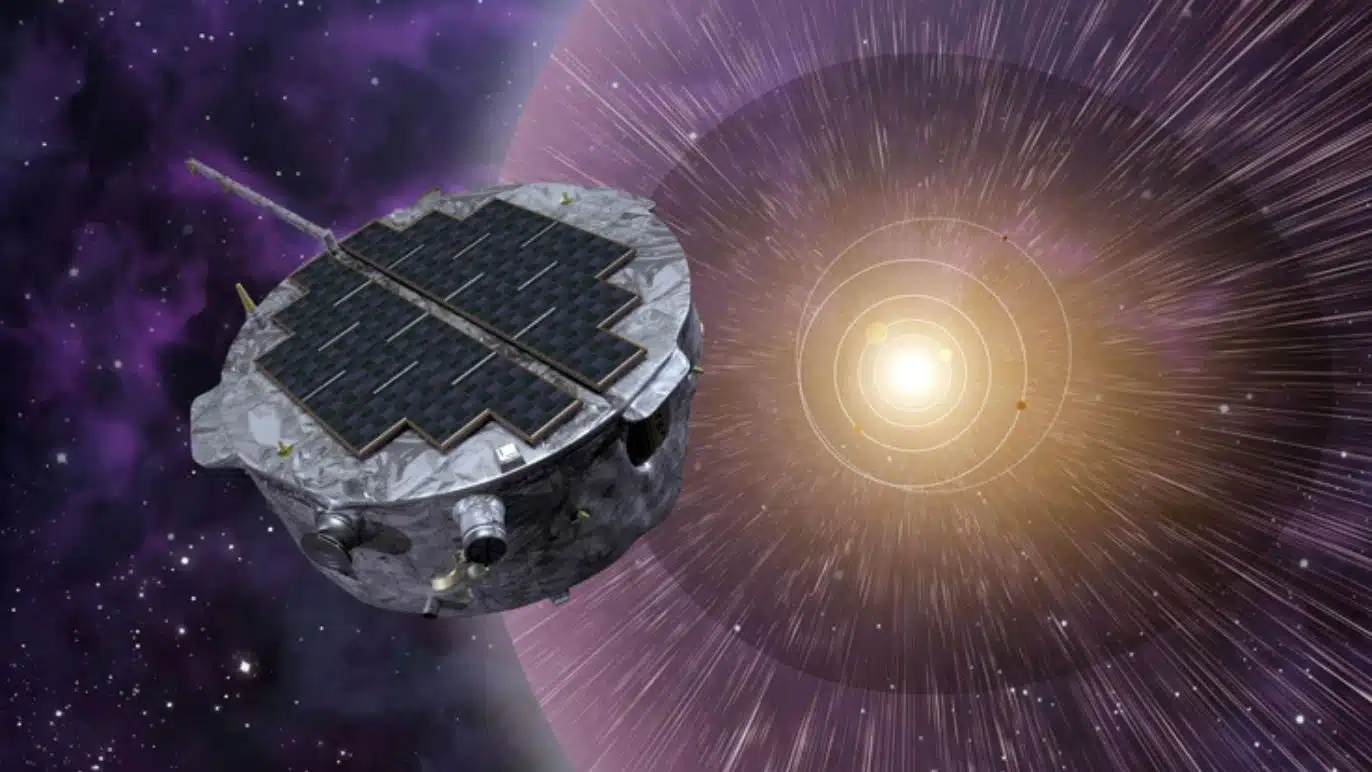
The year 2025 will be remembered as a pivotal chapter in the history of space exploration. A series of groundbreaking discoveries, technological leaps, and international collaborations have not only expanded our understanding of the cosmos but have also laid the foundation for the ambitious lunar missions planned for 2026. From new findings about the Moon’s water ice and hidden moons to the completion of critical hardware for the Artemis program, the stage is set for humanity’s next giant leap: a sustained presence on the Moon.
Major Space Discoveries of 2025
James Webb Space Telescope: Revolutionizing Astronomy
The James Webb Space Telescope (JWST) continued to astound scientists and the public alike in 2025. One of its most significant achievements was the discovery of a new exoplanet, the first directly imaged by JWST, located within a debris disk of a young star. This milestone was made possible by a new coronagraph developed by the CNRS, which masked the star’s light and revealed the planet’s orbit. The discovery opens new possibilities for the detection and characterization of exoplanets, particularly those that could harbor conditions suitable for life.
JWST also confirmed the existence of a previously unknown moon orbiting Uranus, dubbed S/2025 U1. This small, faint moon, only about 10 kilometers wide, escaped detection by Voyager 2 nearly 40 years ago but was finally spotted using JWST’s powerful Near-Infrared Camera. Such discoveries highlight the telescope’s unprecedented sensitivity and its role in rewriting our understanding of the outer solar system.
In addition, JWST captured images of a “runaway” supermassive black hole, hurtling through its host galaxy at an astonishing 2.2 million mph. This observation provides new insights into the dynamics of galaxy mergers and the behavior of black holes in extreme environments.
New Insights into Lunar Water Ice
The search for water ice on the Moon took a major leap forward in 2025. Scientists now believe that water ice is more widespread than previously thought, extending beyond the permanently shadowed craters at the Moon’s poles. Data from NASA’s Lunar Reconnaissance Orbiter revealed that ice may exist in regions exposed to sunlight, suggesting new possibilities for resource utilization on future lunar bases.
Researchers from the University of Hawaiʻi developed a novel technique to detect buried water ice using naturally occurring cosmic rays. When these rays strike the lunar surface, they penetrate deep layers and emit radar waves that bounce off ice and rock, allowing scientists to infer what lies beneath. This breakthrough could revolutionize the way we search for water on the Moon and other celestial bodies.
Advances in Lunar Exploration
2025 saw a flurry of activity in lunar exploration, with multiple nations and private companies launching missions to the Moon. NASA’s Commercial Lunar Payload Services (CLPS) program delivered two successful landings: Firefly’s Blue Ghost spacecraft and Intuitive Machines’ Nova C lander. These missions tested new technologies for precision landing, navigation, and communication, providing valuable data for future crewed missions.
China’s Chang’e 6 mission brought back samples from the Moon’s far side, confirming that the Moon was fully molten in its youth and that the far side mantle contains less water than the near side. These findings are crucial for understanding the Moon’s evolution and the differences between its two hemispheres.
India’s Chandrayaan 5 / LUPEX mission, a joint effort with Japan’s JAXA, was approved to drill and analyze water ice at the Moon’s south pole. This mission will provide critical data for NASA’s Artemis planning and could pave the way for sustainable lunar habitation.
Preparing for 2026 Moon Missions
Artemis II: The First Crewed Lunar Flyby in 50 Years
NASA’s Artemis II mission, set to launch in early 2026, marks the first crewed flight around the Moon since Apollo 17 in 1972. The mission will test the Orion spacecraft and the Space Launch System (SLS) rocket, which have been meticulously prepared throughout 2025. Four astronauts will embark on a ten-day journey around the Moon, conducting critical systems checks and gathering data to ensure the safety and success of future lunar landings.
The Artemis II crew has undergone extensive training, including mission simulations, survival suit tests, and countdown demonstrations. The mission will also test new spacesuits and the lunar terrain vehicle (LTV), which will allow astronauts to travel away from their landing zone and conduct scientific studies on the Moon’s surface.
International Collaboration and the Artemis Accords
The Artemis Accords, a set of voluntary guidelines for safe and responsible lunar exploration, now have 59 signatories, including new additions such as Bangladesh, Finland, Norway, and Senegal. This growing international coalition reflects the global interest in lunar exploration and the need for cooperation to ensure the sustainable use of lunar resources.
China has also invited India to join its International Lunar Research Station (ILRS), signaling a new era of collaboration in lunar science and exploration. As more nations and private companies join the race to the Moon, the need for shared navigation infrastructure and coordinated efforts becomes increasingly important.
Technological Innovations and Challenges
2025 saw significant advancements in space technology, from the development of new power systems to the testing of autonomous navigation and communication networks. Zeno Power raised $50 million to develop a nuclear electric power system for the Moon, which could provide reliable energy for future lunar bases.
NASA and its partners continued to test and refine new technologies for lunar exploration, including electrodynamic dust shields, high-performance computing, and autonomous navigation systems. These innovations will be critical for the success of the Artemis missions and the establishment of a sustainable human presence on the Moon.
The Road Ahead: 2026 and Beyond
Artemis III: The First Crewed Lunar Landing Since Apollo
Following the success of Artemis II, NASA plans to launch Artemis III in mid-2027, which will land astronauts on the Moon’s south pole for the first time since Apollo 17. The mission will focus on scientific exploration, resource utilization, and the development of technologies for long-term lunar habitation.
The search for water ice will be a key objective of Artemis III, as it is essential for supporting human life and producing rocket fuel on the Moon. The data collected by previous missions, including the detection of ice in previously unexplored regions, will guide the selection of landing sites and the planning of scientific experiments.
The Future of Lunar Exploration
The discoveries and achievements of 2025 have set the stage for a new era of lunar exploration. As nations and private companies work together to unlock the secrets of the Moon, the dream of a sustainable human presence on the lunar surface is closer than ever.
The lessons learned from the Artemis missions will also pave the way for future exploration of Mars and beyond. The technologies developed for lunar exploration, such as autonomous navigation, power systems, and resource utilization, will be essential for the success of deep space missions.
Final Words
The year 2025 was a watershed moment for space exploration, marked by groundbreaking discoveries, technological innovations, and unprecedented international collaboration. The findings about the Moon’s water ice, the completion of critical hardware for the Artemis program, and the growing coalition of nations committed to lunar exploration have paved the way for the ambitious missions planned for 2026 and beyond. As humanity prepares to return to the Moon and establish a sustainable presence, the legacy of 2025 will be remembered as the year that set the stage for the next giant leap in space exploration.





















