When world leaders met at the COP26 climate summit back in 2021, they announced a massive deal designed to change how developing countries ditch fossil fuels. They called it the South Africa Just Energy Transition Partnership. Fast forward to 2026, and this initiative has grown into a highly complex, heavily scrutinized framework. It aims to overhaul a national energy grid while protecting the millions of people who rely on the old coal-heavy system to feed their families and power their homes.
Moving away from coal is tough. For South Africa, a country that built its entire industrial base on cheap coal, the stakes are massive. This agreement balances urgent climate action, economic survival, and social fairness. A poorly managed shift could devastate local economies, while a successful one could set the country on a path toward sustainable, green prosperity.
If you want to know how this historic deal actually works, who pays for it, and what it means for everyday people, you are in the right spot. We break down exactly where the money goes, the political hurdles standing in the way, and the recent changes that have shaken up the agreement. Let us explore the ten most essential facts about the South Africa Just Energy Transition Partnership and see how it impacts the global fight against climate change.
What is the South Africa Just Energy Transition Partnership?
Before diving into the specific facts, you need to understand the basic setup of this massive agreement. The partnership is a major political and financial deal between the South African government and a wealthy coalition originally called the International Partners Group. The primary goal is to unlock international finance to help South Africa clean up its economy and build renewable energy infrastructure. The word “just” simply means the transition cannot abandon the workers and towns that currently depend on coal mining to survive. The agreement started as a high-profile announcement at the United Nations climate summit in Glasgow. Wealthy nations realized they could not simply demand that developing countries stop using fossil fuels without offering financial help.
South Africa relies on coal for over eighty percent of its electricity. Replacing that infrastructure requires hundreds of billions of dollars over the coming decades. The initial group of partner countries offered a starting package to kickstart the process, hoping it would attract even more private investors down the line. Shutting down a coal power plant reduces carbon emissions, but it also fires hundreds of workers and destroys the local economy of the surrounding town. The funding creates safety nets for these communities.
| Core Component | Implementation Detail |
| Primary Goal | Decarbonize the economy while securing livelihoods for vulnerable coal workers. |
| Launch Origin | Announced globally at the COP26 Climate Summit in November 2021. |
| Key Target Area | South Africa, with a massive focus on the coal-heavy Mpumalanga province. |
| Financial Makeup | Heavily reliant on concessional loans, commercial debt, and minimal direct grants. |
10 Essential Facts About South Africa Just Energy Transition Partnership
This climate deal goes way beyond just shutting down old power stations to hit an emissions target. It covers upgrading national grids, changing local laws, and creating entirely new green industries from scratch. Tracking the progress of this partnership reveals a lot about the hurdles developing nations face when trying to go green. Let us break down the ten most important things you should know about how the plan is unfolding on the ground.
1. The Financial Pledge Has Grown Significantly
When leaders first announced the deal, the headline number was an $8.5 billion pledge from the international community. Over time, that figure has grown substantially as more countries and institutions joined the effort. By the end of 2025, factoring in bilateral agreements and pledges from multilateral development banks, the total mobilized sum reached approximately $13.7 billion. While this sounds like a mountain of money, energy experts estimate that South Africa will actually need close to $100 billion over the next decade to fully overhaul its energy sector.
The current pledges act as seed money meant to get the hardest, riskiest projects off the ground. Getting this initial capital flowing is critical because it signals to private global investors that the country is serious about its green energy future. Without this initial push, the massive private capital required to build solar and wind farms simply would not materialize.
| Financial Metric | Data Point |
| Original 2021 Pledge | $8.5 Billion |
| Estimated 2025 Total | $13.7 Billion |
| Estimated Total Need | ~$100 Billion over the next decade |
| Primary Purpose of Pledges | Catalytic seed money to attract private market investment |
2. It Goes Beyond Just Closing Coal Plants
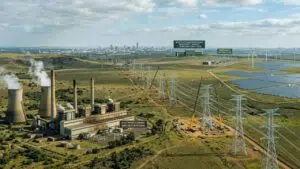
Many people assume the partnership just pays South Africa to turn off its coal burners. In reality, the most critical part of the plan is building the infrastructure to replace them. South Africa has incredible wind and solar resources, but its electrical grid is too old and weak to handle power generated in remote areas. A massive chunk of the strategy involves building thousands of miles of new transmission lines across the country.
Furthermore, the partnership helps launch the South African Wholesale Electricity Market in early 2026, which fundamentally changes how power is bought and sold. By focusing on the grid rather than just the power plants, the partnership addresses the actual bottleneck preventing renewable energy adoption. You can build all the solar panels in the world, but if the grid cannot carry that electricity to the cities, the investment is practically useless.
| Infrastructure Focus | Action Plan |
| Transmission Grid | Building thousands of miles of new high-voltage lines. |
| Market Reform | Launching the competitive South African Wholesale Electricity Market. |
| Renewable Integration | Upgrading substations to handle intermittent solar and wind power. |
| Decommissioning | Safely retiring end-of-life coal stations and repurposing the sites. |
3. Mpumalanga is the Heart of the Transition
Mpumalanga is the province where nearly all of South Africa’s coal gets mined and burned. It is the absolute focal point for the social side of this agreement. The government and international partners channel catalytic finance into this region specifically to support small and medium enterprises in the green economy. The goal is to create new supply chains and jobs before the coal plants shut down completely. Planners fund local entrepreneurs and promote agriculture on rehabilitated mining land to prevent the region from turning into an economic wasteland.
This province represents the ultimate test of the “just” element in the agreement. If the transition fails to protect the workers in Mpumalanga, the political backlash will stall the entire national decarbonization effort. Therefore, social safety nets, retraining programs, and direct community investments in this specific geographic area take absolute priority over general national spending.
| Mpumalanga Initiative | Objective |
| Worker Retraining | Equip coal miners with skills for solar installation and grid maintenance. |
| Land Rehabilitation | Convert old, toxic mining sites into usable agricultural land. |
| SME Support | Provide targeted loans for local green tech startups in the province. |
| Economic Diversification | Attract non-coal manufacturing businesses to the region. |
4. Grants Make Up a Tiny Fraction of Funding
One of the most debated facts about the South Africa Just Energy Transition Partnership is the structure of the money. When citizens hear about billions of dollars in climate aid, they often think it is free money. The truth is quite different. Current financial data shows that actual, non-repayable grants make up roughly five percent of the total package. The vast majority of the money comes as concessional loans, which are loans with lower interest rates than private banks offer.
Critics worry this structure forces a developing nation to take on heavy foreign debt to solve a global climate crisis primarily caused by wealthier industrialized nations. This heavy reliance on debt has sparked fierce debates among local economists who argue that taking on dollar-denominated loans places the national treasury at massive risk if the local currency weakens.
| Funding Type | Approximate Share | Description |
| Direct Grants | ~5% | Free capital requiring no repayment; used mostly for studies and training. |
| Concessional Loans | ~70% | Loans with below-market interest rates and longer repayment terms. |
| Commercial Debt | ~25% | Standard market-rate loans from international development banks. |
| Risk Factor | High | Dollar-denominated debt poses risks if the South African Rand weakens. |
5. It Ushered in Major New Climate Laws
Money alone cannot fix an energy crisis; you need the right laws in place. The pressure and momentum from the partnership forced the South African government to modernize its energy legislation rapidly. In early 2025, the Electricity Regulation Amendment Act officially came into force alongside the broader Climate Change Act. These new laws strip away old state monopolies and make it much easier for private renewable energy companies to generate power and sell it to the national grid.
The partnership acted as the ultimate catalyst to push these long-delayed political reforms across the finish line. Without these legal frameworks, international investors would never risk their capital. By legally mandating carbon budgets for large polluters and opening the energy market to private competition, South Africa completely rewrote the rules of its economy in a matter of months.
| Legislation | Impact on Energy Transition |
| Climate Change Act | Legally mandates carbon budgets and emission limits for heavy industry. |
| Electricity Regulation Amendment | Breaks state monopolies, allowing private companies to sell power to the grid. |
| Carbon Tax Adjustments | Increases financial penalties for companies resisting decarbonization. |
| Municipal Power Procurement | Allows local cities to buy renewable energy directly from private farms. |
6. Unbundling Eskom is a Major Pillar
For nearly a century, a single state-owned company named Eskom controlled everything about South African electricity. Eskom fell into massive debt and operational failure, leading to years of crippling daily blackouts. The partnership made it clear that fixing the energy sector required breaking up this massive, inefficient monopoly. Recently, the national energy regulator finally granted a market operator license to a new, separate entity called the National Transmission Company South Africa.
By separating the transmission grid from the dying coal plants, the country can finally allow private clean energy to flow freely. This structural unbundling ensures that the people managing the power lines do not have a vested interest in keeping old coal plants running. It levels the playing field, making the grid a neutral carrier of electricity rather than a weapon used to block renewable energy competitors.
| Eskom Restructuring | Functional Change |
| Generation Division | Manages the aging fleet of coal stations and new state renewables. |
| Transmission Company | Newly independent entity managing the national grid and power flow. |
| Distribution Division | Focuses entirely on delivering power to end-users and local municipalities. |
| Market Impact | Creates a neutral grid system that treats private and state power equally. |
7. Electric Vehicles and Green Hydrogen are Key Focuses
South Africa does not just want to fix its power grid; it wants to build industries that will survive the next century. The country features a massive automotive manufacturing sector that exports cars globally, particularly to Europe. Since Europe plans to ban gas-powered cars soon, South Africa must learn to build electric vehicles or risk losing thousands of factory jobs. The partnership includes specific funding to help car factories retool for electric vehicles.
It also funds research and port infrastructure to produce and export green hydrogen, capitalizing on the country’s abundant sunshine and wind. Green hydrogen serves as a clean alternative fuel for heavy industries like shipping and aviation. By investing heavily in these two future-facing sectors, the government hopes to create a massive export market that replaces the revenue previously generated by exporting raw coal.
| Future Industry | Strategic Importance |
| Electric Vehicles (EVs) | Protects the local auto manufacturing sector from global combustion engine bans. |
| Green Hydrogen Production | Uses abundant solar/wind to create clean fuel for global export markets. |
| Battery Manufacturing | Leverages local mineral wealth to build energy storage solutions domestically. |
| Port Infrastructure | Upgrades coastal facilities to handle new green fuel exports safely. |
8. The Deal Relies Heavily on Foreign Expertise
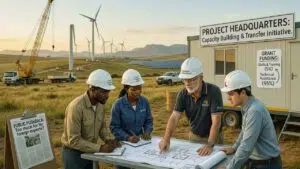
A harsh reality of this transition is the immense reliance on foreign expertise and consulting. Many of the early grants were spent on technical assistance, complex feasibility studies, and policy drafting led by international development agencies. While this helps ensure projects meet global banking standards, it causes significant friction locally. Civil society groups argue that too much money flows back to foreign consultants in London or Washington rather than reaching the local communities that need it most.
Balancing the strict administrative requirements of international lenders with the need to build local South African capacity remains a daily struggle. If local engineers and project managers do not learn how to execute these massive infrastructure projects, the country will remain dependent on expensive foreign contractors long after the initial partnership funding dries up.
| Expertise Dynamics | Observation |
| Consulting Flow | High percentage of grant money pays for foreign technical advisors. |
| Capacity Building | Slow transfer of highly technical skills to local municipal workers. |
| Local Friction | Public pushback against funds leaving the country via consulting fees. |
| Banking Standards | Strict international reporting rules force the use of specialized foreign firms. |
9. Transparency and Delays Frustrate the Public
Turning high-level political promises into actual wind farms and retrained workers takes a frustrating amount of time. Citizens often ask where the billions of dollars went, especially when they still experience occasional power grid issues or local unemployment. Tracking the flow of funds from international banks through national treasuries down to local municipalities proves highly complex. The government tries to improve transparency by publishing regular grant registers.
However, the heavy paperwork, strict environmental impact assessments, and general bureaucratic red tape mean that visible, ground-breaking progress often lags years behind the exciting press announcements. This massive delay between funding pledges and actual construction breeds public cynicism, leading many to believe the partnership is just another political talking point rather than a real driver of economic change.
| Implementation Challenge | Details |
| Fund Tracking | Difficult to trace dollars from international banks to specific local projects. |
| Bureaucratic Red Tape | Complex environmental and social impact studies delay ground-breaking by years. |
| Public Perception | High skepticism due to the gap between political announcements and visible results. |
| Reporting Mechanisms | The government uses grant registers, but data is often highly technical and inaccessible. |
10. The JET Funding Platform Streamlines Bureaucracy
To solve the frustrating delays in getting money to actual projects, the government set up dedicated platforms to manage the massive pipeline of proposals. Recently, they established the JET Funding Platform to match local green initiatives with the right type of international funding. If a municipality in Mpumalanga has a solid plan for a solar micro-grid, these platforms help package the proposal so it meets the strict criteria of the international donors.
By streamlining the bureaucracy, South Africa hopes to move past the planning phase and start pouring concrete at a much faster pace. This centralized platform acts as a matchmaking service, ensuring that smaller, community-led projects do not get ignored in favor of massive corporate developments. It democratizes the funding process, giving local mayors and entrepreneurs a direct line to international climate finance.
| JET Funding Platform Feature | Purpose |
| Project Matchmaking | Connects local municipal projects with specific international donors. |
| Standardized Proposals | Helps local developers format pitches to meet strict global banking rules. |
| Pipeline Management | Tracks the progress of all green projects from concept to final funding. |
| Democratizing Access | Gives smaller, community-led initiatives a chance to secure serious capital. |
Why South Africa Just Energy Transition Partnership Matters Globally
You might wonder why the internal energy politics of one country receive so much attention from global media and international banks. The reason is simple: South Africa serves as the ultimate test case for a brand new method of fighting climate change. The international community watches every success and failure to see if this framework can be replicated in other heavily polluting, developing nations. If the model works here, it changes the entire landscape of global climate finance.
South Africa was the very first country to negotiate and sign this specific type of deal. Because of its initial success in securing pledges, other nations quickly followed suit. Indonesia, Vietnam, and Senegal all negotiated their own versions of this partnership. Policymakers from these countries regularly study South Africa’s progress, its legislative hurdles, and its strategies for dealing with powerful labor unions. If South Africa manages to clean its grid without crashing its economy, it provides a workable, real-world blueprint for the entire Global South. Conversely, if it falls into a debt trap, other nations will walk away from climate finance altogether.
| Global Impact Factor | Explanation |
| The Blueprint Model | South Africa serves as the primary test case for global climate finance structures. |
| Follow-on Agreements | Inspired similar multi-billion dollar deals in Indonesia, Vietnam, and Senegal. |
| Debt Trap Monitoring | Global economists watch closely to see if climate loans ruin the national economy. |
| Policy Export | Successful strategies for handling coal labor unions will be copied globally. |
Final Thoughts
The path away from fossil fuels is incredibly complicated, messy, and expensive. The South Africa Just Energy Transition Partnership represents the most ambitious attempt yet to solve this puzzle in a developing nation. It offers no magical overnight fix, and it carries massive challenges regarding debt loads, slow implementation, and intense political pushback.
However, the recent legislative breakthroughs and the launch of competitive new electricity markets prove that real, structural change is happening. By balancing green infrastructure upgrades with immediate human needs, this partnership offers the best chance for South Africa to build a modern, resilient economy that benefits everyone.
Frequently Asked Questions (FAQs) About South Africa Energy Transition Partnership
1. Why did some countries adjust their funding commitments in recent years?
Funding commitments fluctuate based on shifting domestic policies and geopolitical priorities within the donor countries. While the core international coalition remains intact, changes in foreign government administrations occasionally lead to the reallocation or cancellation of specific unallocated grants, though multilateral banks usually step in to fill the gaps.
2. What is the South African Wholesale Electricity Market launching in 2026?
The Wholesale Electricity Market is a newly designed trading platform for national power. It moves the country away from relying on a single state-owned monopoly. Instead, it allows independent power producers, including those generating wind and solar energy, to sell their power directly in a competitive, open-market environment.
3. How does the partnership specifically help coal miners in Mpumalanga?
The partnership channels direct funds into the Mpumalanga region through catalytic finance programs designed to support small green enterprises. The goal is to build alternative industries, such as agriculture on rehabilitated mining land and local renewable supply chains. This ensures miners have tangible new job opportunities before the local coal sector shuts down entirely.