In today’s fast-paced world, many professionals push themselves beyond their limits, often without realizing it. While hard work is admirable, there is a fine line between being dedicated and overworking yourself. Ignoring the signs you’re overworking can lead to burnout, chronic stress, and serious health issues.
This article will help you recognize the key signs-you’re-overworking and provide actionable strategies to restore balance in your life. If you’ve been feeling constantly exhausted, anxious, or struggling with your work-life balance, this guide is for you.
Understanding Overwork and Its Impact
Many people fail to recognize the signs-you’re-overworking until they experience severe stress or burnout. It is essential to identify these warning signs early and take proactive measures to maintain a healthy work-life balance.
What Does It Mean to Be Overworked?
Overworking means consistently pushing your physical and mental limits beyond a healthy threshold. It can involve long hours, skipping breaks, and prioritizing work over personal well-being.
Common causes of overworking include:
- Unrealistic work expectations
- Pressure to meet tight deadlines
- Lack of boundaries between work and personal life
- Fear of job insecurity
The Negative Effects of Overworking
Overworking affects both your body and mind, leading to serious consequences such as:
Physical Health Issues:
- Increased risk of heart disease and high blood pressure
- Chronic fatigue and weakened immune system
- Frequent headaches, muscle pain, and digestive issues
Mental and Emotional Consequences:
- Higher stress and anxiety levels
- Increased risk of depression and burnout
- Difficulty concentrating and making decisions
Work-Life Balance Disruptions:
- Strained relationships with family and friends
- Reduced personal time for hobbies and relaxation
- Decreased job satisfaction and productivity
Recognizing the signs-you’re-overworking early can help prevent these issues before they spiral out of control.
7 Signs You’re Overworking
Recognizing the signs-you’re-overworking is crucial for maintaining your well-being and productivity. Many people overlook these indicators until burnout becomes unavoidable. By understanding these warning signs, you can take steps to restore balance before it’s too late.
1. Constant Fatigue and Lack of Energy

If you find yourself feeling exhausted even after a full night’s sleep, it could be a major sign-you’re-overworking. Over time, chronic fatigue can weaken your immune system and make daily tasks feel overwhelming.
| Sign | Impact |
| Feeling exhausted despite sleeping | Weakened immune system, decreased productivity |
Solution: Prioritize quality sleep, take regular breaks, and avoid overloading your daily schedule.
2. Increased Stress and Anxiety
Work-related stress is normal, but excessive worry, tension, and anxiety could indicate a deeper problem. If work pressure affects your mood, sleep, or personal relationships, you might be overworked.
| Sign | Impact |
| Excessive worry, tension | Poor mental health, strained relationships |
Solution: Practice stress management techniques like deep breathing, mindfulness, and regular physical activity.
3. Declining Work Performance
Ironically, overworking can reduce productivity. If you make frequent mistakes, miss deadlines, or struggle to focus, your brain might be overtaxed.
| Sign | Impact |
| Frequent mistakes, missed deadlines | Reduced efficiency, workplace dissatisfaction |
Solution: Implement time management techniques such as the Pomodoro technique, delegation, and prioritization of tasks.
4. Neglecting Personal Life and Hobbies
A healthy work-life balance includes time for family, friends, and hobbies. If your social life is suffering due to excessive work, it’s a clear sign-you’re-overworking.
| Sign | Impact |
| Avoiding social events, missing hobbies | Loss of joy, disconnection from loved ones |
Solution: Set firm boundaries between work and personal time, and schedule leisure activities just as you do work tasks.
5. Frequent Physical Ailments
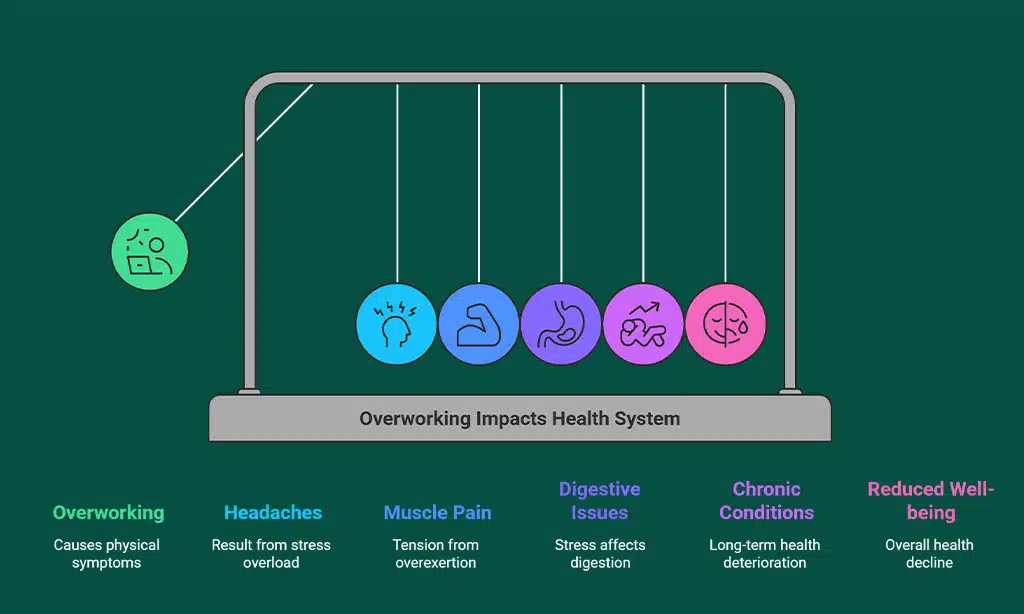
Do you often experience headaches, muscle pain, or digestive issues? Physical symptoms are a common sign-you’re-overworking and can worsen over time.
| Sign | Impact |
| Headaches, muscle pain, digestive issues | Chronic health conditions, reduced well-being |
Solution: Maintain a healthy diet, stay hydrated, and engage in light exercise to reduce tension and improve circulation.
6. Sleep Disruptions and Insomnia
If you struggle to fall asleep or wake up feeling unrested, work stress may be the culprit. Sleep deprivation further impacts your cognitive function, creating a vicious cycle.
| Sign | Impact |
| Difficulty sleeping, feeling unrested | Increased stress, poor cognitive function |
Solution: Establish a bedtime routine, avoid screens before sleep, and practice relaxation techniques.
7. Dependence on Stimulants (Caffeine, Energy Drinks, etc.)
Relying on excessive coffee or energy drinks to get through the day is a strong indicator that you’re pushing yourself too hard.
| Sign | Impact |
| Relying on caffeine to stay awake | Poor sleep quality, increased dependence |
Solution: Reduce caffeine intake, drink more water, and include nutrient-dense foods in your diet for natural energy.
How to Dial Back and Regain Balance?
Recognizing the signs-you’re-overworking is only the first step. The next crucial action is learning how to reset and reclaim your balance before burnout takes over. By implementing effective strategies, you can restore your well-being and maintain a sustainable work-life equilibrium.
Prioritizing Rest and Recovery
- Ensure at least 7-8 hours of quality sleep per night.
- Take short breaks every hour to refresh your mind.
- Incorporate relaxation techniques like yoga or meditation.
Setting Clear Work Boundaries
- Define strict start and end times for work.
- Avoid checking emails or work messages after hours.
- Communicate your boundaries to colleagues and clients.
Practicing Stress Management Techniques
- Try deep breathing exercises and mindfulness meditation.
- Engage in physical activities like walking or swimming.
- Keep a gratitude journal to focus on positive aspects of life.
Learning to Delegate and Say No
- Assign less important tasks to team members.
- Politely decline extra work that exceeds your capacity.
- Use productivity tools to streamline your workload.
Seeking Professional Help When Needed
- Consult a doctor if experiencing chronic fatigue or severe stress.
- Seek therapy if work-related anxiety affects your mental health.
Maintaining a Healthy Work-Life Balance
Achieving a healthy work-life balance requires conscious effort and consistent adjustments. If you’ve noticed the signs-you’re-overworking creeping into your routine, now is the time to make positive changes. By structuring your day effectively and prioritizing well-being, you can prevent burnout and maintain long-term success.
Creating a Sustainable Routine
- Start your day with a morning routine to set a positive tone.
- Set realistic daily goals and deadlines to avoid overwork.
- Use time-blocking to schedule breaks and personal time.
Recognizing Early Warning Signs of Overwork
- Monitor your stress levels through a daily self-assessment.
- Keep track of how often you feel exhausted or overwhelmed.
- Make necessary adjustments before burnout sets in.
Wrap Up
Ignoring the signs-you’re-overworking can have serious consequences on both your physical and mental health. Recognizing these warning signals early and taking proactive steps to restore balance is crucial.
Key Takeaways
- Overworking leads to fatigue, stress, and declining productivity.
- Setting clear boundaries and prioritizing self-care is essential.
- Small lifestyle changes, like better sleep and delegation, can prevent burnout.
Have you experienced the signs-you’re-overworking? Share your story and tips in the comments below!