

Finding sustainable home goods brands sounds easy until you start shopping. One cleaner says plant-based. One towel says organic. One mattress says natural. One storage bag says reusable. Then you look closer, and the real questions begin. Is the packaging lower-waste? Are the materials certified? Will the product last? Is the refill system practical? Is this actually better for your home, or just another thing with green branding?
That is the problem with sustainable home shopping. A home can collect eco clutter just as quickly as regular clutter. Refillable bottles, bamboo brushes, organic sheets, reusable bags, glass jars, recycled paper goods, and natural cleaners can all be useful. But if you buy too many of them without a real need, the result is still overconsumption.
The better approach is slower. Start with the products you use every week: dish soap, laundry detergent, toilet paper, food storage, bedding, cleaning sprays, towels, and mattresses. These are the places where better materials, refill systems, durability, and lower-waste packaging can make daily life a little less wasteful.
This list reviews seven eco home brands that are useful for real households. Some are stronger for cleaning. Some are better for bedding. Some help reduce plastic in the kitchen. Some make paper products less wasteful. Some are more expensive, but may last longer or replace repeated single-use purchases.
No home goods brand is perfect. Every product still needs materials, factories, packaging, shipping, and end-of-life handling. But these sustainable household brands offer better options than many conventional choices.
The goal is not to make you buy more home products. The goal is to help you buy fewer, better things and use them well.
How I Chose These Sustainable Home Goods Brands
This list is not based on pretty packaging or beige kitchen photos. Each brand had to show a clearer reason for inclusion. That reason could be reusable packaging, refill systems, recycled paper, organic textiles, credible certifications, circular programs, lower-plastic formats, durable design, or strong social impact.
I also looked at real-life usefulness. A sustainable home product should not make your routine harder without a good reason. If a cleaner does not clean well, a reusable bag leaks, or a mattress does not support your sleep, the product will not stay in use.
The review focused on:
- Material choices
- Waste reduction
- Refill, reuse, or circular systems
- Certifications or public sustainability claims
- Product durability
- Daily household usefulness
- Access and price
- Important trade-offs before buying
That last point matters. A green home product is not automatically a smart purchase. The right choice depends on your budget, cleaning habits, storage space, family needs, and whether you will actually keep using the product.
1. Blueland
Blueland is one of the most practical sustainable home goods brands for people who want to cut single-use plastic from cleaning routines.
The brand’s idea is simple. You buy a reusable bottle once, then refill it with tablets or concentrates. Instead of shipping a new plastic bottle full of mostly water every time, Blueland ships smaller refills that you mix with water at home.
That model works especially well for cleaning sprays, hand soap, laundry tablets, dishwasher tablets, toilet bowl cleaners, and other repeat-use household products. These are the kinds of items people buy again and again, so reducing bottle waste here can make daily routines feel lighter.
Blueland’s biggest strength is habit design. A good sustainable swap has to be easy enough to repeat. Dropping a tablet into a bottle is much easier than finding a local refill station, especially for people who do not live near zero-waste shops.
The caution is product fit. Tablet-based cleaners are not always the right solution for every home. Some people may prefer liquid formulas. Some may dislike waiting for tablets to dissolve. Some pumps and bottles can wear down if handled roughly.
Still, for households that want a simple move away from plastic-heavy cleaners, Blueland is one of the easiest brands to try.
Where Blueland fits: surface cleaners, hand soap, laundry tablets, dishwasher tablets, toilet cleaners, refillable cleaning systems.
Smart home note: Start with one repeat product, like hand soap or multi-surface cleaner. Refill systems work best when they become routine.
2. Seventh Generation
Seventh Generation is a good choice for people who want more sustainable home products without changing where they shop.
Not everyone wants to order niche refill systems online. Some people need a better detergent, dish soap, cleaner, diaper, or paper product that they can buy from a supermarket, pharmacy, or major retailer. That is where Seventh Generation works well.
The brand has been part of the green household products category for decades. Its range includes laundry detergents, dish liquids, dishwasher products, surface cleaners, disinfectants, paper products, baby care, and personal care.
Its strongest value is accessibility. Sustainable living should not only work for people with time to research every product or visit specialty shops. A widely available household brand can help more people make better everyday swaps.
The brand also highlights EPA Safer Choice products across multiple categories. That gives shoppers a more concrete signal than vague claims like clean, natural, or gentle.
The limitation is that Seventh Generation is still a large consumer product brand. Some items still use plastic packaging. Some products may not be the lowest-waste option compared with refill tablets, bulk systems, or reusable alternatives.
But for beginners, it is a realistic step.
Where Seventh Generation fits: laundry detergent, dish soap, cleaners, paper products, baby care, supermarket-friendly swaps.
Smart home note: Use it when convenience matters. A better product you can actually find and use is often more helpful than a perfect product you never repurchase.
3. Grove Collaborative
Grove Collaborative works as a bridge between regular household shopping and more intentional home buying.
The company sells its own products and also curates home, cleaning, laundry, personal care, baby, pet, and wellness items from other brands. For many shoppers, the appeal is simple: they want better household products, but they do not want to research every cleaner, sponge, trash bag, soap, detergent, and hand wash separately.
Grove makes that process easier.
Its sustainability work focuses heavily on reducing single-use plastic, supporting plastic cleanup, and offering products with stronger ingredients or packaging standards. Grove is also a B Corp and Public Benefit Corporation, which gives it a clearer accountability signal than many ordinary online retailers.
The biggest advantage is convenience. A busy household can replace several products in one place: dish soap, laundry detergent, reusable cloths, cleaners, paper goods, room sprays, trash bags, and personal care items.
The caution is overbuying. Subscription-style shopping can quietly create clutter. Auto-ship may send products before you truly need them. Sustainable shopping only works when you control quantity.
Grove is useful when it helps you simplify. It is less useful if it turns your home into a storage closet of backup products.
Where Grove fits: curated household essentials, cleaning supplies, refills, reusable home goods, family shopping.
Smart home note: Keep your delivery schedule realistic. The more accessible supermarket-friendly option is the one you actually need.
4. Who Gives A Crap
Who Gives A Crap turns one of the least glamorous household purchases into a more thoughtful one.
Toilet paper, tissues, and paper towels are repeat buys in nearly every home. Most people do not think deeply about them until they run out. That is exactly why this brand matters. It takes a product people already buy and connects it to better material choices and a social-impact model.
The brand sells recycled toilet paper, bamboo toilet paper, tissues, and paper towels. It also donates 50% of profits to organizations working on clean water and sanitation.
This makes Who Gives A Crap one of the easiest sustainable household brands to understand. You are not adding a new habit. You are changing a product you already use.
The packaging is also part of the appeal. Rolls are wrapped in paper instead of the plastic wrap used in many conventional bulk packs. That can help reduce household plastic waste, especially for families that buy paper products regularly.
The caution is storage. Who Gives A Crap often works best as a bulk order, which means you need space. It can also cost more than budget supermarket toilet paper, depending on where you live.
Still, if your household buys paper products anyway, this is a simple upgrade.
Where Who Gives A Crap fits: toilet paper, tissues, paper towels, bulk bathroom and kitchen paper goods.
Smart home note: Buy only what you can store. Bulk buying is practical only when it does not create clutter or waste.
5. Coyuchi
Coyuchi is one of the strongest eco home brands for bedding and bath textiles.
The brand focuses on organic cotton sheets, duvet covers, towels, robes, blankets, sleepwear, and other home textiles. This category matters more than many people think. Bedding and towels are used every day, washed repeatedly, and replaced when they pill, thin, stain, or tear.
Coyuchi’s value is not only organic cotton. It also works on circularity through its renewed and take-back-style programs, giving some textiles a second life through resale, recycling, or repurposing.
That is important because home textiles create waste too. People often think about clothing waste, but sheets, towels, blankets, and robes also end up discarded when quality drops or style changes.
Coyuchi works best when you are upgrading daily-use items and want them to last. Sheets and towels are not impulse categories. They are products you live with.
The caution is priceless. Organic bedding and towels can be expensive. If your budget is limited, start with the item you use most, such as pillowcases, towels, or a good sheet set. Buying everything at once is not necessary.
Also, care matters. Even good organic textiles can wear out quickly if washed harshly, overheated in the dryer, or treated poorly.
Where Coyuchi fits: organic sheets, towels, robes, blankets, duvet covers, everyday home textiles.
Smart home note: Buy for daily use, not decoration. Bedding is most sustainable when it is used hard and cared for well.
6. Avocado Green Mattress
Avocado Green Mattress is a serious option for people making a larger home purchase.
Mattresses are not like dish soap or storage bags. They are expensive, heavy, hard to return, and difficult to dispose of. That is why sustainability claims in this category need more proof than soft words like natural or eco.
Avocado stands out because it uses a strong certification stack around organic mattresses, bedding, pillows, and related bedroom products. The brand is also B Corp certified, which adds another accountability signal.
The core appeal is certified organic materials and long-term use. A mattress is not something most people want to replace often. If you are buying one, it makes sense to choose carefully.
Avocado is especially relevant for shoppers who want to avoid conventional mattress materials, off-gassing concerns, and vague “green mattress” claims. It is also useful for people who care about latex, wool, cotton, and certified material sourcing.
The caution is personal comfort. A certified mattress is still a mattress. It has to suit your sleep position, firmness preference, body weight, temperature needs, and budget. A sustainable mattress that gives you bad sleep is not a good purchase.
Price is another real factor. Avocado is premium. It makes the most sense when you are ready for a long-term sleep investment.
Where Avocado fits: organic mattresses, pillows, bedding, bedroom furniture, long-term sleep products.
Smart home note: Research firmness, trial periods, and return rules carefully. Sustainability does not replace comfort.
7. Stasher
Stasher is one of the easiest sustainable home goods brands to use in a kitchen.
The brand makes reusable silicone bags and bowls designed to replace disposable plastic bags. They can be used for snacks, leftovers, freezer storage, meal prep, lunch packing, travel organization, and small household items.
The best thing about Stasher is repetition. One reusable bag is not impressive by itself. But a bag that replaces disposable snack bags week after week becomes genuinely useful.
Stasher works especially well for families, commuters, meal preppers, school lunches, fridge organization, freezer storage, and travel packing. The bags are sturdy, easy to see through, and versatile.
The caution is that silicone is still a manufactured material. It is not impact-free. Buying a large set and barely using it is not a sustainable move. The better approach is to buy one or two sizes you know you will use often.
Also, some people dislike washing reusable bags. That is a real behavior issue. If cleaning them feels annoying, you may stop using them. Choose shapes that are easy to wash and dry.
Where Stasher fits: food storage, lunch packing, snacks, freezer storage, kitchen organization, travel pouches.
Smart home note: Start with the size that matches your most common disposable bag use. Replace one habit first.
Quick Comparison of the 7 Brands
| Brand | Main Category | Strongest Sustainability Signal | Best Household Fit |
| Blueland | Cleaning and household tablets | Refillable bottles and plastic-free tablets | Lower-waste cleaning routines |
| Seventh Generation | Cleaning, laundry, dish, paper, baby care | Safer Choice products and plant-based household options | Easy supermarket swaps |
| Grove Collaborative | Household marketplace and home essentials | Plastic-waste reduction and curated sustainable products | Busy households wanting convenience |
| Who Gives A Crap | Toilet paper, tissues, paper towels | Recycled or bamboo paper and 50% profit donation model | Everyday paper products |
| Coyuchi | Bedding, towels, robes, home textiles | Organic textiles and circular renewal model | Long-lasting bedding and bath linens |
| Avocado Green Mattress | Mattresses, bedding, pillows, furniture | Certified organic mattress and home products | Long-term sleep and bedroom investment |
| Stasher | Reusable food storage | Durable reusable silicone storage bags | Kitchen, lunch, freezer, and travel storage |
How to Build a More Sustainable Home Without Buying Too Much
The quickest way to make sustainable home shopping wasteful is to replace everything at once.
A greener home does not need a full reset. You do not need to throw away your current cleaners, sheets, storage bags, paper products, mattress, and towels just because better options exist.
Use what you already own first.
Then replace slowly when something runs out, breaks, wears out, or no longer meets your needs.
A practical order looks like this:
Finish your current cleaners before buying refills.
Use your existing plastic containers until they fail.
Replace paper products when you naturally restock.
Upgrade towels or sheets only when old ones are worn.
Buy a mattress only when you actually need one.
Choose reusable food storage based on your real habits.
Avoid buying backup products without a plan.
This approach is less exciting than a full eco-home makeover, but it is more honest.
Sustainable household products work best when they enter your home as replacements, not decorations.
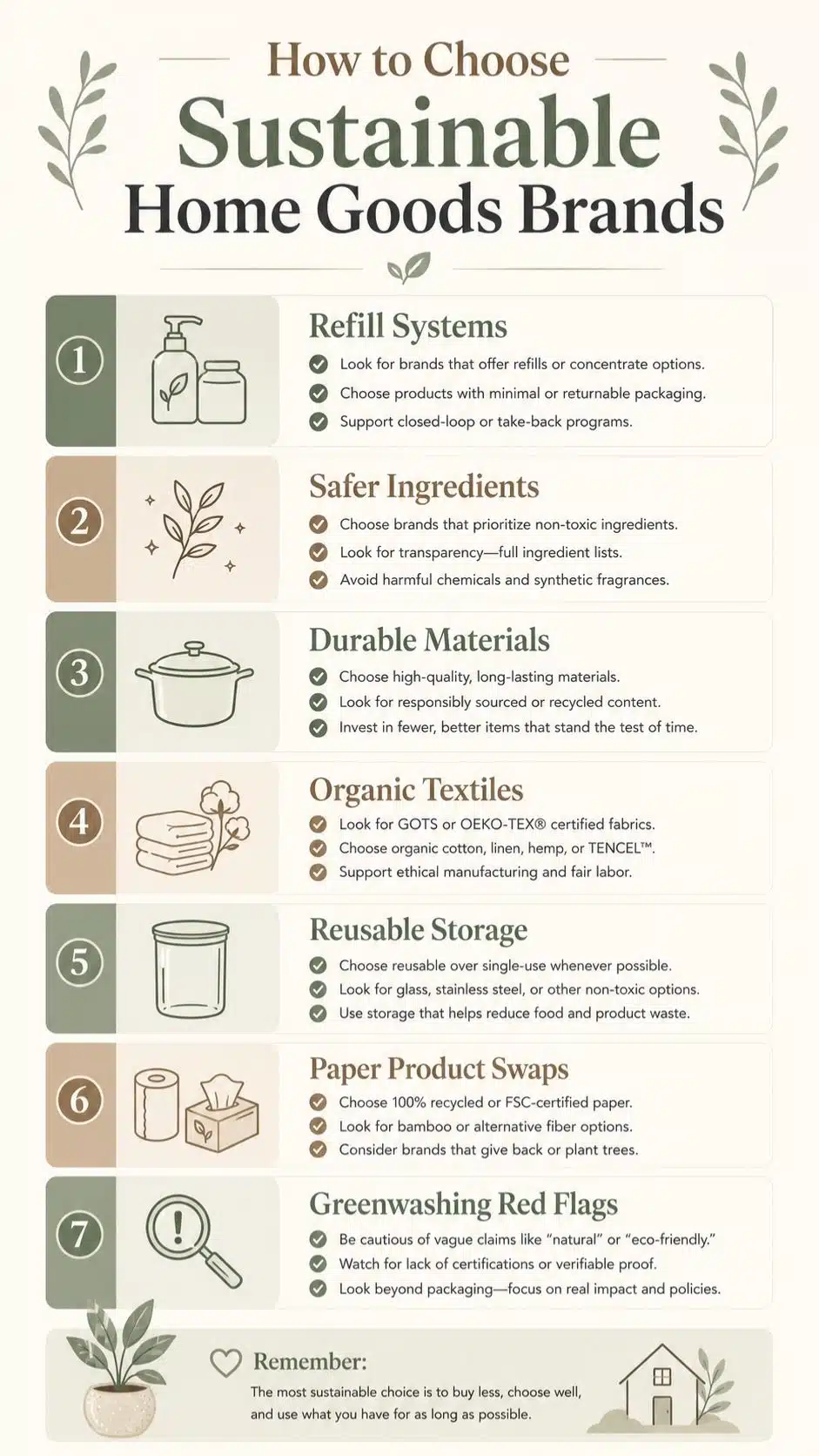
Greenwashing Red Flags in Home Goods
Home products are full of greenwashing because the language sounds comforting.
Be careful with words like natural, non-toxic, clean, green, earth-friendly, plant-powered, eco-safe, chemical-free, sustainable, and biodegradable when the brand gives no clear explanation.
A stronger brand should show real details.
Look for:
Ingredient transparency
Material information
Certifications or third-party standards
Refill, reuse, take-back, or recycling systems
Packaging details
Product lifespan information
Clear care instructions
Public sustainability reports or impact goals
Honest limits
Also be careful with “compostable” or “biodegradable” claims. These often depend on local systems and proper disposal. A product that needs industrial composting may not break down in your backyard or landfill.
For textiles, look for more than the word organic. Certifications, fiber content, dye information, and care instructions matter.
For mattresses, check material certifications, trial policies, and return rules.
For cleaners, look for ingredient lists and recognized safety or environmental labels where available.
The best sustainable home goods brands give you enough information to make a calm decision.
A Better Home Starts With Fewer, Better Things
The strongest lesson from these sustainable home goods brands is not that you need to buy a new home full of eco products.
You do not.
A lower-waste home is built slowly. One refill system. One better detergent. One reusable food bag. One set of towels that lasts. One mattress chosen carefully. One paper product swap. One cleaner you repurchase because it works.
Blueland, Seventh Generation, Grove Collaborative, Who Gives A Crap, Coyuchi, Avocado Green Mattress, and Stasher all offer useful routes into more responsible home buying. But none of them can make overbuying sustainable.
The real goal is a home with fewer disposable habits, fewer low-quality products, and fewer purchases you regret.
Use what you have. Replace slowly. Choose proof over pretty claims. Buy products that fit your routine, not just your values.
That is how sustainable living becomes practical.
Frequently Asked Questions About Sustainable Home Goods Brands
1. What are the best sustainable home goods brands to start with?
Good starter brands include Blueland for refillable cleaning products, Seventh Generation for accessible household basics, Who Gives A Crap for paper products, Stasher for reusable food storage, and Coyuchi for organic bedding and towels.
2. Are sustainable home goods always more expensive?
Many cost more upfront, but not always over time. Refillable cleaners, reusable storage bags, durable towels, and long-lasting bedding can reduce repeat purchases. The real value depends on how often you use the product and how long it lasts.
3. What makes a home goods brand sustainable?
A stronger sustainable home goods brand usually offers better materials, lower-waste packaging, refill or reuse systems, credible certifications, transparent ingredients, durable design, circular programs, or clear social and environmental commitments.
4. Are refillable cleaning products worth it?
Refillable cleaning products can be worth it if you use them consistently. They help reduce repeated plastic bottle purchases and can save storage space. They are less useful if you dislike the formula or do not keep up with refills.
5. Are organic bedding and towels better?
Organic bedding and towels can be better when they use credible certifications and last through regular use. But they still need proper care. Washing gently, avoiding overheating, and using products fully matter as much as the label.
6. How can I avoid greenwashing in home products?
Look for proof. Check ingredient lists, material details, certifications, refill systems, packaging information, impact reports, and honest trade-offs. Be cautious with vague words like natural, green, clean, earth-friendly, or non-toxic when no details are provided.





















