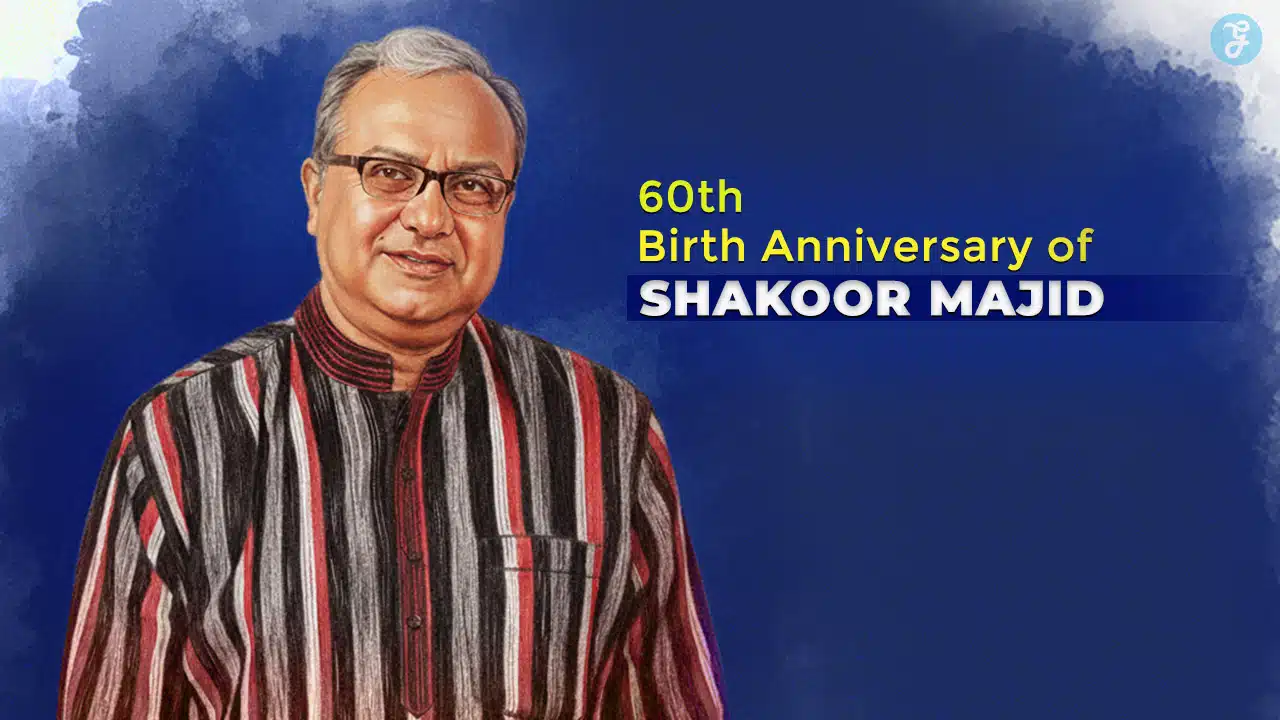
Few contemporary Bangladeshis embody as many creative identities as Shakoor Majid. He is simultaneously an architect, writer, playwright, documentary filmmaker, photographer and teacher. Today is his 60th birth anniversary.
In a cultural landscape where many figures excel in a single domain, his career forms an uncommon constellation of talent. Although he has earned major recognition—most notably the Bangla Academy Literary Award—his name remains less acknowledged than it deserves.
This editorial critically explores who Shakoor Majid is, how his contribution spans multiple fields, and why Bangladesh has yet to fully celebrate a creative mind of such depth and range.
Early Life and Educational Foundations
Understanding the foundations of Shakoor Majid’s creativity begins with his early life. He was born on 22 November 1965 in Mathiura village of Biani Bazar in the Sylhet district. As the eldest of five siblings, he grew up in a family shaped by both rural grounding and aspirations for education. His father passed away when he was around twenty, a loss that significantly influenced his sense of responsibility and self-direction.
After completing primary education in his hometown, he attended Faujdarhat Cadet College, where he successfully completed his secondary and higher secondary education. This Cadet College environment instilled discipline, leadership, and structured thinking—qualities that later permeated his work across multiple mediums.
He continued his academic journey by pursuing a B.Sc. in Architecture at the Bangladesh University of Engineering and Technology (BUET), graduating in 1993. Even during his student years, he worked as a journalist, demonstrating an early intersection of analytical thinking and narrative curiosity.
Biography of Shakoor Majid
| Field | Details |
|---|---|
| Full Name | Shakoor Majid |
| Date of Birth | 22 November 1965 |
| Place of Birth | Mathiura village, Biani Bazar, Sylhet District, Bangladesh |
| Nationality | Bangladeshi |
| Parents | Abdul Majid (father), Farida Khatun (mother) |
| Siblings | Eldest of five |
| Education (School) | Mathiura Model Primary School, Faujdarhat Cadet College |
| Education (University) | BSc in Architecture, BUET |
| Main Professions | Architect, writer, playwright, documentary filmmaker, photographer |
| Key Award | Bangla Academy Literary Award (Travelogue category) |
| Spouse & Children | Married to Dr. Hosne Ara Jolly; father of two sons |
This combination of rural upbringing, elite schooling, technical university training and early journalism laid the intellectual foundation for a career that blends discipline with creativity and structure with emotion.
The Structural Mind Behind the Stories
Any analysis of Shakoor Majid must begin with his architectural career, for it shapes his worldview profoundly. Soon after graduating, he co-founded Triangle Consultants, a firm devoted to architecture and design. Over the decades, he has also held leadership roles in several companies related to architecture, real estate and media production.
Since 2004, he has been a part-time faculty member in the Department of Architecture at Ahsanullah University of Science and Technology, sharing his multidimensional insight with younger architects.
Why Architecture Matters to His Other Work
Architecture is not merely a profession—it is a way of understanding space, movement, and human behavior. This perspective feeds directly into his writing and filmmaking:
-
His travelogues demonstrate a refined sensitivity to structures, landscapes, and urban forms.
-
His documentaries reveal an architect’s eye for composition, depth, and spatial relationships.
-
Even his autobiographical works follow a structural logic—foundation, development, and carefully crafted layers.
For Shakoor Majid, architecture is not separate from storytelling; it is one of its deepest foundations.
Shakoor Majid: Writer and Travelogue Pioneer
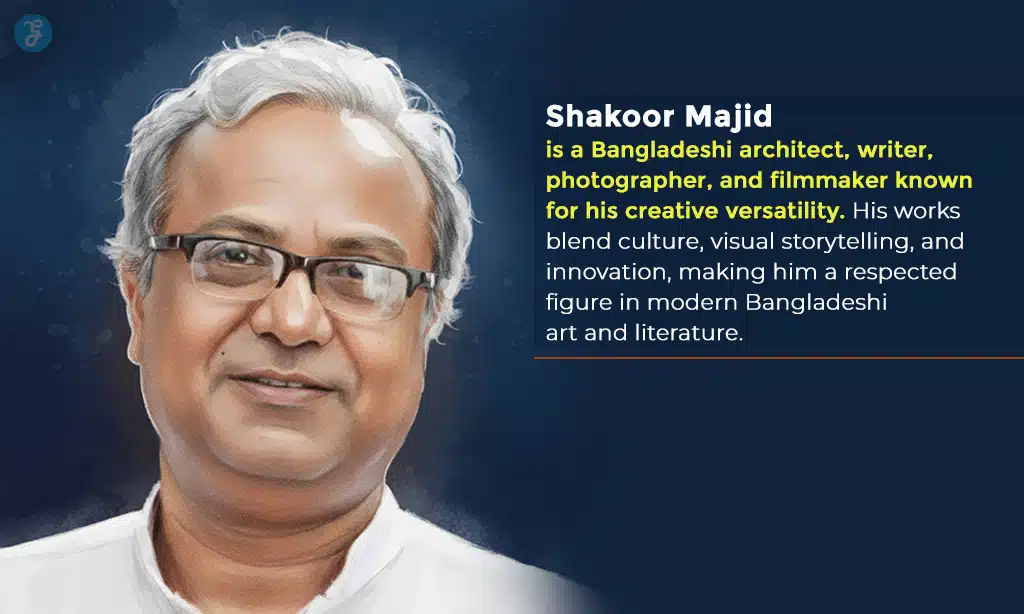
Although trained as an architect, Shakoor Majid rose to national prominence as a writer, especially in the domains of travel literature and autobiographical narrative. He has authored dozens of books, including travelogues, personal memoirs, biographies, and dramas.
Some of his most recognized works include
-
Humayun Ahmed: Je Chhilo Ek Mugdhokor—A widely acclaimed reflective book on the legendary writer.
-
Class Seven 1978—A nostalgic narrative capturing social and educational life of the late 1970s.
-
BUETkal—A compelling blend of personal memoir and institutional memory from his university years.
-
Numerous travel books reflecting global journeys, cultural observations and philosophical insights.
His contributions to travel writing earned him the Bangla Academy Literary Award, firmly establishing him as one of Bangladesh’s leading literary voices in this genre.
What Distinguishes His Travel Writing?
Before evaluating his popularity, it is essential to understand what makes his work unique:
1. Multi-Layered Narratives: He blends personal experience, historical background and cultural observation, transforming simple travel accounts into rich, reflective essays.
2. Research-Driven Writing: His journalism and architectural training lead to detail-oriented narratives—often filled with historical context, geographical accuracy and social commentary.
3. Emotional Honesty: He openly expresses vulnerability, nostalgia and personal reflection. Readers feel they are traveling not just through landscapes but through memories, emotions and inner journeys.
Playwright and Television Drama Contributor
Another lesser-known dimension of Shakoor Majid is his role as a playwright. His writing career began with radio plays in his youth, and later he gained wider recognition through television. His drama “Londonni Koinna” was a notable milestone that brought him into the mainstream media landscape.
His plays often explore themes of migration, identity, family and social dynamics—subjects consistent with his larger body of reflective and culturally grounded work.
Documentary Filmmaker and Photographer
Beyond the written page, Shakoor Majid is an active documentary filmmaker and photographer. His films explore real-life stories, travel experiences and cultural themes, while his photography captures landscapes, architectural forms and human subjects with depth and sensitivity.
His visual work extends the same narrative voice found in his books—emotional, observant and rooted in human connection. He has appeared at literary and cultural festivals to discuss his approach to representing art, architecture and human stories through visual media.
Visual Storytelling as Natural Extension of Writing
-
His documentaries emphasize authentic, human-centered experiences.
-
His photography reflects architectural precision, focusing on light, texture and spatial depth.
-
His visual archives preserve moments of everyday history that might otherwise fade.
This combination makes him not only a writer but also a documentarian of eras, places and people.
How Unique Is Shakoor Majid? A Comparative Analysis

To call Shakoor Majid a multidisciplinary genius is not an exaggeration. When comparing him with other major Bangladeshi cultural figures, what stands out is not the number of fields he touches but the depth of engagement in each field.
Comparison With Other Bangladeshi Cultural Figures
| Person | Technical/Scientific Background | Literary Role | Film/TV Direction | Photography/Visual Arts | Nature of Recognition |
|---|---|---|---|---|---|
| Shakoor Majid | Architect (BUET) | Travel writer, playwright | Documentary filmmaker | Photographer | Bangla Academy Literary Award |
| Tareque Masud | History | Screenwriter | Documentary/Feature films | Limited | International and national awards |
| Selim Al Deen | Literature | Playwright | Theatre direction | Not prominent | National awards |
What sets Shakoor Majid apart is the simultaneous longevity and seriousness with which he contributes to each field—architecture, literature, drama, film and photography.
Why Has Shakoor Majid Remained Under-Celebrated?
Even with significant achievements, public recognition of Shakoor Majid often lags behind his impact. Several factors contribute to this gap.
1. Genre Bias
Bangladeshi mainstream literary culture tends to prioritize novels and political writing over travelogues and memoirs. Since travel writing is his strongest genre, his contributions receive less mass-market attention.
2. Limited Media Sensationalism
Writers who become household names often do so through highly commercial projects or strong media branding. Shakoor Majid’s temperament is thoughtful and understated, not publicity-driven.
3. Specialized Audience
His architecture and photography work attract more niche groups—students, cultural researchers, and viewers of documentaries—rather than mass entertainment audiences.
4. Quiet Creative Personality
He tends to speak more about ideas than about himself. This humility, while admirable, decreases his public visibility compared with more media-oriented figures.
The Cultural Significance of His Work
Although under-celebrated, Shakoor Majid holds substantial value for Bangladeshi cultural identity.
1. Connecting Local Roots with Global Experiences
His travelogues represent global landscapes through a Bangladeshi emotional lens. He writes as someone who deeply knows village life yet moves comfortably through international environments.
2. Documenting Social History
His books capture life in 1970s–1990s Bangladesh—education, friendships, political climate and cultural habits—offering future generations authentic personal archives.
3. Building a Visual Memory of Bangladesh
His documentaries and photographs archive landscapes, small towns and social changes that might otherwise go undocumented.
4. Educating the Next Generation
As a longtime teacher of architecture, he influences young professionals by merging aesthetics, depth and critical observation.
Why Bangladesh Should Celebrate Him More
From an analytical standpoint, Bangladesh benefits immensely from recognizing figures like Shakoor Majid, who challenge narrow definitions of creativity.
He is:
-
A bridge between technical and artistic worlds
-
A chronicler of Bangladeshi memory across text and visuals
-
A champion of travel literature in a novel-centric literary market
-
A cultural archivist quietly capturing a changing world
Bangladesh often celebrates loud, sensational figures more readily than quiet, multidimensional thinkers. Shakoor Majid represents the latter. His creative integrity, humility and range reflect the potential of a broader, richer national creative identity.
Final Words
Shakoor Majid is not just an architect-writer-filmmaker—he is a rare multidisciplinary figure whose work honors the intersection of thought, memory and creativity. His travelogues, memoirs, dramas and documentaries form a vast cultural archive, while his architectural and photographic work deepens his artistic reach.
To celebrate him is to appreciate a model of creativity grounded in depth rather than noise, reflection rather than spectacle. Bangladesh has not forgotten him—but it has yet to celebrate him at the scale his contribution deserves. Recognizing him more broadly would enrich Bangladesh’s cultural narrative and inspire new generations to pursue expansive, interconnected forms of creative expression.