


Many e-commerce platforms hit roadblocks in cross-border shipping. They watch orders stall at borders. They fret over high costs, customs clearance delays, lost parcels, or complex returns management.
They want a smooth supply chain that ends with quick last-mile delivery.
Belgium has a top highway network that links ports, cities, and zones fast. It also uses train cargo, maritime shipping, and air transport to boost freight forwarding. It taps big data, IoT, and cloud computing to cut wait times.
It builds green zones and uses EVs for eco-friendly trips. This post shows six ways Belgium smooths customs clearance, cuts carbon footprint, and speeds last-mile delivery. Read on.
Key Takeaways
- Belgium links to France, Germany, the Netherlands, and Luxembourg via over 7,000 kilometers of highways (E19, E40, E17, E25), rail, barges, and daily sea shipments at Antwerp (Europe’s #2 port) plus airfreight at Brussels and Liège, letting drivers reach Paris in 3 hours, Amsterdam in 2, and Frankfurt in 4.
- Automated customs use EDI, tariff coding in seconds, and risk‐based scans to clear most goods in under 24 hours, aided by local GLS experts who guide online retailers through forms, security checks, and returns.
- Logistics teams tap big data, IoT sensors (GPS, RFID), and cloud platforms for TMS and WMS to track fuel use, traffic, and stock needs in real time; AI forecasts demand, edge computing speeds scans, and robots handle basic pallet picks.
- Belgium runs electric trucks and vans for last-mile delivery, with ChargeNet green power stations and green delivery zones in Brussels and Antwerp; reusable packaging and FleetTrack software cut idle time, noise, and carbon output.
- Cross-border partners share EDI data, GPS feeds, and TMS links with French, Dutch, and German crews, cutting hold times by 30% on key lanes and smoothing customs checks, permits, and returns management.
Strategic Geographic Location and Infrastructure
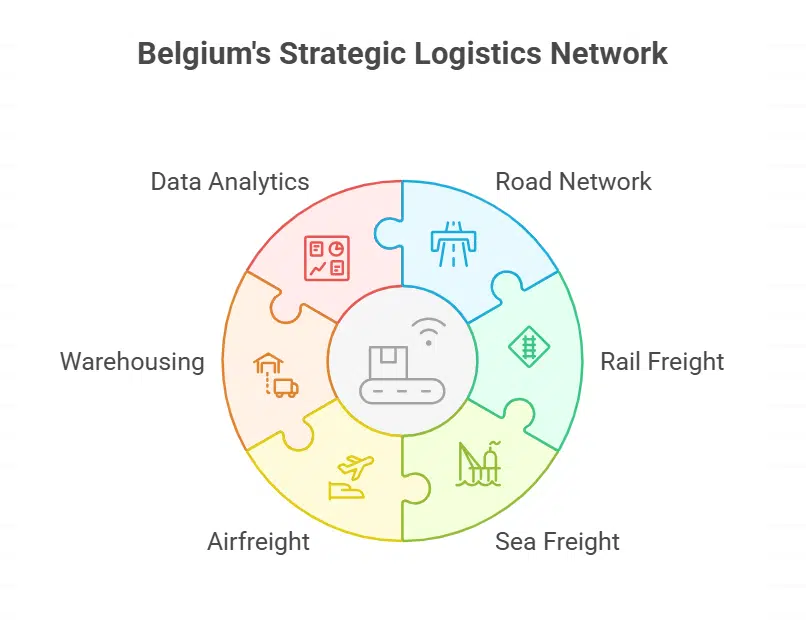
Belgium sits in the Benelux Union, at the heart of Europe. It shares borders with France, Germany, the Netherlands, and Luxembourg. Trucks run on over 7,000 kilometers of national highways.
The network links to major routes like E19, E40, E17, and E25, forming a well-oiled machine for freight. Drivers reach Paris in three hours. They reach Amsterdam in two hours. They reach Frankfurt in four hours.
Warehousing and storage hubs cluster near Brussels, Antwerp, Liège, and Ghent. Suppliers cut lead times. ERP and TMS tools speed up pick and pack tasks.
Rail freight leaps into main industrial zones via high-speed lines. Shippers move containers from Antwerp, Europe’s second largest port, to inland cities. Sea freight ships dock at that port daily.
Airfreight flights touch down at Brussels and Liège airports every day. Last-mile delivery teams pick up boxes near those hubs. That multimodal mix acts like a well-oiled machine in supply chains.
Data analytics track each shipment in real time.
Efficient Customs Clearance Processes
Customs clearance uses automated data exchange to speed up cargo processing. They match tariff coding in seconds. Scanning tools check all high risk shipments, cutting hold times. Officials lean on EDI systems and risk management software to flag delays fast.
GLS deploys local experts in all major ports and airports. Those teams guide online retailers through customs forms, tariff rules, and security checks. Experts support international shipping, returns management, and last-mile delivery.
They help online stores handle broken shipments fast. This local expertise shrinks processing time to less than 24 hours for most goods.
Advanced Multi-Modal Transportation Options
Logistic teams link trucks, trains, barges, and planes. Belgium features a highway network that carries heavy loads with ease. Trucks cruise past fields, then dock at river hubs or rail yards.
Barges move goods along canals. Cargo jets lift parcels from Brussels Airport.
Freight firms set up shops at Antwerp and Liège terminals. Automation helps cranes shift pallets from road to rail. Teams clear customs fast at border stations. Workers handle picking, packing, and shipping in tight windows.
They tap tracking apps and GPS trackers to watch every mile. This digital commerce model boosts operational efficiency and speeds last-mile delivery.
Integration of Technology in Logistics Operations
Big data tools collect shipping details, fuel use and traffic patterns in real time across global supply chains. IoT platforms link GPS trackers and RFID scanners on trucks and pallets, creating a digital nervous system.
A cloud platform hosts a transportation management system, general logistics systems and a warehouse management system. Fleet managers spot delays faster, reduce idle hours and cut carbon footprints thanks to high-speed internet.
They adjust routes to speed up last-mile delivery and returns management.
Artificial intelligence algorithms predict stock needs before a sale ends and sharpen demand and supply management. That clarity boosts a brand’s image and keeps social commerce sites humming.
Smart alerts warn warehouse teams to prep for returns or reverse logistics tasks. Edge computing and radio tags speed up checkout and save time for drivers. Teams can even outsource basic scans to robots, freeing humans for tricky jobs.
Focus on Sustainability in Transportation

Belgium runs electric trucks and vans for last-mile delivery. The strategy cuts carbon output. Drivers charge at ChargeNet stations. These hubs run on green power credits. Planners use onboard sensors and RouteSmart to track fuel use and miles.
Customs clearance teams tap local expertise to speed border checks, they also reuse boxes with eco-friendly packaging initiatives.
Companies set up green delivery zones in Brussels and Antwerp. They block diesel vehicles and welcome EVs only. Local carriers apply the strategy for returns management. Firms use FleetTrack software to optimize routes, they cut idle time and noise.
Experts call this a big win. It links regional collaboration and low carbon scores.
Collaboration with Neighboring Countries for Seamless Connections
Cross-border teams in Brussels link with French, Dutch, and German partners. They share EDI data, GPS trackers, and TMS feeds. This setup speeds customs clearance and cuts waiting times.
Teams use local expertise to adapt plans for each route.
Companies in Belgium coordinate with Paris crews for faster permits. Regional collaboration slashes hold times at borders. Carriers report 30 percent fewer delays on key lanes. Expert teams power returns management and last-mile delivery with ease.
Takeaway
Belgium pairs strategic roads and ports with smart sensors and big data. Local experts guide firms through customs clearance. Green trucks and bikes curb emissions and cut waste. Cloud platforms track every shipment step by step.
Neighbors link highways for quick moves. Each tool speeds pick up, drop off, and returns management. The process feels smooth, fast, and reliable.
FAQs on Seamless Cross-Border Logistics Solutions Backed by Belgium
1. What makes Belgium a hub for fast transit?
Belgium has deep sea terminals, busy freight rail, well-kept highways. It works like a Swiss watch, but with Belgian flair.
2. How does regional collaboration trim your border time?
Belgium links data with France, Germany, Netherlands; they built joint control posts, and they share traffic updates. That teamwork cuts wait times to a minimum, saving your sanity.
3. Why lean on local expertise in Belgium?
A Belgian clearance agent knows every quirk of customs, skips the red tape, and speaks your language. They guide your goods across borders without a hitch.
4. What digital tools keep your goods rolling?
Belgium runs an online cargo tracking hub and a single customs portal. It gives you real-time updates, stops blind spots, and keeps you in the driver seat.





















