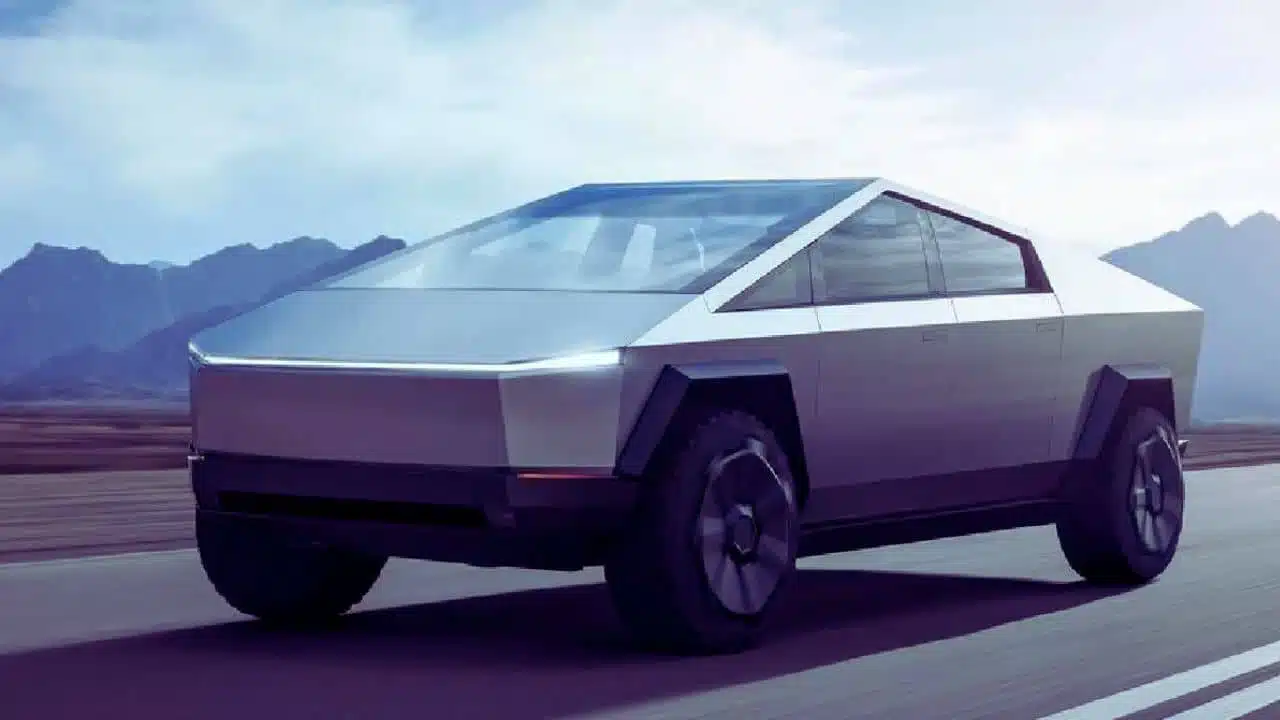
As the world still grapples with the shocking aftermath of pager explosions that devastated Hezbollah’s ranks and caused civilian casualties across Lebanon and Syria, Chechen warlord Ramzan Kadyrov has made a new, unexpected claim. In a move that has left many scratching their heads, Kadyrov accused U.S. billionaire and Tesla CEO Elon Musk of “remotely” disabling his Tesla Cybertruck, which Kadyrov claimed Musk had gifted to him earlier.
This incident adds another layer of complexity to Kadyrov’s unpredictable behavior and comes at a time when technology’s role in warfare is under scrutiny due to recent cyber-like attacks in the Middle East. In what appears to be a bizarre crossover between high-tech innovation and brutal warfare, Kadyrov’s allegations raise questions about the involvement of advanced technology in global conflict.
The Tesla Cybertruck: From Luxury to War Machine
Last month, Ramzan Kadyrov, an ally of Russian President Vladimir Putin and a notorious figure in Russian politics, released a video where he demonstrated his new possession: a Tesla Cybertruck. However, this was no ordinary Cybertruck — it was equipped with a machine gun mounted on its roof. According to Kadyrov, this highly modified Cybertruck had been a personal gift from Musk, whom Kadyrov hailed as “the strongest genius of our time.”
The video, which quickly went viral, depicted Kadyrov proudly driving the Cybertruck around a seemingly empty square in Grozny, the capital of Chechnya. In what appeared to be a carefully staged scene, Kadyrov exited the vehicle, donned an ammunition belt, and posed behind the mounted machine gun, showcasing his militia-like persona to the world.
In a Telegram post accompanying the video, Kadyrov lavished praise on the Cybertruck, calling it “invulnerable,” “fast,” “comfortable,” and “maneuverable.” He added that the vehicle’s performance was so impressive that he had “literally fallen in love” with it. This is a significant departure from the usual luxury car collection that Kadyrov has previously flaunted — this time, it wasn’t about opulence but about power and militaristic potential.
He emphasized that the Tesla Cybertruck had earned the nickname “Cyberbeast” for a reason. The vehicle’s supposed robustness made it, in Kadyrov’s words, ideal for military operations. The warlord’s enthusiasm for the vehicle seemed to go beyond mere admiration; he was using it to symbolize his strength and military ambitions.
Elon Musk Denies Kadyrov’s Claim of Gifting a Tesla Cybertruck
While Kadyrov’s statements may have boosted his image among his followers, they didn’t sit well with the Tesla CEO. In a blunt response, Elon Musk quickly dismissed Kadyrov’s claim that the Cybertruck was a gift. Musk, known for his outspoken and sometimes controversial social media posts, responded on X (formerly known as Twitter) with an uncharacteristically harsh remark: “Are you seriously so retarded that you think I donated a Cybertruck to a Russian general?
This response marked an unusual turn in what had already been an odd news story. Musk’s remark not only distanced himself from Kadyrov’s claims but also brought the situation to international attention. It highlighted the ongoing tension between high-profile individuals like Musk and politically volatile figures like Kadyrov, whose militaristic and authoritarian image stands in stark contrast to Musk’s tech-forward, future-oriented persona.
Are you seriously so retarded that you think I donated a Cybertruck to a Russian general?
That’s amazing 🤣🤣
— Elon Musk (@elonmusk) August 18, 2024
Kadyrov’s New Allegation: Tesla Cybertruck Remotely Disabled
Not long after Musk’s public denial, Kadyrov added fuel to the fire with another sensational claim. This time, the Chechen leader alleged that Elon Musk had “remotely disabled” the Tesla Cybertruck. Writing on Telegram once again, Kadyrov expressed his frustration, stating, “Musk remotely disabled the Cybertruck. That’s not a nice thing for Elon Musk to do. He gives expensive gifts from the bottom of his heart and then remotely switches them off.”
This accusation adds an intriguing technological element to the story. Tesla vehicles, like many modern electric cars, are known for their ability to receive over-the-air updates and can be controlled remotely in certain respects, such as disabling or tracking the vehicle in cases of theft. While it remains unclear whether Musk truly disabled the Cybertruck or if Kadyrov is merely concocting another outlandish narrative, the situation raises interesting questions about the limits of control that can be exerted over such advanced technologies.
Despite this, Kadyrov released another video shortly after the accusation, showing at least two Tesla Cybertrucks still operating in what appeared to be an undisclosed location. This prompted military analysts to speculate that the video was likely propaganda, designed to flatter Musk or perhaps to distract from the more pressing issue of Kadyrov’s role in the ongoing Ukraine conflict.
Kadyrov’s Use of the Cybertruck in Ukraine
Kadyrov has a history of making bold, unverifiable claims about his contributions to Russia’s military efforts. In this instance, he stated that the Tesla Cybertruck had already been deployed to the front lines of the war in Ukraine, where it had “performed admirably” in various operations. While these assertions cannot be independently verified, they are consistent with Kadyrov’s previous rhetoric.
He had earlier proclaimed that the Cybertruck would soon be sent to the “special military operation zone,” a term used by Russian authorities to describe their invasion of Ukraine. Kadyrov seemed convinced that the “Cyberbeast,” as he repeatedly called it, would offer significant advantages to Russian forces.
This claim is interesting because, until now, the Tesla Cybertruck had been primarily associated with consumer markets and luxury buyers, not military applications. Kadyrov’s statements about the Cybertruck’s performance in a military setting blur the line between consumer tech and warfare, potentially signaling new uses for commercial electric vehicles in conflict zones. However, as with many of Kadyrov’s statements, skepticism remains.
The Pager Explosion in Lebanon: A Disturbing Parallel
Kadyrov’s allegations about Musk’s control over the Cybertruck come on the heels of another technology-related attack, this time in the Middle East. On September 17, a series of explosions rocked Lebanon and Syria, as pagers exploded within Hezbollah ranks, injuring or killing numerous operatives, diplomats, and civilians. This event was unprecedented and left military analysts puzzled.
Initially, it was believed that Israel, through a sophisticated cyberattack, had remotely triggered the explosions in these pagers. However, further investigation suggested that the attacks might have been carried out through supply chain manipulation. According to analysts, explosives had likely been inserted into the pagers before they were imported from Taiwan and distributed in Lebanon. Each pager was allegedly fitted with around three grams of explosives.
This attack, which occurred alongside a separate wave of explosions in Hezbollah’s walkie-talkies a day later, marked a significant breach in Hezbollah’s security. These incidents have been described as the most severe security breach Hezbollah has experienced since Hamas’s attack on Israel in October 2023.
While Israel has neither confirmed nor denied responsibility for these attacks, military experts have pointed to Mossad, Israel’s renowned intelligence agency, as the most likely perpetrator. Israeli Defense Minister Yoav Gallant later hinted at a “new phase in the war,” though he did not directly address the explosions of electronic devices.
The method of attack—using everyday communication devices as explosive weapons—adds a new dimension to modern warfare. It also raises the question of how technology, whether in consumer vehicles or communication devices, can be manipulated and weaponized.
Hezbollah’s Response and Escalating Tensions
In response to these explosions, Hezbollah’s leader Hassan Nasrallah vowed retaliation, calling the attacks a potential “declaration of war.” This warning has heightened fears of further escalation in the already volatile region. While Hezbollah continues to investigate the breaches in its ranks, the attacks have highlighted just how vulnerable even seemingly mundane devices can be in modern warfare.
The explosion of communication devices, whether through cyberattacks or supply chain sabotage, has sent shockwaves throughout the Middle East. Civilians have been caught in the crossfire, raising humanitarian concerns about the impact of these tactics.
The pager explosions and Kadyrov’s claim about Musk disabling his Cybertruck might seem unrelated on the surface, but both incidents underscore a broader reality: technology is increasingly being weaponized in unprecedented ways. From luxury vehicles to handheld communication devices, no piece of technology seems entirely safe from being exploited for military or political purposes.
The Role of Technology in Warfare: A New Frontier
The incidents involving Kadyrov’s Cybertruck and the Hezbollah pager explosions represent a new frontier in how technology can be weaponized or manipulated in warfare. Whether it’s a Tesla truck fitted with a machine gun or everyday communication devices being turned into deadly weapons, the intersection of consumer technology and military conflict is becoming more pronounced.
As warfare evolves, so too does the technology used in it. What was once science fiction—remotely disabling a vehicle or detonating a pager—has now become reality. These developments raise critical questions about the future of warfare, particularly as more sophisticated technologies are integrated into everyday life.
Elon Musk’s involvement, albeit indirectly, in these developments adds another layer of complexity to the situation. As the CEO of Tesla and owner of X, Musk wields significant influence over the direction of technology. While his refusal to allow Starlink to aid Ukraine in offensive operations drew criticism, his products are now being discussed in the context of warfare.
Both Kadyrov’s claim of a remotely disabled Cybertruck and the pager explosions in Lebanon underscore the complex role of technology in modern warfare. The lines between consumer technology and military applications are blurring, with devastating consequences for those caught in the crossfire. As nations, militias, and warlords alike explore new ways to use technology to their advantage, the potential for future conflicts driven by these innovations seems inevitable.