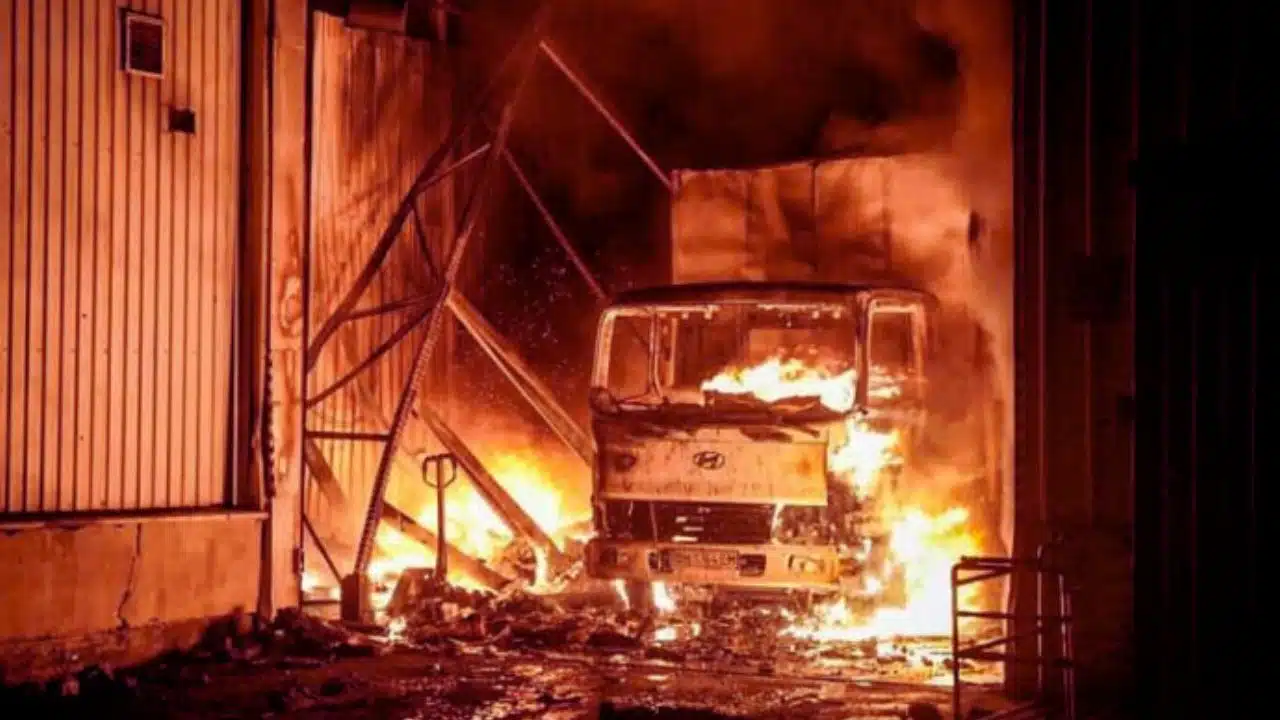
Russia launched coordinated attacks on Ukrainian Black Sea ports on December 30, 2025, damaging civilian grain vessels and critical port infrastructure in Pivdennyi and Chornomorsk, injuring multiple civilians and threatening global food security.
Coordinated Attacks on Strategic Port Facilities
Russian forces targeted infrastructure in Ukraine’s Odesa region on December 30, striking the ports of Pivdennyi and Chornomorsk in a deliberate assault on civilian maritime facilities. Deputy Prime Minister Oleksii Kuleba confirmed that a Panama-flagged civilian vessel carrying grain sustained damage during the attack, alongside oil storage tanks at an industrial facility. Emergency services responded to the scene as one person was reported injured, though both ports continued operations under heightened safety protocols.
The attacks included drone strikes on vegetable oil storage tanks, causing an environmental spill into the Black Sea. Minister Kuleba emphasized that Russia’s objective is to disrupt Ukraine’s logistics capabilities and complicate international shipping operations, stating this represents “yet another deliberate attack by Russia on civilian port infrastructure”.
Civilian Vessels Targeted While Loading Wheat
In a separate but coordinated assault on December 30, Russian attack drones struck two civilian vessels—Emmakris III and Captain Karam—as they entered Ukrainian waters to load wheat for international export. The Ukrainian Navy confirmed that civilians aboard the vessels sustained injuries in the attacks. The strikes occurred as the bulk carrier Emmakris III, operating under a Panamanian flag, and the Captain Karam were approaching port facilities to commence grain loading operations.
Ukrainian naval forces condemned the attacks as war crimes, stating that “ports and civilian shipping are civilian infrastructure” and emphasizing that such strikes “endanger the lives of civilians and undermine global food security”. These incidents mark a continuation of Russia’s systematic targeting of commercial shipping in the Black Sea region throughout December 2025.
Escalating Campaign Against Ukrainian Grain Exports
The December 30 attacks represent the latest in an intensifying campaign by Russian forces against Ukraine’s agricultural export capabilities. Throughout December 2025, Russia has repeatedly targeted port infrastructure in the Odesa region, including attacks on December 26 that damaged three vessels simultaneously and a December 22 strike on Ukraine’s largest port that destroyed 30 containers of flour and oil. On December 23, a Lebanese-flagged civilian vessel transporting Ukrainian soybeans was damaged in the port of Odesa.
The sustained assault has significantly impacted Ukraine’s grain export operations, with the Ukrainian farmers’ union UAC reporting that some export terminals have completely halted operations while others function at merely 20 percent capacity. Ukrainian wheat exports fell to 359,150 tonnes by mid-December 2025, far below the one million tonnes contracted for the month. State railway operator Ukrzaliznytsia confirmed that Russia has also attacked rail infrastructure delivering cargo to the ports, further constraining export capabilities.
Impact on Global Food Security and Markets
Ukraine’s reduced export capacity poses serious implications for global food security, particularly in regions dependent on Ukrainian grain. Since Russia’s full-scale invasion in February 2022, the country has conducted approximately 50 attacks against Ukraine’s Black Sea ports, damaging over 300 port infrastructure facilities, 23 civilian vessels, and destroying more than 100,000 metric tons of agricultural products. Ukraine’s wheat exports for the 2025/26 season totaled only 7.5 million tonnes through December, compared to 9.2 million tonnes during the same period of the previous season.
The attacks have contributed to rising global food prices, with wheat futures jumping 2.2 percent following Russia’s first attack on a commercial vessel in September 2024. The United Nations Food and Agriculture Organization cites renewed Black Sea tensions as a factor driving increased global cereal prices. Food-price inflation remains above 10 percent in 21 low- and lower-middle-income countries, with six nations experiencing inflation exceeding 30 percent.
Strategic Objectives and Economic Warfare
Analysts assess that Russia’s targeting of Ukrainian agricultural infrastructure serves multiple strategic objectives beyond immediate military gains. Deputy Prime Minister Kuleba stated that “the purpose of these attacks is to reduce our export potential” and to “deliberately provoke a food crisis in those parts of the world that directly depend on the supply of Ukrainian grain”. As of October 2024, the UN Human Rights Monitoring Mission documented that similar attacks killed 14 civilians and injured 28.
Russia’s strategy aims to reduce food-importing countries’ reliance on Ukrainian grain, creating opportunities for Russia to expand its own agricultural trade and geopolitical influence. Since invading Ukraine, Russia has dramatically increased wheat exports to sub-Saharan Africa by 39 percent year-over-year, shipping 2.7 million metric tons to the region from July through October 2024—representing 20 percent of Russia’s total wheat exports. The Kremlin has also delivered free grain to countries including Burkina Faso, Mali, Zimbabwe, and Somalia to expand its influence.
Ukraine’s Export Resilience Despite Attacks
Despite sustained Russian attacks, Ukraine has demonstrated remarkable resilience in maintaining agricultural exports through alternative maritime corridors. Since August 2023, following the termination of the Black Sea Grain Initiative, Ukraine established the Ukrainian Corridor—a shipping route through NATO member territorial waters—facilitating the transit of more than 2,800 vessels carrying over 51 million metric tons of agricultural exports. This total significantly exceeds the approximately 33 million metric tons exported under the previous UN-brokered grain initiative.
Ukraine has actively pursued international agricultural partnerships, including agreements with the United Kingdom and Lithuania to identify stolen Ukrainian grain sold by Russia, and cooperative arrangements with India signed in August 2024. In October 2024, Ukraine hosted the Ukraine-Africa forum with representatives from 21 African countries to expand agricultural cooperation. Through the Grain From Ukraine initiative launched in 2022, the country has supplied over 17,000 metric tons of wheat to Ethiopia, Somalia, Yemen, Nigeria, Sudan, and Kenya via the UN World Food Programme.
Economic Damage and Recovery Efforts
Total war-related damages to Ukraine’s agriculture sector reached $10.3 billion from February 2022 through January 2024, while total losses are estimated at $83 billion. The October 2024 attacks alone caused damages estimated at up to $40 million. The United States Agency for International Development has leveraged more than $2.26 billion in investments through the Agriculture Resilience Initiative-Ukraine (AGRI-Ukraine), with a commitment of $350 million to Ukraine’s agriculture sector.
The cost of war insurance for ships transiting the Black Sea has surged following recent attacks, though such coverage remains central to Ukraine’s maritime export success. British intelligence detected a “noticeable increase in Russian risk appetite,” potentially signaling additional attacks on Black Sea port infrastructure and vessels. The United Kingdom and Norway currently lead efforts to protect the Ukrainian corridor, while Ukrainian authorities strengthen defense measures at every Black Sea port.
Final Thoughts
Russia’s coordinated strikes on Ukrainian ports and grain vessels represent systematic economic warfare designed to undermine Ukraine’s export capabilities and destabilize global food markets. The attacks not only threaten Ukraine’s wartime economy—where food exports constitute the majority of total exports—but also jeopardize food security in vulnerable regions dependent on Ukrainian grain. As international partners work to strengthen maritime defense and insurance mechanisms, the continued targeting of civilian infrastructure underscores the urgent need for enhanced protective measures to ensure the safe passage of commercial vessels carrying essential food supplies to millions worldwide.
Key Attack Statistics (December 2025)
| Date | Target | Damage | Casualties |
| Dec 30, 2025 | Ports of Pivdennyi & Chornomorsk | Grain vessel, oil storage tanks damaged | 1 injured |
| Dec 30, 2025 | Vessels Emmakris III & Captain Karam | Both vessels struck by drones | Civilians wounded |
| Dec 26, 2025 | Port logistics infrastructure | Three vessels damaged | Under investigation |
| Dec 22, 2025 | Ukraine’s largest port | 30 containers of flour and oil destroyed | Not reported |
Export Impact Comparison (2024-2025 Season)
| Period | 2023/24 Season | 2024/25 Season | Decrease |
| Wheat Exports (through Dec) | 9.2 million tonnes | 7.5 million tonnes | -18.5% |
| December Contracted | 1 million tonnes | 359,150 tonnes delivered | -64% |
| Port Capacity | Normal operations | 20% capacity | -80% |