

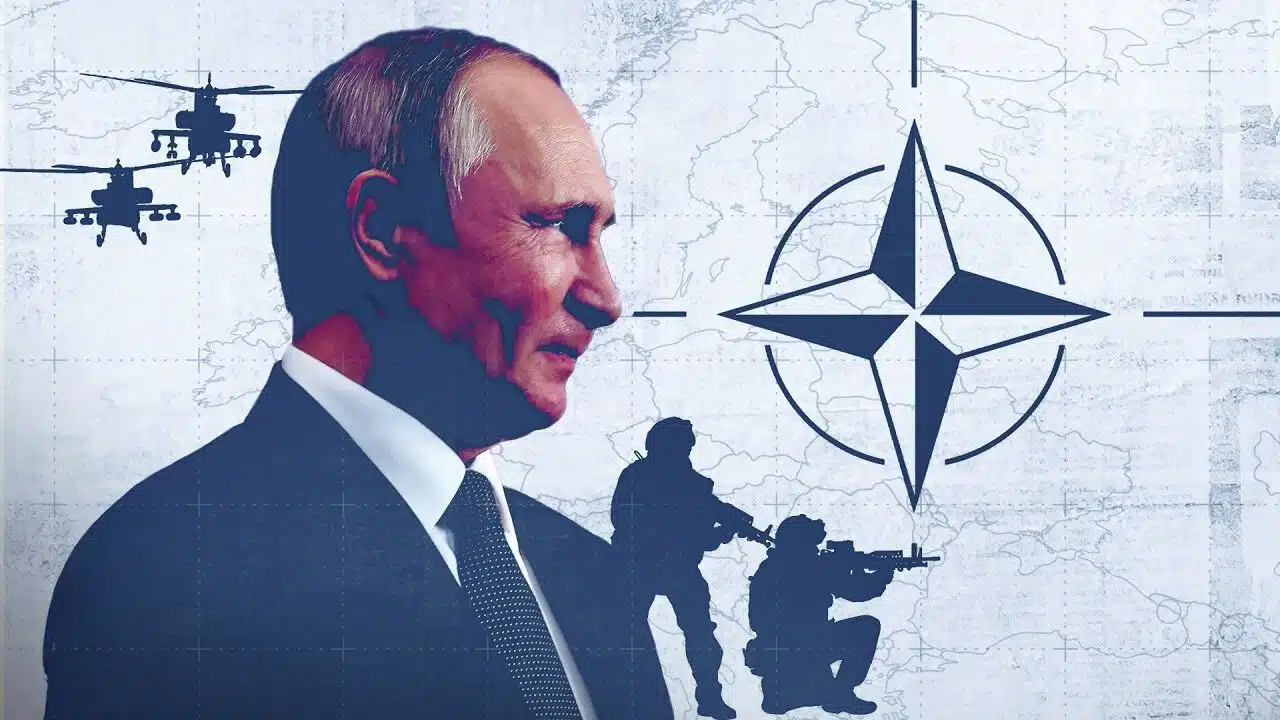
Russia has proposed a written, legally binding non-aggression pact with NATO and the EU, arguing it would reduce tensions as the war in Ukraine continues and Europe re-arms.
Background: Why this matters now
Russia’s proposal arrives as NATO formally describes Russia as its most significant and direct threat, while still saying it is willing to keep communication channels open to reduce risks and prevent escalation. NATO also says political dialogue with Russia has been suspended since Russia’s full-scale invasion of Ukraine in February 2022.
At the same time, the European Union continues tightening economic pressure on Moscow through sanctions aimed at limiting Russia’s access to battlefield technology and reducing energy revenues that can fund the war. The European Commission said the EU’s 17th sanctions package (adopted May 20, 2025) targeted an unprecedented number of vessels linked to Russia’s shadow fleet and expanded listings of individuals and entities.
Key timeline points
| Date | Event | Why it’s relevant |
| May 1997 | NATO and Russia sign the NATO–Russia Founding Act, stating they do not consider each other adversaries and setting principles for cooperation. | It is a core reference point for past security architecture. |
| 2014 | NATO says it suspended practical cooperation with Russia after Crimea’s annexation and aggression in eastern Ukraine. | Marks the long-term breakdown in NATO–Russia relations. |
| Feb 2022 | NATO says Russia launched a full-scale invasion of Ukraine and dialogue was fully suspended. | Defines the current security crisis shaping diplomacy. |
| May 2025 | EU adopts its 17th sanctions package, including new vessel listings and export restrictions. | Shows continuing EU pressure and reduced incentives for concessions. |
| Dec 2025 | Russian officials publicly renew the offer of a written non-aggression guarantee toward NATO/EU members. | Sets up a new diplomatic messaging push and tests Western response. |
What Russia proposed
In December 2025 remarks, Russia’s foreign minister said Moscow has no aggressive plans toward NATO or EU members and is ready to formalize guarantees in writing in a legal document, framed as reciprocal and collective. A senior Russian deputy foreign minister also described the idea as legally formalizing non-aggression-type assurances toward the EU, presented during a security-focused discussion associated with the Valdai forum.
Russian officials have tied the concept to a broader argument that European security talks should not focus only on Ukraine, but also on wider security guarantees across Europe. The stated pitch is that codifying non-aggression could reduce what Moscow calls inflated threat perceptions in Europe and lower the risk of a direct Russia–NATO confrontation.
What non-aggression pact implies in practice
A modern non-aggression pact typically aims to:
- Commit parties not to use force against one another’s territorial integrity or political independence, including threats of force.
- Create channels to manage incidents and reduce escalation risk even when broader relations are hostile.
- Set expectations for restraint, while leaving unresolved disputes (like borders or occupied territory) to separate negotiations.
NATO and EU baseline positions
NATO’s public position is that Russia’s war has shattered peace and stability and that Russia has violated Ukraine’s sovereignty and territorial integrity, while also breaking commitments tied to the UN Charter, the Helsinki Final Act, and other frameworks. NATO also states it will not recognize Russia’s claimed annexations, including Crimea and other Ukrainian regions named in its statement.
On force posture, NATO says it has strengthened deterrence and defense since 2014 and expanded deployments and readiness after 2022, including over 40,000 troops under direct NATO command in the eastern part of the Alliance and over 500,000 high-readiness forces. NATO further states Allies have provided military assistance to Ukraine amounting to roughly EUR 40 billion annually, and set a minimum baseline funding intention of EUR 40 billion within the next year referenced on its 2024 Washington Summit messaging.
From the EU side, the Commission has emphasized sanctions as a central lever, saying the 17th package aims to restrict Russia’s access to battlefield technologies and reduce energy revenues by targeting shadow fleet vessels and sanction-circumvention networks. In that same package, the EU listed 189 additional vessels (bringing the total to 342) and added 75 new listings (17 individuals and 58 entities), alongside expanded export restrictions on dual-use and advanced technology items.
Snapshot: Current measurable pressure points
| Area | What the EU/NATO documents say | Latest cited figures |
| EU shadow fleet designations | Additional vessels were listed and subjected to port-access and services bans. | 189 added; 342 total listings. |
| EU additional listings | Asset freezes/travel bans expanded for actions undermining Ukraine’s sovereignty/territorial integrity. | 75 new listings (17 individuals, 58 entities). |
| NATO eastern posture | Reinforced deployments and readiness under NATO command in the east. | Over 40,000 troops; over 500,000 high-readiness forces. |
| NATO–Russia relationship | Russia is no longer considered a partner; NATO keeps risk-reduction communication channels as needed. | Position statement updated Aug. 5, 2024. |
Where the proposal fits in existing rules
Russia’s offer of a legal document intersects with principles that already exist in Europe’s security framework, even if parties accuse each other of violating them.
The 1975 Helsinki Final Act sets out core norms, including respect for sovereignty and territorial integrity and refraining from the threat or use of force against another state’s territorial integrity or political independence. These principles are frequently cited as the foundation for European security expectations and are referenced by NATO when describing what it says Russia has violated in Ukraine.
Separately, the NATO–Russia Founding Act (1997) states that NATO and Russia do not consider each other as adversaries and expresses an intent to build a lasting peace and partnership mechanisms. NATO now argues Russia has walked away from its Founding Act commitments through actions against Ukraine, which complicates any attempt to revive treaty-style assurances without first addressing the war.
Final thoughts
Whether the non-aggression pact idea moves beyond messaging will likely depend on if NATO and the EU see a credible pathway to enforceability and reciprocity while the war in Ukraine remains active. For NATO, the stated priority remains support for Ukraine and deterrence, paired with limited communication to prevent escalation rather than a broader reset.
For the EU, sanctions policy is still framed as increasing the cost of continuing the war and constraining Russia’s military-industrial inputs, suggesting limited near-term appetite for a standalone political pact absent major changes on the ground. The next signals to monitor are any formal diplomatic notes, draft text proposals, or responses routed through existing institutions and principles repeatedly referenced by all sides, including Helsinki-era commitments.





















