

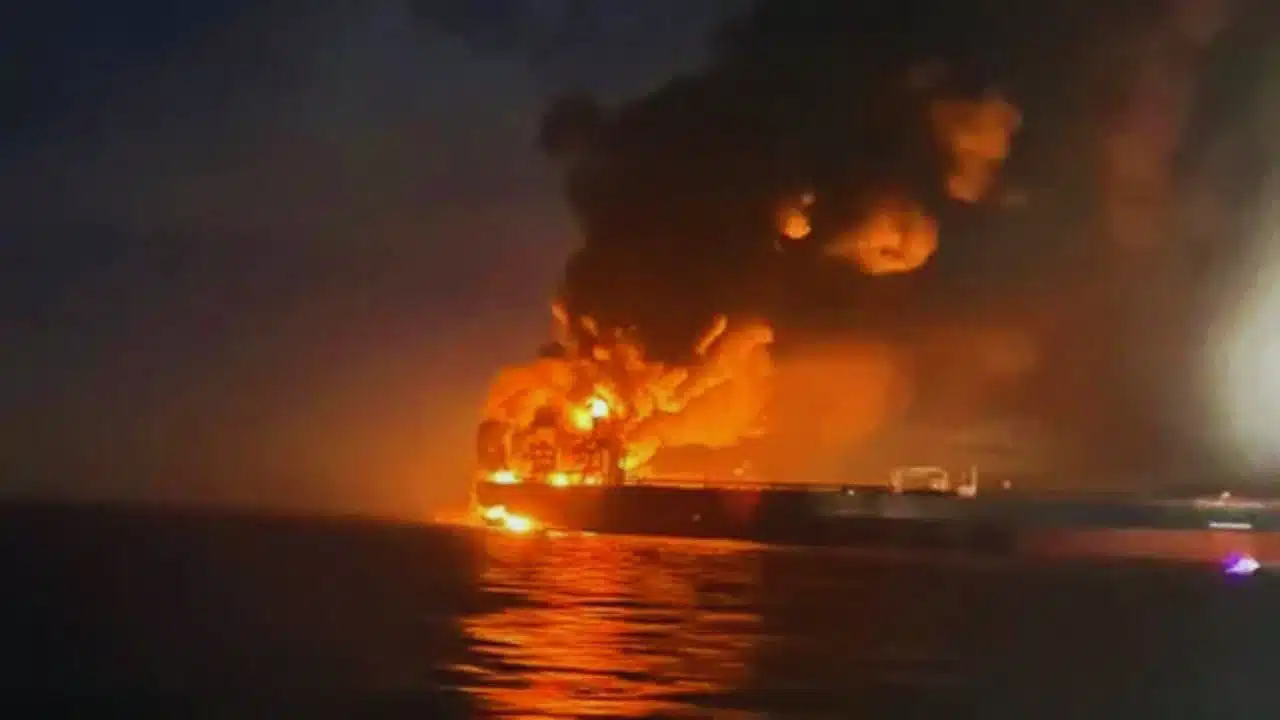
Russian attacks hit Ukraine’s Odesa-region ports and a commercial route in the Black Sea, damaging Turkish-owned vessels and prompting fresh warnings from Ankara over maritime security.
Russia strikes Turkish ships in Black Sea ports after attacks on Ukraine’s Odesa-region port infrastructure damaged multiple Turkish-owned commercial vessels, Ukrainian officials and ship operators said. The incidents, reported on December 12–13, added to growing regional alarm about the safety of civilian shipping routes used for food and commodity exports through the Black Sea.
What happened in Odesa ports
Ukrainian officials said Russian forces struck port infrastructure in the Odesa region on December 12, including the ports of Chornomorsk and Odesa, causing damage to commercial assets and vessels linked to Turkish ownership. Ukraine’s navy spokesperson, cited in multiple reports, said three Turkish-owned vessels were damaged in the port attacks, though not all vessel names were immediately disclosed.
One widely reported incident involved a Turkish-operated roll-on/roll-off vessel identified as the M/V CENK T, which the operator said was hit shortly after docking at Chornomorsk at about 16:00 local time, triggering a major fire response. Ukrainian officials described the broader port assault as involving drones and ballistic missiles and said civilian logistics facilities were among the targets.
Officials in Ukraine also reported damage at Odesa port, including harm to equipment and at least one injury to a worker connected to a private company operating there. Russia did not publicly confirm the specific claims about the Turkish-linked vessels in the reporting cited, leaving key operational details dependent on Ukrainian statements and ship-operator accounts.
Turkish vessel hit at sea
A separate incident on December 13 extended the focus from port infrastructure to open-water commercial transit, as Ukraine’s navy said a Russian drone struck a Turkish civilian vessel named VIVA while it was traveling via the grain corridor route toward Egypt carrying sunflower oil. Ukraine’s navy said there were 11 Turkish citizens on board and reported no injuries, adding that the ship continued toward its destination.
Ukraine also said the strike occurred in waters described as Ukraine’s exclusive economic zone, beyond the effective range of Ukrainian air defenses, underscoring the difficulty of protecting commercial routes far from shore-based coverage. The allegation increased concern that civilian shipping—already operating in a high-threat environment—could face additional risk even outside port areas.
Reactions from Kyiv and Ankara
Ukrainian President Volodymyr Zelensky publicly blamed Russia for striking a civilian Turkish ship and argued the vessel had no military purpose, according to reporting that included video imagery of shipboard firefighting efforts. Ukrainian officials framed the port attacks as part of a broader campaign against civilian logistics that underpin Ukraine’s exports through the Black Sea.
Turkey’s foreign ministry confirmed awareness of at least one incident involving a vessel linked to a Turkish company at Chornomorsk and reiterated concerns that escalation in the Black Sea could threaten freedom of navigation and maritime security. The same ministry statements emphasized the need to halt attacks on port and energy infrastructure to reduce the risk of wider spillover in the Black Sea theater.
The reports also came as Turkish President Recep Tayyip Erdogan raised with Russian President Vladimir Putin the idea of a limited ceasefire framework focused on energy facilities and ports, though Moscow has repeatedly resisted ceasefire proposals in the conflict. The diplomatic timing heightened attention in Ankara to the practical question of whether commercial shipping—especially Turkey-linked vessels operating regional routes—can remain insulated from the war’s expanding maritime dimension.
Why the Black Sea shipping lane matters
The Odesa-region ports are central to Ukraine’s export economy and have served as a key outlet for commodities moving to global markets during the war, making disruptions there significant beyond Ukraine’s borders. The reported damage to vessels carrying or associated with food supplies and vegetable cargo reinforced concerns that attacks near ports can ripple quickly into supply chains and freight insurance pricing.
Several reports linked the escalation to a broader cycle of action and retaliation in the maritime domain, including Kyiv’s campaign against Russia’s so-called “shadow fleet” of tankers and Moscow’s threats to intensify pressure on Ukraine’s access to the sea. Analysts cited in specialist coverage described the strike on the Turkish-operated ship at Chornomorsk as a retaliation signal after Ukrainian maritime drone attacks against Russian-linked oil shipping.
Key developments timeline
| Date (2025) | Event | Location | Reported impact |
| Dec 12 | Strikes reported on port infrastructure; multiple Turkish-owned vessels said damaged | Chornomorsk and Odesa ports (Odesa region) | Three Turkish-owned vessels reported damaged; one ship fire reported; port equipment damage and an injury reported |
| Dec 12 | Vessel operator reports strike shortly after docking, around 16:00 local time | Chornomorsk | Fire and damage reported; no crew injuries reported by operator |
| Dec 13 | Ukraine navy reports drone strike on Turkish vessel VIVA en route to Egypt | Black Sea (reported in Ukraine’s EEZ) | No injuries reported; ship continued voyage; cargo described as sunflower oil |
| Dec 13 | Turkey reiterates concerns on maritime security and navigation freedom | Ankara | Calls to prevent escalation and protect shipping/critical infrastructure |





















