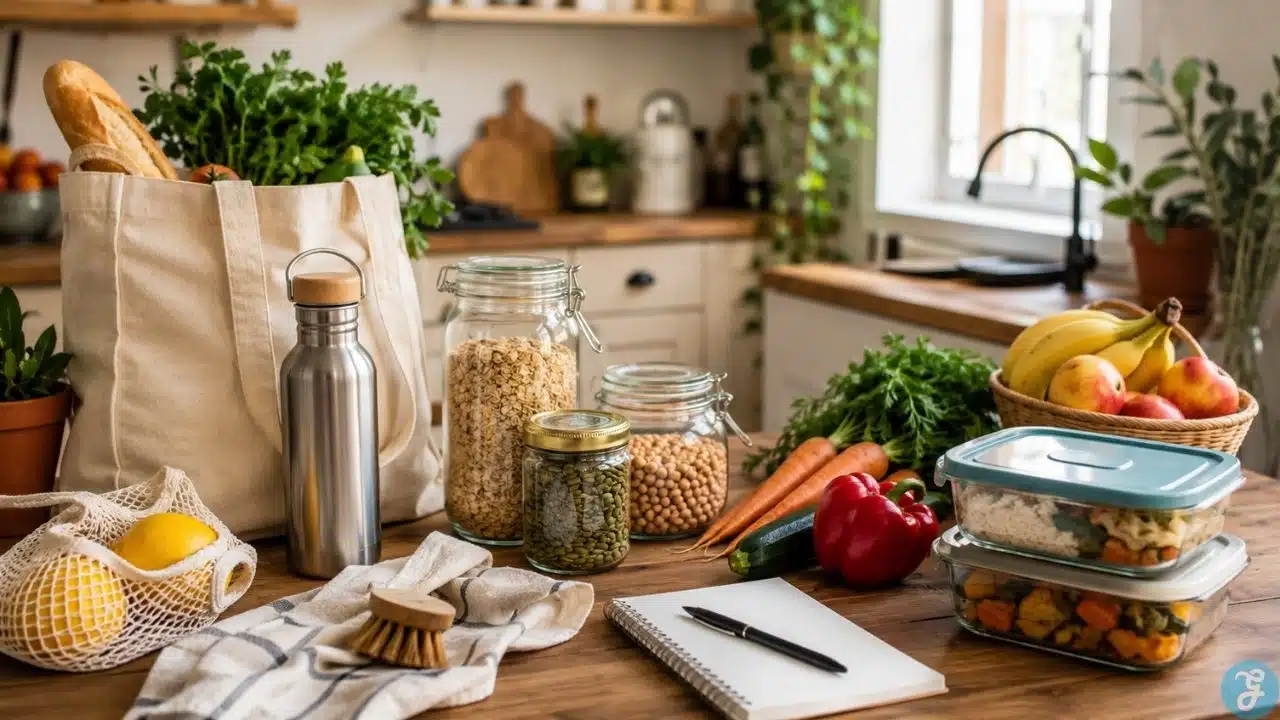
Going eco-friendly sounds expensive when the internet keeps showing bamboo everything, glass jars arranged like museum pieces, and “minimalist” kitchens that somehow cost more than a small car. But real sustainability does not start with buying a new lifestyle. It starts with wasting less of what you already pay for.
That is the practical truth behind Eco on a Budget living. You do not need a perfect zero-waste home, a full pantry makeover, or 27 matching containers to reduce household waste. You need better habits, smarter shopping, fewer impulse purchases, and a realistic system that works on a normal budget. The goal is not to spend more to look eco-conscious. The goal is to stop throwing money into the bin.
Why Reducing Household Waste Starts With Spending Less, Not Buying More
The easiest mistake people make is treating sustainability like a shopping category. They replace every plastic item at once, buy expensive “green” products, and then wonder why eco-friendly living feels financially impossible.
A better approach is slower and cheaper: use what you have first, replace only when needed, and choose reusable or low-waste options when they actually save money over time.
This matters because household waste is often tied to overbuying. Food expires before it is eaten. Cleaning products multiply under the sink. Disposable items run out every month. Packaging piles up because convenience keeps winning. Reducing waste means noticing where money leaks out quietly.
Start With A Simple Waste Audit At Home
Before changing anything, spend one week watching what your household throws away. This is not glamorous, but it works.
Check your bin for:
- spoiled food;
- single-use packaging;
- paper towels;
- plastic bags;
- takeaway containers;
- half-used products;
- duplicate cleaning supplies;
- disposable bathroom items;
- broken items that could have been repaired.
You do not need to weigh everything or create a spreadsheet unless you enjoy making life harder. Just notice patterns. If most waste comes from food, start with meal planning. If it comes from packaging, change how you shop. If it comes from paper towels, move to washable cloths.
The cheapest eco habit is fixing the biggest waste first.
Use What You Already Own Before Buying Eco Swaps
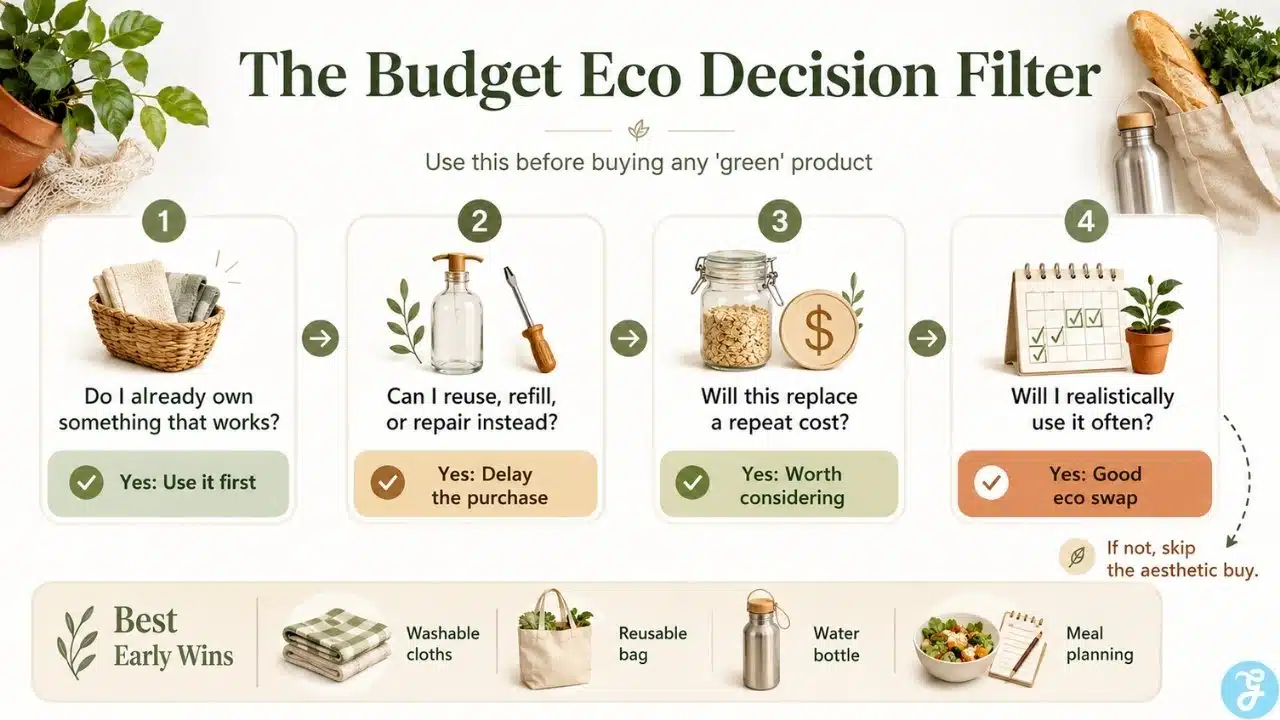
This is where many people get sustainability backwards. Throwing away usable plastic containers to buy glass jars is not eco-friendly. It is just shopping with better lighting.
Before buying anything new, use up:
- existing cleaning products;
- old plastic containers;
- leftover toiletries;
- half-used pantry items;
- disposable bags;
- paper napkins;
- old towels and cloths.
When something finally runs out or breaks, then consider a better replacement. That is where sustainable swaps make sense. Not as a guilt purchase. Not as a full-house makeover. As a practical upgrade.
If you already have a plastic lunch box, use it until it fails. If you already have cleaning sprays, finish them before switching. Sustainability should reduce waste, not create a prettier version of it.
Cut Food Waste First Because It Saves Money Fast
Food waste is one of the biggest household budget drains. Most families do not feel it because the loss happens slowly: a soft cucumber here, expired yogurt there, forgotten leftovers in the back of the fridge silently becoming a science project.
Start with three simple habits.
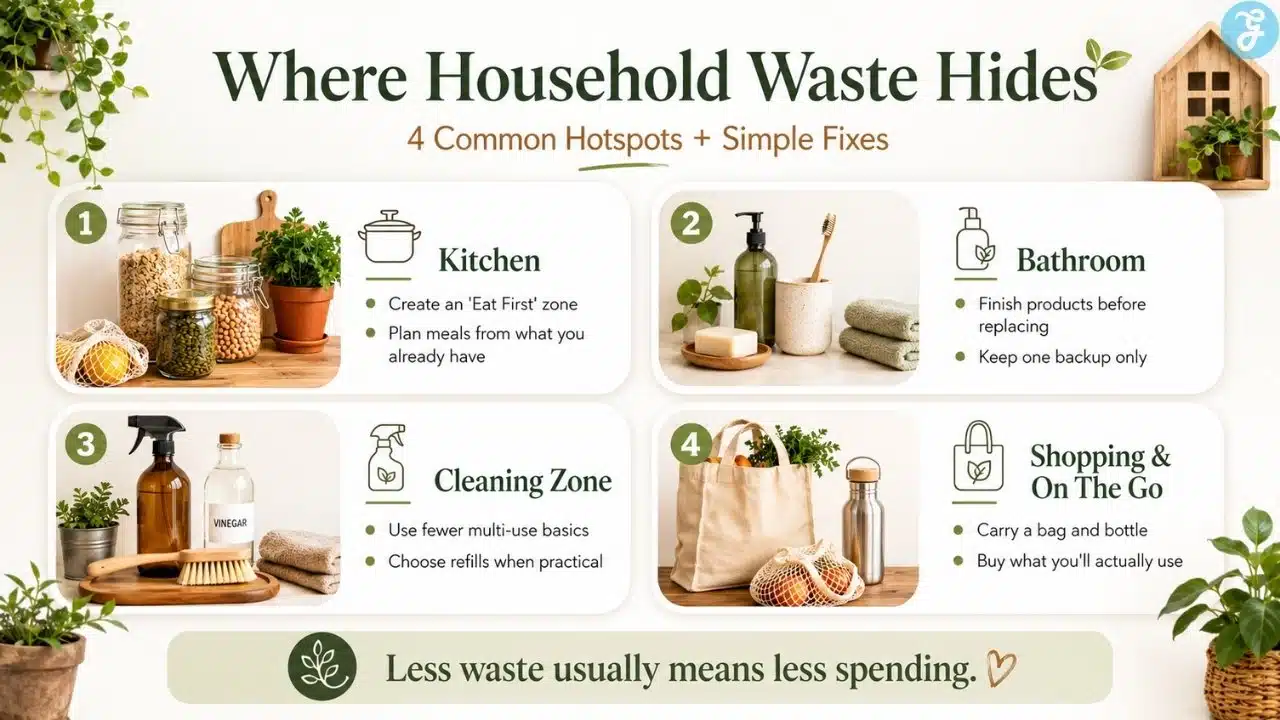
First, plan meals around what you already have. Open the fridge before making a grocery list. Build meals around the ingredients that need to be used soon.
Second, create an “eat first” section in the fridge. Put leftovers, cut fruit, open packets, and soon-to-expire items in one visible spot.
Third, cook flexible meals. Soups, stir-fries, fried rice, wraps, pasta, omelets, and grain bowls are great for using small leftovers.
This is Eco on a Budget at its best because it cuts waste and saves money immediately.
Shop With A Smaller List And A Stronger Plan
A budget-friendly eco home starts before anything enters the house. The less waste you buy, the less waste you manage later.
Use a simple shopping rule: buy what you know you will use, not what your fantasy self might cook on Wednesday.
Helpful habits include:
- making a grocery list before shopping;
- checking pantry items first;
- avoiding bulk purchases unless you truly use the product;
- choosing loose produce when possible;
- buying refills when they are cheaper;
- avoiding overpackaged convenience items;
- comparing price per unit, not only the package price.
Bulk buying can reduce packaging, but only if you actually finish the product. A giant bag of lentils is not sustainable if it lives untouched for three years and becomes part of the furniture.
Replace Disposable Items With Low-Cost Reusables
You do not need to replace everything at once. Start with the disposable items you buy most often.
Good low-cost swaps include:
| Disposable Habit | Budget-Friendly Swap | Why It Helps |
|---|---|---|
| Paper towels | Old T-shirts or washable cloths | Cuts repeat purchases |
| Plastic shopping bags | Reused tote bags | Reduces single-use plastic |
| Disposable water bottles | Reusable bottle | Saves money over time |
| Plastic wrap | Containers, plates, or reusable covers | Reduces kitchen waste |
| Disposable napkins | Cloth napkins or cut fabric | Washable and long-lasting |
| Single-use sponges | Washable dish cloths or scrubbers | Lasts longer |
A good swap should pay for itself. If it costs a lot and does not replace a frequent purchase, it can wait.
For readers who are ready to replace worn-out household items with longer-lasting options, you can explore our Eco Shop product page for practical, reusable home and cleaning essentials.
Make Cleaning Simpler And Less Wasteful
Most homes do not need ten different cleaning products. Marketing says every surface needs a specialist bottle. Reality says a few basics can handle most jobs.
A simple low-waste cleaning setup can include:
- dish soap;
- vinegar for some cleaning tasks;
- baking soda for scrubbing;
- reusable cloths;
- a durable scrub brush;
- one all-purpose cleaner;
- refillable bottles if available and affordable.
Do not mix cleaning chemicals randomly. That is not eco-friendly; that is how people accidentally create a bathroom chemistry incident. Keep it simple, safe, and practical.
If you buy cleaning products, choose concentrates, refills, or larger containers only when they reduce cost and packaging. The best option is the one you will use correctly and consistently.
Repair, Repurpose, And Reuse Before Replacing
A low-waste home does not throw things away at the first sign of inconvenience. It asks one question first: can this still be useful?
Examples:
- old towels become cleaning rags;
- glass jars become storage containers;
- worn T-shirts become dust cloths;
- cardboard boxes become drawer organizers;
- tired furniture gets repaired or repainted;
- leftover food becomes lunch;
- empty containers become plant pots or craft storage.
This does not mean keeping every useless object forever. That is not sustainability. That is clutter with moral branding. The point is to reuse items that still have practical value.
Reduce Bathroom Waste Without Buying Luxury Products
Bathrooms quietly produce a lot of waste: shampoo bottles, toothpaste tubes, disposable razors, cotton pads, wipes, plastic packaging, and half-used products people abandon because they bought something new.
Start with the cheapest fixes:
- Finish products before buying replacements.
- avoid buying duplicates;
- Switch to reusable makeup remover cloths if you use cotton pads often.
- Choose larger refill sizes when they save money.
- Use bar soap if it works for your skin.
- Keep one backup, not five.
Some eco swaps are worth trying when your current product runs out, such as bamboo toothbrushes, refillable soap, safety razors, or shampoo bars. But do not force every swap. If a product irritates your skin or wastes money, it is not the right choice for your household.
Stop Treating Recycling As The Main Strategy
Recycling helps, but it should not be the first plan. The better order is:
- Refuse what you do not need.
- Reduce what you buy.
- Reuse what you already have.
- Repair what can be fixed.
- Recycle what is left.
Recycling still depends on local systems, correct sorting, clean materials, and market demand. Many people feel better after recycling, but the more powerful habit is buying less waste in the first place.
That means choosing fewer packaged goods, avoiding unnecessary freebies, carrying a bag, and buying products that last longer.
Build A Small Low-Waste Kit That Actually Gets Used
A low-waste kit only works if it fits your real life. Do not build a beautiful kit that sits at home while you buy takeaway with plastic cutlery.
A practical kit may include:
- reusable shopping bag;
- water bottle;
- lunch container;
- cloth napkin;
- small cutlery set;
- coffee cup if you buy coffee often.
Keep it where you need it: near the door, in your bag, in the car, or at work. Convenience matters. If the reusable item is always somewhere else, the disposable option wins.
Choose Eco Swaps By Payback, Not Aesthetic
Some swaps save money quickly. Others are nice but not urgent.
High-priority swaps usually replace things you buy again and again:
| Swap | Budget Value |
|---|---|
| Reusable water bottle | High if you buy bottled water |
| Washable cloths | High if you use paper towels often |
| Meal planning | Very high for food waste |
| Reusable shopping bags | High and easy |
| Refillable cleaners | Medium to high depending on price |
| Beeswax wraps | Medium if you use plastic wrap often |
| Glass jars | Low if you already have containers |
This is how to keep Eco on a Budget realistic. Start with swaps that solve a recurring cost. Leave the aesthetic upgrades for later.
Create Household Rules That Make Waste Reduction Easier
Good systems beat good intentions. A few simple rules can reduce waste without constant effort.
Try these:
- leftovers must be eaten within two days;
- check the fridge before grocery shopping;
- no new cleaning product until one runs out;
- reusable bags stay near the door;
- one shelf is for food that needs to be eaten first;
- repair before replacing when practical;
- no buying “eco” products just because they look nice.
These rules are boring in the best way. They prevent waste before it happens.
How To Stay Eco-Friendly Without Feeling Miserable
A budget eco lifestyle should not feel like punishment. If a habit makes your life harder every day, it probably will not last.
Keep it flexible:
- choose progress over perfection;
- change one habit at a time;
- keep convenience where it matters;
- do not compare your home to social media;
- track savings when possible;
- celebrate waste you avoided.
The goal is not to become the most sustainable person on the internet. The goal is to reduce waste in a way your household can actually maintain.
A Practical 30-Day Eco On A Budget Plan
Here is a simple month-long plan to get started without overspending.
| Week | Focus | What To Do |
|---|---|---|
| Week 1 | Waste Audit | Notice what your household throws away most |
| Week 2 | Food Waste | Plan meals around what you already have |
| Week 3 | Reusables | Replace one frequent disposable habit |
| Week 4 | Shopping Habits | Buy less packaging and avoid duplicate products |
By the end of 30 days, you should know where your biggest waste comes from and which habits save the most money.
The Budget-Friendly Truth About Sustainable Living
Living sustainably does not have to mean spending more. In many homes, it means buying less, using things longer, wasting less food, choosing durable basics, and refusing the idea that every eco habit requires a purchase.
That is the deeper lesson behind Eco on a Budget. The most effective changes are often ordinary: eat the food you bought, carry the bag you already own, finish the product before replacing it, repair what can be repaired, and stop buying things just because they promise a greener identity.
The uncomfortable truth is that consumer culture has learned how to sell sustainability back to us. But reducing household waste is not about building a perfect green aesthetic. It is about making better everyday decisions. Spend where it matters. Save where you can. Waste less every week.
That is how eco living becomes realistic, affordable, and sustainable in the truest sense.
Frequently Asked Questions (FAQs) About Eco On A Budget
Can I Live Eco-Friendly Without Spending More?
Yes. Start by reducing food waste, using what you already own, avoiding unnecessary purchases, and replacing only the disposable items you buy often.
What Is The Cheapest Way To Reduce Household Waste?
The cheapest way is to waste less food. Meal planning, using leftovers, and checking the fridge before shopping can save money quickly.
Are Eco-Friendly Products Always More Expensive?
No. Some reusable products cost more upfront but save money over time. Others are unnecessary if you already own something that works.
What Should I Replace First In A Low-Waste Home?
Start with items you buy repeatedly, such as paper towels, bottled water, plastic bags, disposable napkins, or single-use cleaning products.
How Do I Avoid Buying Too Many Eco Products?
Use what you have first. Only buy an eco swap when your current item is finished, broken, or genuinely costing you more over time.