Choosing gaming headsets sounds easy until you start looking at the options. Suddenly, every box is screaming about surround sound, ultra-low latency, RGB lighting, noise cancellation, studio-grade drivers, crystal-clear microphones, and “pro esports tuning.” Half of it sounds useful. Half of it sounds like someone added gamer words to normal headphones and raised the price.
I look at headsets in a more practical way. For gaming, I care about sound positioning, mic clarity, comfort, build quality, and price-to-value. If a headset fails in any of those areas, the branding does not matter. A headset can look aggressive enough to scare your desk, but if it hurts your head after one hour or makes your mic sound like you are calling from inside a washing machine, it is not good.
For me, headsets matter most in competitive multiplayer and voice chat with friends. For story games, I usually prefer speakers when possible because they feel more relaxed. But if people around me are bothered, I switch to headphones. That is where a good headset becomes useful: not just for “gamer” reasons, but because it fits real-life gaming situations.
Why Gaming Headsets Matter More Than Beginners Think
Good gaming headsets are not just about louder sound. They affect awareness, communication, comfort, and immersion. In competitive games, hearing direction matters. Footsteps, reloads, movement, ability sounds, vehicles, gunfire direction, and voice communication can all affect how you react.
A normal headset may work, but a good gaming headset makes the experience easier. You should be able to hear important sounds clearly without turning the volume up to a punishment. You should be able to talk to teammates without your mic sounding muddy. You should be able to wear it for long sessions without feeling like your skull is being compressed by a budget torture device.
PC gaming should treat audio as part of the full setup. The PC can be powerful, the monitor can be sharp, and the mouse can be accurate, but if communication and sound awareness are poor, the whole experience feels incomplete.
Wired Vs Wireless Gaming Headsets
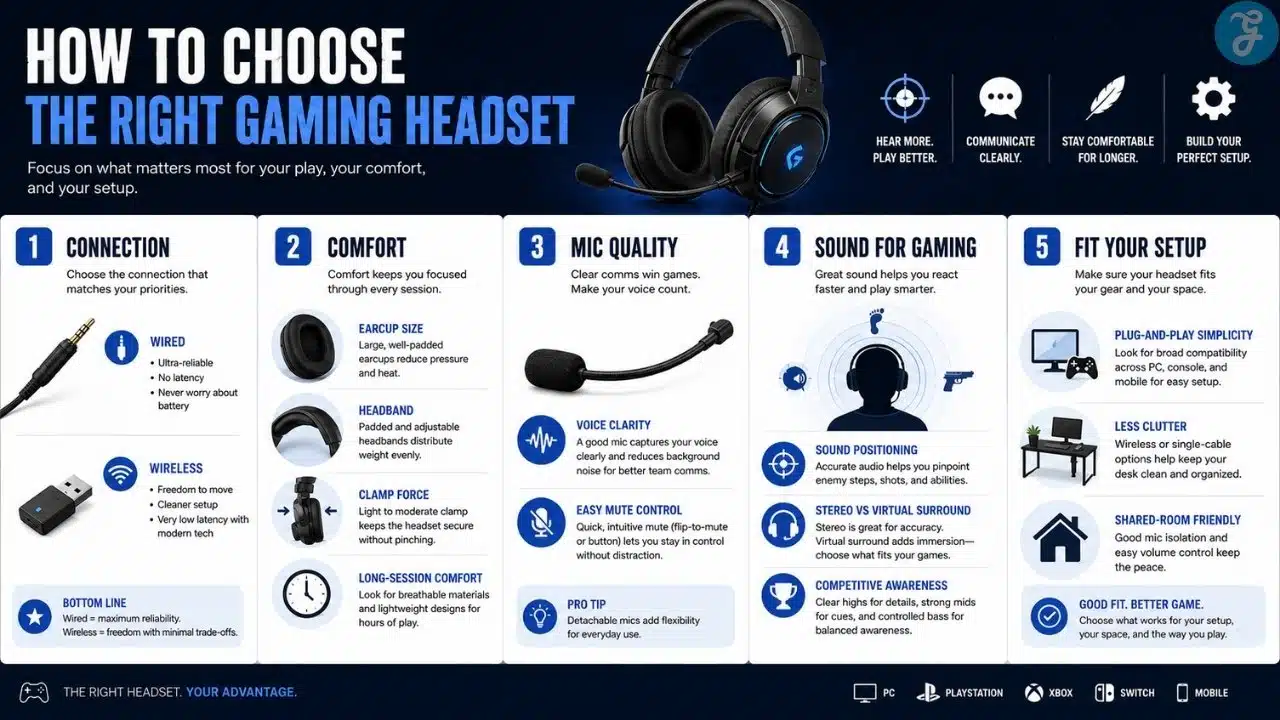
When it comes to gaming, I usually prefer wired devices. That includes headsets. The reason is simple: wired connections are more reliable and help reduce lag and latency concerns.
Wireless gaming headsets have improved a lot. Good wireless models can be convenient, clean, and responsive. But I still trust wired more for serious gaming. There is no battery anxiety, no charging schedule, no random wireless issue, and no connection drop at the worst possible moment.
For casual gaming, wireless can be fine. For competitive multiplayer, I prefer the confidence of a cable. It is not glamorous, but reliability wins.
Here is the practical comparison.
| Connection Type | Strengths | Things To Consider |
|---|---|---|
| Wired | Reliable, no charging, lower latency concerns | Cable management needed |
| Wireless 2.4GHz | Cleaner desk, better freedom | Needs charging and depends on wireless quality |
| Bluetooth | Convenient for casual use | Usually not ideal for serious gaming |
| USB Wired | Simple plug-and-play setup | Depends on headset sound processing |
| 3.5mm Wired | Works with many devices | Audio quality can depend on source device |
Comfort Comes Before Fancy Features
Comfort is one of the first things I judge. A headset can have great sound and a decent mic, but if it feels uncomfortable, I will not use it for long sessions.
Comfort depends on weight, headband pressure, earcup size, cushion material, clamp force, heat buildup, and how well the headset fits your head. Some headsets feel fine for 10 minutes and then become annoying after two hours. That is the real test.
I personally like over-ear headsets because they feel more immersive. They surround the ear instead of sitting directly on it, and that usually feels better for longer gaming sessions. But this is still a preference thing. Some players may prefer lighter on-ear designs or even in-ear options.
For me, over-ear makes the most sense for gaming because it gives better isolation, a fuller sound feel, and stronger immersion.
How I Judge Gaming Headsets For Comfort
When I judge gaming headsets for comfort, I do not only think about softness. I think about how they feel after long use.
A good headset should not create pressure on the top of the head. The earcups should not press painfully on the ears. The material should not become too hot too quickly. The headset should stay stable without clamping too hard.
Comfort is personal, but the basics are not complicated. If a headset feels annoying during normal use, it will feel worse during a long gaming session.
Sound Positioning For Competitive Games
Sound positioning matters a lot in competitive multiplayer. It helps you understand where things are happening. In shooters, footsteps and gunfire direction can give important information. In tactical games, small audio cues can change how you move. In team-based games, audio awareness can stop you from reacting too late.
This does not mean every gamer needs the most expensive headset. But competitive players should care about clarity and direction. Muddy bass-heavy sound can feel exciting, but it may hide important details.
I prefer a headset that lets me separate sounds clearly. Explosions should not bury footsteps. Background music should not overpower voice chat. Directional cues should feel easy to understand.
For casual players, this may matter less. For advanced or professional-level players, better gear and better sound tuning can make a real difference.
Mic Clarity: Your Friends Should Not Suffer
A gaming headset is not only for listening. If you play multiplayer or voice chat with friends, the microphone matters.
I have heard too many headset mics that make people sound distant, muffled, sharp, robotic, or like they are speaking through a fan. That gets old fast. Your teammates do not need studio-level vocals, but they should be able to hear you clearly.
A good mic should handle normal speaking volume, reduce background noise reasonably, and keep your voice understandable. It should also be positioned well enough so you do not have to shout.
For me, mic clarity matters because I use headsets mostly for competitive multiplayer and voice chat. If communication is bad, the headset is failing at one of its main jobs.
Built-In Mic Vs Separate Mic
I prefer gaming headsets with a built-in mic. The reason is simple: less clutter and easier setup.
A separate mic can sound better, especially for streaming, recording, podcasting, or serious content creation. I understand that. But for most gamers, a built-in mic is the better everyday solution. It is plug-and-play, simple, clean, and easy to manage.
Not everyone wants another device on the desk, another cable, another arm stand, another USB port, or another thing to adjust before playing. Sometimes, simple is better.
For most gaming use, a good built-in mic makes more sense than a separate microphone setup.
Here is how I compare both options.
| Setup Type | Best For | My Take |
|---|---|---|
| Headset With Built-In Mic | Gaming, voice chat, plug-and-play use | Best option for most gamers |
| Headphones + Separate Mic | Streaming, recording, content creation | Better audio potential but more clutter |
| Detachable Mic Headset | Flexible use | Good balance if the mic quality is solid |
| Flip-To-Mute Mic | Quick multiplayer control | Convenient for voice chat |
| Noise-Reducing Mic | Shared rooms and noisy spaces | Useful if the processing sounds natural |
Stereo Vs Virtual Surround Sound
This depends on the player and the type of gaming. I do not think every gamer needs virtual surround sound, but I also do not dismiss it completely.
Good stereo sound can be enough for many players. If the headset has clear imaging and good tuning, stereo can provide strong direction and detail. Many experienced players still prefer clean stereo because it feels more natural and predictable.
Virtual 7.1 or surround features can help some players, especially if implemented well. But poor surround processing can make audio sound artificial, echoey, or confusing.
For professional or advanced play, better gear and better hardware can matter more. But better does not always mean louder marketing. It means clearer sound, better positioning, lower delay, and a more reliable experience.
The safest advice is simple: do not buy only because the box says “7.1 surround.” Buy based on how well the headset actually handles game audio.
Open-Back Vs Closed-Back Headsets
Most gaming headsets are closed-back. That means they isolate sound better and keep game audio from leaking too much. This is useful if you play around other people or need fewer distractions.
Open-back headphones can sound wider and more natural, but they leak sound and do not block outside noise as well. They can be great for certain players, but they are not always practical for shared rooms.
Since I often switch to headphones when speakers may bother people around me, closed-back or well-isolated over-ear headsets usually make more sense.
Here is a simple comparison.
| Headset Style | Strengths | Things To Consider |
|---|---|---|
| Closed-Back | Better isolation, less sound leak | Can feel warmer over time |
| Open-Back | Wider, more natural sound | Leaks sound and blocks less noise |
| Over-Ear | More immersive and comfortable for many players | Can be bulky |
| On-Ear | Lighter and smaller | Can press on ears |
| In-Ear | Portable and discreet | Not everyone likes the fit |
Build Quality And Durability
A headset gets handled a lot. You put it on, take it off, adjust the mic, move the cable, maybe drop it, maybe toss it on the desk when the match goes badly and you pretend it was an accident.
Build quality matters.
I look for a solid headband, decent hinges, good cable quality, comfortable pads, and a mic that does not feel fragile. Cheap plastic is not always terrible, but weak joints and poor cables can shorten the lifespan quickly.
Replaceable ear pads are also useful. Over time, cushions wear down, peel, flatten, or collect sweat and dust. If the headset allows easy replacement, that can extend its useful life.
A good headset should feel like it can survive normal gaming life.
Price-To-Value: Do Not Pay Only For Branding
Gaming headsets can get expensive fast. Some are worth it. Some are just average headsets wearing expensive gamer armor.
I usually judge value by asking what the headset actually improves. Does it sound clear? Is the mic good? Is it comfortable? Is it durable? Is the connection reliable? Does it work well across the devices I use? Does it solve a real problem?
RGB lighting, aggressive design, and brand hype do not matter much if the core experience is weak.
For beginners, I would rather recommend a reliable mid-range headset than a flashy expensive one that only looks premium.
Good value means the headset performs well in the areas you actually use.
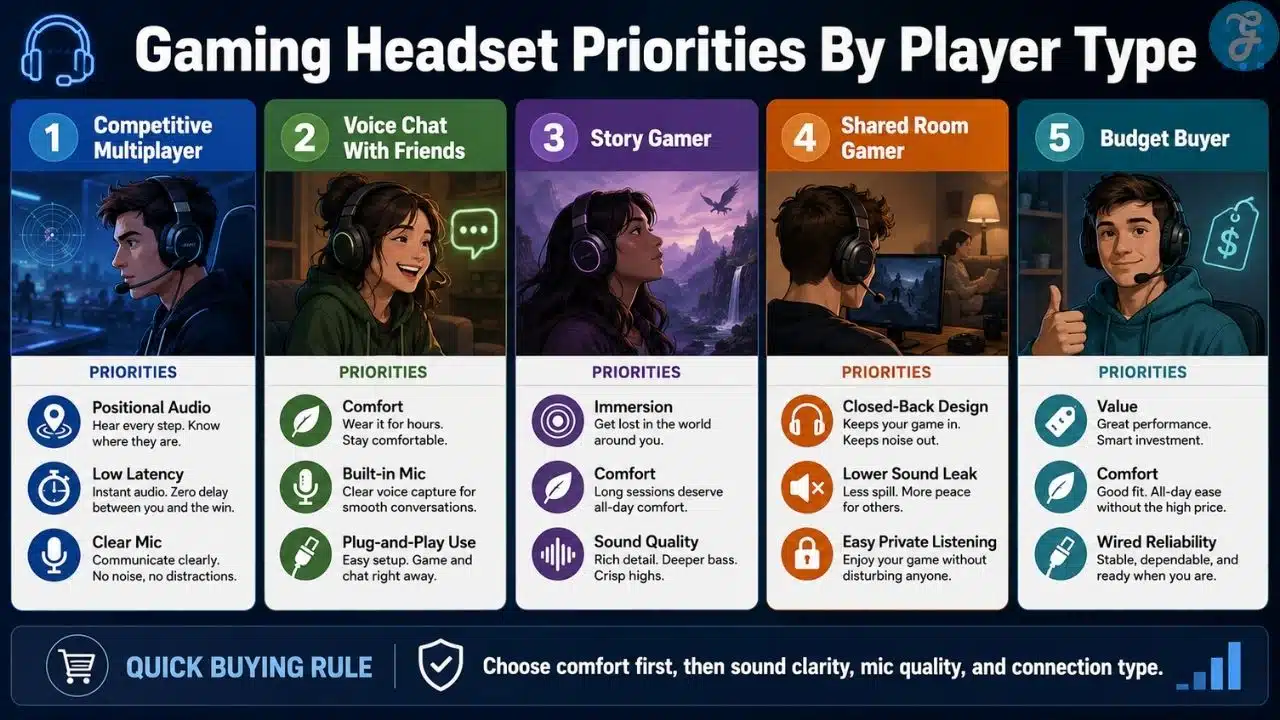
Gaming Headsets By Player Type
Different players need different headsets. A casual gamer, competitive player, streamer, and night-time gamer may not need the same setup.
Use this quick breakdown as a practical starting point.
| Player Type | What To Prioritize | Why It Matters |
|---|---|---|
| Competitive Player | Sound positioning, low latency, comfort | Helps with awareness and reaction |
| Voice Chat Gamer | Mic clarity, comfort, plug-and-play design | Makes communication easier |
| Story Gamer | Immersion, comfort, sound quality | Makes games feel richer |
| Shared-Room Gamer | Isolation, controlled sound leak, built-in mic | Avoids bothering others |
| Budget Gamer | Comfort, mic quality, reliable wired connection | Best value without overspending |
| Advanced Player | Better audio imaging, stronger hardware, tuning options | Supports higher-level play |
Common Gaming Headset Mistakes
The first mistake is buying only for looks. A headset can look amazing and still feel uncomfortable or sound average.
The second mistake is ignoring comfort. If the headset hurts after one hour, it is not a good headset for gaming.
The third mistake is assuming virtual surround automatically means better audio. Sometimes good stereo is cleaner and more useful.
The fourth mistake is buying wireless without thinking about battery, latency, and connection quality. Wireless can be great, but not all wireless is equal.
The fifth mistake is ignoring the microphone. If you play multiplayer, your mic matters to everyone else in the call.
Gaming Headsets Checklist
Before buying, I like going through a simple checklist. It keeps the decision practical and avoids buying based only on branding.
Use this before choosing a headset.
| Feature | What To Check |
|---|---|
| Connection | Wired for reliability or wireless for convenience |
| Comfort | Weight, clamp force, earcup size, and cushion quality |
| Sound Positioning | Clear direction and separation in games |
| Mic Quality | Clear voice, good pickup, low background noise |
| Build Quality | Strong headband, hinges, cable, and materials |
| Ear Design | Over-ear, on-ear, or in-ear based on preference |
| Isolation | Enough to avoid distractions or sound leak |
| Controls | Easy volume, mute, and mic adjustment |
| Compatibility | PC, console, controller, or USB support |
| Value | Performance should match the price |
Choose A Headset That Fits How You Actually Play
The best gaming headsets are not always the loudest, flashiest, or most expensive ones. They are the ones that fit your real gaming habits.
For me, wired reliability matters. Over-ear comfort matters. Built-in mic convenience matters. Sound positioning and mic clarity matter because I mostly use headsets for competitive multiplayer and voice chat. For story games, I like speakers when possible, but I switch to headphones when I need to keep things quieter.
That is how I think gamers should choose: not by marketing hype, but by real use. A good gaming headset should feel comfortable, sound clear, communicate well, and stay reliable when the match actually matters.
Frequently Asked Questions About Gaming Headsets
These answers cover the common headset questions I usually hear from gamers.
Are Wired Gaming Headsets Better Than Wireless?
For gaming, I prefer wired because the connection is reliable and avoids battery or latency concerns. Good wireless headsets can still work well, but wired is the safer choice for consistency.
Are Over-Ear Headsets Better For Gaming?
Over-ear headsets are often better for immersion and comfort because they surround the ear. I personally prefer them, but headset style still depends on the player.
Is Virtual 7.1 Surround Sound Necessary?
Not always. Good stereo sound can be enough for many gamers. Virtual surround can help some players if it is done well, but poor processing can make audio less natural.
Do Built-In Mics Sound Good Enough?
Many built-in headset mics are good enough for gaming and voice chat. A separate mic can sound better, but it adds clutter and is not necessary for most players.
What Matters Most In A Gaming Headset?
Sound positioning, mic clarity, comfort, build quality, low latency, and price-to-value matter most. The best headset is the one that fits your gaming habits.
Should I Use Speakers Or Headsets For Story Games?
Speakers can feel great for story games if you are not bothering anyone nearby. A headset is better when you need privacy, stronger immersion, or quieter gaming.