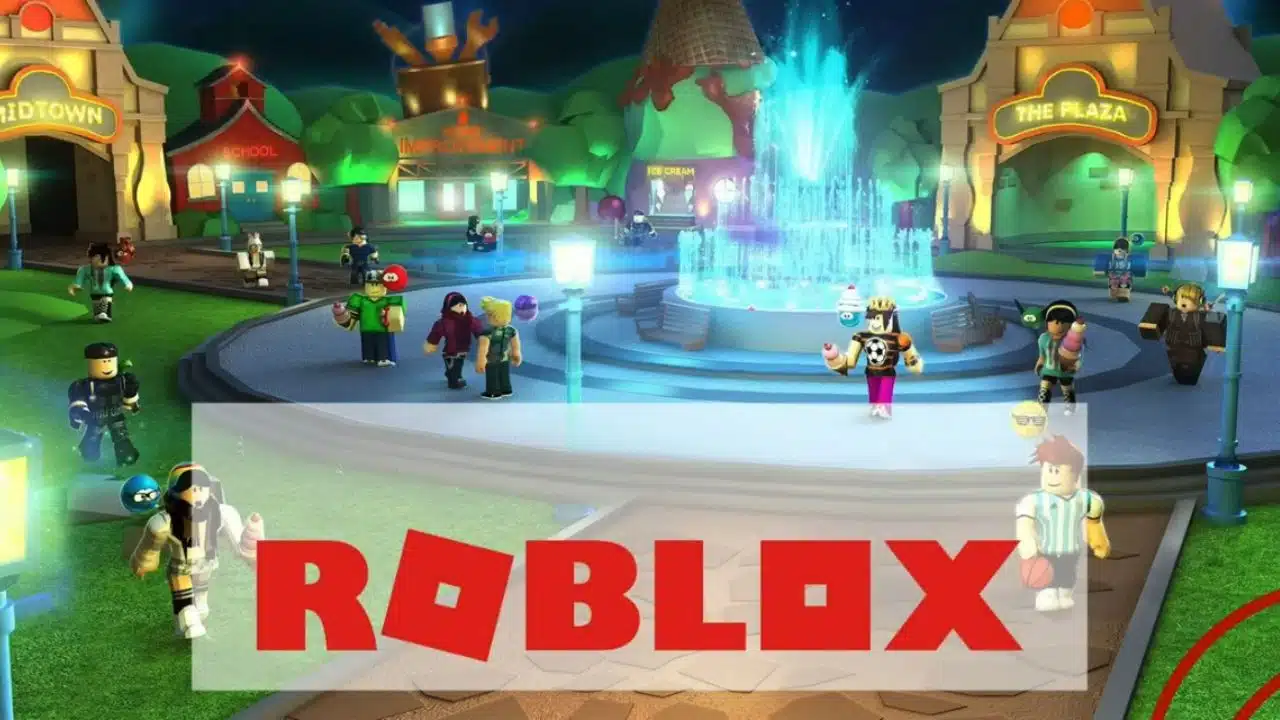
Roblox, the global online gaming platform with more than 77 million daily active users across 180 countries, has announced a bold new safety initiative. By the end of 2025, the company plans to expand its age-estimation technology to every single user on the platform. This means that whether players are logging in from the United States, Europe, or Asia, Roblox will be actively working to confirm their real ages before allowing access to certain features—especially communication tools such as voice chat and text chat.
This move underscores Roblox’s ongoing attempt to balance its vast, creative digital universe with the need for child protection and trust from parents, an area where it has faced heavy criticism and even legal action in recent months.
Why Roblox Is Pushing for Stricter Age Verification
The announcement comes amid growing scrutiny. Over the past year, Roblox has been the subject of lawsuits in California, Texas, Pennsylvania, and Louisiana, alleging that the platform has not done enough to protect children from predatory behavior.
For instance, a lawsuit filed in Louisiana in August 2025 accused Roblox of becoming a “perfect place for pedophiles” due to loopholes in its communication tools. Reports also noted that some adults have used voice-changing software to impersonate children, making it easier to approach underage players without detection. These lawsuits have placed intense pressure on Roblox to demonstrate visible, measurable safety improvements.
How the Age-Estimation Technology Works
Roblox introduced facial age estimation in July 2025. Here’s what it means in practice:
- Selfie Scanning: Users are asked to take a selfie. The system then analyses facial features using machine learning to estimate an age range (under 13, 13+, or 18+).
- Multi-Layered Verification: The facial scan is not the only step. Roblox combines this with government ID checks and verified parental consent for younger players.
- Accuracy Over Self-Reporting: Previously, users could simply enter any date of birth at sign-up. The new system is designed to reduce reliance on “honor system” ages, which has long been a loophole for bad actors.
The company stresses that biometric data is not stored permanently—the scan is used only to estimate age and then discarded, a measure designed to reassure parents concerned about privacy.
New Rules for Adult–Minor Communication

Alongside age estimation, Roblox is also preparing to launch new communication restrictions:
- Adults and Minors: Adults will be blocked from contacting under-13 users unless they are “verified real-world connections.” This could involve importing phone contacts or using QR code verification.
- Teen Users (13–17): Teens will face limits on adding new adult “trusted connections” unless they can prove they know them outside the platform.
- Stronger Moderation Tools: Existing AI moderation (like Roblox Sentinel, which scans for grooming behavior) will work hand-in-hand with these stricter communication rules.
These steps reflect a broader push to shrink the space predators can operate in, while still allowing safe social interaction among friends and family.
Partnership with IARC: Bringing Global Standards
In addition to user age checks, Roblox has partnered with the International Age Rating Coalition (IARC) to roll out globally recognized content ratings. This will replace Roblox’s internal “maturity labels.”
What this means for players:
- In the United States, Roblox experiences will carry ESRB ratings (like “Everyone 10+” or “Teen”).
- In South Korea, games will use the GRAC system.
- In Germany, USK ratings will apply.
- In the UK and wider Europe, PEGI ratings will be visible.
This alignment with trusted local standards should make it easier for parents to evaluate game content, whether it involves cartoon violence, adult language, gambling mechanics, or depictions of drugs and alcohol.
Broader Context: Safety vs Freedom on Roblox
Roblox has long marketed itself as a place where children and adults can create, socialize, and even earn money by designing games. But the same open environment has led to repeated concerns about safety.
- Exploitation Risks: Some games, like “Grow a Garden,” reportedly encouraged children to buy and sell virtual items with real money, raising concerns of financial manipulation.
- Predatory Behavior: Despite safety filters, reports have documented cases where predators bypassed detection and targeted children.
- Content Concerns: Research by The Guardian found that inappropriate content—including sexualized avatars and adult-themed role-play—could still appear in games marketed to younger users.
These issues highlight the tension Roblox faces: keeping its creative economy open and flexible while ensuring children are not exposed to harm.
Company Response: Safety as “Top Priority”
At a press conference, Roblox’s Chief Safety Officer Matt Kaufman emphasized that safety investments are constant. He revealed the company made more than 100 updates to safety systems in 2025 alone.
“Not all of these updates are public,” he explained. “When we roll out a new feature or policy, we announce it. But when we quietly improve our detection models, those changes often happen in the background.”
The message: while lawsuits may have triggered headlines, Roblox claims its safety work is ongoing and continuous, not reactive.
What It Means for Parents and Players
For parents, these changes will provide:
- Clearer content warnings through standardized global ratings.
- Stronger control over who can talk to their children inside the platform.
- More confidence that their child’s claimed age is real, thanks to facial estimation and ID checks.
For players, especially teens, it could mean stricter limits on adding new friends and a slightly slower onboarding experience due to verification. But Roblox argues this tradeoff is necessary to maintain trust and ensure the platform’s long-term growth.
The Global Trend of Digital Child Protection
Roblox’s move fits into a wider international conversation:
- The European Union’s Digital Services Act (DSA) has introduced new child-safety rules for online platforms.
- The UK Online Safety Act demands tech companies put children’s safety first.
- In the U.S., multiple states are exploring age-verification laws for social media and gaming apps.
By adopting stricter rules early, Roblox may also be preparing itself for compliance with these global regulations.
Roblox’s new measures mark one of the biggest safety overhauls in its history. If implemented successfully, the changes could make the platform a safer place for millions of children, while also reassuring parents, regulators, and licensing partners like Netflix, Lionsgate, Sega, and Kodansha, who are watching closely.
Yet the effectiveness of these steps will depend on real-world enforcement. As lawsuits and watchdog reports have shown, predators are highly adaptive. For Roblox, the challenge will be not just launching these tools by 2025 but ensuring they actually work as intended in practice.
The Information is Collected from Variety and PC Gamer.