


Blockchain technology has emerged as a revolutionary force in the financial technology (fintech) sector, reshaping how transactions are conducted, verified, and secured.
With its decentralized, transparent, and immutable nature, blockchain is solving long-standing challenges in areas like payments, lending, and compliance.
In this article, we explore 10 real-world blockchain applications in fintech, demonstrating how they are transforming the industry and paving the way for a more efficient and secure financial ecosystem.
Real-world blockchain Applications in Fintech are at the forefront of this transformation, providing innovative solutions to everyday financial challenges.
Real-World Blockchain Applications in Fintech
1. Cross-Border Payments
Cross-border payments have historically been plagued by inefficiencies such as high fees, long processing times, and complex intermediaries.
Blockchain technology addresses these challenges by enabling faster and more affordable international transactions. Among all real-world blockchain applications in fintech, this is one of the most impactful due to its widespread utility.
Challenges in Traditional Payments
- High transaction costs due to multiple intermediaries.
- Delays caused by time zone differences and manual processes.
- Lack of transparency in tracking payments.
Blockchain Solution
Blockchain-powered platforms like Ripple and Stellar facilitate near-instant cross-border payments. These systems eliminate intermediaries, reduce transaction costs, and provide real-time tracking.
For example, RippleNet enables banks and financial institutions to process payments in seconds with minimal fees, revolutionizing global remittances. Such real-world blockchain applications in fintech demonstrate the potential to redefine international transactions.
Key Benefits Table:
| Feature | Traditional Payments | Blockchain Payments |
| Processing Time | Days | Seconds |
| Transaction Fees | High | Low |
| Transparency | Limited | High |
2. Digital Identity Verification
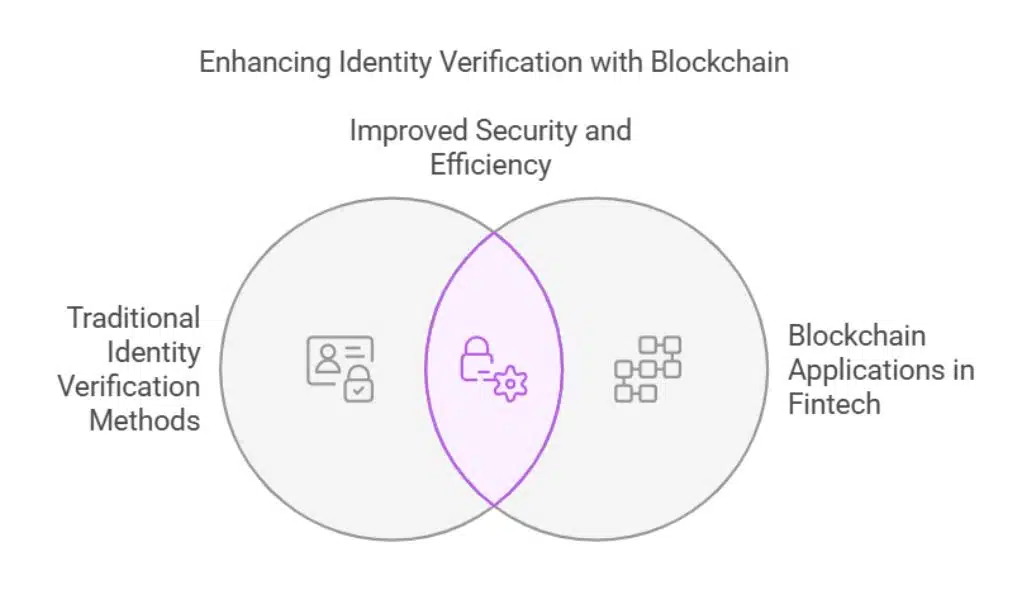
Identity verification is a critical component of financial services, yet traditional methods are often vulnerable to fraud and inefficiencies.
Real-world blockchain applications in fintech, particularly in digital identity, provide a secure and user-centric approach to managing personal information.
The Problem with Identity Theft
- Rising cases of identity theft and fraud.
- Inadequate user control over personal information.
- Complex and time-consuming verification processes.
Blockchain-Powered Identity Management
Blockchain-based identity solutions, such as uPort and Sovrin, enable self-sovereign identities, where individuals own and control their personal data. These systems enhance privacy, streamline verification, and reduce identity theft risks.
For instance, Sovrin uses a decentralized ledger to provide secure and verifiable identity credentials. Such innovations highlight how real-world blockchain applications in fintech enhance security and efficiency.
Key Benefits Table:
| Feature | Traditional Identity Systems | Blockchain-Based Identity |
| Control Over Data | Centralized | User-Controlled |
| Security | Vulnerable | High |
| Fraud Risk | High | Low |
3. Smart Contracts in Insurance
Insurance processes are often bogged down by manual workflows, delays, and disputes. Smart contracts, as a core element of real-world blockchain applications in fintech, automate insurance claims and bring transparency to the sector.
Automating Claims Processing
- Traditional claims processing is slow and prone to errors.
- Disputes often arise from lack of transparency.
How Smart Contracts Work
Smart contracts are self-executing agreements with terms encoded on a blockchain. They automatically trigger payouts when predefined conditions are met.
Examples include Etherisc and AXA’s parametric insurance products, which use smart contracts to process claims for flight delays or weather-related incidents without human intervention.
These real-world blockchain applications in fintech provide a seamless experience for both insurers and customers.
Key Features Table:
| Feature | Traditional Insurance Claims | Blockchain Smart Contracts |
| Processing Time | Days to Weeks | Instant |
| Manual Intervention | High | Minimal |
| Transparency | Limited | High |
4. Decentralized Lending Platforms
Access to credit remains a significant barrier for many individuals and businesses, especially in underserved regions.
Decentralized lending platforms are among the most transformative real-world blockchain applications in fintech, democratizing lending processes.
Traditional Lending Limitations
- Rigid credit requirements exclude many borrowers.
- High costs due to intermediaries.
- Lack of transparency in loan processes.
Blockchain Lending Platforms
Platforms like Aave and Compound enable peer-to-peer lending without intermediaries. Borrowers can access loans by using cryptocurrency as collateral, while lenders earn interest on their deposits.
These platforms provide transparency, lower costs, and greater accessibility to credit. Such innovations underscore the importance of real-world blockchain applications in fintech in addressing global financial inclusion.
Comparative Table:
| Feature | Traditional Lending | Blockchain Lending |
| Credit Requirements | High | Flexible |
| Cost of Borrowing | High | Low |
| Transparency | Limited | High |
5. Fraud Prevention and Security

Fraud remains a major concern in the fintech sector. Real-world blockchain applications in fintech provide unparalleled security through immutable records and proactive fraud detection.
Blockchain’s Immutability Advantage
Blockchain records are immutable, meaning they cannot be altered once added to the ledger.
This feature helps prevent data tampering and ensures transaction integrity. Financial institutions use blockchain to monitor transactions for anomalies and detect fraudulent activities in real time. Real-world blockchain applications in fintech prove to be game-changers in safeguarding financial transactions.
Key Benefits Table:
| Feature | Traditional Systems | Blockchain Systems |
| Data Security | Vulnerable | Strong |
| Fraud Detection | Reactive | Proactive |
6. Supply Chain Finance
Supply chain finance involves a complex network of transactions between suppliers, manufacturers, and retailers.
Among real-world blockchain applications in fintech, it stands out for its ability to enhance transparency, streamline operations, and reduce costs.
Enhancing Transparency
- Traditional supply chain finance processes often lack visibility, resulting in disputes and inefficiencies.
- Blockchain creates a shared ledger where all parties can view and verify transactions in real time, improving trust and reducing delays.
Financial Implications
Platforms like TradeLens and Provenance are revolutionizing supply chain finance by providing end-to-end visibility. For example, TradeLens uses blockchain to track the movement of goods across borders, facilitating quicker payment settlements and reducing paperwork.
Key Benefits Table:
| Feature | Traditional Supply Chain | Blockchain Supply Chain |
| Transparency | Limited | High |
| Dispute Resolution | Time-Consuming | Streamlined |
| Payment Settlement | Slow | Faster |
7. Tokenization of Assets
Tokenization transforms real-world assets like real estate, art, and stocks into digital tokens on a blockchain, creating new opportunities for investment and trading.
Real-world blockchain applications in fintech are leveraging tokenization to redefine asset ownership.
Transforming Asset Ownership
- Traditionally, high-value assets required significant capital and were illiquid.
- Tokenization enables fractional ownership, allowing smaller investors to participate and increasing overall liquidity.
Blockchain Platforms for Tokenization
Platforms like Polymath and tZERO specialize in creating and managing tokenized assets. For example, Polymath offers a secure and compliant ecosystem for tokenizing assets, expanding access to a broader range of investors.
Key Benefits Table:
| Feature | Traditional Assets | Tokenized Assets |
| Accessibility | Limited to Wealthy Investors | Inclusive to All |
| Liquidity | Low | High |
| Ownership Flexibility | Fixed | Fractional |
8. Cryptocurrency-Based Payment Systems
Cryptocurrencies like Bitcoin and Ethereum are redefining payment systems by offering faster, more affordable, and globally accessible alternatives to traditional methods.
Real-world blockchain applications in fintech make these solutions practical and scalable.
The Rise of Crypto Payments
- Companies like Tesla and PayPal have embraced cryptocurrency payments, signaling mainstream acceptance.
- Crypto payments bypass traditional banking systems, enabling seamless transactions across borders.
Advantages Over Traditional Methods
- Lower transaction fees compared to credit cards and wire transfers.
- Faster settlement times without delays caused by intermediaries.
- Accessibility for the unbanked population, especially in developing countries.
Advantages Table:
| Feature | Traditional Payments | Cryptocurrency Payments |
| Transaction Fees | High | Low |
| Processing Time | Hours to Days | Instant |
| Accessibility | Limited | Global |
9. Regulatory Compliance and Auditing
Regulatory compliance is crucial in the financial sector but often involves complex, resource-intensive processes.
Blockchain simplifies compliance with its transparent and immutable ledger.
Streamlining Compliance
- Blockchain provides a complete, auditable trail of transactions, making regulatory reporting more efficient.
- Smart contracts can automate checks for anti-money laundering (AML) and know-your-customer (KYC) compliance.
Real-World Examples
- Chainalysis provides blockchain solutions for monitoring transactions and ensuring regulatory adherence.
- Civic streamlines KYC processes by offering decentralized identity verification on blockchain.
Key Benefits Table:
| Feature | Traditional Compliance | Blockchain Compliance |
| Audit Trail | Fragmented | Unified |
| Processing Time | Lengthy | Instant |
| Automation | Low | High |
10. Blockchain in Stock Trading
Stock trading has traditionally been slow and expensive due to intermediaries and lengthy settlement processes.
Real-world blockchain applications in fintech are transforming this domain.
Challenges in Traditional Stock Markets
- Settlement delays often stretch to T+3 (three business days after trade).
- High costs are incurred due to brokerages and clearinghouses.
Blockchain’s Role
Platforms like Nasdaq Linq and tZERO enable near-instantaneous settlement of trades, improving efficiency and reducing costs. By removing intermediaries, blockchain enhances transparency and accessibility for investors.
Key Benefits Table:
| Feature | Traditional Stock Trading | Blockchain Trading |
| Settlement Time | T+3 Days | Instant |
| Transaction Costs | High | Low |
| Transparency | Limited | High |
Takeaways
Blockchain technology is revolutionizing the fintech industry, addressing inefficiencies and unlocking new opportunities.
From cross-border payments to decentralized lending and fraud prevention, real-world blockchain applications in fintech are transforming how businesses and consumers interact with financial systems.
As adoption continues to grow, organizations must explore blockchain solutions to enhance operations, reduce costs, and deliver unparalleled value to customers. Embracing these innovations is key to staying competitive in the evolving financial landscape.
























