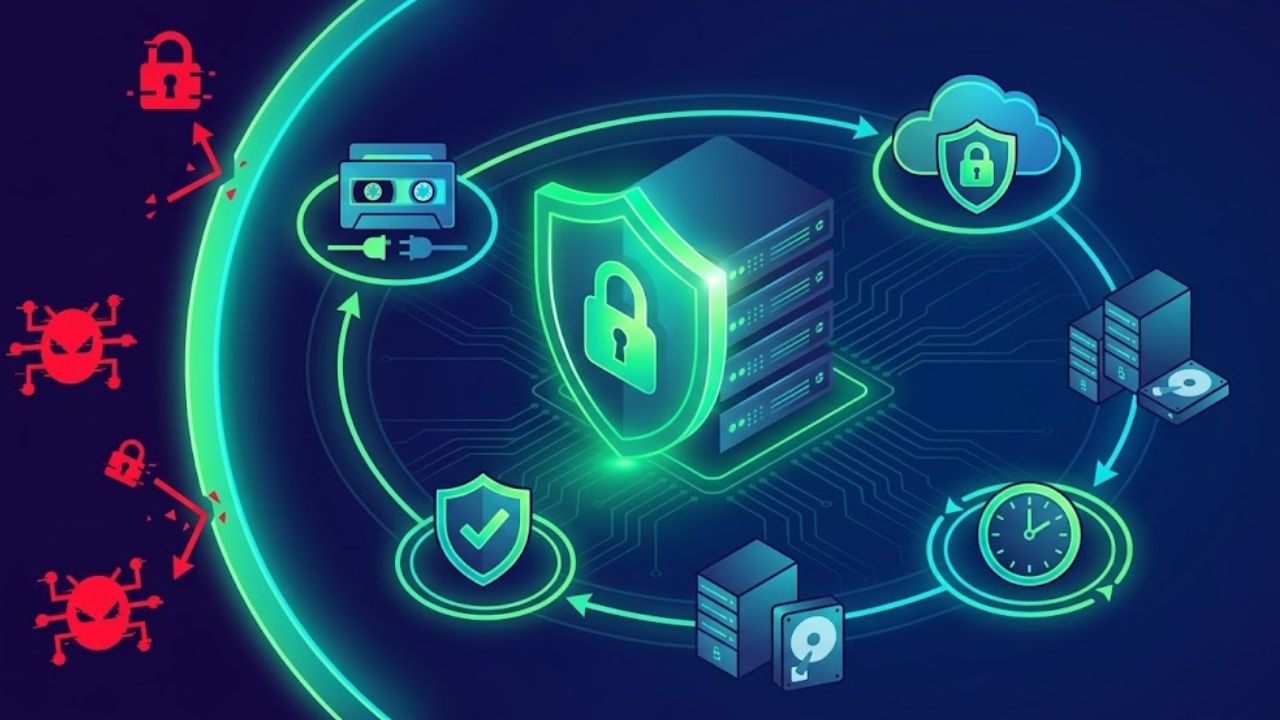
Quantum computing uses qubits that process information in multiple states at once, allowing it to solve certain problems far faster than classical computers. This power holds promise for fields like medicine and logistics, but it also threatens cybersecurity because most of today’s encryption relies on RSA and elliptic curve cryptography.
These algorithms depend on the difficulty of factoring large numbers and solving discrete logarithms, tasks that quantum computers running Shor’s algorithm could break in a fraction of the time. That risk fuels the urgency to prepare now, even before post-quantum standards are finalized. Attackers can already exploit a “harvest now, decrypt later” strategy by collecting encrypted data today and waiting to decrypt it once quantum machines mature.
The stakes go beyond technology: without quantum-resistant encryption, businesses risk data privacy violations, compliance failures under regulations like GDPR and HIPAA, and even threats to national security if critical systems and communications become vulnerable.
What Is Quantum-Resistant Encryption?
Quantum resistant encryption is cryptography designed to stay secure even against attacks from future quantum computers. In August 2024, NIST’s global PQC effort, selected three new quantum resistant algorithms: ML-KEM for encryption (FIPS 203), ML-DSA for signatures (FIPS 204), and SLH-DSA (FIPS 205). These algorithms move away from the fragile foundations of RSA and ECC, which are vulnerable to Shor’s algorithm. Instead, they rely on hard mathematical problems like lattices and hash-based constructions, which are believed to resist both classical and quantum attacks, providing a stronger foundation for long-term data protection.
Lattice-based cryptography, for instance, uses Learning With Errors (LWE) and the Shortest Vector Problem (SVP) to create encryption and signature schemes that are computationally infeasible for both classical and quantum computers to break. Hash-based cryptography, like SPHINCS+, builds signatures on top of secure hash functions. While multivariate cryptography relies on solving complex polynomial equations, another quantum-resistant approach.
Because quantum computers aren’t fully mature yet—but the threat of “harvest now, decrypt later” attacks is real—we need quantum-resistant algorithms that can run on today’s classical systems. That’s where hybrid cryptographic schemes come in. These combine classical and post-quantum algorithms so that communications remain secure as long as one holds up. It’s a cautious, layered defense during this uncertain shift.
Why SSH Keys Matter in Quantum Planning
SSH keys are everywhere—securing automation scripts, cloud infrastructure, DevOps workflows, and remote access across enterprise networks. But for many organizations, they’ve become a quantum-era blind spot. According to Venafi, 90% of organizations lack a complete SSH key inventory, and 61% don’t restrict who can manage them. That’s a serious problem when many of these keys are long-lived, untracked, and still powered by RSA or ECDSA.
Unmanaged or long-lived SSH keys introduce serious risks in a post-quantum world because they give attackers more time and opportunity to exploit cryptographic weaknesses. When administrators generate SSH keys without strong governance, those keys often linger across systems long after the people who created them have moved on or changed roles. These abandoned credentials become a form of “cryptographic debt,” silently granting access that no one actively monitors or rotates.
Operational practices amplify the problem. Many organizations still hardcode SSH keys into scripts, embed them in configuration files, or scatter them across servers without inventory. These unmanaged keys often bypass centralized authentication and logging, leaving no audit trail when they’re used. In the event of compromise, attackers can move laterally through the network with little chance of detection. Combined with the future ability to break the cryptography itself, these overlooked keys provide both persistence and stealth.
The result is a double-edged risk: today’s poor key hygiene already enables insider misuse or external breaches, while tomorrow’s quantum capabilities threaten to strip away the cryptographic shield entirely. Without strict lifecycle management—discovery, rotation, and eventual deprecation—SSH keys become one of the most dangerous weak points in securing infrastructure against the coming post-quantum era.
An effective solution to this is SSH key inventory and lifecycle management. This gives organizations the visibility and control needed to be crypto-agile, that is, to adapt their cryptographic systems as threats evolve. When security teams maintain a full inventory of every SSH key, who owns it, where it’s deployed, what it accesses, they eliminate the guesswork that normally plagues cryptographic transitions. This catalog becomes the foundation for making fast, informed decisions when algorithms or key lengths need to change.
Lifecycle management extends this control by enforcing regular rotation, expiration, and decommissioning of keys. Instead of allowing long-lived keys to accumulate, teams can phase out vulnerable ones on a predictable schedule. This process ensures that when post-quantum cryptography becomes the new standard, outdated RSA or ECC keys can be systematically replaced without paralyzing operations. It transforms key management from a reactive scramble into a disciplined, proactive routine.
Building a Roadmap to Quantum Readiness
Here’s a roadmap on how you can become quantum resistant and keep your ssh keys safe.
CBOM Inventory
Post-quantum readiness begins with visibility. A cryptographic bill of materials (CBOM) is your foundational map, it consolidates all cryptographic assets, including keys, certificates, hardware security modules (HSMs), and protocols across your infrastructure. Unlike isolated key or certificate inventories, a CBOM offers a full-spectrum view across silos: TLS endpoints, SSH keys, IoT firmware, third-party APIs, and more. This is essential because encryption isn’t confined to obvious places.
The CBOM process should capture the key visibility areas: what each asset is, where it’s located, when it was created and expires, who owns it, why it’s used, and how it’s configured. It’s also critical to distinguish assets managed in-house from those controlled by vendors, and request post-quantum roadmaps from the latter.
Algorithm Dependency Assessment
Once visibility is established, the next step is understanding which algorithms your infrastructure depends on. This includes mapping out every instance of RSA, ECDSA, or finite field Diffie-Hellman used across TLS, PKI, SSH, and embedded systems.
In TLS, examine both client and server cipher suites for quantum-vulnerable algorithms. In PKI, focus on certificate chains and root CAs still signed with RSA or ECC. SSH environments often contain hardcoded RSA keys, particularly in legacy systems. IoT introduces more complexity, where cryptography may be buried in firmware or chip-level implementations. Each dependency must be tagged by algorithm type, key length, and expiration to enable prioritized replacement planning.
Don’t ignore your SaaS and third-party vendors. Ask for detailed algorithm usage reports, especially for externally exposed APIs.
Migration Planning for High-Value or Long-Lived Assets
You can’t swap everything at once, so start with what matters most. Prioritize systems that are both critical to business operations and resistant to change—like certificate authorities, identity systems, and hardware modules that rarely get patched sensitive intellectual property, financial transactions, government records, or healthcare data and any information that could cause major harm if exposed.
Because these assets often support essential business functions, migration cannot be rushed or improvised. Plans should outline timelines, fallback options, and coordinated rollouts across dependent systems to minimize disruption. They should also prioritize early adoption in areas where “harvest now, decrypt later” threats pose the greatest danger, such as secure communications and long-term data storage.
Piloting Hybrid and PQC-Ready Solutions
Transitioning to PQC doesn’t mean ripping everything out immediately. Hybrid solutions let you combine traditional algorithms like X25519 with quantum-resistant alternatives like ML-KEM in the same session. This dual-track setup ensures that if one algorithm fails, the other still protects the communication.
Test TLS 1.3 handshakes with hybrid modes, audit telemetry for compatibility issues, and make sure your logging and monitoring tools can still parse the traffic. Document everything. These pilots should serve as training opportunities for your security and DevOps teams.
Best Practices for Enterprises
Integrate Cryptographic Agility into Certificate and Key Management Tools
Cryptographic agility gives you the flexibility to switch algorithms without disrupting operations. This is critical in the post-quantum era, where legacy algorithms may suddenly become obsolete. Your certificate and key management systems should already support post-quantum algorithms like Kyber or Dilithium, or at least be compatible with hybrid models.
Shorten Key and Certificate Lifetimes to Reduce Exposure
Reducing the lifespan of cryptographic credentials is a proven strategy to limit damage from key compromise. Long-lived keys give attackers time to collect and decrypt them later. Moving to shorter TLS certificate lifespans—like Google’S 90-day model—reduces this window drastically. Apply the same to SSH keys and code-signing credentials. It also forces discipline around renewal processes and reveals operational gaps early.
Collaborate with Vendors and Industry Groups on PQC Readiness
No single organization can handle migration alone. Your crypto future depends heavily on vendor roadmaps and broader industry alignment. Start including PQC-readiness in RFPs and procurement reviews. Join working groups like the CA/B Forum or IETF to stay ahead.
Educate Leadership and Boards on the Risks and Roadmap
PQC is also a business resilience issue. Leadership must understand threats like “store now, decrypt later” and the long-tail risk to sensitive data. Use clear visuals and business-relevant scenarios to show them the migration phases: asset inventory, hybrid deployments, phased replacement. With board-level support, you can secure the budget and prioritization needed to prepare now—not later.
Takeaways
Quantum computing poses an existential risk to today’s encryption. Algorithms like RSA and ECC are expected to eventually fall to quantum attacks, which would strip away their protective power. Once that happens, sensitive data will become vulnerable to quantum attacks.
Quantum-resistant algorithms provide the technical foundation for future security, but their effectiveness depends on disciplined SSH key management. By actively inventorying, rotating, and replacing vulnerable keys, organizations build the crypto-agility needed to adapt quickly as standards evolve.
Taken together, quantum-safe encryption and strong key lifecycle practices form the twin pillars of resilience, ensuring that access and data protection remain intact in the coming post-quantum era.