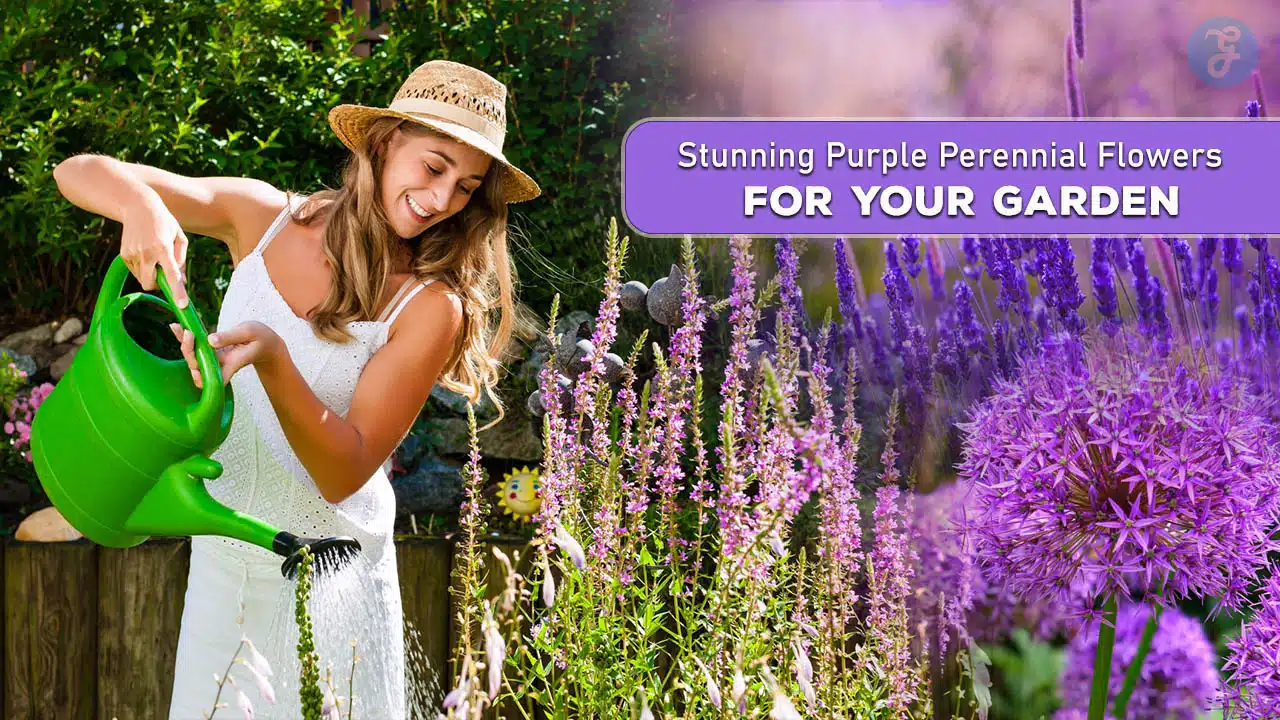
Purple flowers have long been admired for their regal beauty and the sense of tranquility they bring to any garden.
From the soft lavender hues to deep, rich violets, purple blooms add a touch of elegance and mystery to outdoor spaces. When it comes to creating a garden that stands the test of time, perennial flowers are the go-to choice for many gardeners.
These hardy plants return year after year, providing consistent color and beauty with minimal effort.
In this article, we’ll explore 15 stunning purple perennial flowers that will breathe life into your garden. Each of these plants offers unique characteristics, from their growth habits to their specific care requirements.
1. Lavender (Lavandula spp.)
Lavender is perhaps one of the most iconic purple flowers, beloved for its soothing fragrance and beautiful purple spikes. This Mediterranean native is a staple in many gardens, offering both visual appeal and aromatherapy benefits.
Varieties:
– English Lavender (Lavandula angustifolia): Known for its sweet fragrance and compact growth.
– French Lavender (Lavandula stoechas): Features distinctive “rabbit ear” petals atop each flower spike.
Growing Tips:
– Lavender thrives in full sun, requiring at least 6-8 hours of direct sunlight daily.
– Well-draining soil is crucial; add sand or gravel to improve drainage if needed.
– Water sparingly once established; lavender is drought-tolerant and prefers dry conditions.
Benefits:
– The aromatic oils in lavender are known for their calming properties.
– Excellent for attracting pollinators, especially bees and butterflies.
– Drought-resistant once established, making it a low-maintenance choice for water-conscious gardeners.
2. Salvia (Salvia spp.)
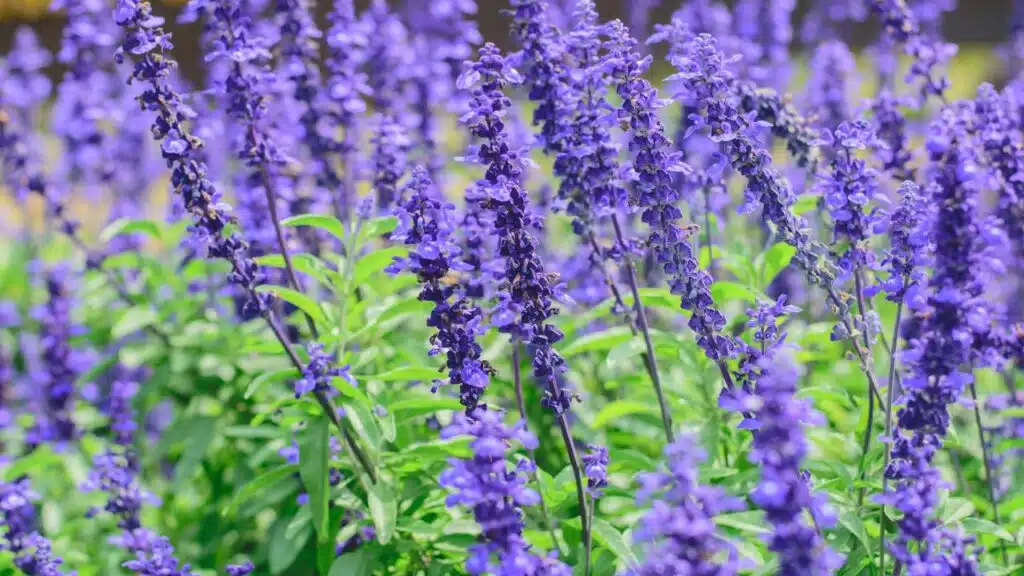
Salvia, also known as sage, offers vibrant purple blooms that are irresistible to pollinators. These long-blooming perennials add vertical interest to any garden with their upright flower spikes.
Varieties:
– Salvia ‘May Night’: Features deep purple flowers and a compact growth habit.
– Salvia ‘Caradonna’: Offers striking purple-black stems contrasting with vivid purple blooms.
Growing Tips:
– Plant in full sun for the best flower production.
– Salvias prefer well-draining soil but can tolerate a range of soil types.
– Prune back after the first flush of flowers to encourage reblooming.
Benefits:
– Extremely long blooming period, often from late spring through fall.
– Attracts a wide variety of pollinators, including bees, butterflies, and hummingbirds.
– Deer and rabbit resistant, making it an excellent choice for gardens prone to wildlife browsing.
3. Siberian Iris (Iris sibirica)
The Siberian Iris is known for its elegant, almost ethereal purple flowers. These graceful perennials add a touch of sophistication to any garden setting.
Varieties:
– ‘Caesar’s Brother’: Offers deep purple blooms with intricate yellow and white markings.
– ‘Purple Sensation’: Features rich, velvety purple petals with a subtle sheen.
Growing Tips:
– Siberian Iris prefers full sun but can tolerate partial shade in hotter climates.
– Plant in moist, slightly acidic soil for best results.
– Divide clumps every 3-4 years to maintain vigor and promote healthy growth.
Benefits:
– Low maintenance once established, requiring minimal care beyond occasional division.
– Deer and rabbit resistant, making it a reliable choice for gardens in rural or woodland areas.
– Attractive seed pods add interest to the garden long after the flowers have faded.
4. Purple Coneflower (Echinacea purpurea)
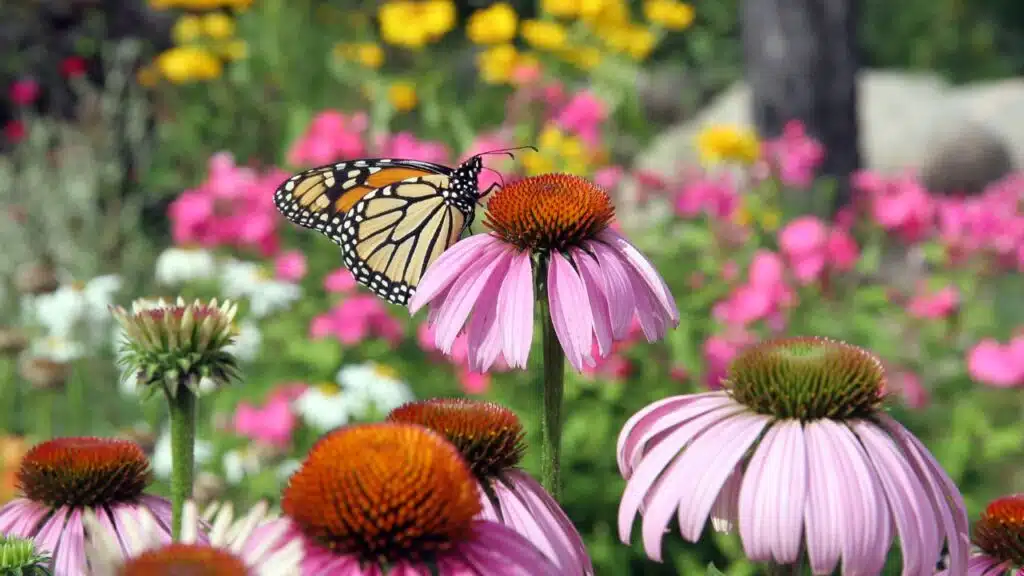
The Purple Coneflower is a North American native that has become a garden favorite. Its daisy-like flowers with distinctive cone-shaped centers are both beautiful and beneficial to wildlife.
Varieties:
– ‘Magnus’: Features large, vibrant pink-purple flowers with horizontal petals.
– ‘Purple Emperor’: Offers rich, deep purple blooms that hold their color well.
Growing Tips:
– Plant in full sun for the best flower production.
– Well-draining soil is essential; coneflowers are drought-tolerant once established.
– Space plants 18-24 inches apart to allow for proper air circulation.
Benefits:
– Attracts a wide variety of pollinators, including bees, butterflies, and birds.
– Known for its medicinal properties, often used in herbal remedies to boost immunity.
– Long-lasting blooms make excellent cut flowers for arrangements.
5. Japanese Anemone (Anemone hupehensis)
Japanese Anemones bring a touch of elegance to the late summer and fall garden. Their delicate, soft purple blooms sway gently in the breeze, adding movement and interest to garden beds.
Varieties:
– ‘September Charm’: Features single pink-purple flowers with yellow centers.
– ‘Honorine Jobert’: Offers pure white flowers with a hint of pink on the underside of petals.
Growing Tips:
– Japanese Anemones prefer partial shade but can tolerate full sun in cooler climates.
– Plant in rich, moist soil with good drainage.
– Water regularly, especially during dry spells, to keep the soil consistently moist.
Benefits:
– Long blooming season, often flowering from late summer through fall.
– Adds graceful movement to garden beds with its tall, swaying stems.
– Excellent choice for woodland gardens or shaded borders.
6. Balloon Flower (Platycodon grandiflorus)
The Balloon Flower gets its name from its unique buds that puff up like balloons before bursting open into star-shaped flowers. This charming perennial adds whimsy and wonder to any garden.
Varieties:
– ‘Sentimental Blue’: Compact variety with intense blue-purple flowers.
– ‘Astra Blue’: Features semi-double flowers in a lovely shade of lavender-blue.
Growing Tips:
– Plant in full sun to partial shade for best results.
– Well-draining soil is crucial; avoid heavy, waterlogged soils.
– Consider staking taller varieties to prevent flopping.
Benefits:
– Compact growth habit makes it suitable for small gardens or container planting.
– Long-lasting blooms that open gradually over the summer months.
– Low maintenance and generally pest-free.
7. Ajuga (Ajuga reptans)
Ajuga, also known as Bugleweed, is a versatile ground cover that offers both attractive foliage and spikes of purple flowers. It’s an excellent choice for shady areas where other plants struggle to grow.
Varieties:
– ‘Black Scallop’: Features deep purple, almost black foliage with blue flowers.
– ‘Purple Beauty’: Offers bronze-purple leaves and vibrant blue-purple flower spikes.
Growing Tips:
– Ajuga thrives in partial to full shade but can tolerate some sun in cooler climates.
– Plant in moist, well-draining soil.
– Control spreading by planting in contained areas or regularly trimming back.
Benefits:
– Excellent ground cover for shady areas, quickly filling in bare spots.
– Evergreen foliage provides year-round interest.
– Drought-tolerant once established, making it a low-maintenance option.
8. Phlox (Phlox paniculata)
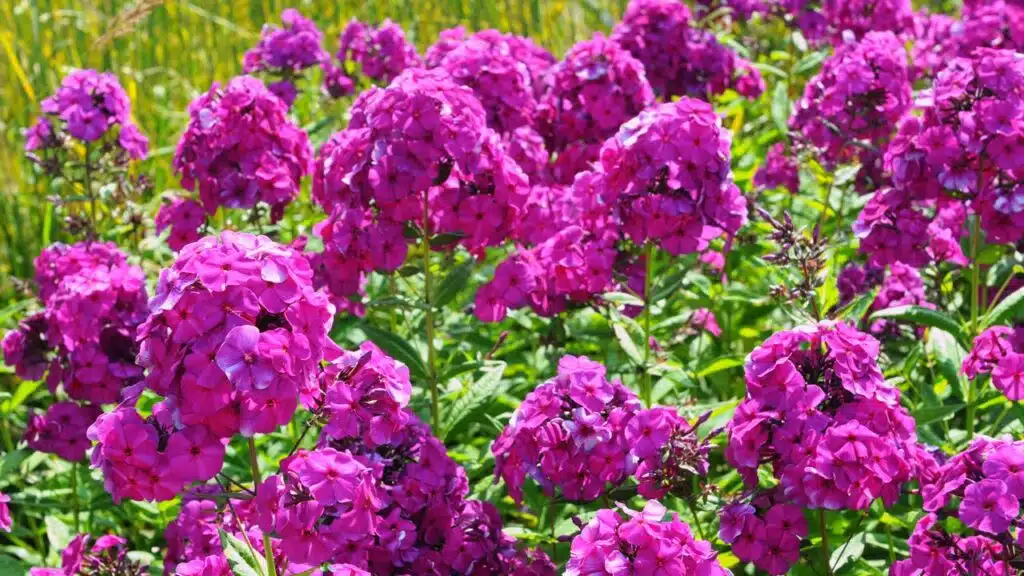
Garden Phlox offers large clusters of sweetly scented flowers that bloom for weeks on end. These classic perennials are a staple of cottage gardens and traditional perennial borders.
Varieties:
– ‘David’: While typically white, this variety can sometimes produce pale lavender blooms.
– ‘Blue Paradise’: Features deep blue-purple flowers that seem to change color in different lights.
Growing Tips:
– Plant in full sun for best flower production.
– Provide rich, well-draining soil with consistent moisture.
– Ensure good air circulation to prevent powdery mildew.
Benefits:
– Long flowering period, often blooming from mid-summer to early fall.
– Attracts butterflies and other pollinators to the garden.
– Fragrant blooms add a sweet scent to the garden, especially in the evening.
9. Catmint (Nepeta spp.)
Catmint is a versatile and easy-to-grow perennial that offers both aromatic foliage and abundant purple flowers. It’s an excellent choice for borders, rock gardens, or as a softening element around hardscaping.
Varieties:
– ‘Walker’s Low’: Features compact growth with lavender-blue flowers.
– ‘Six Hills Giant’: Offers taller growth and deeper purple blooms.
Growing Tips:
– Plant in full sun for best flowering.
– Well-draining soil is essential; catmint is drought-tolerant once established.
– Prune back after the first flush of flowers to encourage a second bloom.
Benefits:
– Drought-tolerant and low-maintenance once established.
– Attracts bees, butterflies, and other beneficial insects.
– Aromatic foliage is deer and rabbit resistant.
10. Columbine (Aquilegia spp.)
Columbines are charming perennials known for their unique, nodding flowers with distinctive spurs. These delicate-looking plants are surprisingly tough and offer a range of purple hues.
Varieties:
– ‘Winky Blue’: Features upward-facing, blue-purple and white bi-color flowers.
– ‘Giant Blue’: Offers large, deep purple blooms with long spurs.
Growing Tips:
– Plant in partial shade for best results, though they can tolerate full sun in cooler climates.
– Provide well-draining, humus-rich soil.
– Allow space for self-seeding if desired, or deadhead to control spread.
Benefits:
– Charming, intricate flowers add visual interest to the garden.
– Attracts hummingbirds and other pollinators.
– Self-seeds readily, creating naturalized drifts over time.
11. Verbena (Verbena bonariensis)
Verbena bonariensis, also known as Tall Verbena, adds height and airiness to the garden with its clusters of small purple flowers atop tall, slender stems.
Varieties:
– ‘Lollipop’: A compact variety that grows to about half the height of the species.
– ‘Homestead Purple’: Offers rich purple blooms on a more compact plant.
Growing Tips:
– Plant in full sun for best flower production.
– Well-draining soil is essential; verbena is drought-tolerant once established.
– Consider staking taller varieties in windy areas.
Benefits:
– Attracts a wide variety of pollinators, including butterflies and bees.
– Adds vertical interest and movement to the garden.
– Long blooming period, often from summer through fall.
12. Creeping Jenny (Lysimachia nummularia)
While primarily grown for its golden foliage, Creeping Jenny also produces small, cup-shaped purple flowers. This versatile ground cover is excellent for adding color to shady areas or softening the edges of garden beds.
Varieties:
– ‘Goldilocks’: Features bright golden foliage with contrasting purple flowers.
– ‘Aurea’: Offers yellow-green leaves that turn golden in full sun.
Growing Tips:
– Plant in partial shade to full sun; foliage color is best in full sun.
– Provide moist, well-draining soil.
– Control spreading by planting in contained areas or regularly trimming back.
Benefits:
– Excellent ground cover that quickly fills in bare spots.
– Tolerant of a wide range of growing conditions, including poor soils.
– Provides multi-season interest with its colorful foliage and summer flowers.
13. Bee Balm (Monarda didyma)
Bee Balm, also known as Bergamot, offers showy, fragrant flowers that are irresistible to pollinators. Its unique, spiky blooms add texture and vibrant color to the garden.
Varieties:
– ‘Jacob Cline’: Features large, bright red flowers that attract hummingbirds.
– ‘Purple Horsemint’: Offers lavender-purple blooms on a more compact plant.
Growing Tips:
– Plant in full sun to partial shade.
– Provide rich, moist soil with good drainage.
– Ensure good air circulation to prevent powdery mildew.
Benefits:
– Attracts a wide variety of pollinators, including bees, butterflies, and hummingbirds.
– Aromatic foliage and flowers have culinary and medicinal uses.
– Native to North America, making it an excellent choice for naturalistic gardens.
14. Heliopsis (Heliopsis helianthoides)
Heliopsis, also known as False Sunflower, offers cheerful, daisy-like flowers with purple petals surrounding golden centers. These long-blooming perennials add a bright splash of color to the summer garden.
Varieties:
– ‘Summer Sun’: Features semi-double, golden-yellow flowers.
– ‘Tuscan Sun’: Offers compact growth with bright yellow blooms.
Growing Tips:
– Plant in full sun for best flower production.
– Provide well-draining soil; heliopsis is tolerant of poor soils.
– Water regularly during the first growing season to establish deep roots.
Benefits:
– Long-lasting blooms, often flowering from early summer through fall.
– Drought-tolerant once established, making it a low-maintenance choice.
– Excellent cut flower for bouquets and arrangements.
15. Sweet William (Dianthus barbatus)
Sweet William is a short-lived perennial known for its clusters of small, fragrant flowers in various shades of purple, pink, and white. These charming plants add a cottage garden feel to any landscape.
Varieties:
– ‘Amazon Neon’: Features bright, neon purple flowers in large clusters.
– ‘First Love’: Offers a mix of pink and purple blooms that darken with age.
Growing Tips:
– Plant in full sun to partial shade.
– Provide well-draining soil rich in organic matter.
– Deadhead regularly to prolong blooming and prevent self-seeding if desired.
Benefits:
– Compact growth habit makes it suitable for borders, rock gardens, or containers.
– Long blooming season, often flowering from late spring through summer.
– Fragrant flowers attract butterflies and make excellent cut flowers.
Conclusion
Incorporating these 15 stunning purple perennial flowers into your garden will create a vibrant, long-lasting display that evolves through the seasons.
From the classic beauty of lavender to the whimsical charm of balloon flowers, each of these plants brings its own unique characteristics to the landscape.
By choosing a mix of these purple perennials, you can ensure a continuous bloom from spring through fall, providing ongoing color and interest in your garden.
Consider factors such as bloom time, height, and growing conditions when creating a harmonious and visually appealing space for your purple garden.