


In today’s world, legal disputes can arise unexpectedly and have a catastrophic impact on your financial wellbeing. Whether you’re an individual looking to protect your personal assets or a business owner trying to secure your business wealth, protecting your assets from legal disputes should be a top priority.
Legal issues such as lawsuits, debts, and claims can result in loss of property, personal savings, and other vital assets if not properly safeguarded.
Taking proactive steps to protect your assets from legal disputes is crucial for ensuring your financial future and peace of mind.
This article outlines 7 essential strategies that will help you effectively protect your wealth. By using these strategies, you can minimize risks and ensure that your hard-earned assets remain secure.
1. Establish a Trust to Safeguard Your Assets

A trust is one of the most powerful legal tools available to protect your assets from legal disputes. By transferring ownership of your assets into a trust, you effectively remove them from your direct control, which makes it harder for creditors or litigants to seize those assets in a legal dispute.
What is an Asset Protection Trust?
An Asset Protection Trust (APT) is a specialized legal structure used to protect your assets from creditors, lawsuits, and other claims. Once you establish a trust, the assets within it are no longer directly owned by you, but by the trust itself. This separation of ownership offers significant protection against creditors.
Types of Asset Protection Trusts:
- Domestic Asset Protection Trust (DAPT): These trusts are established within the United States and are governed by state law. Some states like Nevada, South Dakota, and Alaska have strong laws protecting trust assets from creditors, which makes them ideal for asset protection.
- Offshore Asset Protection Trust: These trusts are established in foreign jurisdictions with laws designed to provide better protection against creditors. Countries like the Cayman Islands, Belize, and the Cook Islands are well-known for offering strong asset protection laws.
Steps to Create a Trust
Creating an asset protection trust involves several critical steps. Here’s a simplified breakdown:
- Choose the Right Type of Trust: Decide between a revocable trust (which allows you to make changes) or an irrevocable trust (which provides stronger asset protection but limits your control).
- Select a Trustee: The trustee is responsible for managing the assets in the trust. This can be a trusted individual or a corporate trustee.
- Fund the Trust: Transfer ownership of your assets to the trust. This can include real estate, bank accounts, investments, or business interests.
- Ensure Legal Compliance: Consult with an estate planning attorney to ensure your trust is structured and complies with the necessary legal frameworks.
Key Details: Types of Trusts
| Trust Type | Benefits | Downsides |
| Revocable Trust | Flexibility to make changes | Weaker protection from creditors |
| Irrevocable Trust | Stronger asset protection, no control over assets | Permanent, cannot make changes once established |
| Domestic Asset Protection Trust (DAPT) | Protection under U.S. laws in select states | Not available in all states, less privacy |
| Offshore Asset Protection Trust | Greater protection from foreign creditors | Complex, expensive setup, legal hurdles |
2. Use Limited Liability Entities for Business Assets
Limited Liability Companies (LLCs) and corporations are essential for business owners who want to protect their personal assets from business-related liabilities. Using an LLC or corporation helps ensure that your personal wealth is separated from your business assets.
Understanding LLCs and Corporations
An LLC (Limited Liability Company) is a business structure that provides personal liability protection. If your business is sued, the LLC structure protects your personal assets from being seized. Similarly, corporations (both C-Corps and S-Corps) provide a similar shield by distinguishing the personal and business finances.
Here’s why LLCs and corporations are ideal for asset protection:
- Personal Asset Protection: Both LLCs and corporations ensure that creditors cannot target personal assets (like your home or savings) to settle business debts or lawsuits.
- Tax Benefits: LLCs and corporations offer several tax advantages, such as deducting business expenses, which can protect your profits from being overly taxed.
How LLCs Protect Personal Assets
- Separation of Business and Personal Assets: By operating under an LLC or corporation, you ensure that your personal and business finances remain distinct. This provides a legal barrier between your personal wealth and the business’s financial obligations.
- Court Protection: In the event of a lawsuit, only the business assets are at risk, not your personal property.
Key Details: LLC vs Corporation
| Feature | LLC | Corporation |
| Liability Protection | Strong protection for personal assets | Strong protection for personal assets |
| Tax Flexibility | Pass-through taxation (default) | Double taxation (C-Corp), or pass-through (S-Corp) |
| Management | Less formal, more flexible | More structured and formal with board members |
| Capital Raising | Limited ability to raise capital | Easier to raise capital through stock issuance |
3. Purchase Insurance to Cover Potential Risks
Insurance is an essential layer of protection that provides financial security in case of unforeseen events. Purchasing insurance policies, such as liability or umbrella insurance, can help protect your assets from legal disputes and lawsuits.
Types of Insurance for Asset Protection
Here are several types of insurance you should consider:
- Umbrella Insurance: This provides additional liability coverage beyond what your home, auto, or boat insurance covers. If you’re sued for more than your current liability coverage limits, an umbrella policy will cover the excess amount.
- Liability Insurance: Liability insurance protects you if you’re held responsible for injuries or damage caused to others. This includes injuries that occur on your property or as a result of your actions.
- Professional Liability Insurance: This covers professionals such as doctors, lawyers, or consultants against lawsuits for malpractice or negligence.
- Homeowners Insurance: In addition to covering property damage, homeowners insurance often includes liability coverage for accidents or injuries occurring on your property.
Choosing the Right Insurance Plan
When selecting an insurance plan, consider the following:
- Coverage Limits: Ensure your insurance provides sufficient coverage to protect your assets from high-value claims.
- Exclusions: Carefully review your policy to understand what’s excluded, and make sure it covers the types of risks you’re most concerned about.
- Reputation: Choose a reliable insurer with a good history of claims handling.
Key Details: Types of Insurance Coverage
| Insurance Type | Coverage Provided | Example of Protection |
| Umbrella Insurance | Extra coverage beyond existing policies | Protection if a lawsuit exceeds home or auto insurance limits |
| Liability Insurance | Coverage for injuries or damage to others | Lawsuit from a guest injured in your home |
| Professional Liability | Covers malpractice or negligence claims | Lawsuit from a client claiming poor service |
| Homeowners Insurance | Coverage for property damage and liability | Protection if someone is injured on your property |
4. Keep Personal and Business Finances Separate
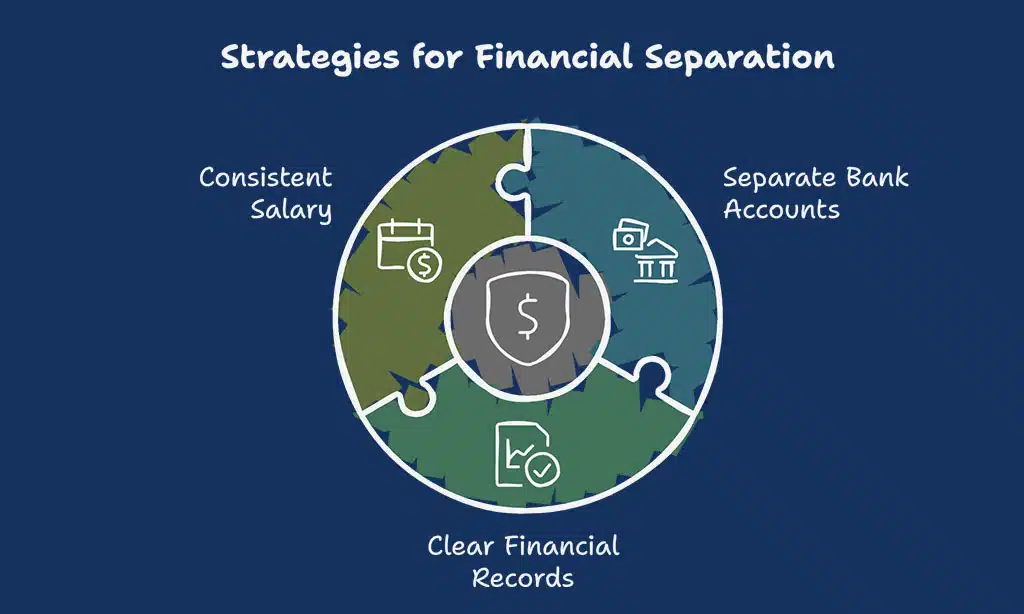
It’s vital to keep your personal and business finances separate to protect your assets. Mixing the two can expose your personal wealth to risks arising from your business operations, particularly in the event of a lawsuit or business debt.
Why Separation Matters for Asset Protection
When personal and business finances are intermingled, it becomes difficult to distinguish between the two in the event of legal action. By keeping your finances separate, you create a legal distinction that can protect your personal assets from business risks.
Best Practices for Financial Separation
- Separate Bank Accounts: Open separate accounts for personal and business transactions.
- Maintain Clear Financial Records: Keep track of business and personal expenses in distinct ledgers.
- Pay Yourself a Salary: Instead of drawing money from your business whenever you need it, pay yourself a consistent, reasonable salary.
Key Details: Financial Separation
| Practice | Purpose | Example |
| Separate Bank Accounts | Keeps business and personal finances distinct | Personal savings account vs. business checking |
| Clear Financial Record Keeping | Avoids the risk of blending assets | Track business expenses separately from personal ones |
| Paying Yourself a Salary | Ensures personal wealth remains distinct | Set up regular payroll instead of random withdrawals from business |
5. Use Homestead Exemptions to Protect Your Primary Residence
Many states offer homestead exemptions, which protect the equity in your primary residence from certain creditors or lawsuits. If you’re concerned about the possibility of losing your home in a legal dispute, a homestead exemption can be a valuable asset protection strategy.
What is a Homestead Exemption?
A homestead exemption is a legal provision that protects the equity in your primary residence from being seized by creditors in the event of a lawsuit. The amount of protection depends on the laws of the state you reside in.
Eligibility and Limitations
Eligibility requirements vary by state, but in general, the home must be your primary residence. Some states have dollar limits on the amount of equity protected, while others may offer unlimited protection, depending on the value of your home and other factors.
Key Details: Homestead Exemption Laws
| State | Exemption Limitations | Notes |
| Florida | Unlimited protection for primary residence equity | Must be primary residence; no cap on the exemption amount |
| Texas | Unlimited protection for primary residence equity | Must reside in the home for at least 6 months |
| California | Up to $175,000 protection for primary residence equity | Varies by county; designed to protect lower-income individuals |
| New York | Up to $82,775 protection for single homeowners | Exemption amounts vary based on the county |
6. Engage in Preemptive Estate Planning
Estate planning is not just about how your assets will be distributed after death, but also how you can protect your assets during your lifetime. By engaging in preemptive estate planning, you can ensure your assets are protected and avoid future legal challenges.
Importance of Estate Planning in Asset Protection
Proper estate planning allows you to manage your assets, minimize estate taxes, and protect your wealth from creditors or family disputes. A well-structured estate plan can be an effective tool to prevent legal challenges from jeopardizing your assets.
Key Estate Planning Tools
- Wills: A will ensures that your property is distributed according to your wishes, reducing the risk of disputes among heirs.
- Powers of Attorney: Assign someone to manage your financial and healthcare decisions if you become incapacitated.
- Trusts: In addition to asset protection, trusts can be used to manage and distribute wealth efficiently.
Key Details: Estate Planning Tools
| Tool | Purpose | Benefits |
| Will | Directs how your property is distributed | Avoids probate, reduces family disputes |
| Power of Attorney | Allows someone to manage your financial decisions | Protects your interests if incapacitated |
| Trust | Protects and distributes assets during your lifetime | Minimizes taxes and avoids probate |
7. Regularly Review and Update Your Asset Protection Plan
Asset protection is not a one-time task; it requires regular reviews and updates to ensure it remains effective. Life circumstances and laws change, and so should your asset protection strategies.
The Importance of Regular Reviews
Changes in your financial situation, family structure, or the legal landscape can impact the effectiveness of your asset protection strategies. Regular reviews ensure your plan stays relevant and protects your wealth effectively.
What to Look for During a Review
- Changes in Financial Status: Any significant changes in your income, investments, or liabilities should trigger a review.
- Life Events: Marriage, divorce, or the birth of children could necessitate changes in your asset protection plan.
- Legal Changes: New laws can impact the protection of your assets, so it’s important to stay informed and adjust your plan accordingly.
Key Details: Regular Plan Updates
| Action | Reason | Frequency |
| Review Financial Status | Ensure protection aligns with your wealth | Annually or after major financial events |
| Assess Life Changes | Update plans based on marriage, children, or divorce | Following significant life events |
| Stay Informed on Legal Changes | Adjust for changes in asset protection laws | Regularly, or when new laws are introduced |
Wrap Up
Safeguarding your assets from legal disputes is essential to securing your financial future. By following the strategies outlined in this article—such as establishing trusts, using LLCs for business protection, purchasing insurance, and keeping personal and business finances separate—you can take control of your financial destiny and protect your wealth. Regularly reviewing and updating your asset protection plan is just as crucial, ensuring your strategies remain effective in an ever-changing legal landscape.
Start implementing these strategies today to protect your assets from legal disputes and maintain the financial security you’ve worked hard to build.





















