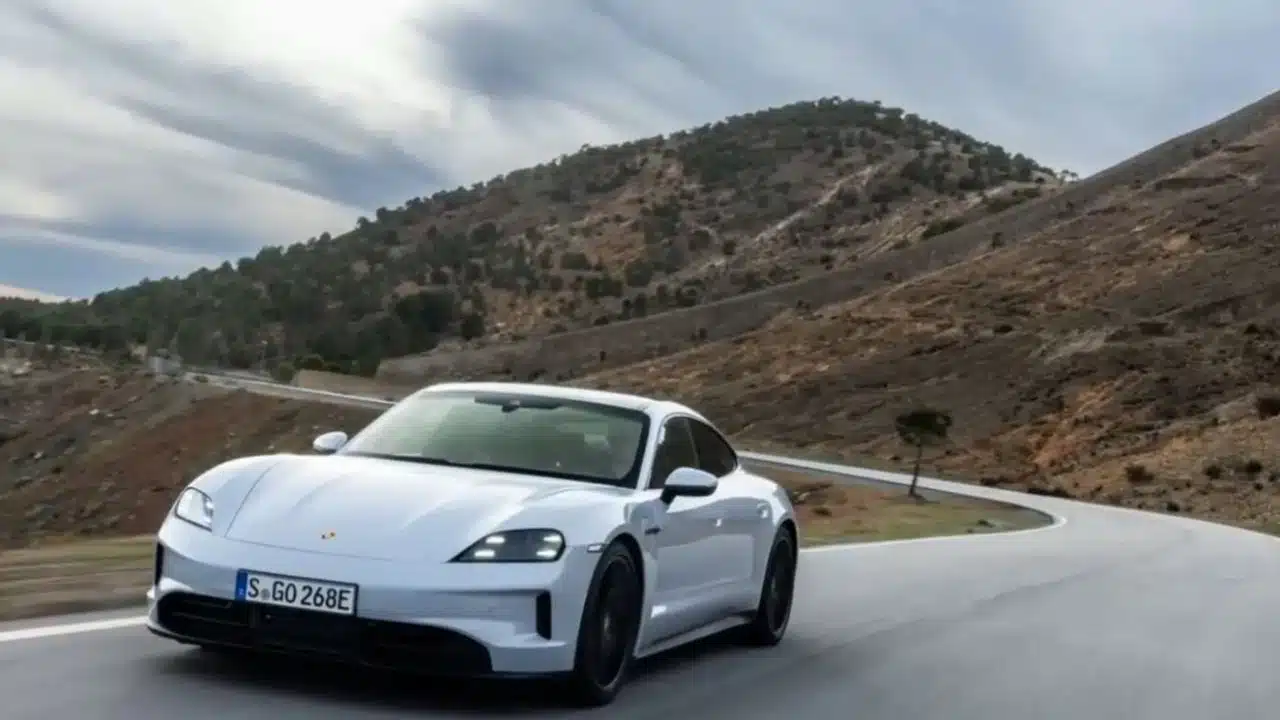
Porsche’s stock price fell sharply on Monday, tumbling by more than 7% in Frankfurt trading, after the German luxury carmaker confirmed it would delay the launch of several new electric vehicles (EVs). Investors reacted negatively because the company also lowered its profit outlook for 2025.
The announcement quickly spilled over to its parent company, Volkswagen Group, which also saw its shares slump by around 7% on the same day. Volkswagen warned that it would need to spend billions of euros to restructure Porsche’s vehicle lineup, which would reduce the group’s overall profitability in the short term.
This dual hit on the stock market reflects wider concerns across Europe’s car industry, where manufacturers are caught between falling EV demand, stricter regulations, and aggressive competition from Chinese automakers.
Profit Guidance Slashed — A Big Red Flag for Investors
In a statement issued last Friday, Porsche acknowledged that it now expects its return on sales — a key measure of profitability — to shrink dramatically in 2025. The company had previously forecast a margin of 5–7%, but it now anticipates only around 2% or less.
At the same time, Porsche cut its projected EBITDA margin from roughly 14.5–16.5% to just 10.5–12.5%. Analysts estimate that these changes will translate into as much as €1.8 billion in additional costs next year, mainly related to postponed EV development and delayed model launches.
Despite these setbacks, Porsche maintained that it still expects sales revenue between €37 billion and €38 billion in 2025, roughly the same as earlier forecasts. However, the reduced profit outlook suggests that much of this revenue will be consumed by restructuring expenses.
Why Porsche Is Pulling Back from EVs
Porsche’s decision highlights several pressures reshaping the global car market:
- Weakening luxury EV demand: In markets like China, where Porsche sells a significant share of its vehicles, demand for luxury electric cars has cooled. Chinese EV makers, such as BYD, Nio, and XPeng, have engaged in a fierce price war, slashing prices by nearly 20% over the past two years. This has left foreign automakers struggling to compete.
- Tariffs and trade tensions: Porsche also cited US import tariffs and uncertainties in global trade policy as a drag on its performance. Higher import duties mean higher consumer prices, which make its EVs less competitive in overseas markets.
- Slow production ramp-up: Transitioning to EV platforms requires massive investments in battery supply chains, new software, and advanced electronics. Porsche admitted that these processes are taking longer and costing more than it originally anticipated.
- European regulations: The European Union has already set a 2035 deadline to phase out the sale of new petrol and diesel cars. Automakers like Porsche and Volkswagen have argued that these targets are unrealistic given current market conditions and infrastructure gaps, especially in charging networks.
Strategic Shift in Porsche’s Line-Up
Instead of racing ahead with a fully electric strategy, Porsche has chosen to slow down and diversify.
- Upcoming SUV changes: A brand-new SUV positioned above the Cayenne was initially planned as a fully electric flagship model. That plan has now been shelved — it will instead launch with combustion and plug-in hybrid options only.
- Extending current models: Best-selling models like the Panamera and the Cayenne will continue to be available with petrol and hybrid engines well into the 2030s, even though Europe is pressing for an EV-only future.
- Platform delays: Porsche has pushed back the introduction of its next-generation EV platform, which was supposed to underpin its 2030s lineup. Development will now be coordinated more closely with other Volkswagen Group brands to cut costs.
This signals that Porsche is adopting a more cautious, phased approach to electrification, instead of fully committing to an all-electric transformation.
Industry Context — Not Just Porsche
The issues Porsche is facing are not unique. Other European luxury carmakers are also rethinking their EV strategies:
- BMW has announced cost-cutting measures to balance its EV investments against slower sales growth.
- Mercedes-Benz recently scaled back its ambition of having an all-electric lineup by 2030, saying it would continue to produce petrol and hybrid vehicles “as long as customers demand them.”
- Volkswagen Group, beyond Porsche, is under pressure to accelerate EV innovation while also reducing costs. It faces rising competition in its largest markets — Europe and China — and is also being challenged in the US by Tesla and other EV-focused rivals.
These adjustments show how Europe’s luxury car industry is struggling to stay competitive in an environment where Chinese EV makers are offering cheaper alternatives and where consumers are increasingly cautious about paying premium prices for new technology.
Broader Implications for Europe’s Car Industry
Porsche’s decision to delay EV rollouts raises important questions for the wider automotive industry:
- Regulatory deadlines: Can the EU’s 2035 combustion ban survive growing resistance from automakers? If more companies push back, Brussels may have to revisit the timeline or allow exemptions.
- Brand positioning: Porsche built its reputation on performance and engineering excellence. Delaying its EV ambitions could put that image at risk if competitors manage to capture the high-end EV market first.
- Investor confidence: A 7% stock drop in one day highlights how sensitive investors are to changes in EV strategies. Markets expect growth from electrification — any retreat raises concerns about long-term competitiveness.
Outlook — What to Watch Next
Going forward, Porsche and Volkswagen will need to carefully manage:
- Consumer expectations: Balancing traditional petrol engines with next-gen EVs will be a delicate act. Loyal Porsche fans may welcome more combustion options, but regulators may not.
- Cost discipline: With billions in extra spending already earmarked, further profit warnings are possible if development delays continue.
- Chinese market dynamics: If the Chinese EV price war stabilizes, Porsche may regain competitiveness. If not, its market share risks shrinking further.
- Global supply chain pressures: Battery costs, rare earth materials, and tariffs will remain unpredictable factors that could impact profitability.
Porsche’s decision to delay its EV rollout is not just about one company’s balance sheet — it reflects the growing tension in Europe’s automotive industry between ambitious electrification targets and harsh market realities.
By extending its reliance on combustion and hybrid engines, Porsche hopes to protect profits in the near term. However, this strategy also risks leaving it behind in the EV race, especially as Chinese manufacturers gain strength and global regulations tighten.
The coming years will determine whether Porsche’s cautious pivot proves to be a smart recalibration or a strategic misstep in an industry racing toward electrification.
The Information is Collected from BBC and Yahoo.