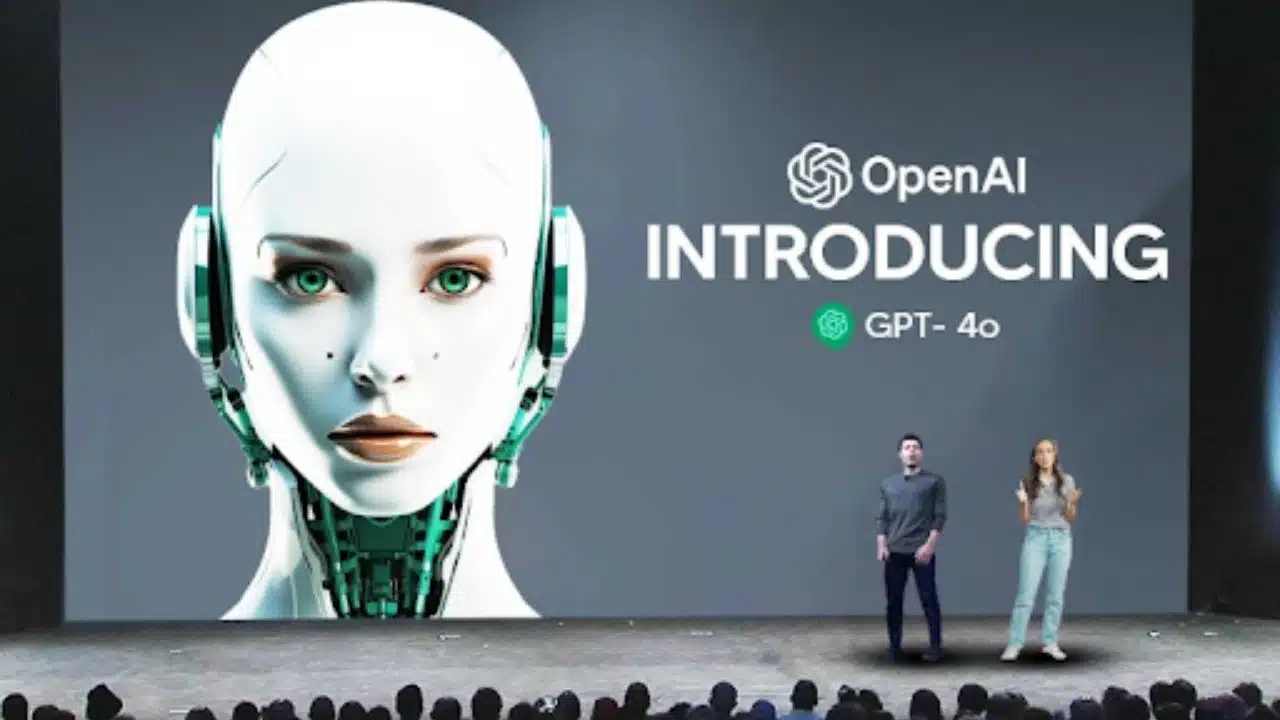
In a bold and ambitious move, OpenAI has unveiled GPT-4o, a revolutionary new artificial intelligence model that promises to redefine the very nature of how we interact with machines.
Debuting just one day before Google’s highly anticipated I/O conference, where artificial intelligence is expected to take center stage, OpenAI’s latest offering has sent shockwaves rippling through the tech industry and beyond.
Dubbed an “omnimodel” by the company, GPT-4o is a supercharged amalgamation of capabilities previously segregated into separate models, resulting in a conversational assistant that vastly outstrips familiar virtual helpers like Siri or Alexa.
This cutting-edge AI model boasts the ability to handle complex prompts with remarkable dexterity, seamlessly transitioning between tasks and modalities in a manner that feels remarkably natural and human-like.
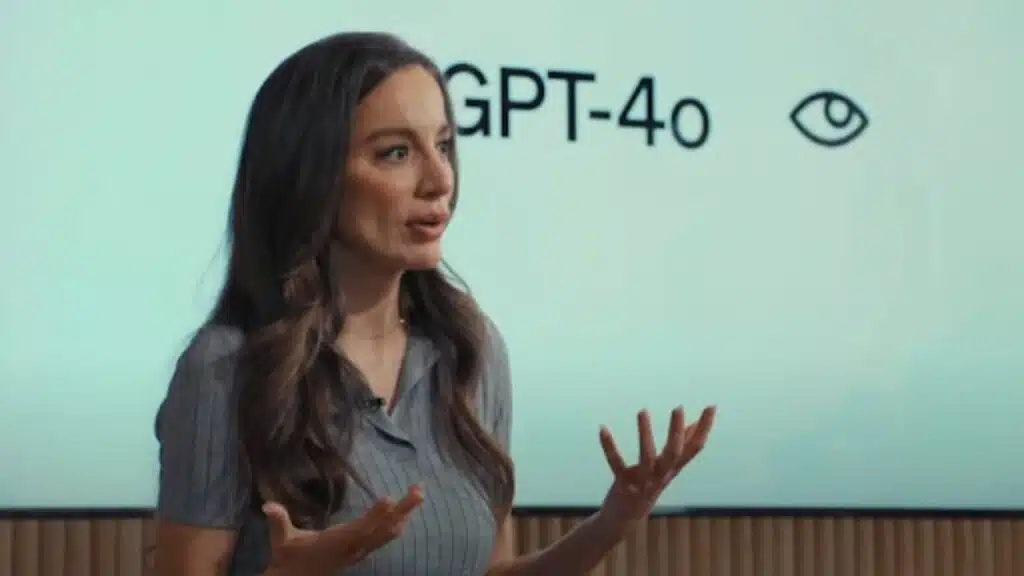
“We’re looking at the future of interaction between ourselves and the machines,” proclaimed Mira Murati, OpenAI’s Chief Technology Officer, during a captivating live demonstration of the new release.
“We think that GPT-4o is really shifting that paradigm into the future of collaboration, where this interaction becomes much more natural.”
One of the most striking features of GPT-4o is its facility with live voice conversations. In a display that left viewers awestruck, researchers Barret Zoph and Mark Chen showcased the model’s remarkable flexibility, instructing it to read a bedtime story about robots and love.
As the story unfolded, Chen seamlessly interrupted, demanding a more dramatic delivery – a request that GPT-4o accommodated without missing a beat, its tone and cadence shifting to match the desired gravitas.
Not content to leave it there, Murati then called for the model to pivot to a convincing robot voice, a transition it executed with aplomb, showcasing its ability to adapt dynamically to evolving conversational contexts.
But GPT-4o’s capabilities extend far beyond mere conversation. With an impressive capacity for real-time visual reasoning, the model can analyze complex equations or intricate diagrams captured on a user’s phone camera, providing step-by-step guidance akin to that of a patient and knowledgeable teacher.
It can also translate languages live, searches through previous conversations to maintain context and continuity and look up information on the fly, constantly expanding its knowledge base to serve its human interlocutors better.
Perhaps most significantly, however, GPT-4o marks a watershed moment in OpenAI’s quest to democratize access to its most advanced AI capabilities.
For the first time, many of the company’s most powerful features, such as image and video reasoning, will be made available to the general public free of charge through both the GPT app and web interface.
While paid subscribers will continue to enjoy higher capacity limits, OpenAI’s stated goal is to make this groundbreaking technology accessible to as many users as possible.
“We want you to be able to use it wherever you are,” Murati emphasized. “It’s easy, it’s simple, it integrates very, very easily into your workflow.”
To further enhance the user experience and cement GPT-4o’s position as a truly seamless and intuitive collaborative partner, OpenAI has also unveiled a “refreshed” user interface.
Complete with real-time conversational speech functionality and the ability to share videos, screenshots, and other media formats as prompts, this revamped interface promises to make interacting with GPT-4o an immersive and naturalistic experience like no other.
While the live demo did encounter some hiccups and glitches – a testament to the sheer complexity of the technology at play – GPT-4o’s ability to recover quickly and adapt to user feedback was nothing short of remarkable.
As with any cutting-edge innovation, there will undoubtedly be challenges and refinements along the way, but the potential for GPT-4o to revolutionize how we interact with artificial intelligence is undeniable.
As OpenAI continues to push the boundaries of what’s possible with AI, and with tech titans like Google and Apple poised to unveil their own advancements in the coming days and weeks, it’s clear that we are bearing witness to a pivotal moment in the evolution of human-machine interaction.
GPT-4o represents a significant stride towards a future where collaboration between humans and AI becomes not just seamless and intuitive but truly transformative.
In the future, the lines between our capabilities and those of our artificial counterparts become increasingly blurred.
In the wake of this groundbreaking announcement, the world watches with bated breath, eager to see how this revolutionary technology will shape our relationship with artificial intelligence in the years and decades to come.
One thing, however, is certain: the era of truly naturalistic and seamless human-AI collaboration has well and truly arrived, and OpenAI’s GPT-4o stands poised to lead the charge into this brave new world.
The Information is Collected from FirstPost and NBC News