June 16 is one of those dates where history does not move in a single direction. It carries the memory of anti-colonial politics in Bengal, the golden voice of Bengali music, the pain of apartheid-era South Africa, the rise of modern automobile culture, the birth of corporate technology, and one of humanity’s great space milestones.
For Bengali readers, the date is especially meaningful because it marks the death anniversary of Deshbandhu Chittaranjan Das, one of the most influential leaders of Bengal’s anti-colonial politics, and the birth anniversary of Hemanta Mukherjee, whose voice remains part of Bengali emotional life. Globally, June 16 is remembered for Valentina Tereshkova becoming the first woman in space, the Soweto Uprising, Abraham Lincoln’s “House Divided” speech, the founding of Ford Motor Company, and the International Day of Family Remittances.
This is not just a list of events. June 16 shows how politics, culture, migration, science, and resistance can all meet on the same page of the calendar.
June 16 at a Glance
| Year | Event | Region | Why It Matters |
|---|---|---|---|
| 1606 | Martyrdom of Guru Arjan Dev | South Asia | A defining moment in Sikh history |
| 1755 | British capture Fort Beauséjour | Canada | Helped reshape control of Atlantic Canada |
| 1858 | Lincoln gives “House Divided” speech | United States | Framed the moral crisis over slavery |
| 1903 | Ford Motor Company is created | United States | Changed industrial production and transport |
| 1920 | Hemanta Mukherjee is born | Bengali/India | One of the greatest voices in Bengali and Hindi music |
| 1925 | Chittaranjan Das dies | Bengal/India | Loss of a major anti-colonial leader |
| 1933 | Glass-Steagall Act signed | United States | Reshaped banking regulation after the Great Depression |
| 1963 | Valentina Tereshkova enters space | Soviet Union/Russia | First woman in space |
| 1976 | Soweto Uprising begins | South Africa | Turning point in anti-apartheid resistance |
| 2012 | Shenzhou 9 launches with Liu Yang | China | First Chinese woman in space |
The Bangalee Sphere: Bengal, Bangladesh and India
Deshbandhu Chittaranjan Das Dies: A Loss for Bengal’s Political Imagination
June 16, 1925, marks the death of Chittaranjan Das, popularly known as Deshbandhu, meaning “Friend of the Nation.” Born in Calcutta in 1870 with family roots connected to Bikrampur in present-day Bangladesh, Das became one of the most important Bengali leaders of India’s freedom struggle.
His importance lies not only in his politics but also in the kind of politics he represented. Das was a lawyer, nationalist, organiser, writer, and mentor to younger leaders, including Subhas Chandra Bose. He defended Sri Aurobindo in the Alipore Bomb Case and later emerged as a major figure in the Indian National Congress.
After disagreements over political strategy, he helped found the Swaraj Party in 1923 with Motilal Nehru. The party argued that Indians should enter colonial legislative councils and obstruct British rule from within. This was a practical and tactical approach to resistance. It showed that anti-colonial politics was not only about protest on the streets but also about using institutions against the empire.
For Bengal, Das remains a symbol of principled leadership. His death at only 54 deprived Indian politics of a figure who might have shaped the next phase of nationalist strategy.
Hemanta Mukherjee Is Born: The Voice That Became Memory
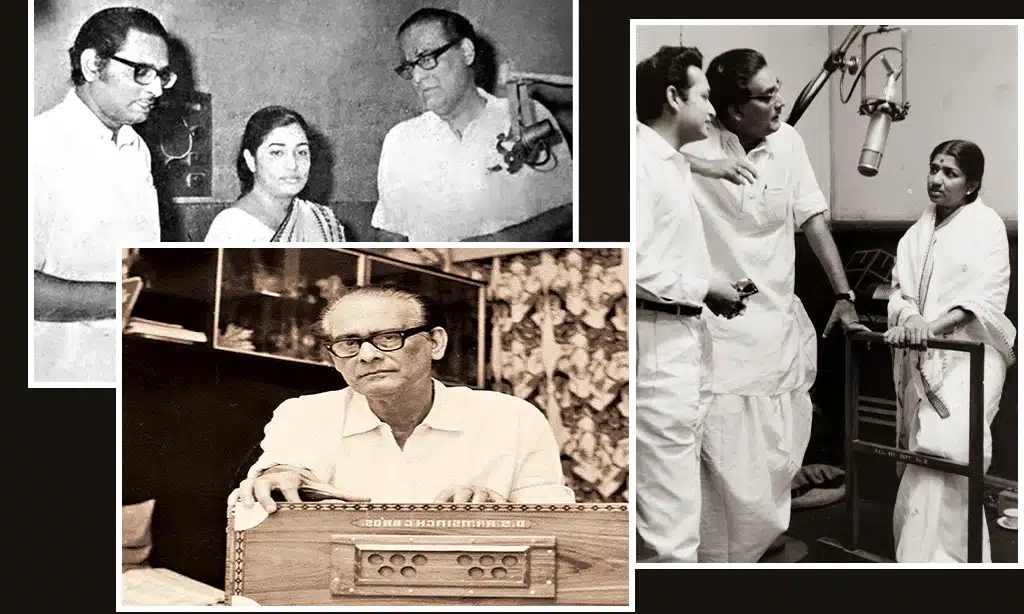
June 16, 1920, is the birth anniversary of Hemanta Mukherjee, also known as Hemant Kumar. Born in Varanasi to a Bengali family, Hemanta became one of the most beloved singers and music directors in South Asian music.
His voice had a rare quality: deep, calm, intimate and instantly recognisable. In Bengali music, he became a master interpreter of Rabindra Sangeet and modern songs. In Hindi cinema, he created unforgettable playback and music direction, including work that shaped the sound of mid-20th-century film music.
Hemanta’s importance is not limited to nostalgia. His songs still travel across generations because they carry emotional restraint. He did not overperform grief, romance or longing. He allowed listeners to feel them. That is why his music still appears in homes, radio programmes, film retrospectives and cultural gatherings across Bengal and the wider South Asian diaspora.
Mithun Chakraborty: A Popular Culture Note with a Date Caution
Many public profiles list June 16, 1950, as the birthday of Mithun Chakraborty, the Bengali-born Indian actor who became a pan-Indian star through films such as Mrigayaa, Disco Dancer and Agneepath. His journey from art cinema to mass stardom made him one of the most recognisable faces of Indian popular cinema.
However, editors should note that some entertainment databases list a different birthday, including July 16. Because of this discrepancy, it is better to mention his birthday with caution unless the article is using a verified biographical source.
Guru Arjan Dev’s Martyrdom: A South Asian Religious Memory
June 16 is also connected in many calendars with the martyrdom of Guru Arjan Dev, the fifth Sikh Guru. His death in 1606 under Mughal authority is remembered as one of the most significant martyrdoms in Sikh history.
Guru Arjan Dev compiled the Adi Granth and helped shape the spiritual foundation of Sikhism. His martyrdom changed the direction of Sikh history, strengthening the community’s sense of discipline, sacrifice and resistance. The date can vary in observance depending on the calendar followed, so it should be handled carefully in modern event listings.
International Observances and Holidays on June 16
International Day of Family Remittances
June 16 is observed as the International Day of Family Remittances. This day recognises the contribution of migrant workers who send money back to their families. For Bangladesh, India, Nepal, the Philippines, Mexico and many African countries, remittances are not just financial transfers. They support education, food security, healthcare, housing and rural resilience.
The day matters deeply because it connects global migration with household survival. A worker in the Middle East, Europe, North America or Southeast Asia may be physically far from home, but remittances keep families connected to opportunity. In countries like Bangladesh, remittance income is also a major part of the national economy.
Day of the African Child
The Day of the African Child is observed every year on June 16. It remembers the children and students of the 1976 Soweto Uprising in South Africa. The day is not only a memorial. It is also a reminder that education, language rights and child welfare remain political questions.
The Soweto students protested against the forced use of Afrikaans as a medium of instruction under apartheid. Their courage turned June 16 into a continental symbol of youth resistance.
Youth Day in South Africa
In South Africa, June 16 is Youth Day, a national public holiday. It honours the young people who resisted apartheid education policies in 1976. The day remains relevant because it asks each generation to consider what freedom means when young people still face unemployment, inequality and poor access to quality education.
Bloomsday in Ireland
June 16 is also Bloomsday, a literary celebration connected to James Joyce’s novel Ulysses. The events of the novel take place on June 16, 1904, in Dublin. Every year, readers and visitors celebrate Joyce’s work through readings, walks, costumes and performances.
Bloomsday is unusual because it turns a fictional day into a real cultural festival. Few novels have shaped a city’s public calendar in the way Ulysses has shaped Dublin.
Global History
United States
Abraham Lincoln’s “House Divided” Speech
On June 16, 1858, Abraham Lincoln delivered his famous “House Divided” speech in Springfield, Illinois. He argued that the United States could not remain permanently divided between slavery and freedom.
The speech mattered because it turned slavery from a political compromise into a moral crisis. Lincoln did not win the Senate race that year, but the speech helped define him as a national figure. It also foreshadowed the Civil War and the future of American democracy.
Ford Motor Company Is Created
On June 16, 1903, Henry Ford and his investors created Ford Motor Company. The company would later transform manufacturing through assembly-line production and make car ownership more accessible to millions.
Ford’s rise changed not only transport but also labour, urban planning, suburbs, highways and consumer culture. The modern world of commuting, logistics and automobile identity has part of its roots in this date.
Glass-Steagall Act Signed
On June 16, 1933, during the Great Depression, the United States adopted the Banking Act of 1933, widely associated with Glass-Steagall. It separated commercial and investment banking and helped create the Federal Deposit Insurance Corporation.
Its long-term importance lies in public trust. After waves of bank failures, ordinary people needed confidence that their deposits were safe. Even after later deregulation, the debate over Glass-Steagall remains central to conversations about banking risk.
Russia and the Soviet Sphere
Valentina Tereshkova Becomes the First Woman in Space
On June 16, 1963, Soviet cosmonaut Valentina Tereshkova launched aboard Vostok 6 and became the first woman in space. She completed 48 orbits in roughly 71 hours.
This was more than a space achievement. It was a symbolic victory in the Cold War and a milestone in women’s history. Tereshkova’s flight showed that space exploration could not remain an all-male frontier forever.
Rudolf Nureyev Defects in Paris
On June 16, 1961, Soviet ballet star Rudolf Nureyev defected to the West at Le Bourget Airport in Paris. His decision became one of the most dramatic cultural defections of the Cold War.
Nureyev’s defection mattered because ballet was one of the Soviet Union’s great soft-power tools. His choice turned an artistic career into a political statement about freedom, surveillance and identity.
China
Whampoa Military Academy and Modern Chinese Politics
On June 16, 1924, the Whampoa Military Academy was inaugurated in Guangzhou. It trained many figures who would later shape both Nationalist and Communist military history.
Whampoa matters because it sits at the crossroads of modern Chinese politics. It was connected to Sun Yat-sen’s revolutionary vision, Chiang Kai-shek’s rise, and the early cooperation and later conflict between Chinese political forces.
Liu Yang Becomes China’s First Woman in Space
On June 16, 2012, China launched Shenzhou 9, carrying Liu Yang, the country’s first woman astronaut. The mission was also important for China’s crewed space docking programme.
The date created a powerful historical parallel: exactly 49 years after Tereshkova’s launch, another woman crossed a national space milestone.
Shanghai Disneyland Opens
On June 16, 2016, Shanghai Disney Resort opened to the public. Its significance goes beyond entertainment. It represented a major cultural and commercial partnership between a U.S. entertainment giant and the Chinese market.
United Kingdom and Europe
Battle of Stoke Field
On June 16, 1487, the Battle of Stoke Field took place in England. It is often regarded as the final major battle of the Wars of the Roses. Henry VII’s victory helped secure the Tudor dynasty.
The battle matters because it closed one violent chapter of English dynastic politics and helped stabilise the monarchy after decades of conflict.
Battle of Ligny
On June 16, 1815, Napoleon defeated Prussian forces at Ligny in present-day Belgium. It was his final battlefield victory. Yet the Prussian army survived well enough to help defeat him two days later at Waterloo.
Ligny is a reminder that a tactical victory can still fail strategically. Napoleon won the day but lost the campaign.
Jo Cox Is Murdered
On June 16, 2016, British MP Jo Cox was murdered in West Yorkshire. Her death shocked the United Kingdom during the tense period before the Brexit referendum.
Cox’s murder remains a warning about political hatred, extremist violence and the vulnerability of democratic public service.
Canada
Fort Beauséjour Falls to the British
On June 16, 1755, French Fort Beauséjour surrendered to British forces and was renamed Fort Cumberland. This event helped shift power in the contested borderlands between French and British North America.
Its consequences were serious for Acadian communities. The fall of the fort came shortly before the deportation of Acadians, one of the most painful episodes in Canadian colonial history.
Churchill Falls Hydroelectric Project
June 16 is also associated with the official inauguration of the Churchill Falls hydroelectric project in Labrador in 1972. The project became one of Canada’s major energy landmarks, though it also remains tied to long-running political and economic debates over resource control and regional benefit.
Australia
June 16 is not among Australia’s best-known national anniversaries, but Australian history calendars connect the date with explorer Ludwig Leichhardt’s 1845 journey and the naming of the Mitchell River in north Queensland. Such entries remind us that exploration history must be read carefully today. What appeared in colonial records as “discovery” often involved lands already known, named and lived in by Indigenous peoples for thousands of years.
Rest of the World
Soweto Uprising in South Africa
On June 16, 1976, thousands of Black students in Soweto protested against apartheid education policies, especially the forced use of Afrikaans in schools. Police opened fire, and the uprising became one of the defining moments in the struggle against apartheid.
The image of Hector Pieterson being carried after he was shot became one of the most powerful photographs of the anti-apartheid era. June 16 now stands as a global symbol of youth courage against state violence.
Uttarakhand Floods in India
On June 16-17, 2013, extreme rainfall and flooding devastated Uttarakhand in northern India. The disaster hit pilgrimage routes and mountain communities, killing thousands and forcing a difficult debate about climate risk, hydropower, road building and fragile Himalayan ecology.
Bhutan’s Tobacco Control Experiment
On June 16, 2010, Bhutan’s Tobacco Control Act came into force. It became internationally notable because Bhutan took one of the world’s strictest approaches to tobacco sales and distribution. Later changes softened parts of the policy, but the original law remains an important case study in public health regulation.
Famous Birthdays on June 16
| Name | Year | Nationality | Known For |
|---|---|---|---|
| Hemanta Mukherjee | 1920 | Indian/Bengali | Legendary singer and music director |
| Barbara McClintock | 1902 | American | Nobel-winning geneticist known for “jumping genes” |
| Joyce Carol Oates | 1938 | American | Prolific novelist and National Book Award winner |
| Roberto Durán | 1951 | Panamanian | One of boxing’s greatest lightweight champions |
| Tupac Shakur | 1971 | American | Influential rapper, actor and cultural icon |
| Phil Mickelson | 1970 | American | Major-winning golfer |
| John Cho | 1972 | Korean-American | Actor known for Harold & Kumar and Star Trek |
| Daniel Brühl | 1978 | German-Spanish | Actor known for Good Bye, Lenin! and Rush |
Famous Death Anniversaries on June 16
| Name | Year | Nationality | Legacy |
|---|---|---|---|
| Guru Arjan Dev | 1606 | Sikh/South Asian | Fifth Sikh Guru and major martyr in Sikh history |
| John Snow | 1858 | British | Pioneer of epidemiology and cholera mapping |
| Chittaranjan Das | 1925 | Indian/Bengali | Freedom fighter and founder of Swaraj Party |
| Imre Nagy | 1958 | Hungarian | Reformist leader executed after the 1956 uprising |
| Wernher von Braun | 1977 | German-American | Rocket engineer central to the U.S. space programme |
| Jo Cox | 2016 | British | MP remembered for public service and anti-hate legacy |
| Helmut Kohl | 2017 | German | Chancellor linked to German reunification |
| Daniel Ellsberg | 2023 | American | Pentagon Papers whistleblower and anti-war activist |
Did You Know?
- June 16 links two major women-in-space milestones: Valentina Tereshkova became the first woman in space in 1963, and Liu Yang became China’s first woman in space on the same date in 2012.
- Bloomsday is based on a fictional day in a novel, but it has become a real-world cultural festival celebrated by readers across the globe.
- Lincoln’s “House Divided” speech did not win him the 1858 Senate election, but it helped build the national reputation that carried him toward the presidency two years later.
Quote of the Day
“A house divided against itself cannot stand.”
Abraham Lincoln spoke these words on June 16, 1858, in Springfield, Illinois. The line remains one of the most famous warnings in democratic history: a nation cannot survive forever by avoiding its deepest moral conflict.
Final Thoughts
June 16 has witnessed remarkable moments that have shaped nations, influenced global affairs, and left lasting marks on history. From significant political developments and groundbreaking achievements to the births of influential figures and the passing of notable personalities, this date serves as a reminder of humanity’s ever-evolving story.
Reflecting on these events helps us better understand the past and appreciate the individuals and milestones that continue to influence our world today. As another June 16 unfolds, these historical moments remain an important part of our shared global heritage.