In 2026, the concept of Non-Ultra-Processed Foods (Non-UPF) Verified is the ultimate defensive line for a nation’s food supply. At its core, this standard is about stripping away the industrial camouflage that has infiltrated even the organic sector. While Organic tells you how an ingredient was grown, Non-UPF Verified tells you how it was handled after the harvest.
It is a rigorous third-party certification that rejects the high heat extrusion, chemical fractionation, and synthetic additive chains that define ultra-processed foods. By enforcing a return to real food structures, this standard ensures that a country is not just fed but nourished by systems that are simple enough to be maintained locally. These systems are resilient enough to withstand global supply chain collapses.
The Industrial Camouflage Problem
The Organic label used to be the final word in food quality. By 2026, that has changed. We now see organic biscuits and frozen meals that are just as industrially manipulated as their conventional counterparts. You can grow corn organically, but if you turn it into a chemically isolated maltodextrin, the biological value is gone.
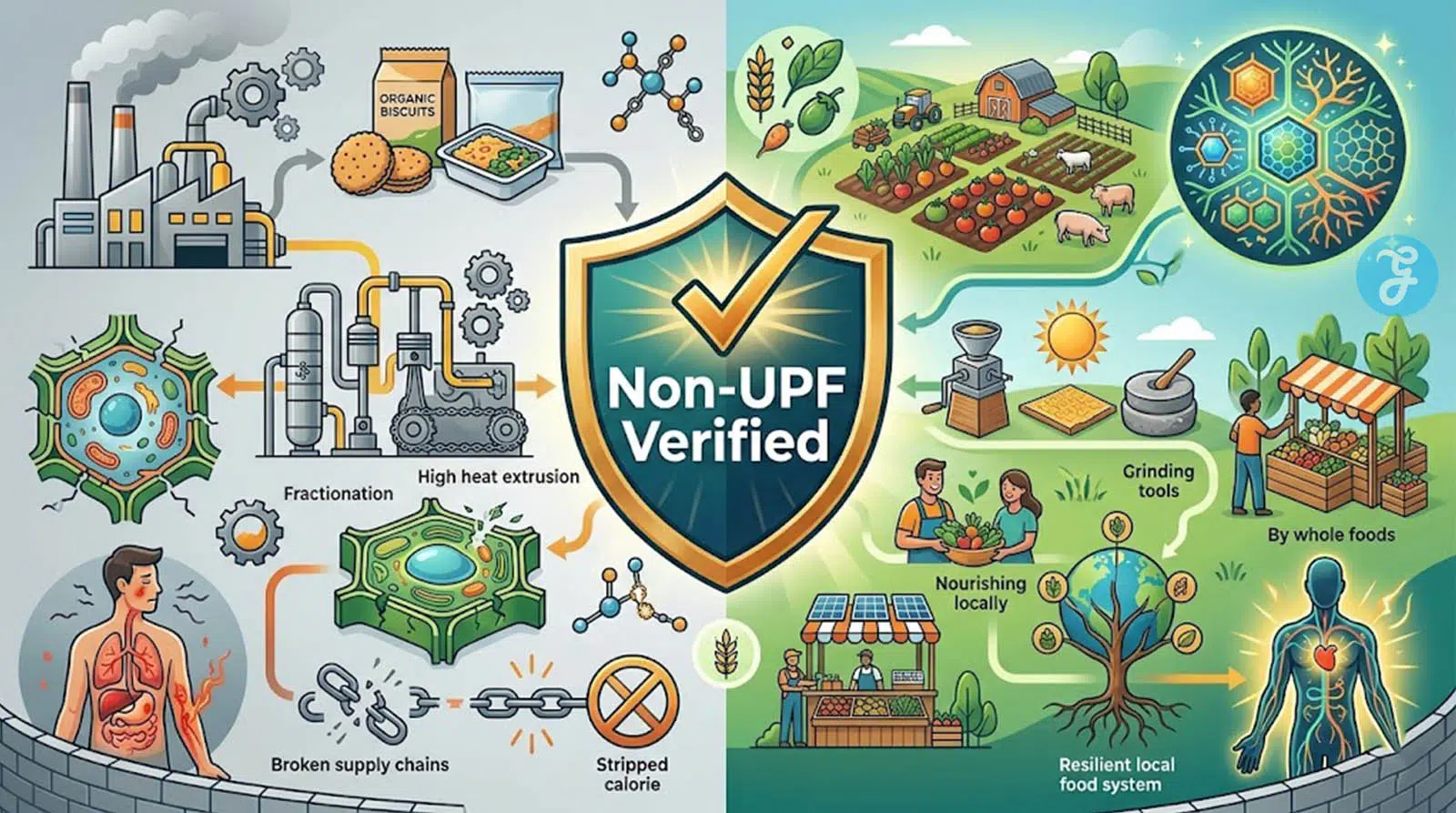 The Non-UPF Verified seal solves this by looking at the mechanical and chemical journey of the food. It ensures the cellular structure of the plant or animal remains intact. When we eat food that has lost its internal architecture, we develop metabolic vulnerability. Our bodies cannot process these “stripped” calories correctly, leading to a silent crisis of chronic inflammation and insulin resistance.
The NOVA 4 Distinction
The technical backbone of this movement is the NOVA classification system. Most modern food falls into ultra-processed products. These are ultra processed products made from substances derived from foods, with little if any intact food remains. The Non-UPF Verified standard is the only framework that successfully de-industrialises the pantry. It bans the cosmetic ingredients that make industrial sludge look and taste like real food. If a product contains high fructose corn syrup, hydrogenated oils, or chemically modified starches, it cannot carry the seal. It forces manufacturers to move away from the laboratory and back to the kitchen.
Nutrient Security over Caloric Volume
For years, governments focused on caloric volume. They wanted to ensure there was enough energy to go around. In 2026, the metric has shifted to nutrient security. Having a warehouse full of refined flour and seed oils is a liability, not an asset. These foods create metabolic vulnerability. A population reliant on them is more likely to suffer from chronic illness, making them less resilient during a national crisis. Non-UPF Verified food acts as a hard asset for a nation. It builds a healthy, productive populace that does not drain the national healthcare budget. Shifting the national metric from “having enough food” to “having enough real food” is now the primary goal of any state seeking true independence.
Non-UPF Verified and Three Pillars of National Independence
France is the pioneer in this movement, but it is not alone. A triad of nations is now leading the global defence of real food. They are proving that food processing is a matter of national security.
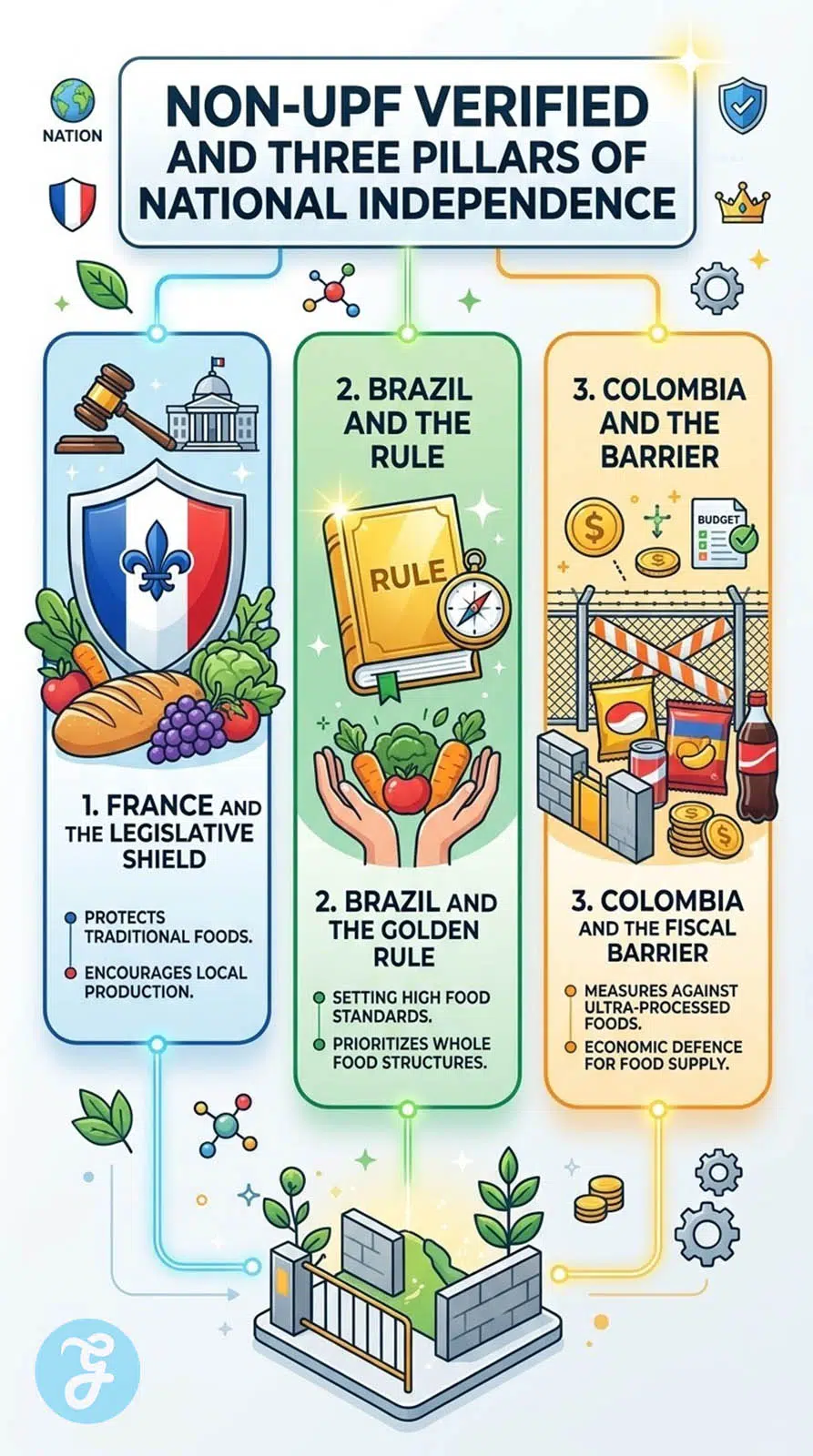
1. France and the Legislative Shield
The 2025 Agricultural Orientation Law bore fruit in early 2026. By requiring public canteens to serve Non-UPF Verified meals, France created a guaranteed market for local farmers. This removed the reliance on foreign industrial conglomerates. When global supply chains for additives faltered in late 2025, French schools kept running on local stone-milled grains and butter.
2. Brazil and the Golden Rule
Brazil’s 2026 dietary guidelines are famous for one simple instruction. Always prefer natural or minimally processed foods and freshly prepared dishes. They have limited ultra processed products in school menus to just 10%. This preserves traditional food cultures and protects local biodiversity from industrial encroachment.
3. Colombia and the Fiscal Barrier
Colombia proves that policy can change the plate. Their 20% tax on industrialised food products led to a measurable drop in consumption within a year. The revenue from this “Junk Food Tax” is now being used to fund local Non-UPF Verified food hubs. This ensures that healthy, independent food is cheaper than imported industrial complexity.
A Global Coalition for Nutrient Resilience
Beyond these pioneers, a broader global shift is gaining momentum in 2026. Mexico has expanded its front-of-pack labelling system, NOM-051, to include specific warnings about the degree of industrial processing. This policy is driving a massive shift back towards traditional maize production and away from industrial corn derivatives. In the United Kingdom, the 2025 National Food Strategy update began prioritising whole food procurement for the NHS. Early data from early 2026 is already linking faster patient recovery times to the strict avoidance of industrial additives in hospital meals.
Meanwhile, the Canadian government is investing 30 million dollars into the Local Food Infrastructure Fund to build regional processing hubs. These hubs allow communities to bypass the complex supply chains controlled by global food giants. These nations are all moving toward the same conclusion. National security is impossible without a resilient Non-UPF Verified food supply. By decentralising production and focusing on mechanical simplicity, these states are insulating themselves from the next wave of global instability.
The Geopolitics of Food Independence
In 2026, nations are learning that a closed border means nothing if your kitchen relies on a foreign laboratory. Food processing technology has become a proprietary asset. It is now used as leverage by global corporations and the states that host them. If a country depends on patented extruders or specific chemical catalysts to feed its people, it is not truly independent. These technologies can be switched off or restricted during a trade conflict. Transitioning to Non-UPF Verified standards ensures that the tools of food production remain in the hands of the local community.
Securing Physical and Digital Borders
The digital age has turned food into a series of algorithms and proprietary formulas. Many ultra processed staples rely on “black box” technology that local engineers cannot fix. This creates a digital vulnerability. When a nation adopts Non-UPF Verified protocols, it moves away from these opaque systems. It chooses transparent methods that do not require foreign software updates or specialised industrial parts. This is the new frontier of border security. A nation that can maintain its own food processing equipment is a nation that cannot be held to ransom.
The Just In Time Trap
Ultra processed complexity creates a hidden dependency on dozens of nations for a single product. A simple box of industrial crackers might require palm oil from one continent and synthetic vitamins from another. It needs emulsifiers from a third and moisture controllers from a fourth. This is the “Just In Time” trap. If one shipping lane closes, the entire product disappears from the shelves. Non-UPF Verified food breaks this chain. It relies on whole ingredients that can be sourced and processed within a smaller geographic radius. This geographical honesty is the best defence against global supply chain shocks.
Resilience through Simplicity
We used to think of high tech as something complex and digital. In 2026, we know better. Stone milling, cold pressing, and traditional fermentation are the new high tech for a secure economy. These methods are robust. They do not fail when the internet goes down or when a foreign supplier goes bust. They produce food that is biologically superior and culturally grounded. By investing in these “simple” technologies, a state builds a resilient food system. This system is immune to the volatility of the global industrial complex.
The Economic and Metabolic Defence
A nation’s health is its most valuable asset. In 2026, the cost of metabolic disease has become a direct threat to national stability. A population that consumes mostly ultra processed food is a population in a state of constant biological stress. This is not just a personal tragedy. It is an economic disaster that drains the treasury and weakens the state.
Healthcare as a National Security Risk
Chronic diseases linked to ultra processed diets are now the leading cause of government overspend. High rates of type 2 diabetes and hypertension are not just medical issues. They are fiscal leaks. Every pound spent on managing a preventable diet related illness is a pound taken away from infrastructure or education. Non-UPF Verified food acts as a preventative shield. It reduces the long term burden on the healthcare system. By promoting these standards, a government is effectively de-risking its national budget for the next decade.
The Productivity Multiplier
A healthy population is a productive one. People who eat real food have more stable energy levels and better cognitive focus. They are more resilient to physical and economic stress. This is the productivity multiplier. In the competitive environment of 2026, the most successful nations will be those with the highest “Human Nutrient Density.” Non-UPF Verified standards ensure that the workforce is fuelled by food that supports longevity and performance. It is the ultimate investment in human capital.
Technical Standards and Global Adoption
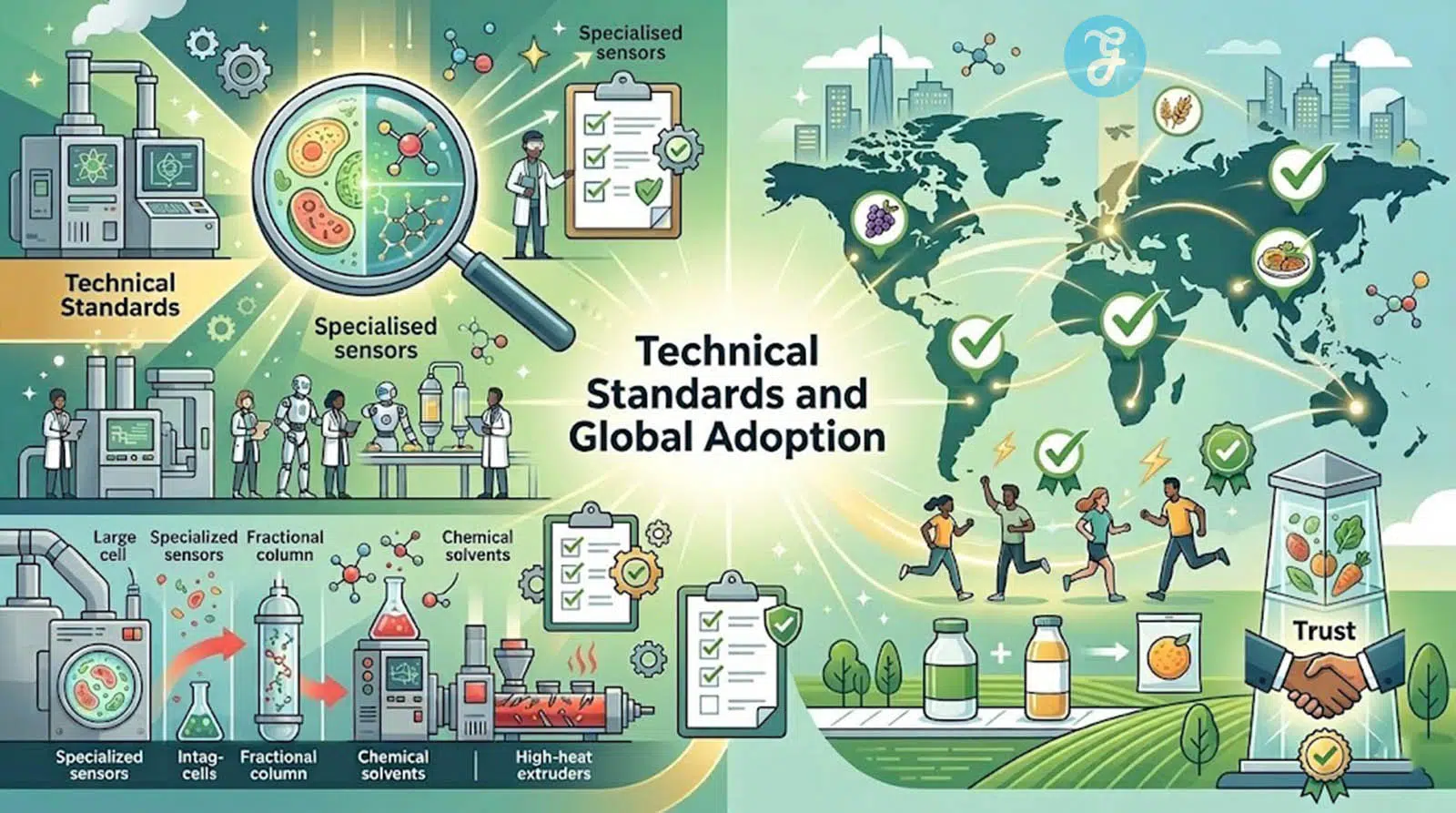
The integrity of this movement relies on strict oversight. In 2026, the Non-UPF Verified seal is not just a marketing claim. Created by the Non-GMO Project, it is a technical certification administered by the world’s leading safety bodies. These organisations act as the gatekeepers of food independence. They ensure that every product carrying the seal has been forensically examined for industrial interference.
The Guardians of the Standard
Independent technical administrators like NSF and SCS Global Services maintain the rigorous framework of the Non-UPF Verified programme. They do not just look at a list of ingredients. They audit the entire manufacturing process. If a factory uses high-speed centrifugal fractionation or chemical solvents to “clean” an organic oil, it fails. This level of scrutiny protects the consumer from the hidden risks of ultra-processing. It also protects the nation from the invisible vulnerabilities of global industrial patents.
The 2026 Corporate Leaders
Mainstream brands are already using the seal to signal their commitment to national reliability. Spindrift was an early mover in the beverage sector. They proved that a sparkling drink can exist without “natural flavours” or synthetic sweeteners. By early 2026, Amy’s Kitchen achieved verification for a significant portion of their frozen range. These companies are proving that scale does not have to mean complexity. They are building a new type of corporate trust. This trust is based on biological transparency rather than clever branding.
The New Standard for Organic Independence
Choosing Non-UPF Verified is a political and strategic act. It is a vote for a world where food is a hard asset. By rejecting the complexity of ultra-processed systems, we choose a future of self-reliance. This is about more than just what we eat for dinner. It is about who owns the technology that feeds us. It is about the health of our children and the stability of our economy.
The Manifesto
The era of blind trust in global industrial food is over. We now know that true independence requires a return to the fundamentals of food processing. We must support the farmers and processors who use methods we can see, touch, and understand. This is the only way to build a food system that cannot be disrupted by foreign interests or digital failure. It is a path to a more grounded and resilient society.
As we look toward the future, the evidence is clear. A nation is only as strong as its nutrient supply. This report highlights that the shift toward real food is the ultimate power move for 2026. By embracing the Non-UPF Verified standard, we are securing our health and our national independence for the decades to come.