
Publishers do not have the luxury of treating email like a side channel anymore. Search traffic is less predictable, social platforms keep changing the rules, AI answers are reshaping discovery, and readers are drowning in too much content.
That makes email one of the few places where a publisher can still build a direct, repeatable relationship with readers.
But the best Newsletter Strategies for Publishers are not just about sending more emails. More email can make readers unsubscribe faster if the promise is weak. A strong publisher email strategy gives people a clear reason to sign up, a clear reason to open, and a clear reason to keep coming back.
The goal is not to build a giant list full of passive subscribers. The goal is to build a useful habit.
Our Selection Criteria
We selected these newsletter strategies based on what helps publishers grow loyal audiences, not just inflate subscriber counts.
| Criteria | What We Looked For |
|---|---|
| Reader value | Does the strategy make the newsletter more useful to the audience? |
| Publisher fit | Can it work for media sites, niche publishers, local newsrooms, B2B publishers, and editorial brands? |
| Growth potential | Does it support newsletter growth without relying on spammy tactics? |
| Editorial quality | Does it improve the newsletter as a content product, not just a marketing channel? |
| Revenue support | Can it help subscriptions, memberships, ads, sponsorships, events, or premium products? |
| Sustainability | Can a small editorial or growth team repeat it without burning out? |
Who This Is For
These strategies are for digital publishers, newsletter editors, media startups, local newsrooms, niche content sites, magazine brands, B2B publishers, and editorial teams that want stronger direct audience relationships.
They are especially useful if your site depends too heavily on search, social traffic, or one-time visitors. A good newsletter can turn casual readers into returning readers. A great newsletter can turn returning readers into paying supporters, subscribers, event attendees, or community members.
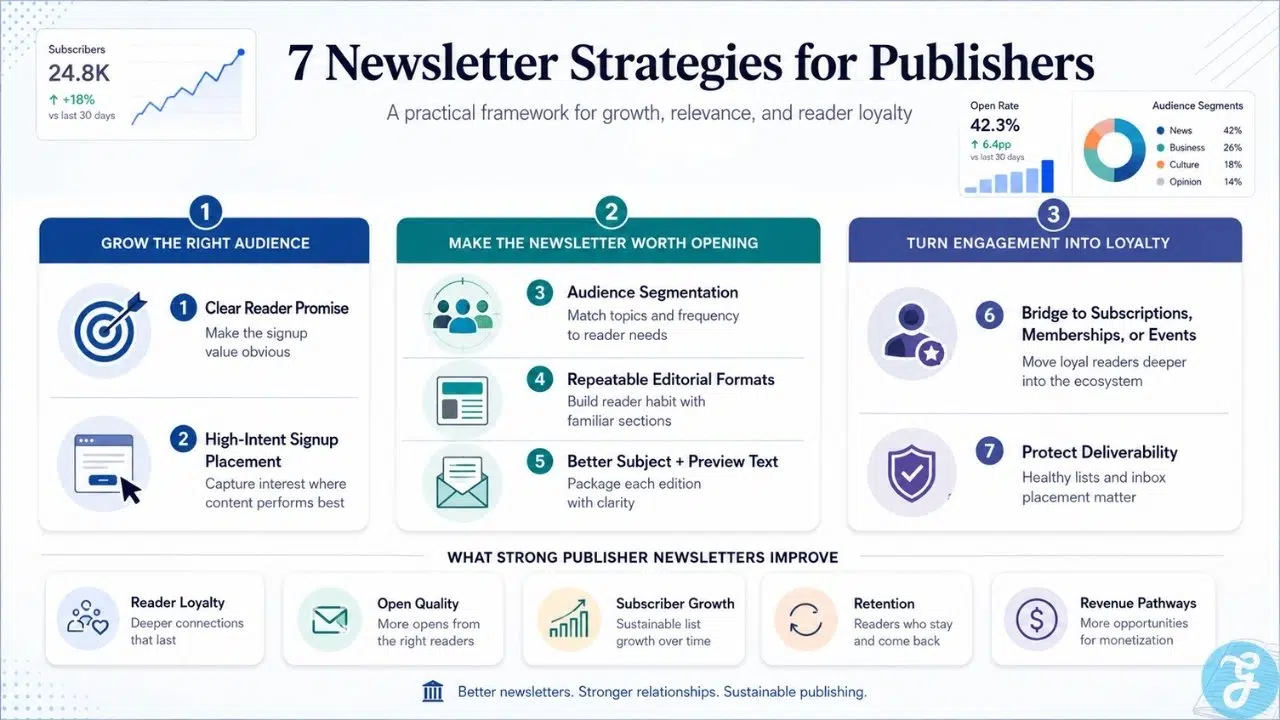
7 Newsletter Strategies for Publishers to Grow Reader Loyalty
Before choosing tactics, remember this: a newsletter is not a dumping ground for links. It is an editorial product with its own promise, rhythm, voice, and reader expectation.
1. Build Each Newsletter Around a Clear Reader Promise
The weakest publisher newsletters say, “Here are our latest stories.” The strongest ones answer a sharper question: “Why should this reader let us into their inbox?”
That promise can be practical, emotional, professional, local, or identity-based. A business publisher might promise “the five market shifts executives need before 9 a.m.” A local publisher might promise “what changed in your city today.” A niche site might promise “the best expert reads, tools, and warnings in one short briefing.”
This is the foundation of every serious publisher email strategy. If the promise is vague, the newsletter becomes easy to ignore.
Best For:
- Best for creating a newsletter readers can understand immediately
- Great for publishers launching or repositioning email products
Why We Chose It:
- Gives the newsletter a clear editorial identity
- Helps readers know what they are signing up for
- Makes subject lines, formats, and CTAs easier to plan
- Prevents the newsletter from becoming a random content dump
Things to consider:
- Do not create ten newsletters with nearly identical promises
- Keep the promise narrow enough to be remembered
2. Place Signup Offers Where Reader Intent Is Highest
Newsletter growth does not happen only through homepage popups. The best signup moments usually happen when the reader has already shown interest.
Place newsletter prompts beside your strongest content, inside related article templates, near author pages, after long-form explainers, within topic hubs, and on high-returning visitor pages. A reader who just finished a useful guide is much more likely to subscribe than someone attacked by a popup three seconds after landing.
The trick is matching the signup offer to the article context. A climate-tech reader should see a climate-tech newsletter. A sports analysis reader should see the sports briefing. A business reader should see the business digest.
Best For:
- Best for practical newsletter growth
- Great for publishers with strong topic verticals or evergreen content
Why We Chose It:
- Converts readers when interest is already high
- Makes signup prompts feel useful instead of intrusive
- Helps grow more relevant subscriber segments
- Turns high-performing articles into list-building assets
Things to consider:
- Ask for the email address first, not a full biography
- Test placement without damaging the reading experience
3. Segment by Interest, Frequency, and Reader Value
A one-size-fits-all newsletter strategy is lazy. Readers do not all want the same topics, the same frequency, or the same level of depth.
A smart publisher email strategy segments readers by what they care about. That can include topics, location, membership status, subscription stage, reading behavior, event interest, job role, or frequency preference. Some readers want daily updates. Others only want a weekly editor’s pick. Some want breaking alerts. Others hate alerts and prefer analysis.
Segmentation does not need to start complicated. Even a simple choice between “daily briefing,” “weekly digest,” and “deep-dive analysis” can improve the reader experience.
Best For:
- Best for improving relevance and retention
- Great for publishers with multiple topics, regions, or audience types
Why We Chose It:
- Reduces inbox fatigue
- Helps readers receive more relevant content
- Supports better sponsorship and subscription targeting
- Makes email content tactics more precise
Things to consider:
- Do not create segments your team cannot maintain
- Use preference centers so readers can adjust rather than unsubscribe
4. Create Repeatable Editorial Formats Readers Recognize
Readers open newsletters partly because of habit. Habit comes from consistency.
That does not mean every edition should feel robotic. It means the reader should recognize the value pattern. You might use recurring sections like “One Big Story,” “What Changed,” “What to Watch,” “Reader Question,” “Best Read Elsewhere,” “Chart of the Week,” or “Editor’s Note.”
Repeatable formats make production easier too. Editors waste less time inventing a structure from scratch, and readers learn where to find the parts they care about.
This is where email content tactics become editorial systems. A strong format helps the newsletter feel familiar without becoming stale.
Best For:
- Best for building reader habit
- Great for daily briefings, weekly digests, and niche analysis newsletters
Why We Chose It:
- Makes newsletters easier to produce consistently
- Helps readers scan quickly
- Builds recognition over time
- Keeps the newsletter from feeling like a pile of links
Things to consider:
- Refresh sections when they stop serving readers
- Keep the format flexible enough for major news days
5. Treat Subject Lines Like Editorial Packaging
A subject line is not just an open-rate trick. For publishers, it is editorial packaging.
The best subject lines make a specific promise without sounding desperate. They point to one clear reason to open: a big story, a useful explanation, a sharp question, a surprising data point, or a timely reader benefit. Weak subject lines try to tease everything and end up saying nothing.
Publishers should also pay close attention to preview text. The subject line earns attention. The preview text should deepen the reason to open, not repeat the same words.
For mobile readers, clarity matters more than cleverness. A beautiful newsletter does not matter if the subject line looks vague, cut off, or misleading in the inbox.
Best For:
- Best for improving opens without clickbait
- Great for publishers with daily or weekly editorial newsletters
Why We Chose It:
- Helps the newsletter compete inside crowded inboxes
- Improves editorial discipline
- Makes each edition feel more intentional
- Reduces the temptation to use cheap curiosity gaps
Things to consider:
- Do not overpromise in the subject line
- Test subject style, but do not let testing destroy brand voice
6. Use Newsletters as Bridges to Paid and Deeper Relationships
A newsletter should not only send traffic back to articles. It should move readers closer to the publisher.
That may mean subscriptions, memberships, premium newsletters, events, podcasts, webinars, community spaces, donations, surveys, or first-party data collection. The key is to make the next step feel natural. A reader who opens every week may be ready for a subscription offer. A reader who clicks every sports analytics story may be ready for a premium sports product.
Do not turn every newsletter into a sales pitch. Instead, design soft pathways. Use occasional member-only previews, premium article teasers, event invitations, reader questions, and “support our work” notes where they fit.
Best For:
- Best for turning engagement into revenue and loyalty
- Great for subscription publishers, local newsrooms, and niche media brands
Why We Chose It:
- Connects newsletter engagement to business goals
- Helps identify loyal readers before they convert
- Supports reader revenue, sponsorships, events, and memberships
- Makes email more strategic than simple traffic referral
Things to consider:
- Give before asking
- Match offers to reader behavior and topic interest
7. Protect Deliverability Before Growth Breaks It
A publisher can have brilliant editorial strategy and still lose if emails stop reaching the inbox.
Deliverability is no longer optional technical housekeeping. Publishers need proper authentication, clean lists, clear unsubscribe options, bounce management, complaint monitoring, and responsible sending frequency. If readers forget why they signed up, cannot unsubscribe easily, or receive too many irrelevant emails, they may report spam. That damages sender reputation and weakens the whole newsletter program.
This is the least glamorous strategy, but it protects every other strategy. Growth means nothing if the list becomes unhealthy.
A serious newsletter operation should track more than opens. Look at clicks, repeat opens, inactive subscribers, unsubscribes, spam complaints, conversions, replies, and downstream behavior on-site.
Best For:
- Best for long-term list health
- Great for publishers sending frequent newsletters or operating multiple lists
Why We Chose It:
- Protects inbox placement
- Reduces complaint risk
- Keeps the email list healthy over time
- Forces teams to value engaged subscribers, not just list size
Things to consider:
- Remove or re-engage inactive subscribers regularly
- Make unsubscribe and preference management easy
A Quick Overview
These newsletter strategies work best when publishers treat email as a reader relationship, not only a distribution channel. The strongest programs connect editorial promise, audience segmentation, habit formation, conversion paths, and deliverability discipline.
| Strategy | Best Use | Main Benefit | Best Fit |
| Clear reader promise | Newsletter positioning | Stronger identity | New or unfocused newsletters |
| High-intent signup offers | Newsletter growth | Better subscriber quality | Publishers with strong content hubs |
| Segmentation | Relevance and retention | Less inbox fatigue | Multi-topic publishers |
| Repeatable formats | Habit building | Easier production and scanning | Daily and weekly newsletters |
| Editorial subject lines | Open improvement | Better inbox clarity | All publishers |
| Revenue bridges | Subscription and membership growth | Deeper reader value | Paid or hybrid publishers |
| Deliverability discipline | List health | Better inbox placement | Any serious publisher |
Our Top 3 Picks and Why
1. Build Each Newsletter Around a Clear Reader Promise
This comes first because every other tactic depends on it. If readers cannot explain why the newsletter exists, they will not build a habit around it.
2. Segment by Interest, Frequency, and Reader Value
Segmentation makes newsletters feel less like mass broadcasting and more like service. For publishers with multiple verticals, this can make a major difference in retention.
3. Protect Deliverability Before Growth Breaks It
A healthy list beats a bloated list. Deliverability, unsubscribe clarity, and complaint control protect the entire newsletter engine.
How to Choose the Right Newsletter Strategy
Do not try to fix everything at once. Choose the strategy that matches your biggest weakness.
If people are not signing up, improve your offer and placement. If people sign up but stop opening, sharpen the reader promise and editorial format. If people open but do not click, improve the content mix and calls to action. If unsubscribes or complaints rise, check frequency, relevance, and list hygiene.
A simple selection framework:
- Pick clear reader promise if your newsletter feels generic.
- Pick high-intent signup offers if list growth is weak.
- Pick segmentation if one audience is getting too many irrelevant emails.
- Pick repeatable formats if production feels chaotic.
- Pick subject line discipline if opens are soft but content is strong.
- Pick revenue bridges if loyal readers are not converting.
- Pick deliverability discipline if your list is growing but engagement is dropping.
Final Checklist Before Sending a Publisher Newsletter
Before every major newsletter send, ask:
- Is the reader promise clear in this edition?
- Does the subject line give one strong reason to open?
- Is the content mix useful, not just promotional?
- Are the links, CTAs, and next steps obvious?
- Is this going to the right segment at the right frequency?
- Are unsubscribe and preference options easy to find?
- Are we measuring loyalty, not just opens?
The Inbox Is Where Publisher Trust Gets Tested
The best Newsletter Strategies for publishers do not chase inbox attention with noise. They earn it with consistency, usefulness, and respect for the reader’s time.
That is the real advantage of email. It gives publishers a direct line to people who have already raised their hands. But that permission is fragile. Abuse it, and readers leave. Respect it, and the newsletter becomes more than a traffic tool.
It becomes a habit, a relationship, and sometimes the most valuable product a publisher owns.
Frequently Asked Questions(FAQs) About Newsletter Strategy for Publishers
What are the best Newsletter Strategies for Publishers?
The best strategies include creating a clear reader promise, placing signup offers near high-intent content, segmenting by reader interest, using repeatable editorial formats, improving subject lines, connecting newsletters to revenue paths, and protecting deliverability.
Publishers can grow newsletter subscribers by placing signup prompts near relevant articles, topic hubs, author pages, and high-performing content. The signup offer should match the reader’s interest instead of using the same generic form everywhere.
A strong publisher newsletter should include a clear lead item, useful summaries, links to relevant stories, editorial context, a consistent format, and a simple next step. Depending on the brand, it may also include reader questions, event links, premium content, or sponsor placements.
The right frequency depends on the audience and the promise. Breaking news brands may send daily or multiple times per day, while niche publishers may do better with weekly or twice-weekly briefings. The key is to match frequency with reader expectation.
Why is deliverability important for publishers?
Deliverability affects whether newsletters actually reach inboxes. Poor authentication, high spam complaints, irrelevant sending, and weak list hygiene can damage sender reputation and reduce the value of the entire newsletter program.