

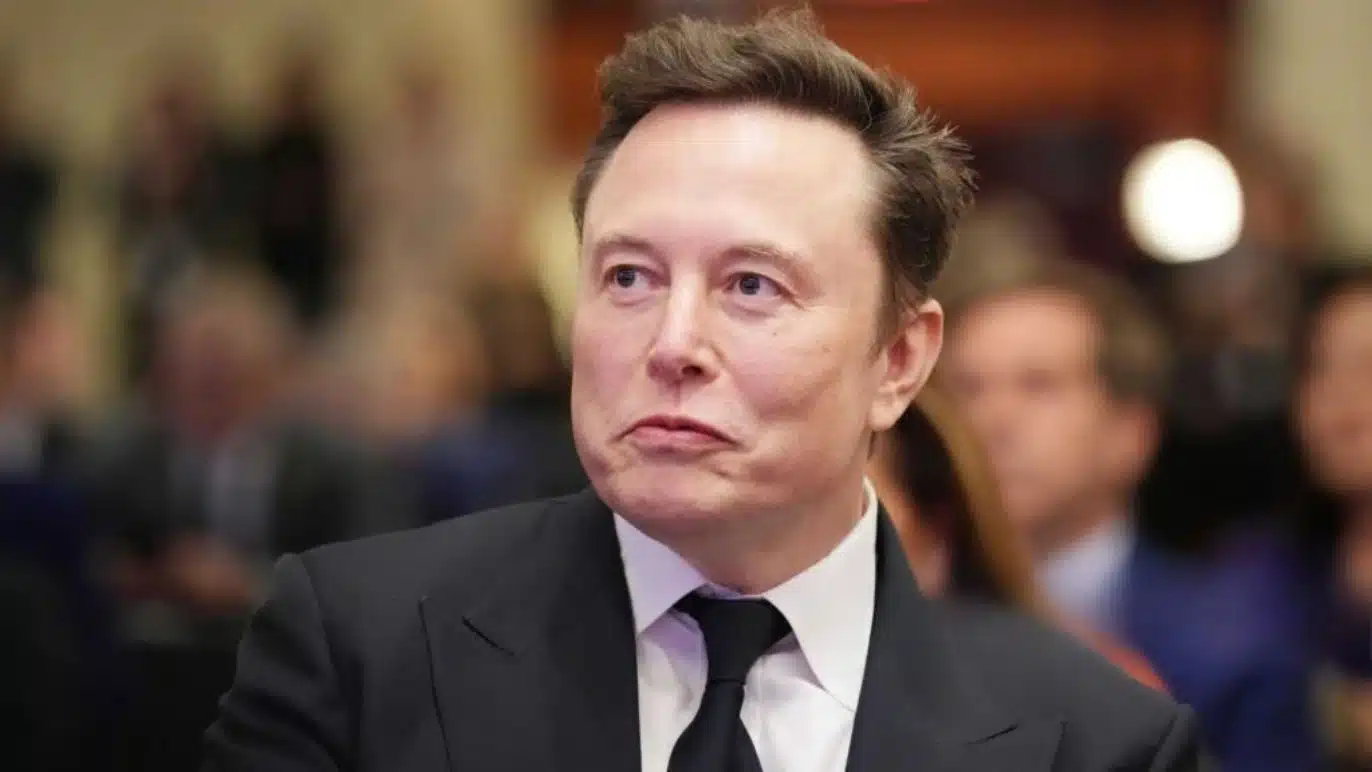
Elon Musk sparked controversy by labeling Earth-based nuclear fusion reactors as “super dumb” on social media, urging a shift to solar power instead. His comments come as AI-driven data centers fuel a fierce competition for energy resources among tech giants. The debate highlights tensions between proven renewables and experimental clean energy tech.
Musk’s Blunt Critique
Musk posted on X that the Sun serves as an “enormous, free fusion reactor in the sky,” making tiny human-made versions pointless. He argued that even burning four Jupiters would not dent the Sun’s output, which he claims accounts for 100% of the solar system’s future power needs. “Stop wasting money on puny little reactors, unless actively acknowledging that they are just there for your pet science project,” Musk added, dismissing fusion efforts as inefficient science experiments.
This stance echoes Musk’s long-held views on fusion. In 2022, he called fusion energy expensive due to fuel transport and reactor maintenance challenges, favoring solar and wind instead. Despite past support for large-scale nuclear fission—once deeming plant shutdowns “total madness”—Musk now targets small modular reactors and fusion alike as impractical.
Critics see self-interest in his position. Tesla heavily invests in solar panels and batteries, positioning the company to benefit from a renewables push. Meanwhile, xAI runs up to 35 gas turbines for its Memphis data center, highlighting Musk’s own energy compromises.
The Surging Energy Demands of AI
Tech firms race to power AI data centers, projected to consume 6.7-12% of U.S. electricity by 2028, up from 4.4% in 2023. Generative AI uses 10-30 times more energy than traditional models, requiring advanced cooling and massive compute clusters. A single large data center rivals a town of 80,000 residents in power use, straining grids and driving bills up 13% since 2022.
Microsoft, Google, and Amazon pour billions into infrastructure. Data center markets could double to $624 billion by 2029, fueled by AI and crypto demands. President Trump’s Energy Secretary Chris Wright promises lower prices under new policies, blaming prior regulations.
xAI’s needs underscore the crisis. Musk’s Grok AI demands huge electricity, prompting temporary fossil fuel reliance. This energy scramble pits companies against each other for grid access and new sources.
Fusion’s Promise and Progress
Fusion fuses atoms to mimic the Sun’s energy release, promising unlimited clean power without fission’s waste. Private investment tops $10 billion, with projects accelerating globally. France’s WEST reactor set a plasma duration record of over 1,071 seconds in 2025, topping China’s EAST by 25%.
ITER, a 30-nation project in France, nears assembly of the world’s strongest magnet to confine super-hot plasma. Delayed to 2033 startup, it proves fusion feasibility amid geopolitical tensions. Private firms like Commonwealth Fusion Systems raised $863 million, backed by Nvidia, aiming for commercial reactors soon.
Yet challenges persist. Reactors still consume more input energy than output, with economic viability decades away per experts. Musk’s “super dumb” label amplifies doubts on scaling tiny prototypes against nature’s fusion giant.
Tech Giants Bet Big on Nuclear
Silicon Valley diverges from Musk. Microsoft and Amazon invested in nuclear plants pre-AI boom; now fusion draws billions. Google partners with Kairos Power for small modular reactors, while fusion startups leverage AI for faster breakthroughs.
These moves address grid limits. Data centers need reliable baseload power renewables can’t always provide without massive batteries. Fusion’s potential density—far exceeding solar per area—appeals despite risks.
Musk counters that solar plus batteries suffices, interconnected via high-voltage lines. No “unknown technology” required, he insists. His orbital data center talks tie into solar visions, but critics question covering Earth in panels.
Renewables: Musk’s Preferred Path
Solar and wind dominate Musk’s blueprint. Tesla’s ecosystem integrates panels, Powerwalls, and Megapacks for 24/7 clean energy. The Sun blasts free fusion daily; capturing it scales better than lab reactors, Musk argues.
Costs favor renewables. Solar prices plummeted, outpacing fusion R&D expenses. Batteries bridge intermittency, with no fuel or meltdown worries. Yet AI’s constant hunger demands overbuilds—solar fields dwarfing cities—and mineral-intensive storage.
Musk’s history reinforces this. From 2020 tweets doubting fusion costs to 2025’s Jupiter analogy, he prioritizes deployable tech.
Industry Reactions and Rifts
Fusion advocates push back. Private ventures claim viability in a decade, fueled by AI simulations cutting trial times. Musk’s dismissal ignores progress like record plasmas and magnets.
Reddit threads buzz: Some call Musk strategic, shielding xAI from rivals grabbing nuclear edges; others decry gas turbine hypocrisy. Investors watch closely—fusion funding surges despite Musk’s shade.
Broader context: U.S. electricity prices outpace inflation, risking 70% hikes without grid upgrades. Trump’s pro-energy stance may favor all sources, but Musk influences via X and government ties.
Historical Context of Musk’s Energy Views
Musk evolved on nuclear. Early Tesla days championed fission for low-carbon grids. By 2022, fusion skepticism solidified, pivoting to “big fusion reactor in sky.” SpaceX Starship eyes solar scalability for Mars, aligning with Earth strategy.
Critics note vested interests. Tesla’s solar revenue grows amid AI power bids. xAI’s turbines buy time for renewables ramp-up.
Implications for the Energy Race
Musk’s salvo intensifies competition. Tech leaders hedge: Renewables for scale, nuclear for reliability. Fusion’s “puny” prototypes may yet prove pivotal if breakeven nears.
Data center boom forces choices. Grids buckle; prices soar. Solar blankets or fusion breakthroughs? Musk bets Sun; others diversify.
Global trends amplify stakes. ITER unites foes; private fusion booms. 2025 trends: More records, funding, demos. Musk’s voice, amplified by 200 million followers, shapes policy and investment.
Fusion vs. Solar: Key Comparisons
| Aspect | Nuclear Fusion | Solar Power (Musk’s Choice) |
|---|---|---|
| Energy Density | Extremely high; compact output | Lower; requires vast land/panels |
| Fuel/Source | Deuterium/tritium; abundant oceans | Sunlight; free, unlimited |
| Current Status | Experimental; net gain elusive | Deployed globally; costs fallen 90% |
| Reliability | Baseload potential post-breakthrough | Intermittent; needs batteries/storage |
| Cost Projections | High initial; uncertain LCOE | Lowest new-build; batteries dropping |
| Environmental | No waste like fission; safe | Minimal impact; recyclable challenges |
| Scalability | Decades to grid; regulatory hurdles | Rapid; manufacturing ramps |
This table underscores trade-offs driving the debate.
Road Ahead for Clean Energy
AI’s thirst reshapes power markets. Investments hit $500 billion for U.S. data centers alone by decade’s end. Fusion milestones—like WEST’s record—signal hope, but Musk’s critique spotlights risks.
Tech firms balance portfolios. Amazon revives nuclear; Tesla scales Megapacks. Hybrids may win: Solar backbone, fusion accents.
Geopolitics looms. China leads tokamaks; U.S. privatizes. Trump’s deregulation could unlock all paths. Musk’s “super dumb” quip galvanizes discourse, forcing fusion backers to prove commercial chops.
Global Fusion Landscape
Beyond ITER, China’s EAST held prior records; France advances WEST. Private U.S. outfits eye 2030s grids, AI-optimized.
Investment hits $10B+; trends for 2025 include demos, materials breakthroughs. Musk’s solar push contrasts, but fusion’s density tempts for hyperscalers.
Data Centers’ Power Crunch Deep Dive
Projections: 50 GW new U.S. capacity needed, tripling demand. Cooling alone rivals small nations’ use—liquid systems essential.
Efficiency lags: Chips double performance every three years, not two. China’s DeepSeek rivals highlight U.S. urgency.
Musk’s Business Angle
xAI’s Colossus supercomputer cluster in Memphis stands as the world’s largest AI training facility, boasting over 100,000 Nvidia H100 GPUs with plans to double that capacity soon. To meet its voracious power demands—estimated at 150 megawatts initially and scaling toward 1 gigawatt—the company deployed up to 35 methane gas turbines as a temporary bridge while negotiating grid connections. This move strained local infrastructure, prompting backlash from Memphis residents and officials over air quality and grid reliability, yet it underscores Musk’s willingness to deploy unconventional solutions amid the AI energy crunch..






















