

Artificial Intelligence (AI) has become one of the most transformative technologies of our time, revolutionizing industries, changing how we live and work, and pushing the boundaries of what machines can accomplish.
Behind this technological revolution are brilliant minds dedicated to advancing the field of AI. These researchers have made groundbreaking discoveries, developed innovative algorithms, and shaped the direction of AI research and applications.
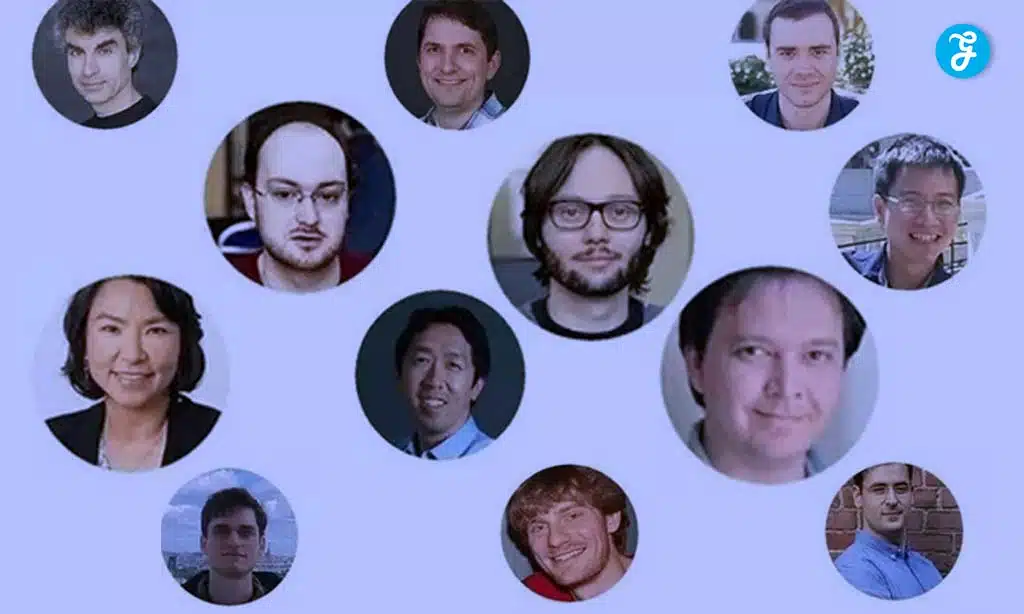
In this article, we’ll explore the lives, work, and contributions of the ten most influential AI researchers who are shaping the future of this rapidly evolving field.
From pioneers who laid the foundation of AI to contemporary innovators pushing the boundaries of machine learning and neural networks, these individuals have left an indelible mark on artificial intelligence.
 1. Geoffrey Hinton
 1. Geoffrey Hinton
Geoffrey Hinton, often called the “Godfather of AI,” is a cognitive psychologist and computer scientist who has significantly contributed to artificial intelligence intense learning.
Background:
- Born in 1947 in Wimbledon, London
- Studied at King’s College, Cambridge and the University of Edinburgh
- Currently a professor at the University of Toronto and a researcher at Google Brain
Key Contributions:
- Backpropagation Algorithm: Hinton and his colleagues popularized the backpropagation algorithm, which is fundamental to training neural networks.
- Boltzmann Machines: He developed Boltzmann Machines, a stochastic recurrent neural network type.
- Deep Belief Networks: Hinton’s work on deep belief networks in the mid-2000s helped reignite interest in deep learning.
- Capsule Networks: More recently, he has been working on capsule networks, a new machine-learning approach that addresses some limitations of traditional neural networks.
Impact:
Hinton’s work has been instrumental in developing modern deep-learning techniques. His research has applications in speech recognition, computer vision, and natural language processing.
Many of today’s AI technologies, including those used by tech giants like Google and Microsoft, can trace their roots back to Hinton’s pioneering work.
Awards and Recognition:
- Turing Award (2018)
- IJCAI Research Excellence Award (2005)
- IEEE James Clerk Maxwell Medal (2016)
2. Yann LeCun
Yann LeCun is a French computer scientist known for his work on machine learning, computer vision, mobile robotics, and computational neuroscience. He is one of the creators of one of the leading convolutional neural networks (CNNs).
Background:
- Born in 1960 in Soisy-sous-Montmorency, France
- Studied at ESIEE Paris and Université Pierre et Marie Curie
- Currently VP and Chief AI Scientist at Facebook and a professor at New York University
Key Contributions:
- Convolutional Neural Networks: LeCun developed CNNs, which have become the foundation of modern computer vision systems.
- LeNet: He created LeNet, one of the earliest convolutional neural networks used to read zip codes and digits.
- Deep Learning: LeCun has been critical in developing and popularizing deep learning techniques.
- PyTorch: He has been involved in developing PyTorch, an open-source machine-learning library.
Impact:
LeCun’s work on CNNs has revolutionized image recognition and computer vision. His research has facial recognition, autonomous vehicles, and medical image analysis applications. The techniques he developed are widely used in smartphones, social media platforms, and various AI-powered technologies.
Awards and Recognition:
- Turing Award (2018, shared with Geoffrey Hinton and Yoshua Bengio)
- IEEE Neural Network Pioneer Award (2014)
- IJCAI Research Excellence Award (2016)
3. Yoshua Bengio
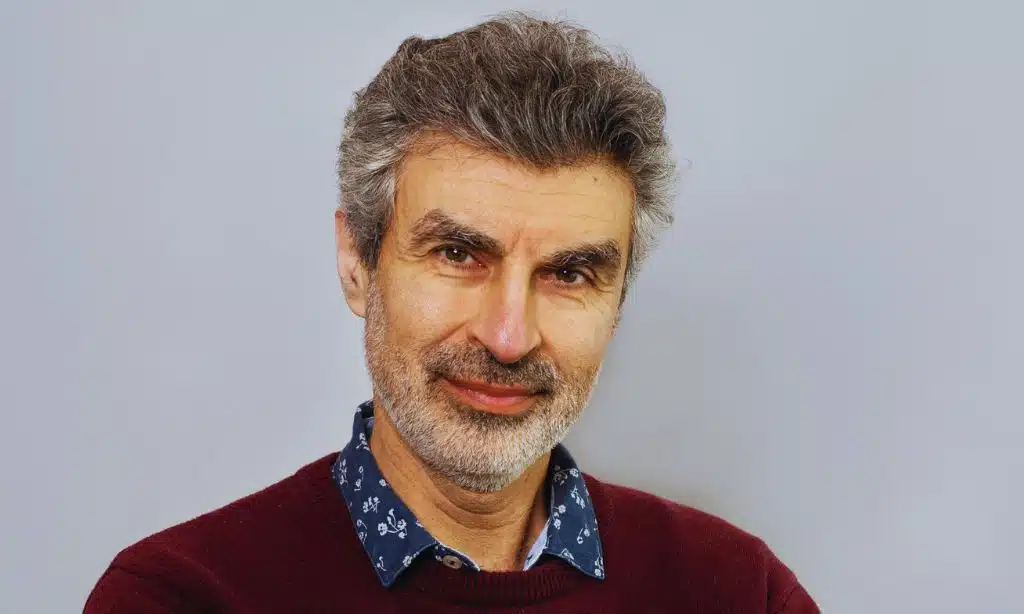
Yoshua Bengio is a Canadian computer scientist known for his work on artificial neural networks and deep learning. He is one of the world’s leading experts in machine learning and a key figure in the development of deep learning.
Background:
- Born in 1964 in Paris, France
- Studied at McGill University in Montreal, Canada
- Currently a professor at the Université de Montréal and the Scientific Director of the Montreal Institute for Learning Algorithms (MILA)
Key Contributions:
- Deep Learning: Bengio has made significant contributions to the theory and practice of deep learning, particularly in language modeling and representation learning.
- Attention Mechanisms: He has worked on attention mechanisms in neural networks, which have become crucial in natural language processing tasks.
- Generative Adversarial Networks (GANs): Bengio has contributed to developing and understanding GANs, which are used for generating realistic images and other data.
- Transfer Learning: His research has advanced the field of transfer learning, allowing AI models to apply knowledge gained from one task to new, related tasks.
Impact:
Bengio’s work has been fundamental in advancing the field of deep learning and its applications in natural language processing, computer vision, and speech recognition. His research has influenced the development of AI technologies in virtual assistants, machine translation, and autonomous systems.
Awards and Recognition:
- Turing Award (2018, shared with Geoffrey Hinton and Yann LeCun)
- NSERC Herzberg Gold Medal (2017)
- Marie-Victorin Prize (2017)
4. Andrew Ng
Andrew Ng is a British-American computer scientist and entrepreneur known for his work in machine learning and artificial intelligence. He has played a significant role in making AI education accessible to a global audience.
Background:
- Born in 1976 in London, UK
- Studied at Carnegie Mellon University and MIT
- Co-founded Coursera and deeplearning.ai
- Currently CEO of Landing AI and General Partner at AI Fund
Key Contributions:
- Online AI Education: Ng has created popular online machine learning and deep learning courses, making AI education accessible to millions worldwide.
- Large-scale AI Projects: He led the Google Brain project and was Chief Scientist at Baidu, where he oversaw significant AI research and development efforts.
- AI Applications: Ng has worked on applying AI to various domains, including computer vision, speech recognition, and autonomous driving.
- AI Ethics and Strategy: He has been a vocal advocate for responsible AI development and has contributed to AI ethics and policy discussions.
Impact:
Ng’s work has significantly contributed to the democratization of AI education. His courses and initiatives have helped train a new generation of AI practitioners and researchers. His research and leadership in large-scale AI projects have advanced the field and its practical applications in industry.
Awards and Recognition:
- Fortune 40 under 40 (2013)
- Time 100 Most Influential People (2013)
- World Economic Forum Young Global Leader
5. Fei-Fei Li
Fei-Fei Li is a Chinese-American computer scientist known for her work in computer vision and cognitive neuroscience. She has made significant contributions to AI education and ethics.
Background:
- Born in 1976 in Beijing, China
- Studied at Princeton University and California Institute of Technology
- Currently a professor at Stanford University and co-director of Stanford’s Human-Centered AI Institute
Key Contributions:
- ImageNet: Li led the creation of ImageNet, an extensive visual database crucial for advancing computer vision and deep learning.
- AI Education: She has been instrumental in promoting AI education and diversity in the field.
- AI Ethics: Li has strongly advocated for human-centered AI and ethical considerations in AI development.
- Computer Vision: Her research has significantly advanced the field of computer vision, particularly in image recognition and understanding.
Impact:
Li’s work on ImageNet has been fundamental in advancing computer vision and deep learning. Her advocacy for ethical AI and diversity in the field has influenced AI research and development. Her contributions have applications in autonomous vehicles, medical imaging, and various AI-powered visual recognition systems.
Awards and Recognition:
- ACM Fellow (2019)
- National Academy of Engineering Member (2020)
- WITI Hall of Fame Inductee (2019)
6. Demis Hassabis
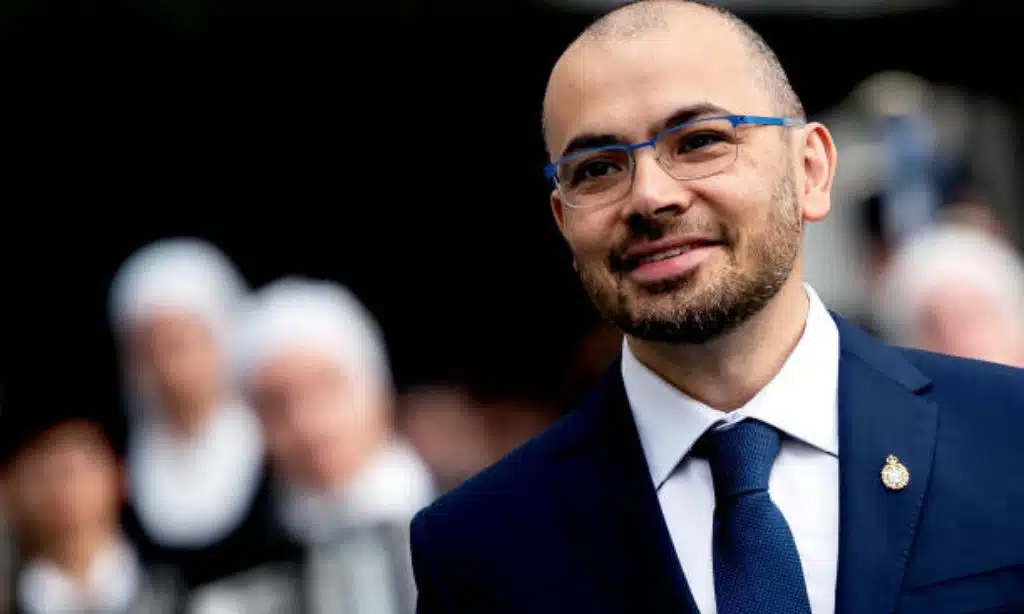 Demis Hassabis is a British artificial intelligence researcher, neuroscientist, and entrepreneur. He is best known as the co-founder and CEO of DeepMind, one of the world’s leading AI research companies.
Background:
- Born in 1976 in London, UK
- Studied at the University of Cambridge
- Co-founded DeepMind in 2010, which was acquired by Google in 2014
Key Contributions:
- Reinforcement Learning: Hassabis has led research in advanced reinforcement learning techniques, which have been applied to game-playing AI and other domains.
- AlphaGo and AlphaFold: Under his leadership, DeepMind developed AlphaGo, which defeated world champions in the game of Go, and AlphaFold, which made significant breakthroughs in protein folding prediction.
- Neuroscience-inspired AI: Hassabis has advocated for and pursued AI research inspired by our understanding of the human brain.
- General AI: His work aims towards developing artificial general intelligence (AGI), which would be capable of performing any intellectual task that a human can.
Impact:
Hassabis’s work at DeepMind has pushed the boundaries of what AI can achieve. The breakthroughs in game-playing AI and protein folding have demonstrated the potential of AI to solve complex problems. His approach to AI development, inspired by neuroscience, has influenced the direction of AI research towards more general and adaptable systems.
Awards and Recognition:
- Mullard Award from the Royal Society (2014)
- CBE in the 2018 New Year Honours for “services to Science and Technology”
- Time 100 Most Influential People (2017)
7. Daphne Koller
Daphne Koller is an Israeli-American computer scientist and entrepreneur known for her work in machine learning and computational biology. She has made significant contributions to the fields of probabilistic graphical models and AI in education.
Background:
- Born in 1968 in Jerusalem, Israel
- Studied at the Hebrew University of Jerusalem and Stanford University
- Co-founded Coursera in 2012
- Currently CEO and founder of Insitro, a machine learning-driven drug discovery company
Key Contributions:
- Probabilistic Graphical Models: Koller has made fundamental contributions to developing and applying probabilistic graphical models.
- Computational Biology: She has applied machine-learning techniques to problems in biology and medicine, particularly in understanding gene regulation and protein folding.
- Online Education: As co-founder of Coursera, Koller has played a crucial role in making high-quality education accessible globally through online platforms.
- AI in Drug Discovery: With Insitro, Koller is working on using machine learning to revolutionize the drug discovery process.
Impact:
Koller’s work on probabilistic graphical models has had wide-ranging applications in AI, from computer vision to natural language processing. Her contributions to computational biology have advanced our understanding of complex biological systems. Through Coursera, she has helped globally democratize education, including AI education.
Awards and Recognition:
- MacArthur Fellowship (2004)
- ACM Prize in Computing (2008)
- National Academy of Engineering Member (2011)
8. Jürgen Schmidhuber
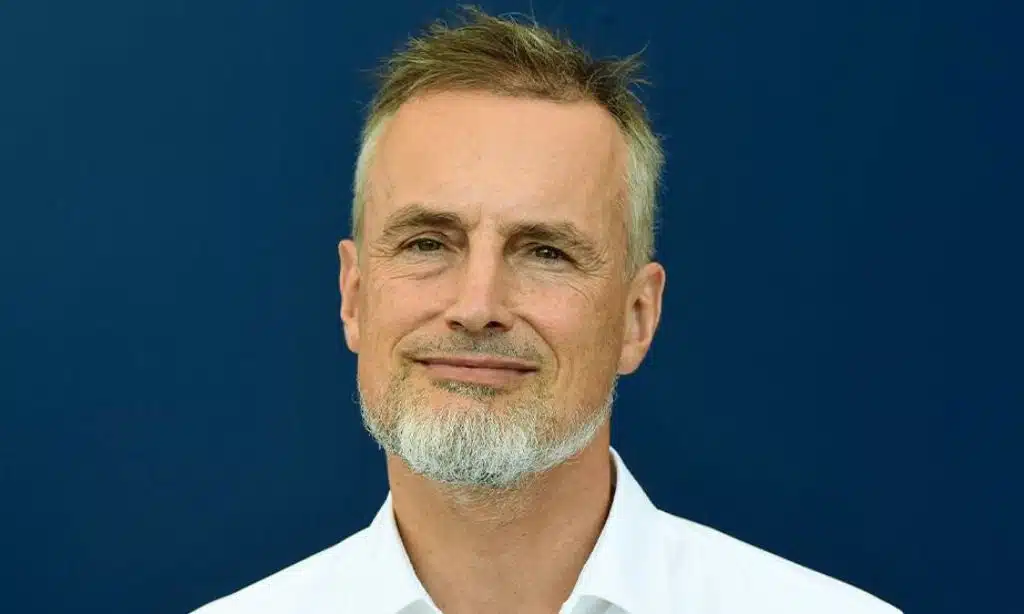
Jürgen Schmidhuber is a German computer scientist known for his work in artificial intelligence, deep learning, and artificial neural networks. He is often called the “father of modern AI” due to his pioneering work in these fields.
Background:
- Born in 1963 in Munich, Germany
- Studied at the Technical University of Munich
- Currently Scientific Director of the Swiss AI Lab IDSIA
Key Contributions:
- Long Short-Term Memory (LSTM): Schmidhuber and his collaborators invented LSTM networks, which are crucial for processing sequential data and are widely used in speech recognition and language translation.
- Artificial Curiosity: He developed a formal theory of artificial curiosity and creativity, which has implications for creating more adaptive and general AI systems.
- Meta-Learning: Schmidhuber has made significant contributions to the field of meta-learning, or “learning to learn.”
- Universal AI: His work on Gödel machines and other theoretical concepts has contributed to developing more general AI systems.
Impact:
Schmidhuber’s work, particularly on LSTM networks, has been fundamental to many modern AI applications, including speech recognition systems, machine translation, and text generation. His theoretical work on artificial curiosity and meta-learning has influenced the development of more adaptive and general AI systems.
Awards and Recognition:
- Helmholtz Award of the International Neural Network Society (2013)
- IEEE Neural Networks Pioneer Award (2021)
- AAAI Fellow (2022)
9. Stuart Russell
Stuart Russell is a British-American computer scientist known for his work on artificial intelligence. He is notably recognized for his contributions to probabilistic reasoning, decision-making under uncertainty, and AI safety.
Background:
- Born in 1962 in Portsmouth, England
- Studied at the University of Oxford
- Currently a professor at the University of California, Berkeley
Key Contributions:
- AI Foundations: Russell co-authored “Artificial Intelligence: A Modern Approach,” which is considered the standard textbook in AI.
- Probabilistic Reasoning: He has significantly contributed to the field of probabilistic reasoning in AI.
- AI Safety: Russell is a leading voice in discussions about the long-term future of AI and the importance of developing safe and beneficial AI systems.
- Inverse Reinforcement Learning: He has worked on inverse reinforcement learning, which aims to infer the goals or preferences of an agent from its behavior.
Impact:
Russell’s textbook has educated generations of AI researchers and practitioners. His work on probabilistic reasoning has influenced the development of decision-making systems in uncertain environments. His advocacy for AI safety has shaped discussions about the ethical development of AI technologies.
Awards and Recognition:
- IJCAI Computers and Thought Award (1995)
- ACM Karl V. Karlstrom Outstanding Educator Award (2011)
- AAAI/EAAI Outstanding Educator Award (2019)
10. Yoshua Bengio
Yoshua Bengio is a Canadian computer scientist known for his groundbreaking work in deep learning and neural networks. He is one of the world’s foremost experts in artificial intelligence and a key figure in the profound learning revolution.
Background:
- Born in 1964 in Paris, France
- Studied at McGill University, Montreal
- Currently a professor at the Université de Montréal and Scientific Director of Mila – Quebec AI Institute
Key Contributions:
- Deep Learning: Bengio has made fundamental contributions to the field of deep learning, particularly in the areas of language modeling, translation, and speech recognition.
- Neural Probabilistic Language Models: He developed some of the first neural probabilistic language models, which have become essential in natural language processing.
- Attention Mechanisms: Bengio’s work on attention mechanisms has been crucial in improving the performance of neural networks on various tasks.
- Generative Adversarial Networks (GANs): He has contributed to developing and understanding GANs, which are used for generating realistic data.
Impact:
Bengio’s work has been instrumental in advancing the field of deep learning and its applications. His research has influenced the development of AI technologies in virtual assistants, machine translation, and various other applications. His contributions have helped shape the current AI landscape and continue to drive innovation in the field.
Awards and Recognition:
- Turing Award (2018, shared with Geoffrey Hinton and Yann LeCun)
- NSERC Herzberg Gold Medal (2017)
- Marie-Victorin Prize (2017)
Takeaway
Artificial intelligence is rapidly evolving, driven by the innovative work of researchers like those we’ve discussed. These ten influential AI researchers have made groundbreaking discoveries and shaped the direction of AI research and applications.
From Geoffrey Hinton’s pioneering work in deep learning to Fei-Fei Li’s contributions to computer vision and AI ethics, each of these researchers has left an indelible mark on the field. Their work spans various AI subdisciplines, including machine learning, neural networks, natural language processing, and robotics.
As AI continues to advance, the contributions of these researchers will undoubtedly continue to influence the field. Their work paves the way for more sophisticated AI systems that could revolutionize industries, solve complex problems, and potentially lead to artificial general intelligence.
The future of AI is bright and full of potential, largely thanks to the groundbreaking work of these influential researchers. As we look to the future, their contributions will continue to shape the development of AI technologies that can potentially transform our world in profound ways.





















