
Medical malpractice claims are complex legal cases that require precision, strong evidence, and a deep understanding of the legal process.
If you or a loved one has suffered due to medical negligence, knowing the right steps to take is crucial. However, many people unknowingly make mistakes that can ruin your medical malpractice claim, reducing their chances of receiving fair compensation.
In this comprehensive guide, we’ll explore the most common mistakes that can ruin your medical malpractice claim and provide actionable insights on how to avoid them. By understanding these pitfalls, you can protect your rights and improve the likelihood of a successful outcome.
Medical malpractice cases have been on the rise, with reports showing that nearly 250,000 deaths per year in the U.S. result from medical errors, making it the third leading cause of death. Understanding how to navigate the claims process effectively is vital to ensure justice is served.
Understanding Medical Malpractice Claims
A medical malpractice claim arises when a healthcare provider causes harm due to negligence, such as misdiagnosis, surgical errors, medication mistakes, or failure to provide proper treatment. To prove malpractice, you must establish:
- A doctor-patient relationship existed.
- The healthcare provider breached the standard of care.
- The breach directly caused harm.
- You suffered damages (physical, emotional, or financial).
| Key Elements of a Malpractice Claim | Description |
| Duty of Care | The healthcare provider had a responsibility to provide competent care. |
| Breach of Duty | The provider failed to meet the expected standard of care. |
| Causation | The negligence directly caused injury or harm. |
| Damages | The patient suffered physical, emotional, or financial damages. |
Why Avoiding Mistakes Matters in Your Case
Mistakes in filing, handling, or negotiating your claim can lead to delays, reduced compensation, or even case dismissal.
Insurance companies and defense attorneys will use any errors to their advantage, making it essential to handle your claim carefully.
Recent data suggests that only 20% of malpractice claims result in a payout, emphasizing the need for meticulous case management to improve success rates.
10 Mistakes That Can Ruin Your Medical Malpractice Claim
Seeking compensation for a medical malpractice claim can be a daunting process, requiring careful documentation, legal expertise, and a proactive approach.
While understanding the legal framework is crucial, avoiding common pitfalls can significantly enhance your chances of a successful claim.
By steering clear of these mistakes, you protect your rights and improve your likelihood of obtaining fair compensation.
1. Failing to Seek Immediate Medical Attention
One of the biggest mistakes people make after experiencing medical malpractice is not seeking immediate medical attention.
Delaying treatment not only puts your health at risk but also weakens your claim because insurance companies may argue that your injuries weren’t severe or resulted from other factors.
Key Consequences of Delayed Medical Attention:
| Consequence | Impact on Your Case |
| Lack of medical records | Harder to prove malpractice occurred. |
| Worsening of injuries | May be blamed on inaction rather than negligence. |
| Reduced credibility | The defense may claim your injuries were minor. |
2. Not Documenting Evidence Properly
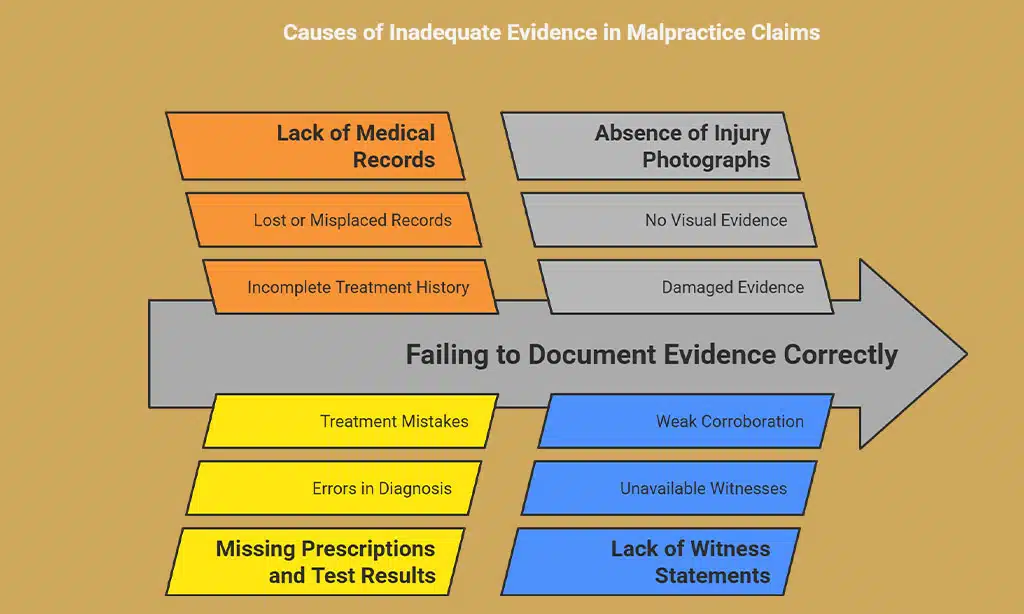
Failing to document evidence correctly is a common pitfall. Without solid proof, it becomes nearly impossible to establish a malpractice claim.
Proper documentation is crucial as it serves as the foundation of your case, providing indisputable proof of medical negligence.
Many cases have been dismissed simply because claimants did not maintain adequate records or lost important documents.
| Essential Documentation | Importance |
| Medical Records | Serve as primary evidence of negligence and harm. |
| Prescriptions & Test Results | Help demonstrate errors in diagnosis or treatment. |
| Injury Photographs | Provide visual proof of the damage caused by malpractice. |
| Witness Statements | Strengthen the case by corroborating your claims. |
| Personal Journal | Tracks symptoms, pain levels, and emotional distress over time. |
To improve your case, ensure you gather and securely store all relevant medical documentation, keeping multiple copies as backups. If you suspect any missing records, request them immediately from your healthcare provider or legal team.
Essential Documents to Keep:
- Medical records detailing treatment history and diagnosis
- Copies of prescriptions, test results, and imaging reports
- Photographs of injuries and medical bills
- Witness statements and expert evaluations
- A personal injury diary detailing pain, emotional distress, and daily limitations
3. Missing the Statute of Limitations Deadline
Each state has a strict deadline for filing medical malpractice claims, known as the statute of limitations. This timeframe varies depending on where the malpractice occurred and can range from one to five years. Missing this deadline can result in case dismissal, meaning you lose the opportunity to seek compensation, regardless of the severity of your claim.
Additionally, some states have discovery rules, which allow claimants additional time if the malpractice was not immediately apparent. Certain exceptions may apply for minors, mentally incapacitated individuals, or cases involving fraud.
To ensure you file your claim within the appropriate time frame, it is essential to consult an attorney as soon as you suspect malpractice.
| State | Statute of Limitations |
| California | 1 year from discovery or 3 years from injury |
| New York | 2.5 years from malpractice date |
| Texas | 2 years from malpractice occurrence |
| Florida | 2 years from discovery, max 4 years |
How to Avoid This Mistake:
- Research your state’s statute of limitations.
- Consult an attorney to ensure timely filing.
- File as early as possible to avoid delays.
4. Speaking Directly to the Insurance Company
Insurance adjusters are trained to minimize payouts and will use your words against you. Many victims mistakenly provide recorded statements or sign agreements without legal guidance, often believing they are simply cooperating.
However, these adjusters are skilled in extracting statements that can later be used to dispute or devalue claims.
Common Tactics Used by Insurance Adjusters:
| Tactic | Impact on Your Case |
| Asking leading questions | May lead you to unintentionally admit fault. |
| Pressuring for quick statements | Prevents you from consulting legal counsel. |
| Offering low initial settlements | Hopes you’ll accept less than your claim is worth. |
| Delaying responses | Can force claimants into financial distress, pushing them to settle. |
To safeguard your claim, always consult an attorney before speaking to an insurance company and avoid discussing details over the phone without legal representation.
How to Protect Yourself:
- Do not speak with insurance adjusters without legal counsel.
- Avoid signing documents until reviewed by an attorney.
- Let your lawyer handle all communications.
5. Accepting a Quick Settlement Offer
Many victims accept lowball settlement offers out of desperation, which is one of the biggest mistakes that can ruin your medical malpractice claim. Once you accept, you waive your right to future claims.
Insurance companies often pressure victims into accepting fast settlements before they fully understand the extent of their injuries or financial losses.
Key Risks of Accepting a Quick Settlement:
| Risk | Consequence |
| Inadequate compensation | May not cover future medical costs and lost wages. |
| Loss of negotiation power | Cannot renegotiate after signing a settlement. |
| Permanent claim closure | Waives all rights to future legal action. |
To avoid being shortchanged, seek legal counsel before accepting any settlement and calculate long-term financial implications thoroughly.
What to Do Instead:
- Consult a lawyer before accepting any offer.
- Assess your future medical costs, lost wages, and pain and suffering.
- Be patient—negotiating a fair settlement takes time.
6. Posting About Your Case on Social Media
Social media can seriously damage your case. Insurance companies and defense attorneys monitor your activity to find contradictions in your claims. Even a seemingly harmless post can be taken out of context and used against you in court.
Additionally, checking into locations, posting about daily activities, or discussing medical appointments can inadvertently reveal information that weakens your case.
Social Media Pitfalls to Avoid:
| Pitfall | How It Can Hurt Your Case |
| Posting about your case | Can be used as an admission of liability or exaggeration. |
| Sharing photos of activities | May contradict injury claims and reduce credibility. |
| Checking in at locations | Reveals movement that may be used to dispute claims. |
| Engaging in online discussions | Statements can be misinterpreted or taken out of context. |
To safeguard your case, refrain from posting about your health, case progress, or daily activities. It’s best to take a temporary break from social media until your claim is resolved.
Social Media Pitfalls to Avoid:
- Avoid posting updates about your health or case.
- Do not share photos that can be misinterpreted.
- Set your privacy settings to the highest level.
7. Not Hiring an Experienced Medical Malpractice Attorney

Medical malpractice cases are highly specialized and require expertise. Choosing an inexperienced lawyer or trying to handle the case alone can lead to costly mistakes that can ruin your medical malpractice claim.
A seasoned attorney understands complex legal procedures, medical terminologies, and expert witness requirements, ensuring your case is handled effectively.
Additionally, experienced lawyers can negotiate settlements strategically, preventing insurance companies from exploiting victims with lowball offers.
Benefits of Hiring a Skilled Attorney:
| Benefit | Explanation |
| Stronger Case | A lawyer ensures all documentation and evidence are properly handled. |
| Higher Compensation | Experienced attorneys know how to negotiate fair settlements. |
| Legal Protection | They prevent you from making mistakes that harm your case. |
8. Failing to Obtain an Expert Medical Witness
Expert witnesses are crucial in proving malpractice. Without a qualified medical professional supporting your case, your claim may lack credibility.
These experts provide critical testimony, helping to clarify complex medical details for the court and reinforcing the connection between negligence and harm suffered by the patient.
Selecting the right expert is vital, as their experience and reputation can significantly impact the case outcome.
| Key Factors When Choosing an Expert Witness | Importance |
| Relevant Medical Specialization | Ensures expertise in the specific field related to the malpractice. |
| Prior Testimonial Experience | Increases credibility and effectiveness in court. |
| Impartiality | Helps maintain integrity and trustworthiness of testimony. |
| Strong Communication Skills | Aids in clearly explaining complex medical terms to a jury. |
Ensuring you work with an experienced and reputable medical expert witness will help strengthen your case and improve your chances of a favorable outcome.
9. Overlooking the Importance of Second Opinions
Relying on a single doctor’s opinion can be a critical mistake that can ruin your medical malpractice claim.
A second opinion can confirm negligence and strengthen your case. In many instances, medical professionals may have differing interpretations of diagnostic tests, treatment options, or medical errors.
Seeking additional expert assessments can help identify inconsistencies in medical reports and provide valuable testimony that reinforces your claim.
| Benefits of Seeking a Second Opinion | How It Strengthens Your Case |
| Identifies misdiagnoses | Helps prove medical negligence. |
| Provides alternative treatment options | Establishes gaps in standard care. |
| Strengthens credibility | Demonstrates thorough investigation efforts. |
| Supports expert witness testimony | Adds legitimacy to your malpractice claim. |
Taking the initiative to obtain a second opinion can serve as a pivotal step in proving negligence and ensuring that all possible angles of your case are explored thoroughly.
10. Misrepresenting or Exaggerating Your Injuries
Providing false information or exaggerating your symptoms can destroy your credibility. Courts may dismiss your case entirely if dishonesty is detected.
Additionally, insurance companies and defense attorneys actively look for inconsistencies in your statements, social media posts, and medical records to dispute your claim. If you are caught exaggerating, even minor inaccuracies can compromise your case and damage your reputation.
| Risk of Exaggerating Injuries | Potential Consequence |
| Contradictory medical reports | Weakens the validity of your claim. |
| Loss of credibility | Reduces the chances of a fair settlement. |
| Case dismissal | The court may reject your lawsuit altogether. |
| Legal consequences | Possible penalties for fraudulent claims. |
To maintain integrity, always be truthful about your injuries and provide accurate, consistent information to your attorney and medical providers.
How to Maintain Credibility:
- Be honest about your symptoms and limitations.
- Provide consistent statements in medical records and legal documents.
- Let medical evidence support your claim.
Takeaways
Filing a medical malpractice claim is a challenging process, and mistakes that can ruin your medical malpractice claim can be costly. Avoiding common errors, gathering strong evidence, and seeking expert legal guidance will improve your chances of obtaining the compensation you deserve.
If you suspect medical malpractice, take action immediately—your health, financial security, and justice depend on it. Consult a qualified attorney today to protect your rights and strengthen your case.