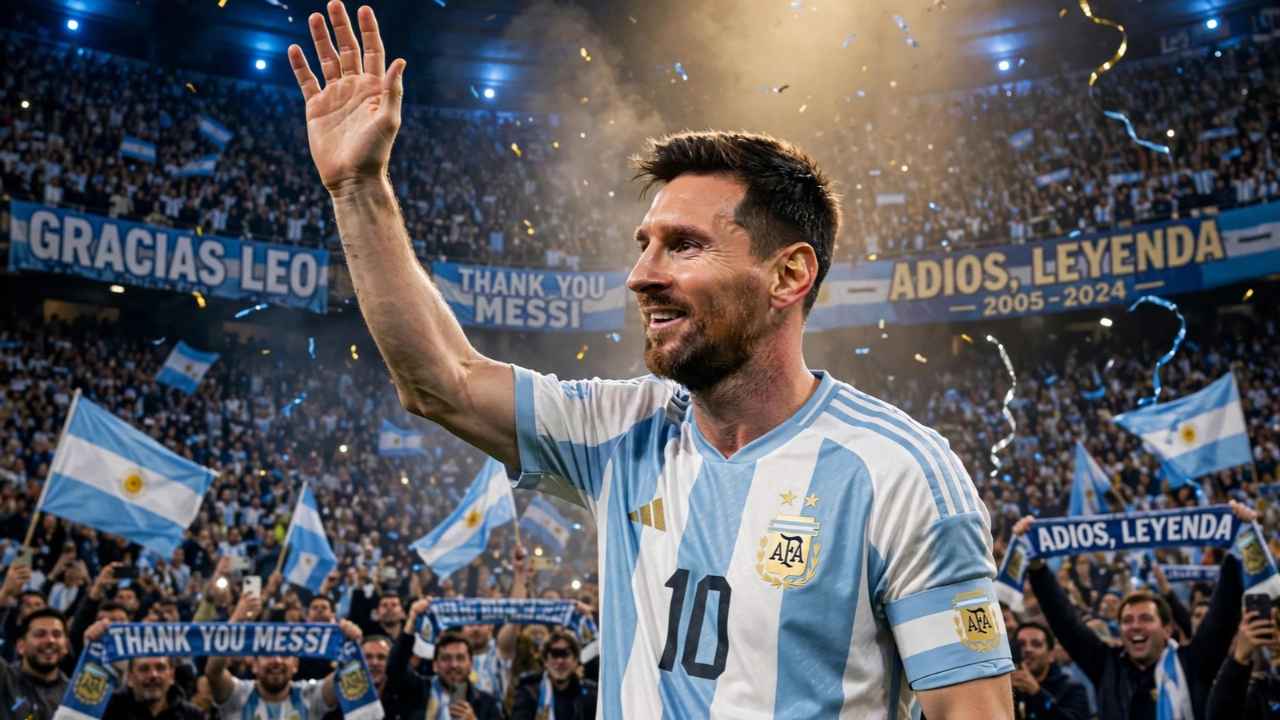
Lionel Messi farewell match will kick off at 8 p.m. on 6 October 2026 at the Monumental in Buenos Aires. For me, on the other side of the world in Bangladesh, it means waiting for the broadcast as dawn breaks, watching Argentina say goodbye.
Dawn in Dhaka: Why Messi’s Goodbye Feels Personal
Watching Argentina has always meant odd hours. The sun won’t be up yet when that opening whistle goes.
Watching Argentina From Bangladesh
I grew up loving Argentina entirely because of Messi. Bangladesh has no global football infrastructure and no local league that draws international attention. What we have is a devotion Messi built from scratch, carried on glowing screens through the night.
Why This Farewell Feels Bigger Than Football
That morning, a crowd of 85,000 will pack the stands in Buenos Aires. It will surpass the crowd at Super Bowl LX in 2026, the largest sporting gate of the year. No ordinary club fixture commands that kind of gathering. Only a nation preparing to grieve does.
The Central Idea: Defeat Should Not Decide When the Story Ends
Before he ever lifted a trophy, Messi lost four major finals. The fourth, in 2016, broke him so deeply that he walked away from international duty. Then he came back, and that return reshaped everything that followed. Was walking away back then an ending, or only a detour? Football history still hasn’t answered that.
A Boy Carrying a Nation’s Impossible Expectations
An 18-year-old sat alone in a dressing room in Budapest, crying, barely two minutes into his Argentina career. That boy was Messi. His debut was a friendly against Hungary in 2005, and it should have been a dream. Instead, the referee sent him off after about 90 seconds on the pitch.
The Red Card That Started It All
The humiliation hit him instantly. Most supporters now forget how early his misery with the national team began, but it started right there, before he had even broken a sweat.
Living in Maradona’s Shadow
Plenty of people in Argentina argued the number 10 shirt should have been retired for Diego Maradona. Nobody, they insisted, could ever match him. Messi took the shirt anyway. The comparison dogged him for the next twenty years.
Barcelona Glory and Argentina Pressure
At Barcelona he won everything there was to win. For Argentina, for years, he won nothing, and that gap fed doubt back home about how much he really cared. If you want to see how it played out, check the tournament record between 2007 and 2026.
Five Final Defeats: The Part of Messi’s Story We Now Forget
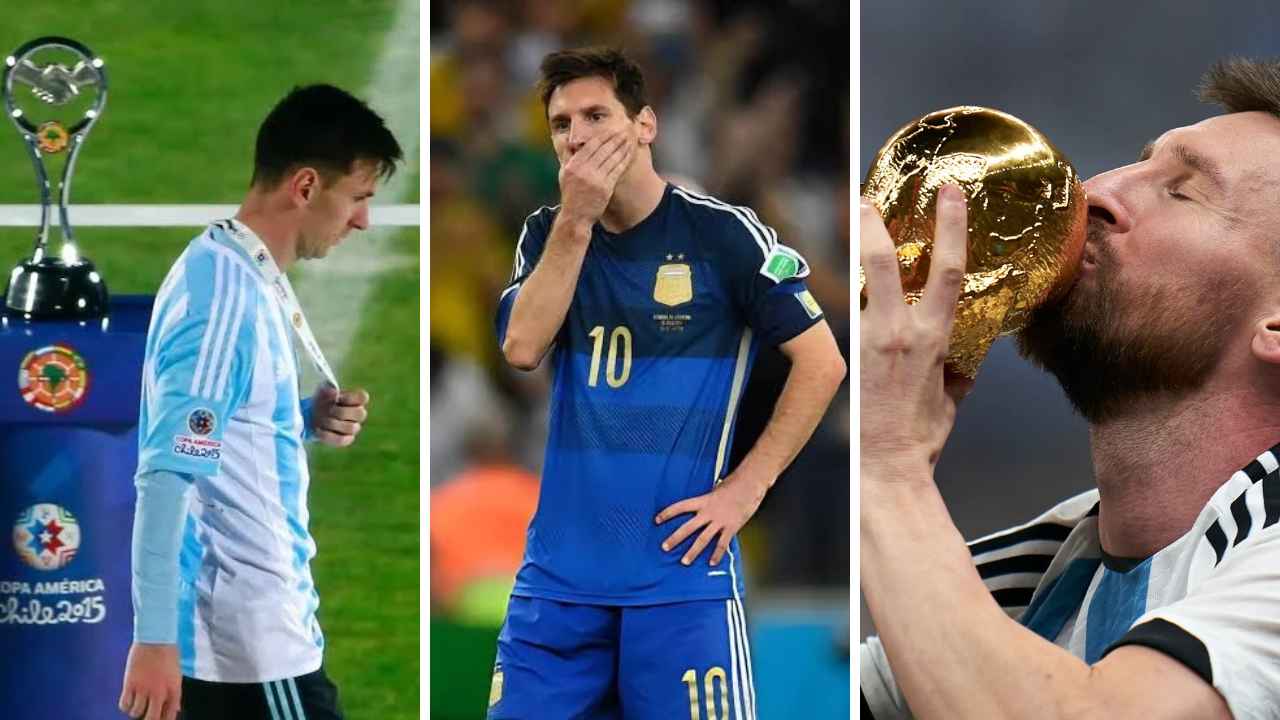
Five times I watched him walk off a final pitch in silence. The first came when he was 20. The last came at 39, long after his prime had gone.
2007 Copa America Final: The First Major Heartbreak
Brazil tore Argentina apart 3-0 in Maracaibo. Messi, just 20, stood watching the green and yellow shirts dance around the podium. His first senior final had become a lesson in public grief.
2014 World Cup Final: So Close at the Maracana
Seven years he waited for a stage this big. Germany broke Argentine hearts with an extra-time goal at the Maracanã, and of every near miss in his career, this one cut deepest. The trophy slipped away just as his hands were reaching for it.
2015 Copa America Final: Chile Wins on Penalties
A scoreless draw in Santiago went straight to a shootout. Banega and Higuaín missed from the spot, and Chile took the title. A second straight tournament loss. The pattern was starting to suffocate.
2016 Copa America Centenario Final: Chile, Again
He arrived in the United States determined to end the drought once and for all. Instead, the 2016 rematch mirrored the summer before, ending in another shootout disaster. It was his fourth consecutive failure on the final day.
2026 World Cup Final: One Last Wound
Spain edged Argentina 1-0 in the 2026 decider. At the final whistle he yanked his shirt over his face, as if shielding himself from the stadium lights. He was 39. None of the earlier defeats broke him quite like that summer evening in New Jersey.
The Night He Actually Quit
New Jersey, 2016
American soil offered Messi no comfort that night. He carried the weight of two finals against Chile, two summers running, both lost on penalties, and it showed from the first whistle. He walked off without a word to anyone around him. What stays with me from that broadcast isn’t the run of play. It’s the eerie hush that settled over everything once it ended.
The Missed Penalty and the Breaking Point
His own penalty sailed over the crossbar and into the stands. Something plainly snapped in him. You could see the crack across his face long before he reached the tunnel. Carrying yet another missed trophy through yet another shootout proved too heavy.
Messi’s Retirement Announcement
Right after the loss, he stood in the mixed zone and told reporters he was done with Argentina in 2016. He had tried everything and still fallen short, he explained, so the national team was no longer for him. His tone was absolute. Nobody listening doubted him.
Why That Moment Changed the Meaning of Everything That Followed
Strip out that sudden exit and the 2021 Copa América title and the 2022 World Cup read as simple tournament wins. Because he walked away and then chose to return, those trophies became something a man had to earn back rather than collect. A story about innate talent became a test of endurance.
The Return: The Most Important Decision of His Argentina Career
The Decision to Come Back
The retirement lasted only a few months. By late 2016, Messi was back in an Argentina shirt, saying his love for the country outweighed the pain. It was a hard choice. Staying away would have protected him from more public heartbreak; coming back meant facing that unforgiving national expectation all over again.
What Changed After 2016
Coming back fixed nothing right away. At the 2018 World Cup, Argentina fell to France in the round of 16. A year later, the 2019 Copa América ended in failure too. The drought went on without relief.
A More Mature Messi and a Changing Argentina
By 2021, Messi was 34 and had stopped trying to do everything alone. The players around him had grown up as well. Argentina no longer leaned on one man to carry all the weight.
The Rise of Lionel Scaloni’s Team
Scaloni built a squad that trusted each other, and Messi finally had the support he needed. Nearly the whole 2022 Qatar World Cup championship team gathered at the Estadio Monumental to bid farewell to their captain, with Paulo Dybala and Alejandro Gómez among the few absent.
From Heartbreak to Fulfilment
It took three tournaments to settle the question that had dogged him for most of his career.
2021 Copa America: The Breakthrough at the Maracana
The Maracanã carried bad memories. It was the ground where his 2014 World Cup final had ended in defeat. Seven years later he walked back onto that same pitch and won the 2021 Copa América, his first major senior trophy in an Argentina shirt.
2022 World Cup: The Culmination
He had already won everything else the game offers. Only the World Cup stayed out of reach. Then came Qatar in 2022, and he led Argentina to the title.
2024 Copa America: Proof That Qatar Was Not a One-Off
Some tournament victories look like a single golden run that never happens again. The 2024 Copa América closed that argument. Qatar was no fluke; it was the peak of a genuine dynasty.
From National Doubt to Unconditional Love
For years, critics at home questioned whether he cared as deeply for the national shirt as he did for Barcelona. By 2026, when 85,000 supporters packed the Monumental to say goodbye, that long estrangement felt like another lifetime. The memory of those bitter years never quite disappeared, though. I don’t think it ever fully will.
The Counter-Argument: Maybe It Was Genius, Not Persistence
Defenders at the 2026 World Cup still couldn’t stop him. Messi’s 7.91 non-penalty expected goals plus expected assists led the whole tournament, more than 10 percent ahead of Kylian Mbappé in second. Numbers like that point to genius, not grind.
The Case for Pure Talent
He was 39. Most players that age have retired or moved to easier leagues. Yet he was still beating defenders one-on-one more often than Vinicius Junior or Bradley Barcola managed at the same tournament. The raw ability never left.
The Importance of Teammates, Scaloni, and Tournament Luck
Or maybe the credit belongs elsewhere. After the World Cup, Argentina beat Bolivia 4-0 and Burkina Faso 7-0 without Messi on the pitch. Perhaps Scaloni was the real architect, and Messi was just one gifted piece in a superior side.
Why Talent Alone Cannot Explain the Story
Talent explains goals and assists. It doesn’t explain walking away in 2016 or the choice to come back. And it can’t tell me why a man whose body had started breaking down stayed on the field until 2026.
What Would Change My Mind
I’d call it simple genius if he’d never doubted himself, never thought about stopping after 2026. But he lost the World Cup final, then wrote a farewell letter on June 21, two days before changing course. If you want to test my reading, pull up the match reports from that final and set them against the June 21 letter. The dates are all there to check.
New Jersey, Ten Years Later
19 July 2026 gave nobody a fairytale ending in East Rutherford. Argentina lost 1-0 to Spain, and the trophy went home with someone else. Eighty minutes in, the fans who had crossed borders already knew it was slipping away. Messi’s final World Cup match was over.
Returning to the Scene of the 2016 Heartbreak
The venue made the sting stranger. Back in 2016, in this same state, he had announced he was quitting the national team. Now the same ground handed him another final defeat, ten years on.
The 2026 World Cup Final Defeat
He had reached 39 by then. He came back from retirement in 2023 to defend Argentina’s title, and he carried a personal reason that had nothing to do with football. He wanted to bring some joy to his father.
No Hollywood Ending
Late in the match, Messi stepped up for a penalty and blazed it over the bar. Then he pulled at his own shirt as if he wanted to tear it to shreds. That raw picture, not a lifted trophy, is what his last World Cup left behind.
Why Losing Again Does Not Undo the Lesson
None of this erases what came before. He had already won the tournament in 2022, and he returned knowing he might lose again. The 2026 defeat cannot take away that championship. It cannot take away the Copa América titles either.
The timeline stands clear. He quit in 2016, returned in 2023, and fought through a World Cup final at 39. One last date still waited on the calendar, a domestic one.
One Last Walk at the Monumental

A friendly against Benin lacks the pulse of tournament football. That is the price of this goodbye: no trophy on the line, no group to escape. Still, playing at home gives Argentina their proper farewell. More than 85,000 people will fill the Monumental Stadium in Buenos Aires on 6 October 2026.
Messi at 39
Age looked like little more than a number at the 2026 World Cup. Now even for him, time finally catches up. He is 39 in October 2026, his birthday approaching, and he cannot play forever.
Buenos Aires Says Goodbye
The stakes here are nothing. No points, no knockout round, just a friendly to close his Argentina career. The city will treat it like a final anyway.
Passing the Captaincy to the Next Generation
He will hand over the captain’s armband for good as he makes his final appearance in the Albiceleste jersey. The next generation is ready. Argentina won 4-0 against Bolivia and 7-0 against Burkina Faso in their first two matches without him.
What Messi Leaves Behind Beyond the Armband
He walks away as Argentina’s record appearance-maker and top scorer. His ledger closes with 125 goals in 207 games, plus a record 68 assists. On 6 October 2026 he steps off the Monumental pitch for the last time.
Final Words
Watching an athlete step away half a world away leaves you measuring your own time against theirs. My clock ran backwards for years. Daylight came to Bangladesh long before it reached Buenos Aires, and still I never missed Argentina from Dhaka. When 6 October 2026 arrives, my morning begins with the realization that he is no longer their player.
Each tournament registered through a glow in a dark room, hours before dawn. Five lost finals sat alongside two Copa América titles, crowned by the World Cup in 2022. He walked away from the national team in 2016, only to return before that autumn finished. Then came 2026. One last defeat in a final.
For 21 years, his cycles of stumbling and restarting became a quiet cadence in my everyday routines. Watching him absorb devastation kept me from treating my own setbacks as permanent conclusions.
Exhaustion makes anyone walk away; the defeat is in deciding never to return. After 2016 he came back, and in time he won every trophy he had ever chased.
In 2023, after moving to Inter Miami, he returned again to defend Argentina’s World Cup title and bring joy to his father. That tournament final ended in defeat. He still took the field for the farewell against Benin on 6 October 2026 with nothing left to prove.