Over the past decade, interest in the field of AI has skyrocketed. Although the concept was first proposed in the 1950s, early performance lagged far behind human intelligence due to technological limitations. However, thanks to the proliferation of digital data, advancements in natural language processing, and increased investment in AI, it’s now augmenting human capability.
With the advent of AI, medical imaging has entered a new era of automated diagnosis, allowing for quicker, more accurate, and more individualized treatment options for patients. This article will examine the intersection of healthcare and artificial intelligence, specifically how this technology revolutionizes radiology and pathology diagnosis.
The Advancements in AI-assisted Medical Imaging
Medical imaging technologies that use AI to improve patient care are widespread and incredibly promising.
Computer-aided detection (CAD) for mammography is one such example. CAD employs machine learning (ML) algorithms to help radiologists detect breast cancer. The software can highlight potentially problematic areas on a mammogram and trigger a radiologist’s closer inspection. As a result, doctors can now identify breast cancer tumors with greater precision and at an earlier stage. Recent research has shown that AI powered by neural networks can detect early signs of breast cancer and other medical conditions with the same accuracy as human radiologists.
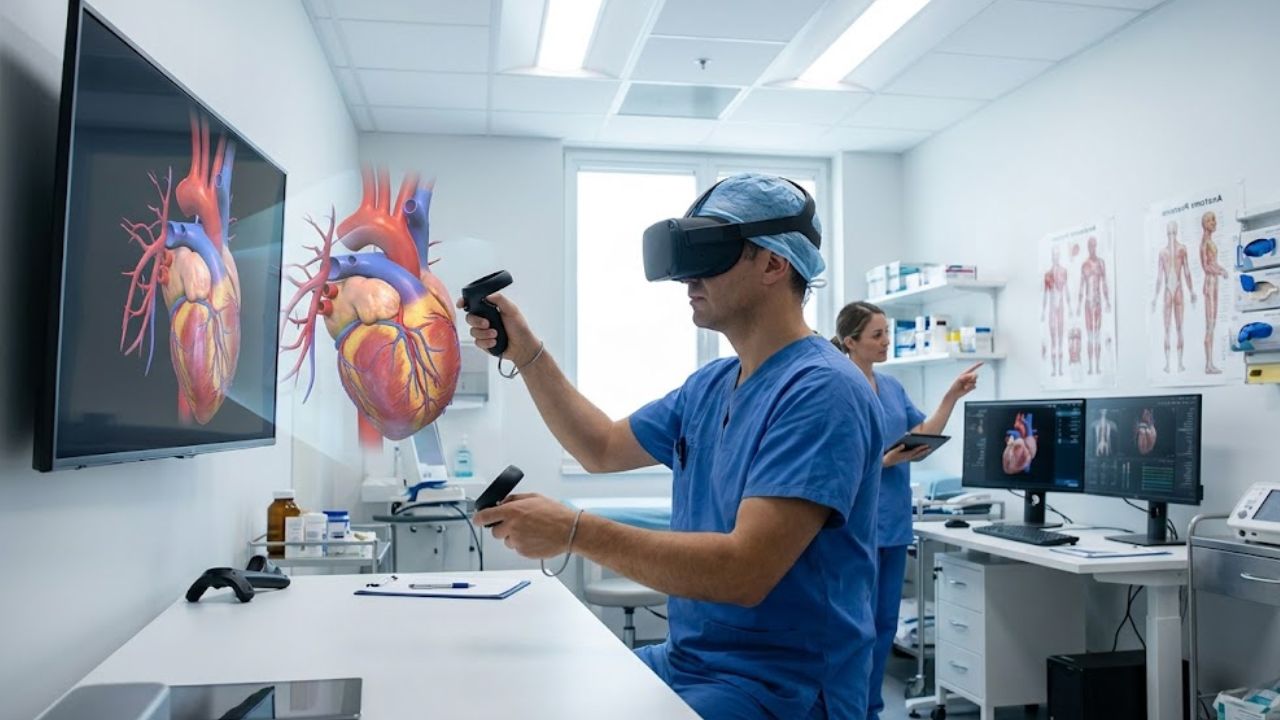
AI-assisted cardiac imaging is another application. AI algorithms can examine cardiac images and identify abnormalities like heart valve dysfunction or damaged heart tissue. The ability to detect heart problems sooner and begin treatment increases the likelihood of a positive outcome for patients.
The field of pathology is also finding applications for AI. Its algorithms can analyze images of tissue samples to assist pathologists in detecting cancerous cells.
Moreover, medical imaging has progressed beyond its initial diagnostic role and is now essential in cancer treatment. With the help of imaging technology, doctors can keep tabs on tumors and the spread of cancer cells in real time, allowing for more timely assessments of the efficacy of different treatments.
This emerging role for imaging has the potential to completely alter cancer treatment, opening the door to more personalized and efficient therapies and empowering oncologists with the information they need to make informed treatment decisions. In the long run, this should entirely change the cancer care system as we know it.
Let’s take a closer look at the advantages of implementing AI in medical imaging.
Benefits of AI-assisted Medical Imaging
With a growing interest in both diagnostic and therapeutic applications, AI has quickly become one of the hottest subjects in medical imaging research. The exponential growth in the number of papers on AI in diagnostic imaging from 100–150 per year in 2007–2008 to 1000–1100 in 2017–2018 is remarkable. So what makes AI such a compelling subject worth our attention?
Improved Diagnostic Accuracy and Speed
Accuracy and speed are two of the most important criteria in medical diagnosis. Time and human error in traditional diagnostic processes can delay diagnosis or even misdiagnose patients. AI-assisted medical imaging fills this gap, enabling quicker and more precise diagnosis.
AI systems can examine medical pictures like CT scans, MRIs, and X-rays, picking up patterns and anomalies that human eyes would miss. With this information, doctors can make more precise diagnoses, ultimately benefiting the patient.
Routine Tasks Automation
Doctors are held to demanding standards at various levels, which are constantly evolving to keep up with new legislation and regulation. In addition to fulfilling the obligations of their own continuous professional development programs, healthcare professionals have to remain ahead of complicated changes in medical care, drug programs, and authorization processes.
Given all the pressures and difficulties medical professionals face, it’s no wonder that burnout is so common among doctors. There is an urgent need for creative responses to reduce stress and enable healthcare personnel to maintain their well-being and resilience.
AI has the ability to significantly cut administrative and repetitive task loads in the healthcare industry. AI-powered technologies can make a huge difference in healthcare with individualized solutions that address the industry’s specific challenges.
These cutting-edge tools can simplify processes and quickly spot problems in massive amounts of patient data or accumulated paperwork. AI-enabled machines can serve as a 24/7/365 safety net for doctors, helping them out when they’re too busy or exhausted to do their jobs effectively.
Enhanced Personalized Treatment Options
Improving patients’ access to personalized care is one of the most exciting prospects for the use of AI in medical imaging. This strategy can potentially enhance treatment outcomes, reduce adverse effects, and boost patient satisfaction levels.
In the case of cancer treatment, for instance, AI-assisted medical imaging can help doctors determine the type of cancer, its stage, and any underlying genetic alterations. This can enable physicians to select the best suitable treatment alternatives.
Alzheimer’s disease treatment is another area where this approach has been successfully used. AI-assisted medical imaging can help doctors monitor changes in the brain indicative of the disease, allowing for an earlier diagnosis and the initiation of treatment.
Conclusion
The application of AI to medical imaging is promising and can dramatically improve patient care. AI-assisted medical imaging allows for quicker and more accurate diagnosis, as well as more individualized therapy options for patients.
Furthermore, AI has the potential to greatly benefit the healthcare industry by freeing up doctors and nurses to focus on more complex cases. AI can act as a consistent and dependable safety net, supporting physicians when weary or overburdened and, eventually, increasing the quality of treatment offered to patients.