
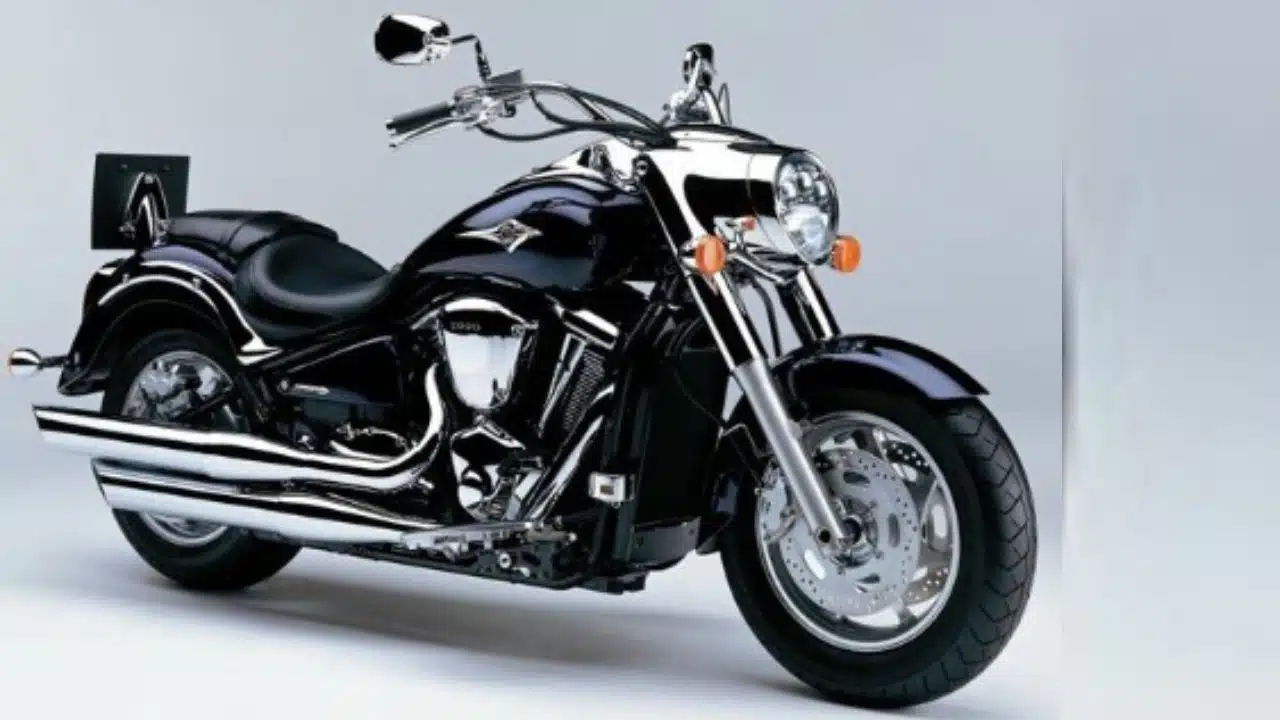
The Kawasaki Vulcan 2000 roared onto the motorcycle scene in 2004, not just as another cruiser, but as a statement of dominance. With a colossal 2,053cc V-twin engine, it claimed the title of the largest displacement production V-twin motorcycle in the world at the time of its launch.
This liquid-cooled behemoth was more than just about raw size; it delivered a torrent of torque and a commanding road presence that left an indelible mark on the cruiser category. The Kawasaki Vulcan 2000 Review reveals a motorcycle that masterfully blended aggressive styling with the comfort required for long-distance journeys, creating a legend that is still revered by enthusiasts today.
The heart of the Vulcan 2000 was its massive engine, a powerhouse that, according to Motorcycle Cruiser’s 2004 road test, produced a formidable 141 lb-ft of torque. This immense pulling power was available from low RPMs, providing a riding experience characterized by effortless acceleration and a satisfying V-twin rumble. The engine’s design was a work of art, featuring pushrod valve actuation to keep the engine height low, contributing to the bike’s low center of gravity and accessible seat height. This engineering choice was a nod to classic V-twin aesthetics, with chrome pushrod tubes adding to the visual appeal.
A Legacy of Power: The Vulcan Series
The Kawasaki Vulcan line has a rich history dating back to the mid-1980s. The series has consistently offered riders a compelling alternative in the cruiser market, with a reputation for reliability and performance. The introduction of the Vulcan 2000 was a bold move by Kawasaki, solidifying their position as a manufacturer capable of producing world-class, large-displacement cruisers. The Vulcan 2000 was the pinnacle of this evolution, showcasing Kawasaki’s engineering prowess and their understanding of the cruiser rider’s desires.
Unpacking the Performance and Handling of the Gentle Giant
Riding the Kawasaki Vulcan 2000 is an experience dominated by its engine. The sheer amount of torque allows for effortless cruising at low RPMs, with a simple twist of the throttle unleashing a wave of acceleration. Despite its significant weight, the Vulcan 2000 handles with a surprising degree of agility. The rigid frame and well-sorted suspension provide a stable and confident ride, even when navigating winding roads. The massive 49mm front forks and single rear shock effectively soak up road imperfections, ensuring a comfortable journey for both rider and passenger.
Braking is handled by dual 300mm discs with four-piston calipers at the front and a single 320mm disc with a two-piston caliper at the rear. This setup provides ample stopping power to haul the big cruiser down from speed with confidence. While it’s a heavy machine, the brakes are more than capable of managing its mass, offering good feel and progressive stopping power.
A Closer Look at the Design and Ergonomics
The styling of the Kawasaki Vulcan 2000 is pure, unadulterated cruiser. Its long, low profile is accentuated by a beautifully sculpted fuel tank and deeply valanced fenders. The distinctive headlight nacelle, housing a powerful projector-beam headlight, gives the front end a unique and imposing look. Chrome is used generously but tastefully, highlighting the engine, exhaust, and other key components, further enhancing its premium appearance.
Comfort was a clear priority in the design of the Vulcan 2000. The wide, pullback handlebars and forward-mounted floorboards create a relaxed, feet-forward riding position that is ideal for long hours in the saddle. The seat is broad and well-padded, providing excellent support. For those looking to share the experience, the passenger accommodations are equally comfortable, with a spacious pillion seat and an available backrest for added security.
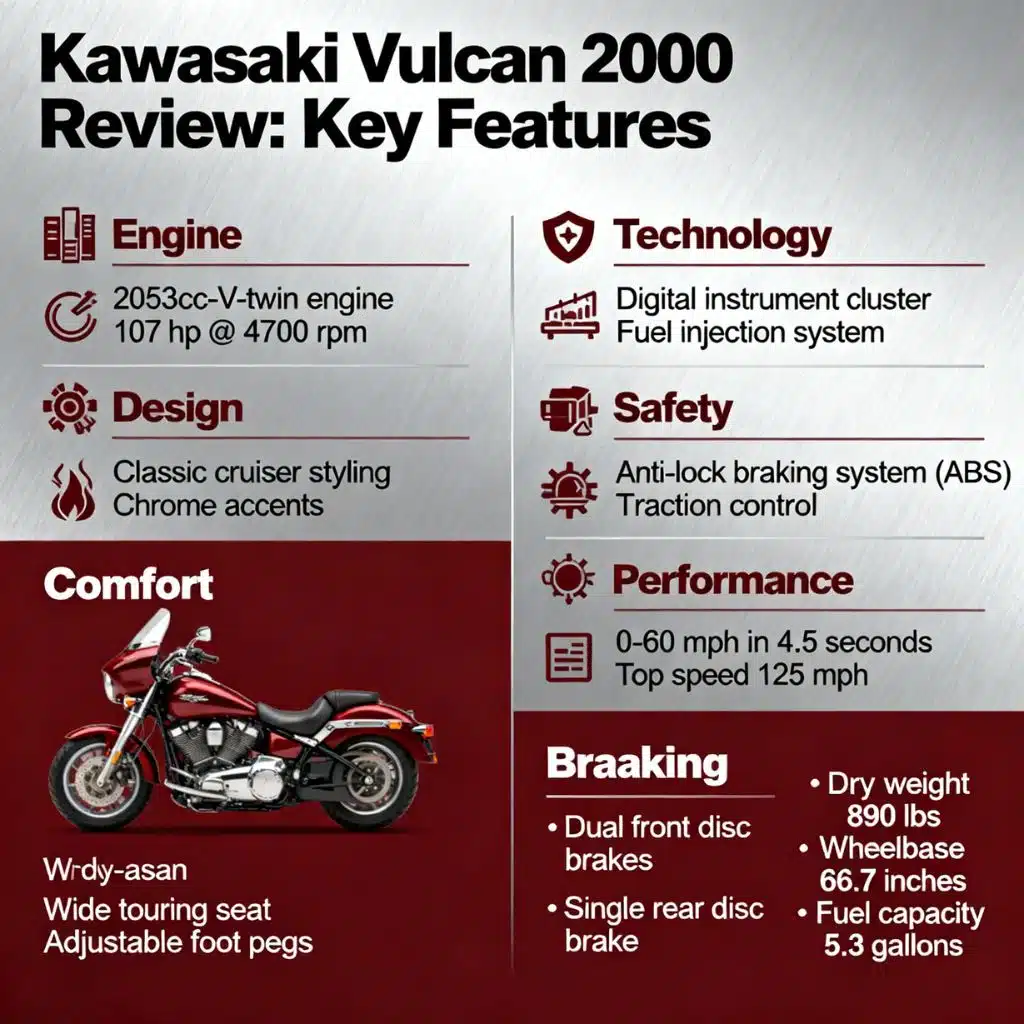
With its comfortable ergonomics and powerful engine, the Kawasaki Vulcan 2000 is an exceptional long-distance touring machine. The 5.5-gallon fuel tank offers a generous range, minimizing the need for frequent stops. The smooth, torque-rich power delivery makes highway cruising a relaxed and enjoyable affair. For riders looking to embark on extended journeys, Kawasaki offered a range of accessories, including windshields, saddlebags, and passenger backrests, further enhancing the bike’s touring credentials.
However, some owner reviews have noted that the stock seat, while comfortable for shorter rides, can become firm on multi-day trips. This is a common critique of many stock motorcycle seats and can be easily rectified with an aftermarket touring seat.
Kawasaki Vulcan 2000 Specifications
| Specification | Value |
| Engine | 2,053cc, 4-stroke, 52° V-twin, liquid-cooled, OHV, 8-valve |
| Bore x Stroke | 103mm x 123.2mm |
| Compression Ratio | 9.5:1 |
| Horsepower | Approximately 116 hp @ 5,000 rpm |
| Torque | 141 lb-ft @ 3,000 rpm |
| Fuel System | Digital Fuel Injection with dual 46mm throttle bodies |
| Transmission | 5-speed |
| Final Drive | Belt |
| Frame | Steel, double-cradle |
| Front Suspension | 49mm telescopic fork |
| Rear Suspension | Single shock with 8-way rebound damping |
| Front Brakes | Dual 300mm discs with 4-piston calipers |
| Rear Brake | Single 320mm disc with 2-piston caliper |
| Seat Height | 26.8 inches |
| Fuel Capacity | 5.5 gallons |
| Dry Weight | 750 lbs |
What Owners Say: The Real-World Experience
Owner feedback on the Kawasaki Vulcan 2000 is overwhelmingly positive, with many praising its powerful engine, comfortable ride, and stunning looks. The bike’s reliability is also a frequently mentioned strong point. However, some common issues have been reported by owners, particularly in the earlier models. These include potential problems with the plastic oil pump drive gear, which could fail and lead to engine damage. Prospective buyers of used Vulcan 2000s are advised to inquire about whether this has been addressed. Some owners have also mentioned that the transmission can be clunky, a characteristic not uncommon in large-displacement V-twins.
Despite these minor concerns, the Vulcan 2000 has cultivated a loyal following. Owners appreciate its unique blend of muscle bike performance and cruiser comfort, making it a versatile motorcycle for a variety of riding styles.
The End of an Era and its Lasting Legacy
Kawasaki ceased production of the Vulcan 2000 in 2010. The reasons for its discontinuation are multifaceted, likely including evolving market trends and stricter emissions regulations. However, the impact of the Vulcan 2000 on the cruiser world is undeniable. It pushed the boundaries of what was thought possible for a production V-twin and set a new benchmark for power and presence.
Today, the Kawasaki Vulcan 2000 remains a highly sought-after motorcycle on the used market. Its timeless design and legendary performance continue to attract riders who appreciate a motorcycle with a big heart and a bold personality. This Kawasaki Vulcan 2000 Review confirms its status as a true icon of the cruiser world, a testament to Kawasaki’s engineering prowess and a machine that will continue to turn heads and stir souls for years to come.