

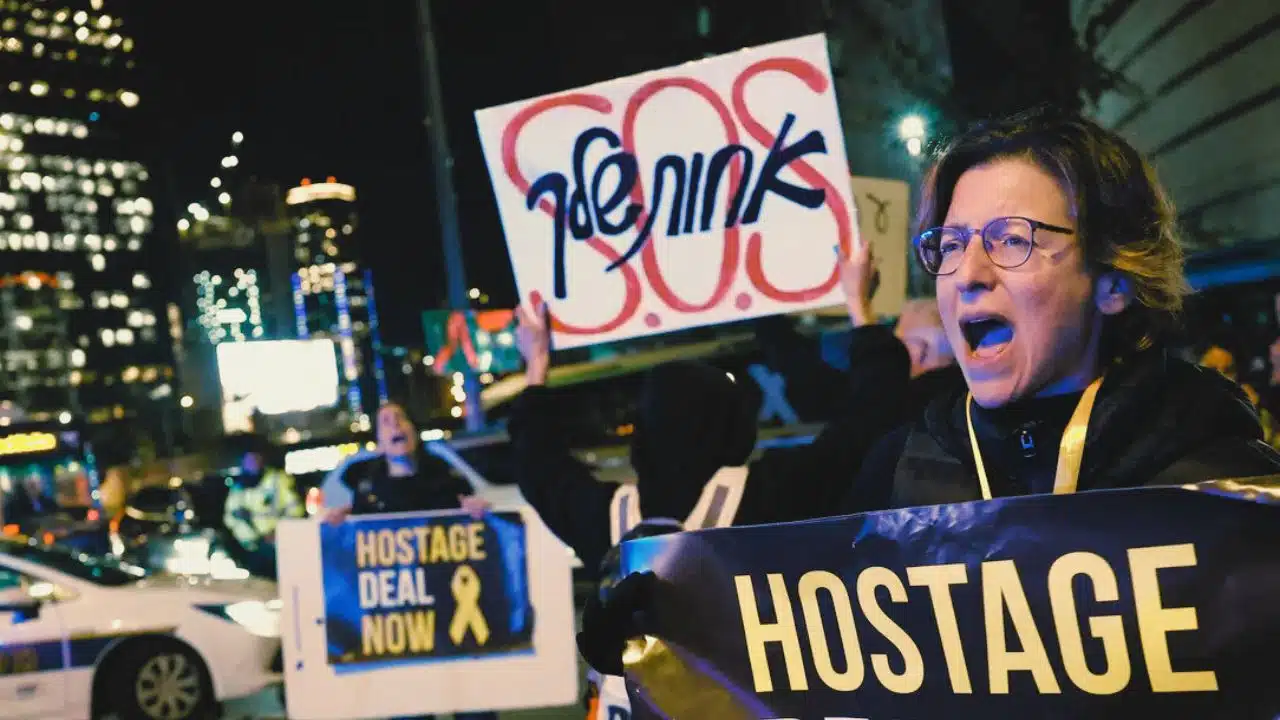
Within hours of the last 20 living hostages arriving back in Israel, a symbolic gesture inside the Knesset turned the national mood. Speaker Amir Ohana removed his yellow hostage pin while introducing U.S. President Donald Trump, whose team brokered the ceasefire. What some officials framed as a sign of progress landed as premature triumphalism for families who are still waiting for the return and identification of their loved ones’ remains. Their message was blunt: the crisis is not over.
Why the pin matters to families
The yellow pin has become a civic pledge to prioritize the hostages until every person—living or deceased—is accounted for. Seeing a top official set it aside, and seeing applause dominate the chamber, reinforced a perception that political narratives were getting ahead of results. Families and advocacy groups argued that symbolism should follow outcomes: complete returns, confirmed identifications, and transparent timelines.
The status of deceased hostages
The deal requires the return of bodies as well as the living. Progress has been uneven and complicated by the battlefield environment:
-
Initial transfers: On Monday evening, four bodies were delivered to Israel.
-
Further returns: On Tuesday, four more were handed over. Shortly after, the Israeli military said one body did not match any recorded captive, underscoring the difficulties of recovery and identification.
-
Outstanding cases: Israeli authorities say many remains are still unaccounted for; some may be unrecoverable quickly due to rubble, tunnel collapses, and shifting front lines. The International Committee of the Red Cross cautions that the process could be lengthy and, in some cases, inconclusive.
Israeli assessments for months have warned that locating every deceased hostage might be impossible without sustained, secure access to heavily damaged areas. An international task force outlined in the ceasefire is expected to aid recovery operations, but operational details and sequencing are still being set with mediators.
Aid flows become leverage—and a flashpoint
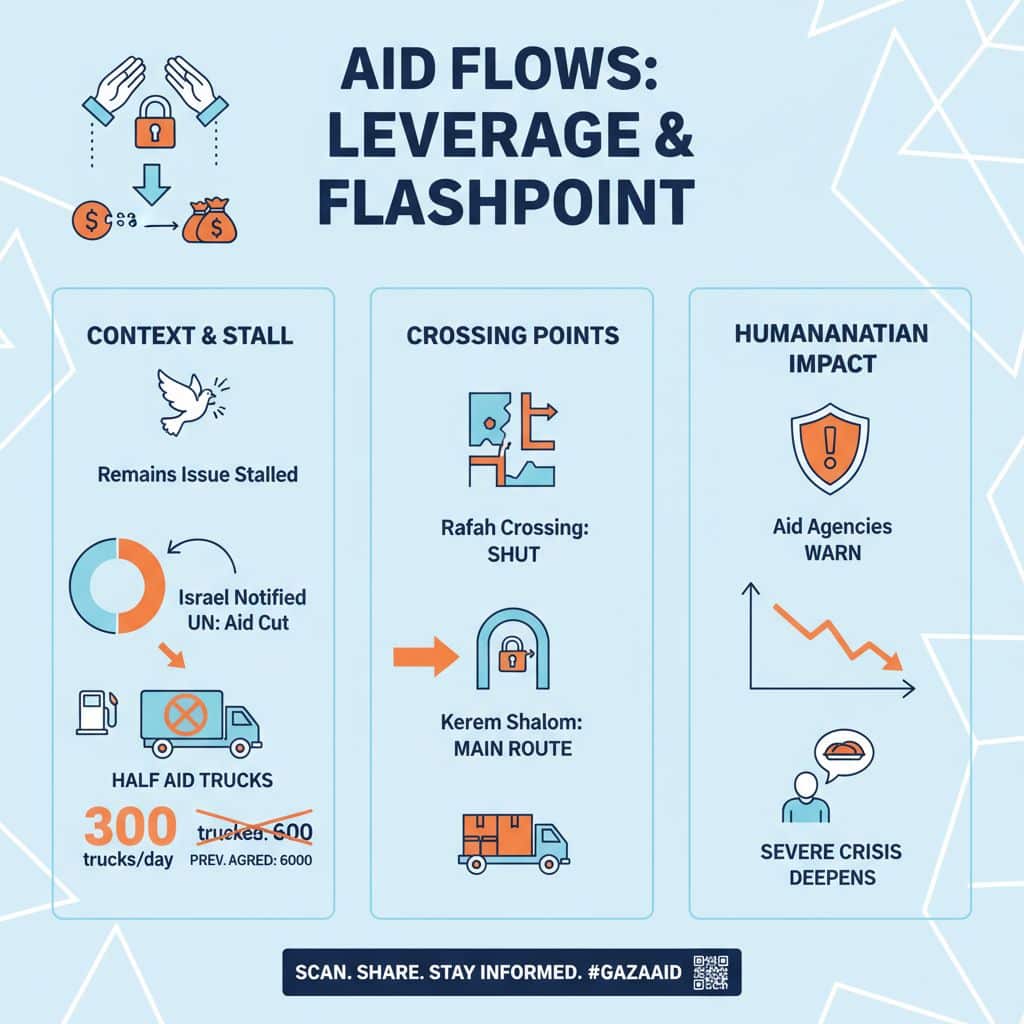
As the remains issue stalled, Israel notified the UN it would allow ~300 aid trucks per day into Gaza—half the previously agreed figure—citing Hamas’s slow compliance on body returns. Fuel and gas shipments remain largely barred except for essential humanitarian uses. The Rafah crossing stayed shut; aid is routing primarily through Kerem Shalom. Aid agencies warn these limits risk deepening an already severe humanitarian crisis.
Government messaging vs. public sentiment
Prime Minister Benjamin Netanyahu has argued that calibrated pressure will secure additional returns while preserving the ceasefire. Families’ groups and some opposition figures contend that overt celebration weakens moral clarity and bargaining leverage. Their asks are practical: a published cadence for remains recovery, public confirmations with forensic documentation, and visible international involvement on the ground.
What Trump declared—and the reality check
From the Knesset stage and in subsequent remarks, President Trump said the war has ended. Security analysts and humanitarian officials counter that ending large-scale combat is only phase one; success depends on compliance mechanisms, aid access, and a governance plan that prevents a power vacuum in Gaza. Without these, localized flare-ups and factional violence could unwind the gains.
The ceasefire roadmap: what’s done and what remains
Only the first phase—release of the remaining living hostages, initial steps on withdrawals, and a framework for aid—has been implemented. Sticking points ahead:
-
Accountability for remains: agreed procedures, search access, and verification standards for all deceased hostages.
-
Security guarantees: credible steps that constrain armed activity and prevent relapse into conflict.
-
Governance of Gaza: a transitional administration with authority to restore services, coordinate reconstruction, and manage borders with third-party oversight.
Operational frictions on the ground
Even with large-scale fire paused, reports describe sporadic armed incidents, bureaucratic hurdles for aid convoys, and uncertainty at crossings. UN agencies point to logistical bottlenecks and the risk of famine if daily truck totals do not rise and if fuel restrictions persist. Israel cites ceasefire non-compliance on remains to justify tighter controls. These are the kinds of frictions that have historically stress-tested ceasefires.
How bereaved families are experiencing this phase
For families who lost loved ones, symbols matter: the pin, the posters, the tone of official events. Their request is straightforward—keep public focus aligned with measurable progress, not political choreography. Until every case is resolved, they see celebration as out of step with their reality.
What to watch next
-
Remains recovery cadence: Do additional bodies come through steadily this week? Are identities confirmed with transparent forensic protocols and family notifications?
-
Aid scaling: Do truck counts rise above 300/day, does Rafah reopen under secure arrangements, and do fuel exceptions broaden to stabilize hospitals, water, and cold chains?
-
Phase-two negotiations: Concrete proposals on security and governance, including third-party monitoring and dispute-resolution mechanisms that prevent a single breach from collapsing the deal.
The ceasefire achieved a significant milestone—no living Israeli hostages remain in Hamas custody—but the mission is not complete. Symbolic closure without material closure risks alienating families and eroding public trust. Durable peace demands sustained remains recovery, predictable and sufficient aid access, and a credible governance and security framework for Gaza. Until those are locked in, restraint in rhetoric and focus on delivery will matter more than ceremonies.
























