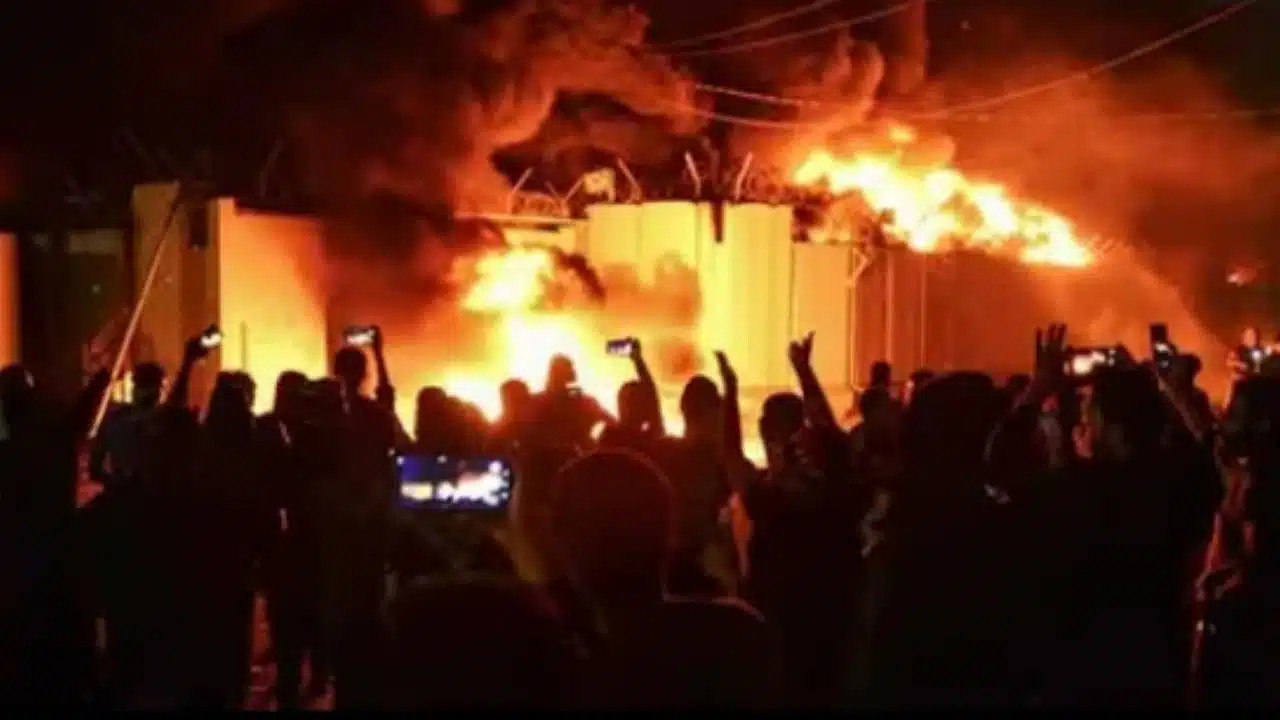
Violent clashes in Iran on January 1 left several people dead as demonstrations over inflation and a collapsing currency spread beyond Tehran, raising pressure on authorities who promised talks while deploying security forces.
What Happened and Where
Iran saw its deadliest day yet in a wave of economic protests that began December 28 and escalated into confrontations in multiple provinces by January 1.
Reports from state-linked outlets and rights monitors pointed to fatalities in at least Lorestan, Chaharmahal and Bakhtiari, and Isfahan provinces, though the exact number of deaths remained unclear due to competing accounts and the difficulty of independent verification.
In Lordegan (Chaharmahal and Bakhtiari), semi-official reporting described two deaths during clashes between demonstrators and security forces. Rights monitors described security forces firing on crowds during the confrontation.
In Kuhdasht (Lorestan), authorities confirmed one death but offered a sharply different account from rights monitors. State media identified the deceased as Amirhossam Khodayari Fard, 21, described as a member of the Basij paramilitary. Security officials said additional militia members were injured and alleged demonstrators exploited public protests to trigger violence. Rights monitors, meanwhile, described Khodayari Fard as a protester killed by security forces.
Another death was also reported in Isfahan province, amid spreading demonstrations and campus chants calling for freedom.
Reported Fatalities and Disputed Accounts
| Location | Province | Reported Outcome | Key Dispute |
| Lordegan | Chaharmahal and Bakhtiari | Two reported killed | Whether deaths occurred during clashes or from gunfire directed at demonstrators |
| Kuhdasht | Lorestan | One confirmed death | Whether the deceased was Basij militia or a protester |
| Isfahan (province) | Isfahan | One reported killed | Circumstances and attribution of responsibility |
Why the Protests Started
The trigger was economic, and it moved quickly.
Demonstrations began December 28 when shopkeepers and traders in Tehran closed stores in protest over worsening living conditions. From there, the unrest spread to other cities and universities, drawing students into the streets and onto campuses.
Two pressures dominated public anger:
- Currency collapse: The Iranian rial weakened sharply in 2025, with the informal exchange rate reported around 1.42 million rials per U.S. dollar at a recent low, intensifying the price of imports and daily necessities.
- High inflation: Iran’s inflation has remained above 40% in widely cited estimates and projections, eroding purchasing power—especially for food, medicine, transport, and rent.
For many households, the combination of a falling currency and persistent inflation has meant wages lag behind prices, while savings lose value quickly—conditions that historically have fueled periodic unrest in Iran.
How the Demonstrations Spread
The protests moved from Tehran’s commercial areas and the Grand Bazaar to other provinces in a pattern seen in earlier Iranian protest waves: economic shock → merchant action → student mobilization → wider city participation.
Students reportedly joined rallies at campuses in Tehran, Isfahan, and Yazd, with chants focused on freedom and living conditions. Strikes and shop closures signaled that the discontent extended beyond political activists to segments of the urban economy that have played a decisive role in prior upheavals.
Timeline of the Latest Unrest
| Date | Key Development |
| Dec. 28 | Initial merchant-led protests and shop closures in Tehran tied to economic conditions |
| Dec. 29–31 | Demonstrations spread to more cities and universities; security presence increases |
| Dec. 31 | Broad office/school closures announced in much of the country amid cold-weather and energy constraints |
| Jan. 1 | Deadliest escalation reported, with fatalities and injuries reported/confirmed in several areas |
Government Response: Security Measures and an Offer of Talks
Iran’s leadership responded with a dual approach: public signals of dialogue alongside intensified security measures.
A government spokesperson said authorities would hold direct talks with representatives of trade unions and merchants, though no detailed framework, timeline, or participants were publicly confirmed.
President Masoud Pezeshkian publicly urged officials to listen to protesters’ “legitimate demands,” a phrase that suggested some recognition of economic grievances even as the state warned against disorder and blamed “opportunists” for violence.
At the same time, security forces moved to contain demonstrations, and arrests were reported in some areas as authorities sought to prevent the unrest from spreading further.
Energy Stress Adds Another Layer to the Crisis
As protests built, officials announced widespread closures of government offices and schools across much of the country, citing extreme cold and energy-supply constraints.
Separate reporting indicated closures affected a large share of provinces, reflecting Iran’s ongoing struggle with energy management and seasonal demand spikes—an issue that has become increasingly visible in recent years due to underinvestment, consumption growth, and infrastructure pressure.
While authorities framed closures as administrative and weather-related, the shutdowns also reduced daily commerce and movement at a time when protests were expanding.
Economic Roots: Sanctions, Confidence, and Shock Events
Iran’s economy has faced long-running constraints under Western sanctions linked to its nuclear program, limiting investment, complicating trade and payments, and contributing to currency volatility.
In 2025, additional pressure reportedly came from regional conflict and security shocks, including a short war with Israel earlier in the year that further strained public finances and confidence.
Even without new shocks, confidence effects matter: when households and businesses expect the currency to weaken further, they often move savings into foreign currency, gold, or durable goods—behavior that can accelerate depreciation and amplify inflation expectations.
Key Economic Pressure Points
| Indicator | What It Means for Daily Life | Recent Signal |
| Rial depreciation | Higher prices for imports, medicines, components, and food staples | Informal rate hit/approached record lows around 1.42m per USD |
| Inflation above 40% | Rapid erosion of wages and savings | IMF shows high inflation projections and country data |
| Sanctions constraints | Reduced investment, trade friction, and currency pressure | Long-running factor widely cited in economic assessments |
| Energy strain | Closures, disruptions, business slowdowns | Widespread closures during cold weather and energy constraints |
Why This Wave Matters
This unrest has drawn comparisons to 2022, when nationwide protests erupted after Mahsa Amini died in custody, triggering a broader movement that combined social freedoms with political demands.
The current protests appear anchored first in economics—currency collapse and inflation—yet they are unfolding in a society where distrust in institutions and anger over governance can rapidly turn economic protest into broader anti-establishment dissent.
What makes this wave especially sensitive for authorities is the participation of merchants and students, two constituencies that historically can expand the reach and resilience of protest movements when they mobilize together.
What Comes Next
Several factors will shape whether protests intensify or ease in the coming days:
- Credible economic stabilization steps: Measures that reduce currency panic and improve supply of essentials may lower immediate pressure.
- Scope and tone of dialogue: Talks with merchants and unions could calm unrest if they appear genuine and produce tangible steps; they may inflame anger if seen as symbolic.
- Security posture: A heavier crackdown can suppress street activity in the short term but risks escalating grievances if casualties rise.
- Information environment: Competing narratives over deaths and injuries are already shaping public perception and could influence turnout.
Iran’s latest protests show how quickly economic distress can spill into nationwide unrest when inflation, currency collapse, and daily hardship collide. With deaths reported and accounts sharply disputed, authorities face urgent pressure to restore stability—through both credible economic steps and a response that avoids further loss of life.