

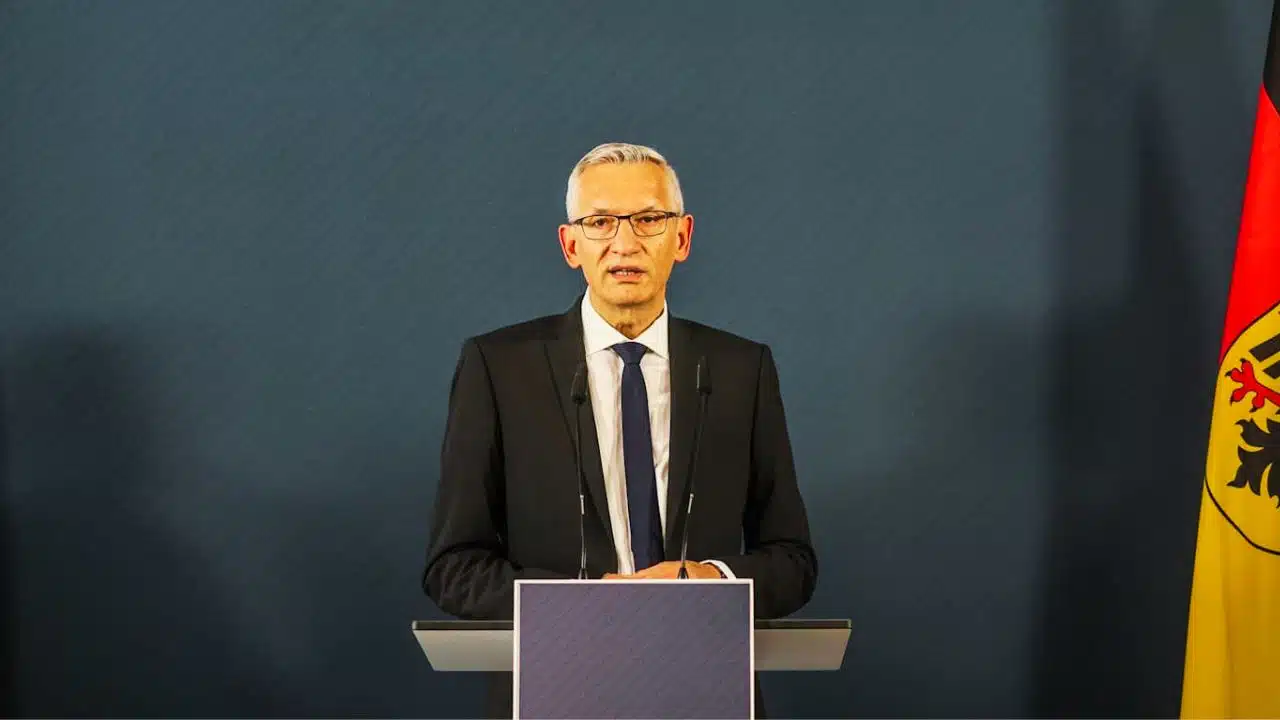
Germany’s top intelligence chiefs have issued their most explicit warning to date, declaring that Russia is rearming at a pace that could enable it to launch an attack against a NATO member state in as little as five years. The stark assessment, delivered by the heads of the country’s foreign and domestic intelligence agencies, is compelling Berlin and its allies to accelerate military preparations for a potential direct confrontation, fundamentally reshaping Europe’s security calculus.
This alarming forecast is not based on immediate intent but on a sober analysis of Russia’s transition to a full war economy and its demonstrated capacity to regenerate forces despite heavy losses in Ukraine. The consensus emerging from Germany’s security apparatus is that the window for deterrence is closing, and the “peace dividend” Europe enjoyed for three decades is definitively over.
Key Facts & Quick Take
- Attack Timeline: German intelligence services, including the BND (foreign intelligence), assess that Russia could be militarily capable of attacking a NATO country, likely in the Baltics or Scandinavia, within a five-to-eight-year timeframe, beginning from 2026 onwards.
- War Economy: Russia’s military-industrial complex is now operating on a 24/7 footing. It is producing weaponry, particularly artillery shells and tanks, at a rate far exceeding pre-war levels and initial Western intelligence estimates.
- Hybrid Warfare: Alongside conventional military threats, German officials warn of a massive escalation in Russian espionage, disinformation campaigns, and cyberattacks aimed at destabilizing German society and undermining support for Ukraine.
- German Response: The warnings have fueled calls from Defence Minister Boris Pistorius for Germany to become kriegstüchtig (war-capable). This includes reviving a form of military service, accelerating the €100 billion “Zeitenwende” fund, and deploying a permanent combat brigade to Lithuania.
The Growing Storm: A Coordinated Warning
The alarm bells from Berlin are not the product of a single report but a coordinated chorus of warnings from the highest echelons of Germany’s security establishment. This represents a significant shift for a country whose post-war identity has been deeply rooted in pacifism and diplomacy.
The head of Germany’s foreign intelligence service (BND), Bruno Kahl, has repeatedly cautioned in parliamentary briefings throughout late 2024 and 2025 that Moscow’s military restructuring is formidable. According to sources privy to these briefings, Kahl’s assessment highlights Russia’s ability to replace battlefield losses and even expand its force structure.
“We are observing Russia’s defense industry producing at full capacity,” a senior German security official paraphrased from a recent intelligence summary provided to lawmakers. “What we are seeing is not a military on the verge of collapse, but one adapting for a long-term, high-intensity conflict with the West.”
This is echoed by Thomas Haldenwang, president of the Federal Office for the Protection of the Constitution (BfV), Germany’s domestic intelligence agency. In a public statement in mid-2025, Haldenwang warned that the threat level from Russian espionage is “as high as it was during the Cold War, if not higher.” He detailed a surge in Russian attempts to recruit informants, conduct cyberattacks on critical infrastructure like energy grids, and spread divisive disinformation to polarize the German electorate.
The Data Behind the Danger
The warnings are underpinned by hard data tracking Russia’s military resurgence and NATO’s response. While the war in Ukraine has been costly for Moscow, its ability to sustain and increase output has alarmed Western planners.
- Russia’s Defense Spending: Russia’s official defense budget for 2025 is projected to reach approximately 7.1% of its GDP, a level not seen since the height of the Soviet era. This figure, released by the Russian Finance Ministry and analyzed by Western institutions, represents over 30% of the country’s total federal spending. In absolute terms, this translates to an estimated $120 billion, though real purchasing power within Russia’s state-controlled defense sector is likely much higher.
- NATO’s Defense Investment: In response, NATO members have dramatically increased their own military expenditures. According to the latest NATO report published in July 2025, an estimated 23 of the 32 member nations are now meeting or exceeding the alliance’s guideline of spending 2% of GDP on defense. This is a sharp increase from just 11 members in early 2024.
Table: NATO 2% GDP Defence Spending Compliance | Year | Number of Allies Meeting Target | | :— | :— | | 2014 | 3 | | 2022 | 7 | | 2024 | 11 | | 2025 (Projected)| 23 - German Military Modernization: Germany’s own efforts, initiated by the Zeitenwende (“turning point”) policy, are underway but face challenges. Of the €100 billion special fund established in 2022, approximately two-thirds had been contractually allocated by early 2025. However, a report from the Parliamentary Commissioner for the Armed Forces, Eva Högl, highlighted that tangible improvements in equipment and personnel levels are only slowly materializing, citing persistent bureaucratic hurdles.
Official Responses and Expert Analysis
The intelligence assessments have forced a dramatic rhetorical and policy shift in Berlin. German Defence Minister Boris Pistorius has become the cabinet’s most forceful advocate for military readiness.
In a landmark speech at the Bundeswehr University in Hamburg, Pistorius stated, “We must be the backbone of deterrence and collective defense in Europe… For decades, Germans have taken peace for granted. Those days are over. We must become war-capable to ensure that war does not come to us.”
This sentiment is backed by concrete action. Germany is leading NATO’s Very High Readiness Joint Task Force (VJTF) and is in the process of permanently stationing a 4,800-strong combat brigade in Lithuania, a first for the Bundeswehr since World War II. The first elements of this brigade arrived in late 2024, with full operational capability expected by 2027.
Experts view the German warnings as a crucial, if belated, recognition of the new reality. Dr. Christian Mölling, Head of the Center for Security and Defense at the German Council on Foreign Relations (DGAP), commented on the findings.
“The German intelligence community is not being alarmist; it is being realistic,” Dr. Mölling stated in an interview. “Their timeline is based on a conservative estimate of how long it would take Russia to reconstitute its most advanced land forces and logistical capabilities for a conflict against a technologically superior adversary like NATO. The key variable is the West’s resolve. If support for Ukraine falters, this timeline could shorten dramatically.” (Source: DGAP analysis publication).
The Human Impact: A Nation Reconsiders its Role
The shift has been jarring for many ordinary Germans. An anecdote from a town hall meeting near the Bergen-Hohne military base captures the mood. Anja Richter, a 55-year-old teacher, told a local newspaper, “My parents’ generation protested against missiles and military spending. We grew up believing that dialogue was always the answer. Now, we are told to prepare for war. It is a frightening thought, but after seeing what happened in Bucha and Mariupol, we understand that you cannot reason with a bully.”
This changing public sentiment is providing the political space for leaders like Pistorius to push for more radical defense reforms, including discussions about reinstating some form of national service to bolster reserve forces.
What to Watch Next
The coming 24 months are critical. Key indicators to watch include:
- Russia’s Force Generation: Western intelligence will closely monitor how effectively Russia can train new conscripts and integrate them into coherent, combat-effective units.
- Ammunition Production: The race to produce 155mm (NATO) versus 152mm (Russian) artillery shells will be a decisive factor in both the Ukraine war and the future balance of power.
- NATO’s Eastern Flank: The speed at which new battle plans are implemented and forces are deployed to countries like Poland, Romania, and the Baltic states will signal the alliance’s seriousness.
- The US Political Landscape: The outcome of future US elections and the durability of its commitment to NATO’s Article 5 remain the most significant variable in the security equation.
The clear and present warnings from Germany’s intelligence chiefs have shattered any remaining illusions about a potential return to the pre-2022 status quo. The message from Berlin is unequivocal: Russia could attack NATO, and the West has a limited, and shrinking, window of time to prepare its defenses. The debate is no longer about if a confrontation is possible, but when it might occur and how to build a credible deterrent to prevent it. For Germany and for Europe, the era of complacency has been replaced by an age of urgent necessity.





















