

If your child runs away the moment you open a workbook, you are not doing it wrong. Most advice on how to teach letters to kids assumes a child who will sit at a table for 20 minutes. Many five-year-olds won’t. My nephew Zayan certainly wouldn’t.
Zayan is five. A few months ago, he did not want to learn anything. He did not even want to go to school. He wanted one thing: to be a footballer like Cristiano Ronaldo. He was good at drawing, but he only drew the flags of big football nations. And he could copy exactly how Mbappé, Messi, Neymar, and Ronaldo celebrate after a goal.
Today, he gets up early every morning to practice letters. He likes to read and write letters and even numbers. Nothing magic happened. We changed how the letters reached him. I also work as chief technical advisor on Alphabet Magic: Trace & Phonics, a letter-learning app for young kids. So I see this problem from two sides: the child at home and the product on the screen.
Why Sitting Still Is the Wrong Starting Point for How to Teach Letters to Kids
A restless five-year-old is a normal five-year-old. The CDC lists paying attention for 5 to 10 minutes as a typical milestone by age 5. The same list says most kids this age can name some letters when you point to them and write some letters of their own name.
That is the real target. Not the whole alphabet in perfect rows. Zayan’s focus lasted about ten minutes. Once I stopped fighting that limit and planned around it, things got easier.
1. How to Teach Letters to Kids Through What They Already Love
Start with the obsession, not the alphabet.
For Zayan, that was football. His flags were the bridge. Every flag has a country name, and every name starts with a letter. When a child draws Brazil’s flag, ask for a big B under it. Portugal gets a P. France gets an F. Argentina gets an A. He also loves Spider-Man. Last month he went to watch Spider-Man: Brand New Day with his two elder brothers and me. And Spider-Man starts with the English letter S. Zayan also loves soft toys and he has a number of them. He has Doraemon, Tiger, Hulk, Pooh, Rabbit, Goofy, and more. Thus, English letters like D, T, H, P, R, and G come.
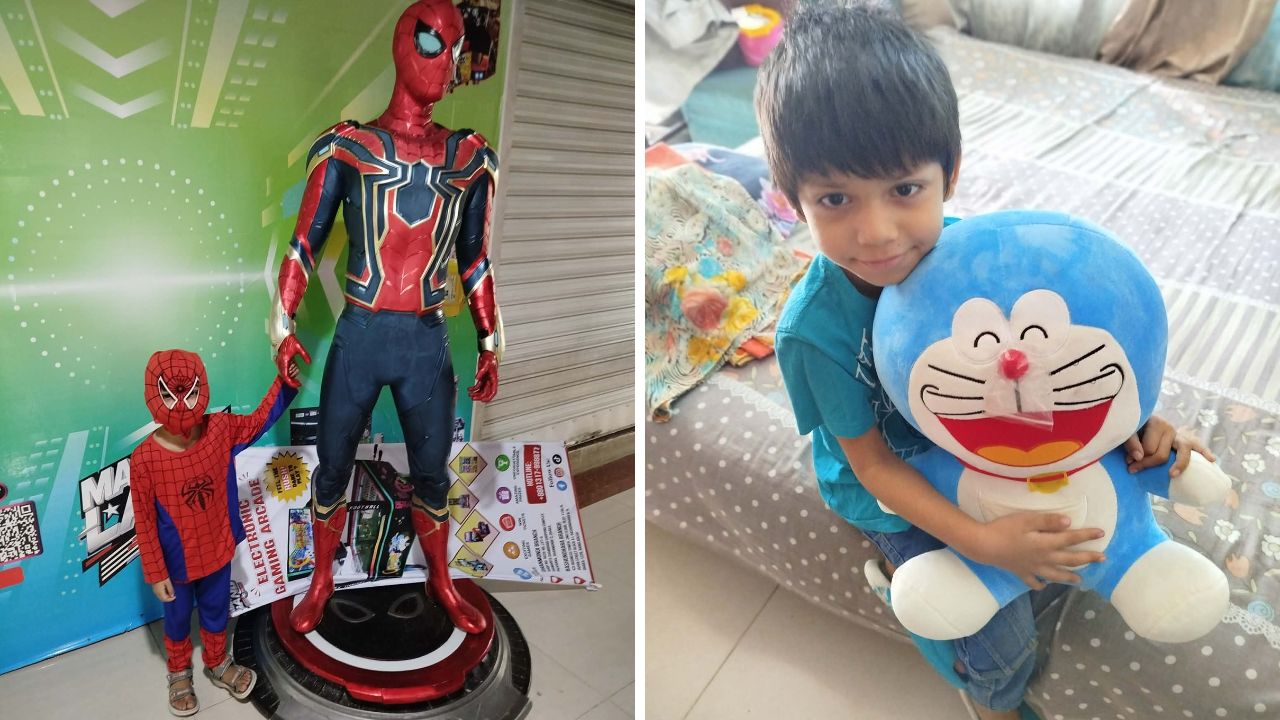
Player names work the same way. RONALDO has seven letters. A child who wants that name on the back of a shirt suddenly has a reason to learn R.
This is the same idea behind project-based learning: kids try harder when the task connects to something they already care about. Dinosaurs, trucks, and princesses work just as well as football.
2. How to Teach Letters to Kids by Turning Letters Into Moves
A child who can copy a goal celebration can copy a letter shape. Zayan already had the body memory. We only needed to point it at letters.
Some easy body letters:
- Y: both arms up in a V
- T: arms straight out to the sides
- C: curve the body sideways
- I: stand tall with arms pressed to the sides
Call out a letter. Your child makes the shape. Then they get to celebrate like their favorite player. The celebration is the reward, and they will ask for “one more letter” just to do it again.
3. How to Teach Letters to Kids by Giving Them Their Own Kit
This was the real turning point for us.
A few months ago, I brought Zayan alphabet picture books, a school bag, and some pencils with erasers. That was it. No big plan. But slowly, he got used to them. The bag was his. The pencils were his. The books were his.
My honest read is that ownership mattered more than the tools. The eraser mattered too. A mistake could vanish, so a mistake was no longer a big deal.
If you try this, let your child pick the bag or the pencil color. It costs very little, and it tells them this is their job, not yours.
4. How to Teach Letters to Kids in Short Bursts
Ten minutes is plenty. Stop while your child still wants more.
You can spread short bursts across the day:
- Five minutes after breakfast with a picture book
- One letter spotted on a road sign in the car
- One letter traced before bed
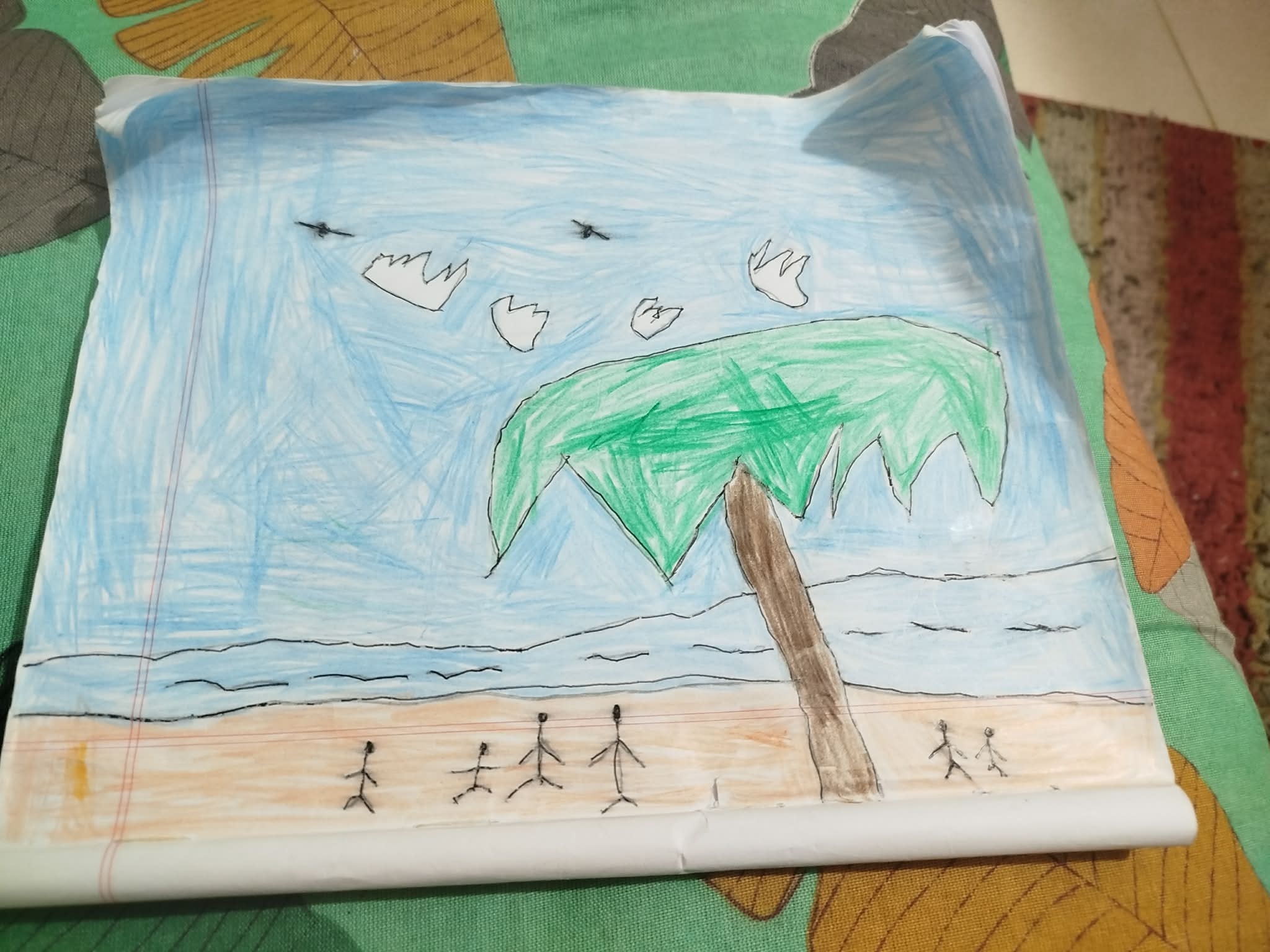
I use Zayan’s own drawing to teach him letters. He likes to draw and usually draws flags of football nations. But I told him to draw some scenario he could imagine and he drew this image. Later on, I taught him letters like T from the tree, S from the sky, and B from the birds.
Short sessions feel like a game. Long sessions feel like school, and school was exactly what Zayan did not want.
5. How to Teach Letters to Kids With Letter Hunts
For Zayan, matching letters to real objects worked best. Letter hunts were his favorite.
Say a sound, like “buh.” Your child runs to find something that starts with it: a ball, a book, or a banana. Then they touch the object and say the letter. Running is allowed. Running is the point.
You can keep this going at meals too. We have a separate guide on how to practice letters at the dinner table without it turning into a lecture.
6. How to Teach Letters to Kids by Tracing First, Then Writing Freehand
Tracing is useful early. It shows a child where a letter starts and which way the pencil should move.
But tracing should be a step, not the goal. A well-known 2012 study by Karin James and Laura Engelhardt at Indiana University scanned the brains of five-year-olds after they printed, typed, or traced letters. A brain network linked to reading became active only after the children printed letters freehand. Tracing and typing did not show the same effect.
So use tracing for a short while, then move to copying letters on blank paper. If you are unsure about timing, read our guide on when kids should start tracing letters.
Expect some mix-ups. Zayan confused b, d, p, and q for a long time. That is very common. Practice one of them at a time, not all four together.
7. How to Teach Letters to Kids With an App, Without Letting the App Take Over
I’ll be upfront, since I help build one.
Alphabet Magic: Trace & Phonics is free to download on the App Store and Google Play. It has uppercase and lowercase tracing, letter matching, phonics games, and a spelling game. It is ad-free, which matters more than most parents realize.
Still, an app is a helper, not the teacher. The American Academy of Pediatrics suggests about one hour a day of high-quality screen content for kids ages 2 to 5, ideally with an adult nearby. A letter app fits best as a short part of that hour, like 10 minutes on a rainy afternoon.
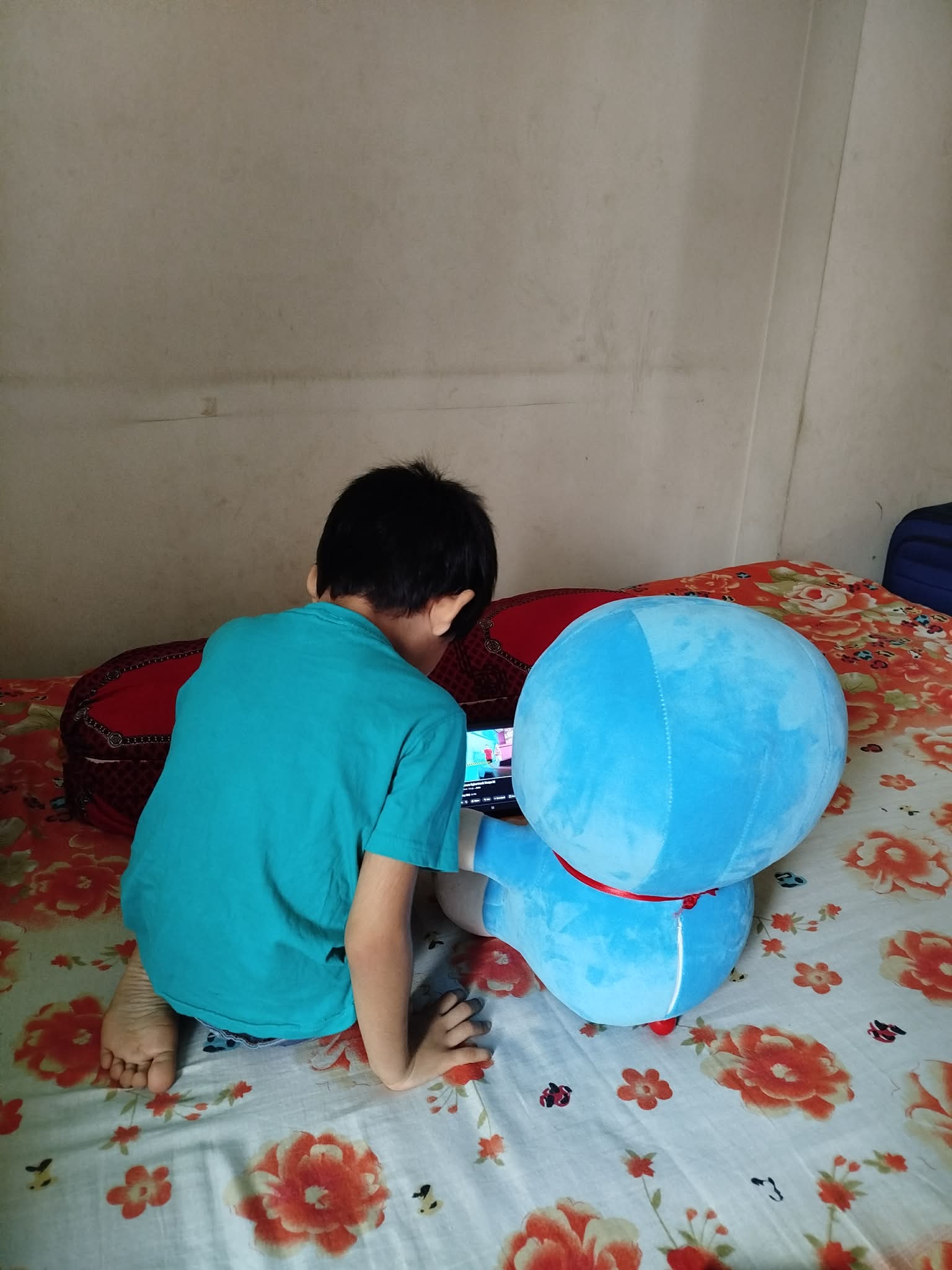
Before you pick any learning app, check these things:
- No ads or pop-ups
- Letter shapes that match what your child’s school teaches
- Short levels a child can finish quickly
- Clear letter sounds, not just letter names
Our guide on how to choose learning apps for kids goes deeper on this.
8. How to Teach Letters to Kids Through Repetition That Doesn’t Feel Like Repetition
Kids need to see a letter many times before it sticks. The trick is to repeat the letter, not the activity.
Take the letter S. On Monday, it is a body pose. On Tuesday, it is a hunt for socks and spoons. On Wednesday, it is in a picture book. On Thursday, your child writes it under a drawing. Same letter, four different games.
This kind of rhythm is what turned Zayan’s mornings around. It became a habit he looked forward to, not a task we pushed on him. For more on this, see our piece on repetition in alphabet learning.
Common Mistakes When Figuring Out How to Teach Letters to Kids
- Teaching all 26 letters at once. Start with the letters in your child’s own name.
- Fixing every wobbly line. Praise the try. Correct one thing at a time.
- Comparing with other kids. The CDC milestone for age 5 is “some letters,” not all of them.
- Using the app as a babysitter. Sit with your child when you can, and talk about what they see.
Final Thoughts
If you are stuck on how to teach letters to kids who hate sitting still, stop trying to make them sit. Find the thing they already love and put a letter on it.
For Zayan, it was football, flags, and his own bag of pencils. For your child, it might be cars or cats. This week, pick one letter and one interest, and try it for ten minutes a day. Watch what happens by Friday.





















