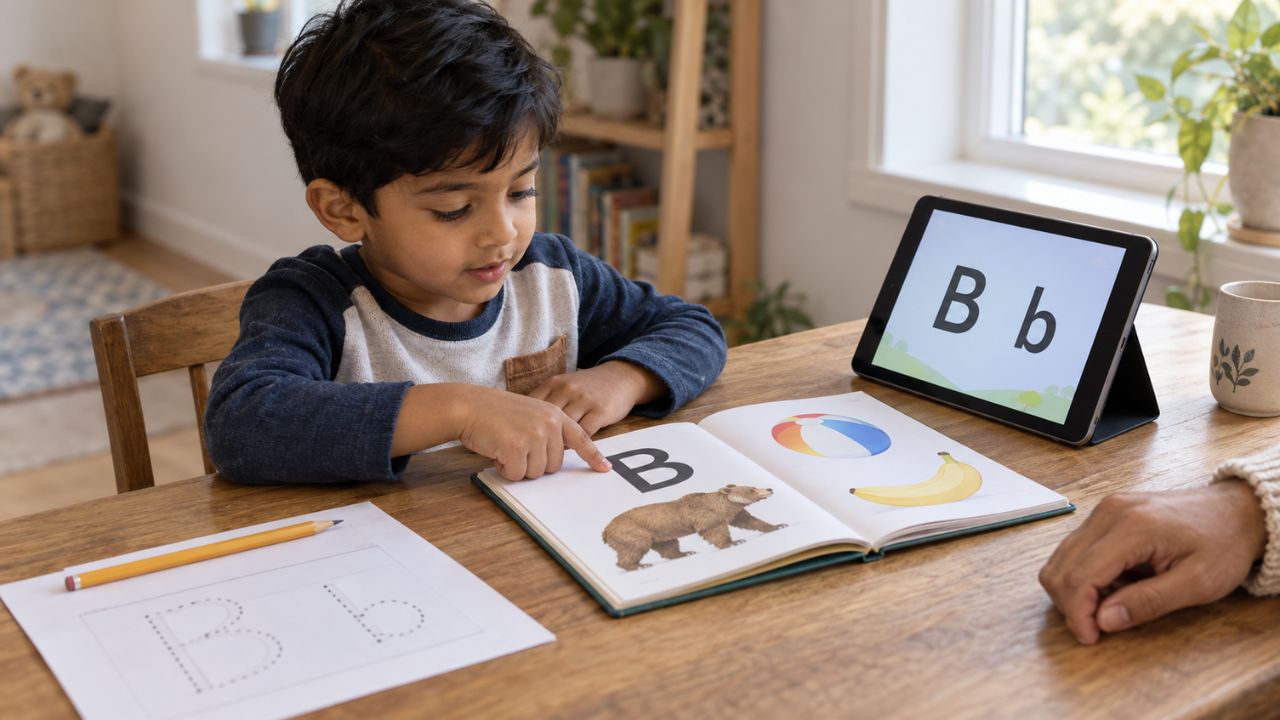
When my nephew first started using Alphabet Magic trace & phonics at age three, I began to see how repetition in alphabet learning works in everyday practice. He already recognized uppercase letters, so the alphabet was not entirely new to him. Look a little closer, though, and the gaps were clear.
He did not consistently recognize lowercase letters or connect them with their uppercase forms. Letter sounds were difficult, and tracing was still unfamiliar. Knowing the capital letters had given him a starting point, but he had not yet connected their shapes, sounds and uses.
Over the next 18 months, I watched that understanding grow. By four and a half, he could recognize lowercase letters, produce common letter sounds, trace letters and work with familiar words. He also progressed from needing my help to using the app independently.
The change was gradual. There was no single lesson that transformed everything. His progress came through returning to the same skills in different activities until they became familiar enough to use without support.
Before going further, I should be transparent. He is my nephew, and Alphabet Magic trace & phonics belongs to our team. His parents gave permission for me to share this experience, and they also observed his progress. We did not conduct standardized tests or record numerical before-and-after scores. He learned through books and videos as well as the app, so this case study documents one child’s development rather than proving that the app alone caused it.
Repetition in Alphabet Learning: The Routine We Followed
My nephew used the app for about one hour each day, divided across the day rather than completed in a single session. He also watched approximately 30 minutes of other video content. I am including that information to describe his actual routine, not to recommend a particular amount of screen use for every child.
His learning was never limited to a screen. Books were part of his routine, and family members helped him notice letters and words in other settings.
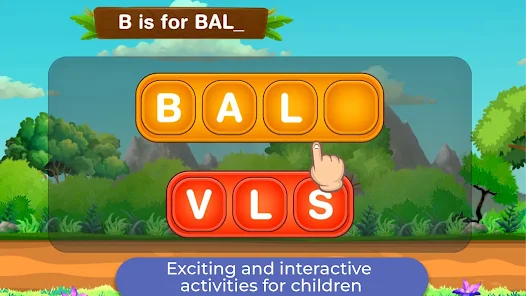
Within the app, he was particularly interested in the letter-discovery and spelling activities. At first, I sat with him and explained what to do. I helped him identify letters, remember their sounds and complete spelling exercises.
As the activities became more familiar, I gradually stepped back. He needed fewer reminders and eventually began using the app independently. That shift was meaningful because he was not merely learning where to tap. He was beginning to understand and complete the learning tasks without constant guidance.
How His Progress Became Visible
The first clear improvement we noticed involved letter sounds and spelling.
Letters he had previously recognized only by shape began to carry sound as well. He also became better at connecting uppercase letters with their lowercase forms. This was an important step because his alphabet knowledge had initially been almost entirely uppercase.
His tracing developed alongside those skills. With practice, he became more comfortable following letter shapes and completing tracing activities with less help.
Spelling improved in stages. In the beginning, he needed assistance. Later, he could spell his own name and simple familiar words independently. He eventually worked with a wider range of practised vocabulary, including words related to flowers, fish, pets and birds.
He also began reading some complete familiar words instead of identifying only individual letters. I cannot attach a percentage to that progress because we did not formally measure it. What I can report is the pattern observed by both me and his parents: his responses became more independent, and the range of skills he could use continued to expand.
The Strongest Evidence Appeared Outside the App
A child can sometimes complete a digital activity by remembering its layout or relying on pictures and audio clues. That is why success inside the app was not the only thing I watched. The more convincing change appeared when my nephew encountered letters elsewhere.
He began recognizing letters in books and in other written settings. The characters no longer needed to appear inside a familiar game for him to identify them. As his skills developed, he could also read some complete familiar words away from the app.
He retained what he had learned after taking breaks. When he returned to a letter or word later, it was often still familiar. That suggested he was doing more than remembering an answer long enough to finish an exercise.
For me, this transfer mattered more than completing another level. It showed that at least part of the learning was becoming usable beyond the original activity.
What Repetition Appeared to Contribute
This experience was not a controlled comparison between repetition and novelty. New activities and visual elements probably helped hold his interest, while books and videos brought their own variety.
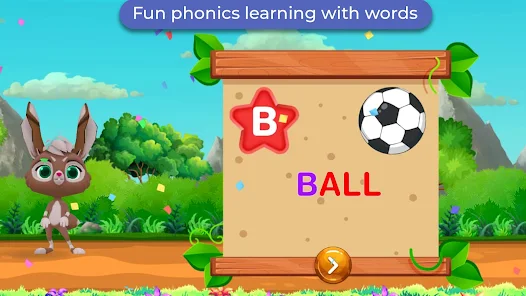
What stood out was the repeated return to the same underlying knowledge. A letter might appear through discovery, sound, tracing or spelling. The action changed, but the child kept meeting the same shape, name and sound.
That pattern seemed especially useful for the skills he initially found difficult. Lowercase letters and letter sounds did not become easy after one introduction. They became more manageable through repeated contact and practice.
The clearest sign was not how excited he appeared during a new activity. It was how much less help he needed later. His progress became visible through independent use, recall after breaks and recognition outside the app.
What I Learned From Documenting His Experience
If I were planning this case study again, I would record more information from the beginning. I would count how many uppercase and lowercase letters he recognized, test letter sounds separately and keep dated samples of his tracing. I would also note how much help he needed at regular intervals.
Without those records, it would be misleading to invent improvement percentages or present this as scientific proof. The 18-month period also included normal development, family assistance, books and video content. Each may have contributed to the result.
Even with those limitations, the experience changed how I judge early-learning progress. Finishing activities is not enough. I now pay more attention to whether a child needs fewer prompts, remembers the material after a break and can use it in an unfamiliar setting.
When Familiarity Became Independence
At three, my nephew recognized uppercase letters but struggled with lowercase forms, sounds and tracing. Over time, those disconnected skills began to come together. He moved from guided practice to independent use, from isolated letters to familiar words, and from recognition inside the app to recognition in books and other written material.
I cannot claim that the app was solely responsible. It was one part of a broader learning routine supported by books, videos, family involvement and his own development.
What this experience showed me is that familiarity should not be mistaken for a lack of learning. For my nephew, revisiting the same alphabet skills through different activities did not make the experience empty or unproductive. It appeared to help him move from needing assistance to recalling and using what he had learned on his own.