Got a chilly old house that eats up energy bills like candy? Here’s a neat fact: retrofitting existing homes into Passive Houses can slash energy use by up to 90%. Stick with me, and I’ll show you a simple 12-step plan to turn your place into an energy-efficient haven by 2025.
Curious how? Keep reading!
Key Takeaways
- Retrofitting your home into a Passive House can cut energy use by up to 90%.
- Start with an energy audit to find heat leaks and save on bills by 2025.
- Use triple-pane windows and heat pumps for better thermal comfort and efficiency.
- The Armadale, Victoria home from the 1910s cut heating costs by 95% after retrofitting.
- Retrofits for homes over 20 years old may cost around 30% of the home’s value, like $75,000 for a $250,000 house.
Conduct an Initial Home Assessment
Start with a good, hard look at your home, folks. I’m talking about an energy audit to spot where your place is leaking heat or guzzling power. This step is like playing detective with your own walls and windows.
Grab a notebook, measure every room, and hunt down faults like drafty spots or weak insulation. Pinpointing these issues in your building envelope is key to slashing energy consumption.
Trust me, it’s the first move toward big energy savings.
Now, get some pros involved for an initial retrofit chat. Lay out your dreams for a passive house, share your budget, and let them assess the bones of your place. Take a page from a heritage weatherboard home in Armadale, Victoria, built way back in the 1910s.
After a solid energy audit and consultation, they retrofitted it to meet tough Passive House standards. The result? A whopping 95 percent drop in heating and cooling costs. That’s the power of starting with a sharp home assessment focused on energy efficiency.
Develop a Comprehensive Retrofit Design Plan
Hey there, let’s chat about crafting a solid plan to turn your home into a passive house wonder. Dive right into designing your retrofit strategy with a clear focus on energy efficiency.
Grab a notebook, sketch out your initial ideas, and think about how to cut down on utility bills. Make sure to refine this design by hunting for solutions that bring the most bang for your buck.
Picture yourself sipping coffee in a cozy space, knowing you’ve slashed greenhouse gas emissions. Focus on maxing out the insulation value in areas like basements and crawl spaces.
Keep it simple, but dream big with sustainable materials in mind.
Now, let’s get into the nitty-gritty of planning your retrofit for real impact. Team up with contractors to nail down accurate costings, so you’re not caught off guard. Think about buildability, and allocate resources like a pro to meet passive house standards.
Take a page from House Askew in Philadelphia, a 214 m², three-story townhouse revamped with Passive House principles. Ponder using triple-pane windows or heat recovery ventilators for top-notch thermal comfort.
Map out spots for solar panels or heat pumps to boost renewable energy. Stay sharp on indoor air quality, and let’s make your place a model of sustainable housing.
Select Energy-Efficient Materials and Systems
Let’s talk about picking the right stuff for your home retrofit. Choosing energy-efficient materials and systems can slash those utility bills and boost your indoor comfort.
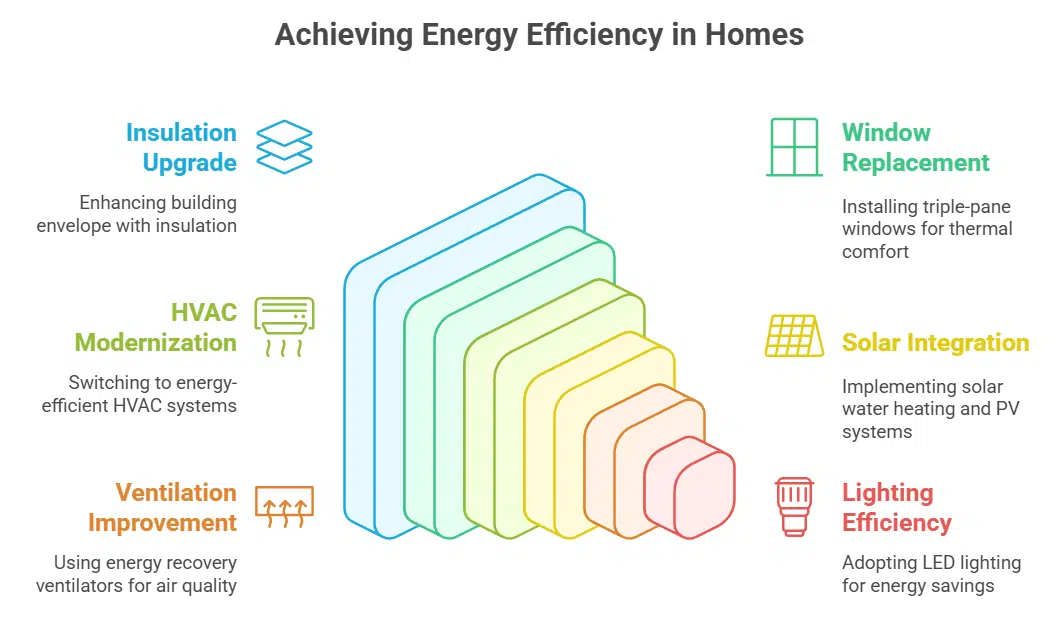
- Start with insulation materials that beef up your building envelope. Go for high-quality options like AFM Safecoat Almighty Adhesive, priced at $107, or the AFM Safecoat 3 in 1 Adhesive for $85. These help seal gaps, cut thermal bridges, and keep your home snug, reducing energy consumption big time.
- Pick triple-pane windows for top-notch energy efficiency. They trap heat inside during winter and keep it out in summer, making a huge dent in greenhouse gas emissions while ensuring thermal comfort.
- Swap old systems for modern HVAC systems with heat pumps. Transition to energy-efficient setups like heat pump water heaters, which save on hot water costs and support a net-zero energy goal.
- Install solar water heating to tap into renewable energy sources. Take a page from the Armadale retrofit, which runs on electricity with a 6.4kW solar PV system, keeping annual costs for heating, cooling, and appliances at just $450.
- Grab energy recovery ventilators for stellar indoor air quality. These ventilation systems swap stale air for fresh without losing heat, a must for passive house standards.
- Think about photovoltaic panels for power. They harness solar energy, cut utility bills, and align with sustainable building practices for a lower environmental impact.
- Opt for induction cooktops over gas furnaces. They’re faster, safer, and play a big role in energy efficiency in buildings, helping you aim for that EnerPHit standard.
- Add LEDs for lighting to save even more. These bulbs use less power, last longer, and fit perfectly into a sustainable design for energy-efficient buildings.
- Consider battery storage to pair with solar setups. It stores extra energy for later, pushing you closer to zero carbon living and climate protection.
- Look into cool roof options for hot climates. These reflect sunlight, lower cooling needs, and mesh well with green architecture principles for reduced energy use.
- Automate with systems like the AutoSlide Automatic Sliding Door System at $475. It cuts air leaks, boosts energy retrofits, and keeps your home tight against heat loss.
- Always check for Energy Star ratings on appliances. This label means top energy efficiency, helping you save money and meet passive house certification goals.
Implement Construction and Monitor Progress
Hey there, it’s time to roll up our sleeves and get the work started on your passive house retrofit. This step is where the magic happens, so let’s dive right into the action with a clear plan.
- First off, welcome the retrofit builders to your home as they kick off the physical work for energy efficiency. These folks are here to transform your space into a cozy, sustainable haven. They’ll start by tackling the building envelope, sealing up gaps to cut down on thermal bridges. Their goal is to slash greenhouse gas emissions while boosting indoor air quality. Plus, they’ll work hard to keep risks low, making sure every nail and board fits just right.
- Next up, keep a sharp eye on the progress of your home energy retrofits. Pop in often to see how things are shaping up with those triple-pane windows or the heat recovery ventilation setup. Chat with the crew about any hiccups, and don’t shy away from asking questions. After all, you’re aiming for passive house standards, like those set by the Passive House Institute (PHI). Staying in the loop helps keep the project on track for that sweet EnerPHit standard.
- Then, take a moment to review the budget as construction chugs along. Retrofits, especially for homes over 20 years old, can cost about 30 percent of the home’s value. For example, a $250,000 house might see costs around $75,000 for this kind of upgrade. Make sure the dollars spent align with your plan for reduced energy consumption. Keep tabs on every penny to avoid surprises down the road.
- Also, focus on quality assurance during this phase to hit passive house certification. Inspect the attic insulation and other sustainable materials being used for thermal comfort. If something looks off, speak up fast to fix it. This step is key to cutting utility bills and shrinking your environmental impact. A tight check now saves headaches later.
- Finally, get ready for project completion and commissioning as the end nears. Verify that every detail meets passive house standards before applying for certification. Celebrate small wins, like a tighter indoor environment, with the team. Transition ownership smoothly during the final handover, and lean on their support if questions pop up. Toast to success, knowing your retrofit strategy paid off big time for climate action.
Takeaways
Well, folks, transforming your old place into a Passive House is like giving it a superpower. It slashes those pesky utility bills and cuts down on greenhouse gas emissions big time.
Imagine living in a home with top-notch thermal comfort and stellar indoor air quality, all thanks to the EnerPHit standard. So, take that first step, grab an energy audit, and watch your space become a sustainable gem.
Let’s make 2025 the year we build greener, one retrofit at a time!
FAQs on How to Retrofit an Existing Home into a Passive House
1. What’s the big deal about turning my old place into a passive house?
Well, buddy, retrofitting your home to meet passive house standards slashes utility bills and cuts greenhouse gas emissions. It’s like giving your house a superpower for energy efficiency, plus you get top-notch thermal comfort. Heck, with the Inflation Reduction Act incentives in 2025, it’s almost a no-brainer to jump on this sustainable construction train!
2. How do I even start with a retrofit strategy for passive house certification?
Kick things off with an energy audit to spot where your home leaks energy. The Passive House Institute (PHI), founded by Wolfgang Feist, has guidelines to help you aim for the EnerPHIT standard, a solid benchmark for existing homes.
3. Why fuss over stuff like triple-pane windows and thermal bridges in a passive house?
Listen up, those triple-pane windows with low-E coatings are your shield against heat loss. Tackling thermal bridges, those sneaky spots where heat escapes, is key to a tight building envelope. It’s like plugging every hole in a boat to keep it from sinking, ensuring energy efficient living.
4. Will my indoor air quality improve after retrofitting to passive house standards?
Absolutely, pal, ventilation systems in a passive house keep fresh air flowing without wasting energy. It’s like having a constant breath of fresh air, cutting down on stuffy rooms and health risks.
5. How does retrofitting impact the planet, and what materials should I pick?
Retrofitting slashes your environmental impact by boosting energy-efficiency and curbing emissions. Go for sustainable materials to align with sustainable buildings goals. Think of it as giving Mother Earth a high-five while you save on mileage for future energy needs through quality assurance from the get-go.