

Canola has become a cornerstone of Australian agriculture, prized for its versatility as a source of edible oil, biofuel, and animal feed. As global demand for canola products continues to rise, Australian farmers face increasing pressure to maximize their yields while maintaining sustainable practices.
Learning how to optimize yield for canola crops in Australia is vital for staying competitive in the market. This guide provides an in-depth look at how to optimize yield for canola crops in Australia, addressing key factors like climate, soil health, crop management, and innovative farming techniques.
Whether you’re a seasoned grower or new to canola farming, this comprehensive resource is designed to help you achieve higher yields and greater profitability.
Factors Influencing Canola Yield
Climatic and Environmental Considerations
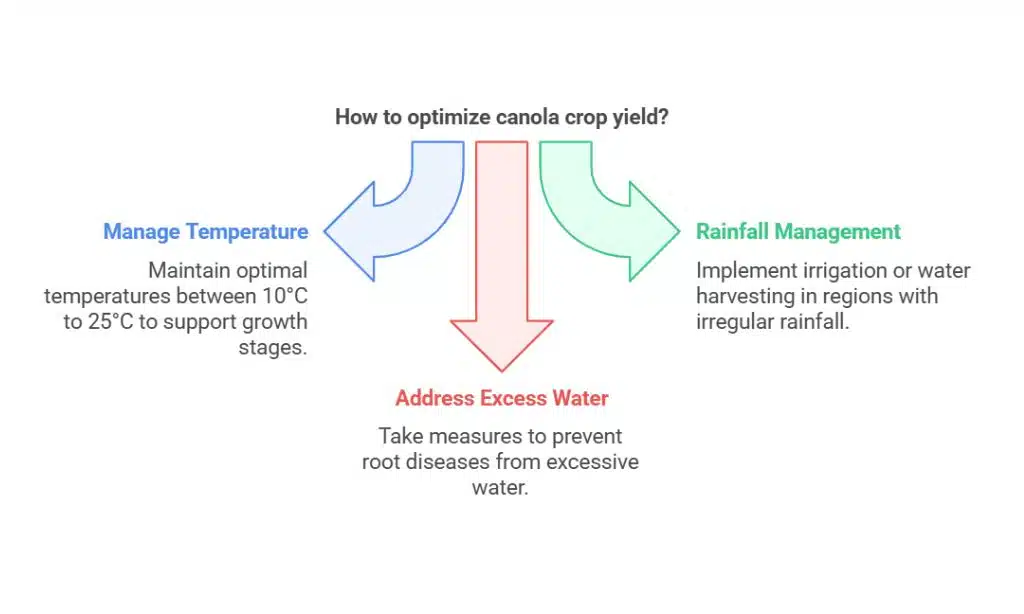
Canola thrives in moderate climates, with optimal temperatures ranging from 10°C to 25°C. These conditions support critical growth stages, from germination to flowering and seed development. Rainfall is another crucial factor, with canola requiring 400-600 mm of water during its growing season. Insufficient rainfall can stunt growth, while excessive water may lead to root diseases. Understanding these environmental needs is vital for farmers aiming to optimize yield for canola crops in Australia. For example, regions with irregular rainfall may benefit from supplementary irrigation systems or water harvesting techniques.
Managing Climate Risks
Australia’s unpredictable climate poses significant challenges to canola farmers. Droughts, frosts, and heatwaves can all impact crop yields. To mitigate these risks, farmers should consider:
- Planting drought-tolerant canola varieties that withstand prolonged dry periods.
- Employing early sowing strategies to avoid late-season heat stress.
- Using weather forecasting tools to plan irrigation and pest control activities, ensuring timely interventions to minimize potential yield losses.
- Installing shade cloths or windbreaks to protect crops from extreme weather events.
Climate Risk Management Strategies
| Climate Risk | Mitigation Strategy | Benefits |
| Drought | Use drought-tolerant varieties | Reduces water dependency |
| Frost | Early sowing | Avoids critical frost periods |
| Heatwaves | Mulching and shading techniques | Minimizes temperature stress |
Soil Health and Fertility
Soil Testing and Preparation
Healthy soil is the foundation of high-yielding canola crops. Regular soil testing helps identify nutrient deficiencies and pH imbalances. Canola prefers slightly acidic to neutral soils with a pH range of 5.5 to 7.5. Farmers can improve soil health by:
- Applying lime to correct soil acidity, ensuring optimal nutrient availability.
- Deep ripping to improve root penetration in compacted soils, which allows better water infiltration.
- Incorporating organic matter like compost or green manure to enhance soil fertility and structure.
Practical Insight: Farmers in Western Australia’s wheatbelt region report up to 15% higher yields when soil testing is coupled with precision fertilization, highlighting the importance of soil health in efforts to optimize yield for canola crops in Australia.
Soil Preparation Steps
| Step | Description | Benefit |
| Soil Testing | Analyze pH and nutrients | Tailors fertilization plans |
| Liming | Apply lime to acidic soils | Balances pH levels |
| Organic Matter | Add compost or manure | Improves nutrient content |
Fertilization Strategies
Proper fertilization is key to achieving optimal yields. Canola requires significant amounts of nitrogen (N), phosphorus (P), and sulfur (S) for robust growth. Recommendations include:
- Applying nitrogen in split doses to match crop demand during growth stages, preventing waste and runoff.
- Ensuring phosphorus availability during early root development for stronger plants.
- Monitoring sulfur levels, particularly in sandy soils prone to nutrient leaching, is essential for protein synthesis.
Essential Fertilizers for Canola
| Nutrient | Role in Plant Growth | Application Tips |
| Nitrogen (N) | Promotes vegetative growth | Apply in split doses |
| Phosphorus (P) | Strengthens root development | Incorporate during sowing |
| Sulfur (S) | Supports protein synthesis | Check levels in sandy soils |
Crop Variety Selection
High-Yielding Varieties
Selecting the right canola variety is essential for maximizing yield. In Australia, growers benefit from a range of high-yielding varieties, including those with herbicide tolerance and resistance to blackleg disease. Popular options include:
- Triazine-tolerant (TT) varieties for effective weed control and adaptability to various soil types.
- Hybrid varieties that offer superior vigor and yield potential through enhanced genetic traits.
Case Study: A farmer in New South Wales switched to a TT hybrid variety and observed a 20% increase in yield, attributed to improved weed control and better adaptation to local conditions. This underscores the importance of variety selection when determining how to optimize yield for canola crops in Australia.
Regional Considerations
Different regions in Australia have unique climatic and soil conditions. When choosing a variety, consider:
- Local rainfall patterns and temperature ranges to match variety characteristics.
- Disease prevalence in your area, such as blackleg or sclerotinia.
- Recommendations from agricultural research centers and extension services that offer localized advice.
Top Canola Varieties by Region
| Region | Recommended Variety | Key Traits |
| Western Australia | TT Hybrid A | High drought tolerance |
| New South Wales | Conventional B | Strong disease resistance |
| Victoria | Hybrid C | High yield potential |
Best Practices for Canola Crop Management

Sowing Techniques
Sowing canola at the right time and density is critical for optimizing yield. Ideal sowing windows vary by region but typically fall between April and May. Key tips include:
- Using a row spacing of 15-30 cm to balance airflow and sunlight penetration, reducing disease risks.
- Sowing seeds at a depth of 1-2 cm to ensure proper germination while minimizing seed loss.
Optimal Sowing Guidelines
| Parameter | Recommendation | Impact |
| Sowing Depth | 1-2 cm | Ensures seed-soil contact |
| Row Spacing | 15-30 cm | Enhances airflow and sunlight |
| Sowing Window | April-May | Aligns with ideal conditions |
Seed Quality and Treatment
High-quality seeds are vital for successful crop establishment. Ensure your seeds are:
- Certified and free from contaminants to guarantee purity.
- Treated with fungicides and insecticides to protect against early-stage pests and diseases, enhancing seedling vigor.
Pest and Weed Control
Common Pests Affecting Canola
Pests like aphids, diamondback moths, and slugs can significantly reduce canola yields. Effective management strategies include:
- Monitoring fields regularly for pest activity, using pheromone traps where applicable.
- Introducing natural predators, such as ladybirds for aphid control, to reduce reliance on chemical pesticides.
- Implementing integrated pest management (IPM) programs that combine biological, cultural, and chemical controls.
Key Pests and Control Methods
| Pest | Identification | Control Strategy |
| Aphids | Clusters on leaves and stems | Natural predators, IPM |
| Diamondback Moths | Leaf mining and larvae presence | Targeted insecticides |
| Slugs | Chewed seedlings | Baiting and trapping |
Weed Management Strategies
Weeds compete with canola for nutrients, water, and sunlight. Control measures include:
- Applying pre-emergent herbicides before sowing to reduce early weed pressure.
- Using post-emergent herbicides to target specific weed species during growth.
- Rotating crops to break weed cycles and reduce herbicide resistance.
Irrigation and Water Management
Efficient Water Use
Water is a critical resource for canola farming in Australia. Optimize irrigation by:
- Installing soil moisture sensors to determine when and how much to irrigate.
- Employing drip irrigation systems for precise water application, reducing wastage.
Conservation Techniques
- Mulching to retain soil moisture and reduce evaporation.
- Capturing and storing rainwater for supplemental irrigation during dry periods.
Monitoring and Analyzing Yield Performance
Data-Driven Insights
Technology plays a vital role in modern farming. Precision agriculture tools like drones and GPS enable farmers to monitor crop health and identify stress areas. Benefits include:
- Yield mapping to evaluate performance across different field zones, highlighting areas for improvement.
- Real-time data collection for informed decision-making, optimizing resource allocation.
Precision Agriculture Tools
| Tool | Function | Benefit |
| Drones | Aerial crop monitoring | Detects stress early |
| GPS Systems | Field mapping | Improves planting accuracy |
| Sensors | Soil moisture and nutrient levels | Optimizes irrigation/fertilization |
Takeaways
Optimizing yield for canola crops in Australia requires a holistic approach that integrates scientific knowledge, advanced technology, and sustainable practices.
By focusing on factors like soil health, variety selection, and efficient water use, farmers can enhance both productivity and profitability. Understanding how to optimize yield for canola crops in Australia is not just about short-term gains but also ensuring the sustainability of farming operations for future generations.
Embracing innovation and staying informed about industry developments will ensure long-term success in canola farming.





















