

You stare at your hair, wanting soft, bouncy layers. You fear a big salon bill or a botched cut. How To Cut Your Own Hair In Layers can feel like a leap. You just want a simple fix at home.
Here’s a fact: the ponytail method cuts layers in minutes. You need an elastic band, a comb, and sharp scissors. This guide will show you how to section hair, trim split ends, and snip perfect layers.
You’ll spot tips for curly and straight hair and dodge common mistakes. Keep reading.
Key Takeaways
- Gather tools: an elastic band, sharp hair shears (ARC Pro or fabric scissors), a fine-tooth comb, sectioning clips, a hand and wall mirror, and a spray bottle.
- Prep hair: dry-brush straight or wavy hair until knot-free. Mist and comb curly hair when damp. Part hair into 2-inch sections and clip each.
- Use the ponytail method: tie a tight ponytail at the crown 1–2 inches above your hairline. Pinch ends at the length you want, then point-cut straight across at a slight angle. Release and shake out layers in about 5 minutes.
- Apply the point-cut technique: hold each section between your fingers, angle scissors slightly, and snip small bits for soft, natural layers. Follow pros like Howard McLaren, Carli Bybel, or Brad Mondo for sectioning tips.
- Avoid common mistakes: don’t cut very wet hair (it shrinks when dry), use sharp scissors to prevent split ends, section hair evenly, leave strands a bit longer than planned, and wait at least one week after coloring before trimming.
Tools You’ll Need for Cutting Layers at Home

Gather a few simple items before you cut your hair at home. Good tools will help you achieve a clean layered haircut.
- An elastic band holds your hair in a ponytail or secures strands for layering at home.
- Precision blades, like sharp craft or fabric scissors, let you create a clean, even cut for a layered haircut.
- ARC Professional Scissors or similar styling shears protect ends and cut hair without split tips.
- A fine-tooth comb helps you part long hair smoothly and measure layer length for your DIY at-home haircut.
- Sectioning clips keep cuts neat; they lock each slice in place for a uniform layered haircut.
- A hand mirror pairs with a wall mirror so you check the back of your head while you cut long layers.
- Spray bottle mists dry strands; it stops frizz and shows you where to trim next to cut hair evenly.
Preparing Your Hair for a Layered Cut
Clean haircuts are better than dirty strands. Brush dry hair from roots to ends until no knot stays. I often cut my frizzy, wavy hair dry for instant shape and to tame frizz. Straight or wavy locks suit this dry-cut method.
Curly hair fares best when damp.
Comb wet hair gently with a wide-tooth comb before you cut. Divide hair into even sections using clips. Position one mirror in front and one behind to view all angles. Grip each section at the ends and use sharp hair-cutting scissors for a clean snip.
Set the shortest layer two inches from your hairline before trimming.
The Ponytail Method for Creating Layers

This ponytail method creates layers fast. It works best for medium to long hair.
- Gather hair into a tight ponytail for a DIY haircut, smooth strands with a comb, and secure a hair tie 1–2 inches above your forehead.
- Hold the ponytail at the target length and pinch the ends where you want to cut.
- Point cut straight across using trimming shears at a slight angle to avoid a blunt cut.
- Release hair and shake it free so the new layers fall naturally.
- Check for uneven bits and trim stray strands to create even layers.
- Enjoy your layered look after about 5 minutes of haircutting.
How to Cut Your Own Hair in Layers: Step-by-Step Guide
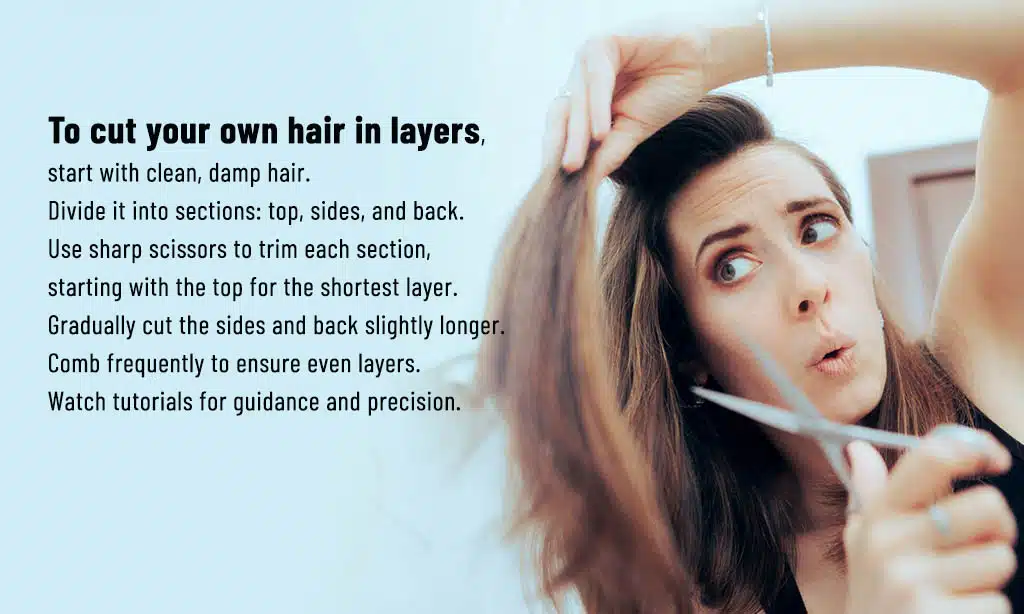
Pick up your scissors and comb, and set a bright mirror close by. Follow clear steps to shape a crisp layer cut that flatters your hair texture.
Sectioning Your Hair
Clear sections make a simple haircut tutorial work well. We split hair to help you cut my own hair like a pro.
- Place your hair straight and smooth with a comb to get neat layers.
- Use a tail comb to part the hair into two-inch sections from crown to nape.
- Clip each strip with duckbill clips to keep hair forward and avoid slips.
- Find an easy way to clamp hair prior to cutting so each side stays even.
- Gather hair into a tight ponytail one to two inches from your hairline for the unicorn ponytail.
- Smooth the ponytail high on the crown to prep for layering.
- Check section labels with a hand mirror to size up each block.
- Follow Howard McLaren’s method and leave strands slightly longer than the desired length.
Trimming to Create Even Layers
I use a ponytail to trim even layers. It feels like a quick salon trick at home.
- Clip your natural hair into a high ponytail at the crown, and secure it with an elastic.
- Pull the band forward so the ponytail drapes over your face, just past my shoulders.
- Snip 2 inches of hair off with sharp shears, point cutting straight across the band.
- Drop the ponytail, comb the hair, and check the ends of the hair in a mirror.
- Use Carli Bybel’s parting trick from YouTube to section hair into three layers.
- Angle the shears for each inch section of hair to create soft, wolf-style layers.
- Study the back with a hand mirror, and tweak any uneven spots in minutes to cut my hair.
- Trim curtain bangs or a bang to frame your face if you like to cut a fringe.
Tips for Cutting Different Hair Types
Curly hair needs a comb and scissors, so treat each ringlet with care. Want more? Flip up the next guide to see how straight locks use clips and shears for smooth layers.
Tips for Curly Hair
Wet each curl with a mist sprayer. Comb through with a detangling comb and part hair into duckbill clips. Use styling shears to make the easiest way to cut layers at home. McLaren advises small cuts while keeping the shape.
Angle the styling shears at the ends as you hold curls between your fingers. Watch YouTube tutorials to learn how to cut curly layers with this method. This finger guide yields precise cuts on natural hair.
A hair stylist picks wet cuts for tight coils and works in small bits. Skip cutting bangs here to avoid a frizzy fringe.
Tips for Straight Hair
Straight hair suits dry cuts, but damp hair gives crisp lines. Olya Iudina dampens strands lightly. Use sharp shears and a comb to mimic professional hair tools. Clip sections with clips.
Pull a section forward and clip the rest back. Snip the hair at a slant or straight line. This method helps you create layers for a fresh hairstyle.
You can add bangs (hair) or keep hair long or short. Parting lines help you determine how much hair to cut. Hairdresser and hairstylist dry-cut tips help when cutting your hair at home.
Start with a small trim on any 3 layers. Hair extensions can boost volume or hide uneven ends. Many videos by Brad Mondo show pro layering tricks.
Common Mistakes to Avoid When Cutting Layers
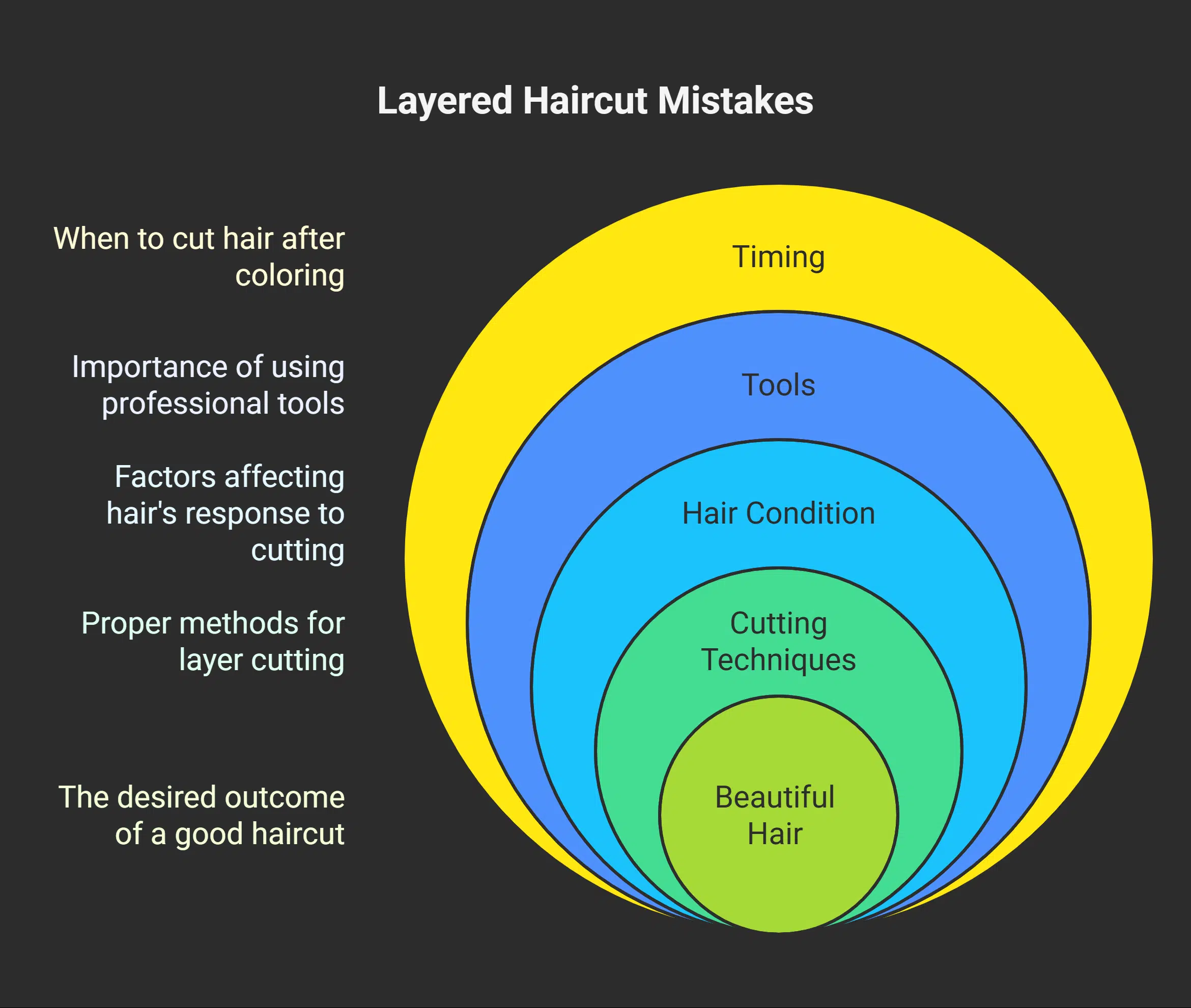
Many mess up layered DIY cuts. This list flags the top blunders.
- Wet hair stretches and snaps back when dry, so it can leave shorter hair than you expect.
- Using non-professional scissors can crush strands and cause split ends; use sharp hair scissors to cut the hair cleanly.
- Snipping new bangs on short hair throws off your style; only trim existing fringe to keep hairstyles balanced.
- Uneven parting of the hair leads to lopsided layers; place your comb straight and section with clips for a smooth look.
- Skipping sectioning with a comb and clips kills the ponytail method and leaves uneven layer lengths.
- Cutting too close to the line can backfire; leave hair slightly longer than intended to keep your hair looking great when it dries.
- Cutting freshly colored hair can fray cuticles; let hair coloring settle before you get your hair cut at home for beautiful hair.
Takeaways
Grab an elastic band and that cutting tool. Find your favorite mirror spot, and slice in those layers with confidence. I cut my own hair for years, and I still thrill at fresh hair length.
This do-it-yourself trick saves cash, slashes salon time, and fits your routine. Try it dry if you have straight strands, tug gently if you rock curls, and trust your hands. Keep ends trimmed, mind section sizes, and smile at every snip.
Long hair stays healthy when you rest well and feed your body right. Now go layer up, and own that look.
FAQs
1. How can I choose hair length for a layered look?
Start by facing a mirror. Clip a strand at jaw level. Think of it as a paint stroke on a canvas. Check if this hair length suits you. If it feels too short, let it down and try lower points.
2. What tools are used to cut layers?
You need sharp scissors and a fine-tooth comb. Your hair and used comb guide each cut, so hold them tight. Trim small bits at a time. Better safe than sorry.
3. Which hair to avoid cutting first?
Avoid cutting the top crown points. They hide under layers, like shy guests at a party. It is better to cut the sides first. These steps allow easy shape checks. You can tweak the crown later.
4. What should the length of my hair be before I start?
The length of my hair must hit at least the shoulders. This gives room to layer. I once cut ears-high hair. It lacked space and looked odd. Then I waited months to regrow.





















