

The way we shop is evolving, and one of the most significant changes in recent years has been the rise of reusable bags. Consumers, businesses, and governments worldwide are making a conscious shift towards sustainability, reducing the reliance on single-use plastic bags.
But beyond the environmental benefits, how reusable bags are changing the way we shop extends far beyond a simple bag switch. From economic savings to innovative solutions, reusable bags are revolutionizing the retail experience.
This article will explore five inspiring stories of how reusable bags are changing the way we shop, highlighting businesses, communities, and individuals making a lasting impact. Additionally, we will provide practical insights on how consumers can embrace the reusable bag movement effectively.
The Environmental and Economic Impact of Reusable Bags
Plastic pollution is a global crisis, with millions of tons of plastic ending up in landfills and oceans every year. Traditional plastic bags contribute significantly to this waste, taking hundreds of years to decompose.
Key Statistics:
| Metric | Data |
| Annual Global Plastic Production | 300 million tons |
| Annual Plastic Bag Usage | 5 trillion bags |
| Recycling Rate of Plastic Bags | 1% |
| Decomposition Time for Plastic Bags | Up to 500 years |
By switching to reusable bags, consumers help reduce waste and minimize their carbon footprint. Retailers that have embraced reusable bag initiatives are seeing a positive environmental shift, with many reporting a significant decrease in plastic waste collection.
Cost Savings for Consumers and Retailers
Switching to reusable bags isn’t just good for the planet—it also makes financial sense.
Benefits for Consumers:
| Consumer Benefits | Details |
| Cost Savings | Avoid plastic bag fees and invest in durable, long-term solutions |
| Convenience | Fewer trips needed as reusable bags hold more items |
| Customization | Stylish, foldable, and even thermal options available |
Benefits for Businesses:
| Business Benefits | Details |
| Lower Operational Costs | Reduced spending on single-use plastic bags |
| Additional Revenue | Selling branded reusable bags increases profit margins |
| Sustainability Image | Attracts eco-conscious consumers and builds brand loyalty |
5 Inspiring Stories of How Reusable Bags Are Changing the Way We Shop
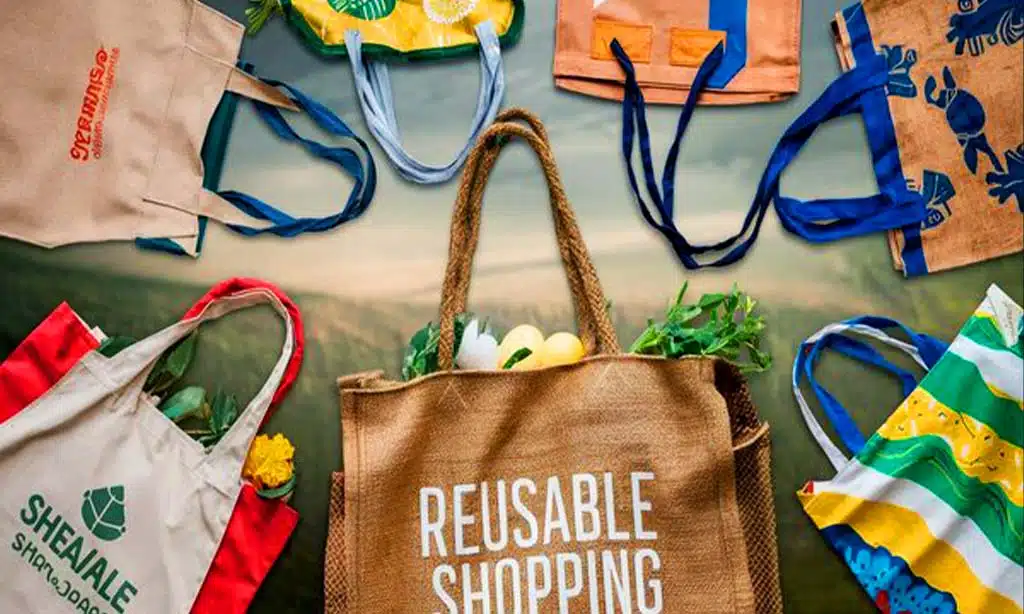
As the movement toward sustainability gains momentum, various organizations and individuals are adopting reusable bags in innovative ways. These inspiring stories highlight the power of change and how reusable bags are changing the way we shop. Each example demonstrates the real-world impact on businesses, communities, and the environment.
Story #1 – A Supermarket Chain That Eliminated Plastic Bags
One of the largest supermarket chains, Woolworths in Australia, took a bold step by eliminating plastic bags nationwide. The company introduced:
- A bring-your-own-bag policy.
- Affordable, durable reusable bags made from recycled materials.
- Incentive programs for customers who bring their own bags.
Impact:
| Impact Area | Result |
| Plastic Bag Reduction | 80% drop in plastic waste |
| Cost Savings | Millions saved on plastic production |
| Consumer Adoption | Positive feedback and increased participation |
Story #2 – A Small Business Leading the Reusable Revolution
A small eco-friendly grocery store in California, Earth Market, implemented a strict zero-waste policy. Customers must:
- Bring their own bags or use biodegradable paper alternatives.
- Participate in a bag return program, where they can borrow reusable bags.
Results:
| Area | Outcome |
| Plastic Use Reduction | 95% decrease in single-use plastic bags |
| Customer Loyalty | Increased foot traffic and engagement |
| Eco-Friendly Impact | Increased awareness and sustainable shopping habits |
Story #3 – A City That Banned Single-Use Plastic Bags
In 2011, San Francisco became the first U.S. city to ban plastic bags, setting a precedent for other cities worldwide. This move led to:
- A 72% drop in plastic bag litter.
- Increased public awareness of plastic pollution.
- More cities adopting similar bans, including New York and Seattle.
Impact:
| Impact Area | Outcome |
| Plastic Waste | Significant reduction in landfill contribution |
| Policy Replication | Inspired other cities to follow suit |
| Public Perception | Increased awareness and behavioral shift |
Story #4 – A Tech-Driven Solution for Reusable Bag Tracking
A startup in Sweden, EcoTrack, developed a smart bag tracking system where:
- Users scan a QR code on their reusable bag.
- The app tracks usage and rewards customers with discounts and loyalty points.
Outcome:
| Feature | Benefit |
| Bags Tracked | Over 1 million reusable bags |
| Consumer Engagement | Gamification increased sustainable habits |
| Business Adoption | Many retailers integrating the system |
Story #5 – A Consumer Movement Making a Difference
A grassroots organization, Plastic-Free Future, initiated a global challenge called #BagFreeMonth, encouraging people to:
- Ditch plastic bags for 30 days.
- Share their experiences on social media.
- Influence local businesses to adopt sustainable packaging.
Success:
| Impact | Result |
| Global Reach | 2 million participants worldwide |
| Business Changes | Many businesses adopting sustainable packaging permanently |
| Social Awareness | Increased discussions on environmental sustainability |
How Consumers Can Embrace the Reusable Bag Movement
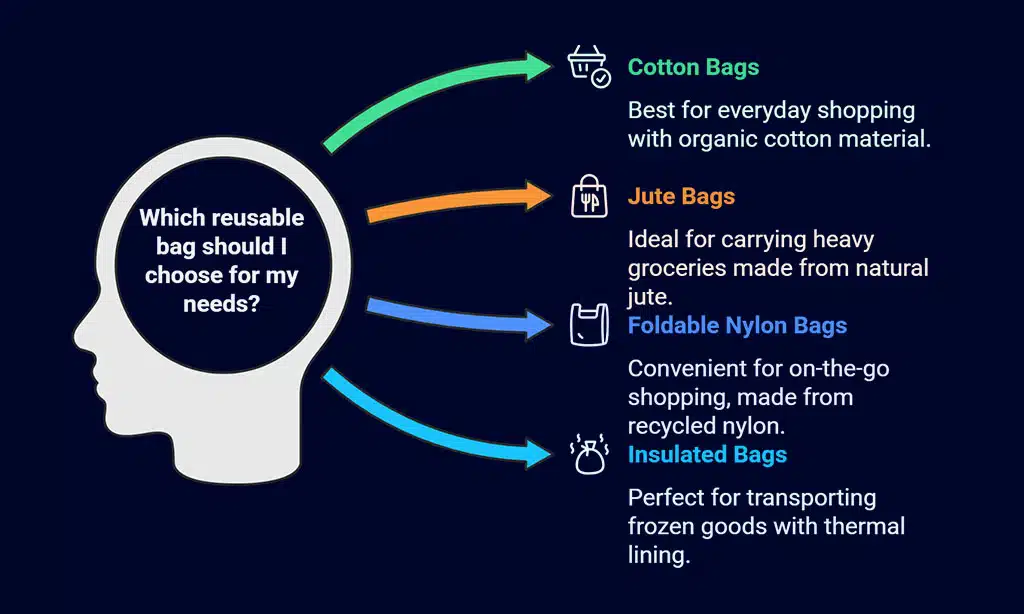
Reusable bags come in various materials and sizes. Selecting the right one ensures maximum convenience and sustainability.
| Type of Bag | Best For | Material |
| Cotton Bags | Everyday Shopping | Organic Cotton |
| Jute Bags | Heavy Groceries | Natural Jute |
| Foldable Nylon Bags | On-the-Go Shopping | Recycled Nylon |
| Insulated Bags | Frozen Goods | Thermal Lining |
Tips for Remembering to Bring Reusable Bags
One of the biggest challenges for consumers is forgetting their reusable bags. Here are simple tips:
- Keep extra bags in your car, purse, or backpack.
- Use reminder apps or sticky notes on the door.
- Buy compact, foldable bags that fit in pockets.
The Future of Shopping: A Plastic-Free Vision
Retailers are exploring biodegradable, reusable, and compostable packaging to complement reusable bags. Some trends include:
- Refill stations where customers bring their own containers.
- Edible packaging is made from seaweed or starch-based materials.
- Plastic-free checkout lanes to encourage reusable bag usage.
Takeaways
How reusable bags are changing the way we shop is evident through environmental impact, economic benefits, and inspiring success stories worldwide. From supermarket chains to small businesses and tech innovations, reusable bags are paving the way for a more sustainable future.
It’s time for consumers, retailers, and policymakers to work together in embracing reusable shopping habits. Are you ready to make the switch? Start today and be a part of the movement towards a plastic-free world!





















