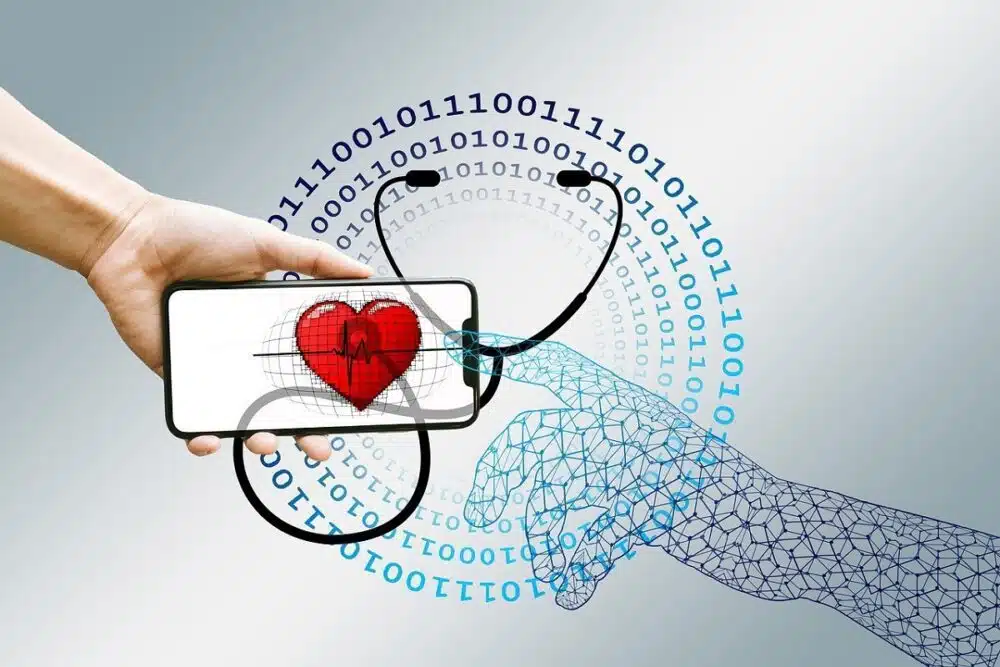
Digital innovations bring numerous advantages and opportunities for companies in the healthcare sector: shorter treatment times, more precise diagnoses, improved communication, and the early detection of diseases.
Companies that operate in the healthcare industry are still often lagging in digitization. Complex systems and processes are usually required, and there is often a lack of agility and flexible team organization.
Only when digital and innovative solutions convince the top floor in healthcare can the benefits be taken up by the employees.
For doctors, patients, pharmacies, and clinics, digital transformation in the healthcare system bring a great deal of potential. A significant increase in quality and efficiency, cost and time savings, and better care for patients are just some of the benefits.
Integrated Patient Journey
The healthcare system in the UK is a myriad of different agencies. Although they all fly the same flag, it’s not always easy for departments to communicate.
It’s hard to believe, but many departments still communicate officially by letter, and many have only just adopted the internet to communicate with other caregivers in the system in the past ten years.
The healthcare sector wants the patient’s journey to be as smooth as possible, but with reform always on the tips of politicians’ tongues, how do we test what health reform would do to patients?
Clarivate offers expert guidance to multidisciplinary clinical teams to achieve an integrated patient journey. This guidance helps them work together to model a patient’s physical and mental well-being through their treatment. It doesn’t stop there.
This modeling can then be applied to how the patient’s journey would look under a proposed change, giving clinicians and administrators a heads up on possible conflicting demands. The patient journey modeling is accomplished by using journey maps and user data that graphically represents the patient’s experience.
The philosophy behind an integrated patient journey is that the patient should be more than simply data on a screen. The time has come, say experts in experiential medical analysis, where patients should be represented digitally for their journey, not just their medical results
For example, the patient’s blood results may have returned, showing no problems, but how does the patient feel emotionally? Do they feel reassured? If the results show no problem, but the patient is still in anxiety, is there work still to be done? The answer, say, proponents of this transformative mapping, is that integration means considering the patient as an entirety.
Virtual Appointments
There have been teething problems in the short term, but telemedicine in healthcare is here to stay.
Telemedicine can significantly improve the care of many patients because it collects data more frequently, and the patients are monitored much more.
Patients with advanced cardiac insufficiency can improve their clinical results through alarms reacting more quickly. Intervention can be carried out earlier.
It was important to protect patients from traveling by public transport and staying in the hospital during the pandemic. Telemedicine helped do that. But even without a pandemic, it is more often comfortable for stable patients not to travel, especially if they live away from the metropolitan areas and travel long distances.
Telemedicine can also be a relief for hospitals and practices when dealing with increasing patient numbers and a simultaneous shortage of skilled workers.
Digital consultation appointments can occur outside of core hours or from the home office. Telemedicine must be an important pillar of modern care and can bring better outcomes for everyone – patients, doctors, and caregivers.
With telemedicine, we’re not only improving patient care but also the healthcare costs for society.
Digitized Records
At the time of writing, patients in the NHS system in the UK can only see their medical records if they ask. This request, somewhat akin to a Freedom of Information request, is sometimes met with administrative costs.
Although the fee is not much, there are calls for patients to have the ability to see their medical records online whenever they choose.
Although most patients mightn’t understand very technical information in their records, they would be able to read their doctor’s updates about them, correspond with clinicians, and take their notes to a private clinic.
From April this year, NHS England will allow patients to read their doctor’s new updates on their records. The move underpins the NHS Long Term Plan’s pledges to give patients electronic access to medical records.
This will mean primary care clinicians must think through the implications of each record, including letters and test returns, when adding these to a patient’s folder.
Patients aren’t expected to view personal details – like blood pressure levels and test results – until they have gone through a vetting and filing procedure, which gives doctors a chance to engage and talk to patients first.
Artificial Intelligence
Artificial intelligence (AI) is a key driver behind the digital revolution. Healthcare researchers and practitioners already benefit from AI in important fields of healthcare application, and AI is especially advanced in the analysis of medical scans, for instance.
In this area, the domain of “computational photonics,” where modern photo-based methods combine with rapid smart computing, offers the hope of major advances in medicine. The possible uses of AI are many and varied.
Through analyzing thousands of patient records, for instance, computers can study and understand how to predict the progression of illnesses and treatments on an individual level.
From genetic data and radiological images, they can determine the hostility of cancer and indicate if radiation and chemotherapy would be more successful.
AI tools will also help streamline surgical workflow in the operating theatre. For instance, surgeons conducting demanding procedures under the microscope will be able to use speech or gesture commands to request specific details, which then pop up in the microscope’s eyepiece.
An Evolving Sphere
There have been challenges with the employment of digital applications. Any new technology takes time to overcome cynicism and bureaucracy. Digitization is clearly in healthcare to stay, and its positive uses are known.
As long as patients’ details and medical histories are respected and protected, there is every chance for digital to succeed in healthcare.
Computers cannot and should not entirely replace human interaction between parent and clinician, which is an important, age-old relationship that must always come first.