


Negotiating a personal injury settlement in Australia can be a complex and overwhelming process, particularly when dealing with insurance companies that prioritize minimizing payouts over providing fair compensation. Whether you’ve been injured in a car accident, workplace incident, or public liability case, securing the right settlement is crucial to covering medical expenses, lost wages, and pain and suffering.
In this in-depth guide, we will cover 9 tips for negotiating a higher personal injury settlement in Australia. By understanding the legal landscape, leveraging strong evidence, and taking a strategic approach, you can maximize your claim and receive the compensation you deserve.
1. Understand the Value of Your Claim
One of the most important steps in negotiating a settlement is knowing the true value of your claim. Many victims settle too early or for too little because they underestimate their entitlements. A fair settlement should cover all financial and non-financial losses, including:
- Medical Expenses: Immediate and future healthcare costs, including surgeries, rehabilitation, and therapy.
- Lost Wages & Earning Capacity: Compensation for time off work and potential long-term impact on career growth.
- Pain and Suffering: Emotional distress and physical pain endured as a result of the injury.
- Property Damage: If applicable, such as vehicle repairs in motor accident claims.
- Additional Expenses: Transport costs to medical appointments, home modifications, or assistive devices.
Breakdown of Personal Injury Claim Components
| Claim Component | Description | Estimated Value [AUD] |
| Medical Costs | Surgery, medication, physiotherapy | $5,000 – $100,000 |
| Loss of Income | Wages lost due to inability to work | $2,000 – $500,000 |
| Pain & Suffering | Emotional distress, reduced quality of life | $10,000 – $1,000,000 |
| Property Damage | Car repairs, lost valuables | $500 – $50,000 |
| Additional Expenses | Travel, caregiving support | $1,000 – $30,000 |
Understanding how these factors apply to your case ensures that you do not settle for an unfair amount.
2. Gather Strong Evidence

The strength of your claim depends heavily on the quality of evidence you present. Insurance companies look for reasons to minimize payouts, so well-documented proof can significantly impact the final settlement.
Essential Evidence to Strengthen Your Case
| Type of Evidence | Purpose | Examples |
| Medical Records | Prove injury severity & required treatment | Hospital records, X-rays, prescriptions |
| Witness Statements | Support your account of the incident | Bystander testimonies, co-workers, passengers |
| Photographs & Videos | Show accident scene & injuries | Crash site, bruises, property damage |
| Police Reports | Provide an official record of the event | Incident reports, traffic citations |
| Financial Records | Demonstrate monetary losses | Pay slips, medical bills, tax returns |
The more detailed and organized your documentation, the harder it is for insurers to dispute your claim.
3. Consult a Personal Injury Lawyer
Even though some individuals negotiate their claims alone, hiring a personal injury lawyer significantly increases the chances of securing a higher payout. Lawyers understand legal complexities, negotiate effectively, and protect your rights against unfair settlement tactics.
Key Benefits of Hiring a Lawyer
| Benefit | Explanation |
| Legal Expertise | Lawyers understand personal injury law and legal loopholes. |
| Negotiation Skills | They negotiate with insurers to ensure fair compensation. |
| No-Win, No-Fee Option | Most personal injury lawyers only get paid if you win. |
| Higher Settlements | Studies show claimants with legal representation receive 2-3 times higher settlements. |
Hiring an attorney is particularly critical for severe injuries or high-value claims.
4. Avoid Accepting the First Offer
Insurance companies often start with a low offer as a negotiation tactic to test whether claimants will settle quickly. These initial offers are typically significantly lower than the actual value of the claim, as insurers aim to minimize their payouts. Many claimants, eager for a resolution, accept without considering the long-term financial implications.
However, accepting the first offer without a thorough assessment can leave you with insufficient funds for ongoing medical expenses, lost wages, and future rehabilitation. Always analyze the offer critically and counter with a well-documented response to ensure fair compensation.
Why You Should Decline the First Offer
- Initial offers are often lower than the claim’s actual value.
- Insurers expect negotiations, so they leave room for higher counteroffers.
- Quick settlements may overlook future medical costs or ongoing suffering.
Instead, respond with a well-researched counteroffer backed by evidence and legal advice.
5. Be Patient and Persistent
Settlement negotiations can take weeks, months, or even longer, depending on the complexity of the case. Insurance companies may strategically delay proceedings, hoping to wear you down into accepting a lower offer out of frustration.
They might request additional documentation, conduct prolonged investigations, or even challenge medical reports to stall the process. Understanding these tactics helps you stay firm in negotiations and avoid settling prematurely for less than you deserve.
How to Maintain Patience in Negotiations
| Strategy | Explanation |
| Regular Follow-Ups | Check in consistently with the insurance adjuster. |
| Maintain Documentation | Keep track of all communication and paperwork. |
| Consult Your Lawyer | Stay informed about legal timelines and next steps. |
The longer you hold out, the more likely you are to receive a better offer.
6. Highlight the Impact of Your Injuries
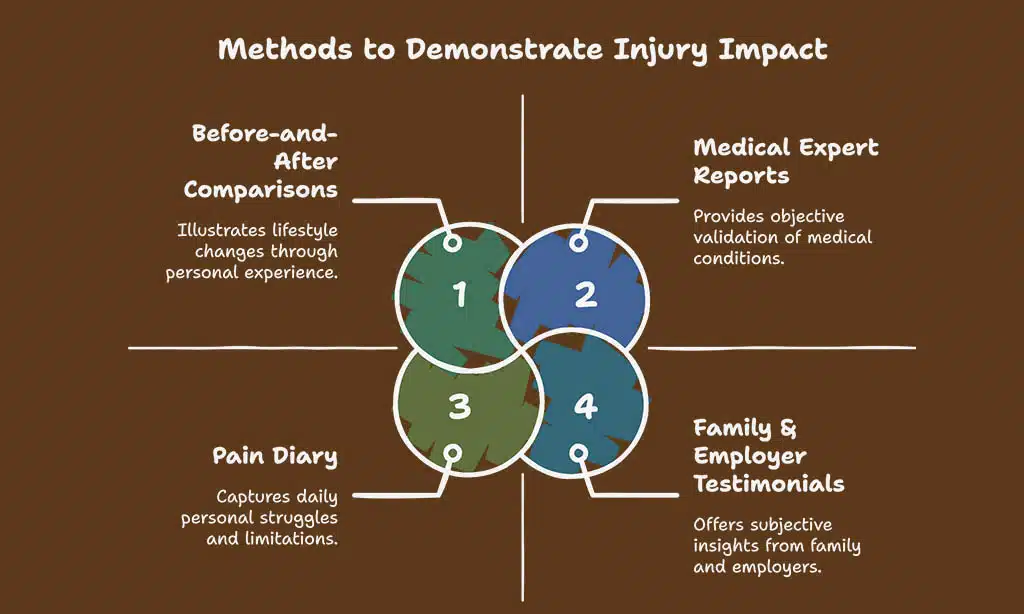
Your claim should comprehensively illustrate the full impact of the injury on your daily life, detailing the extent of physical limitations, chronic pain, emotional distress, and mental health struggles.
Additionally, highlight any disruption to personal relationships, social activities, and professional responsibilities. If the injury affects your ability to work, include lost earning potential and career setbacks.
Provide real-life examples or testimonials from family, friends, or coworkers to strengthen your case. A well-documented impact statement adds credibility and helps justify a higher settlement demand.
Ways to Demonstrate the Impact of Injuries
| Method | Explanation |
| Pain Diary | Document daily struggles and limitations. |
| Before-and-After Comparisons | Show how your lifestyle has changed. |
| Family & Employer Testimonials | Provide third-party insight into your suffering. |
| Medical Expert Reports | Validate your condition and long-term impact. |
| Psychological Evaluations | Support claims of emotional distress. |
Presenting personal narratives strengthens your case and makes insurers take your suffering more seriously.
7. Consider Alternative Dispute Resolution [ADR] Methods
ADR methods such as mediation and arbitration can be effective alternatives to traditional litigation, often saving time and money while still delivering a fair result.
Mediation and Arbitration
Mediation involves a neutral third party helping both sides come to an agreement, while arbitration allows a neutral party to make a binding decision. Both methods can often result in quicker and more affordable resolutions.
Table: Comparison of ADR Methods
| Method | Description | Pros | Cons |
| Mediation | A neutral mediator helps both sides reach a mutually agreeable solution. | Faster, less formal, cost-effective | May not result in binding decision |
| Arbitration | A neutral arbitrator hears both sides and makes a binding decision. | Faster, binding decision, less costly than court | Can still be time-consuming, less flexibility |
8. Understand the Impact of Comparative Fault in Australia
Australia follows a comparative fault rule, meaning that if you are partially at fault for the accident, your compensation will be reduced accordingly.
How Comparative Fault Affects Your Settlement
If you are deemed partially responsible for the accident, your settlement amount will be reduced by your percentage of fault. For example, if you are found 20% at fault, your settlement will be reduced by 20%.
How Comparative Fault Affects Your Settlement
| Percentage of Fault | Impact on Settlement |
| 100% Not at Fault | Full compensation. |
| 50% At Fault | 50% of the original settlement amount. |
| 20% At Fault | 20% reduction in the total settlement. |
9. Be Willing to Walk Away from an Unfair Offer
Finally, if the settlement offer is unfair or too low, don’t be afraid to walk away.
Knowing When to Reject a Settlement Offer
If the offer doesn’t adequately compensate you for your injuries, future medical care, or lost income, rejecting the offer and pursuing further negotiations or litigation is the best choice.
Table: When to Reject a Settlement Offer
| Offer Type | Reason to Reject |
| Too Low | The amount doesn’t cover all medical costs and lost wages. |
| Doesn’t Account for Future Costs | The offer doesn’t cover anticipated future medical care or ongoing treatment. |
Takeaways
By following these 9 tips for negotiating a higher personal injury settlement in Australia, you can maximize your compensation and secure the justice you deserve. If in doubt, consult an experienced personal injury lawyer to guide you through the process and strengthen your case.
Negotiating a higher personal injury settlement in Australia requires patience, knowledge, and the right approach. By following these 9 tips for negotiating a higher personal injury settlement in Australia, you can maximize your chances of securing a fair settlement that adequately compensates you for your injury. With the right strategy and professional support, you can navigate the complexities of the negotiation process and achieve a successful outcome.
























