
Florida consistently reports a notably high incidence of personal injury cases, surpassing national averages. In 2021, the state’s age-adjusted injury rate was 96.17 per 100,000 residents, approximately 8.89% higher than the national rate of 88.32. This elevated rate underscores the prevalence of incidents such as auto accidents, slips and falls, and other injury-related events across the state. Specifically, in 2020, Florida experienced over 340,000 auto accidents, leading to significant injuries and fatalities.
Navigating the legal landscape following a personal injury in Florida can be intricate. The process typically involves gathering evidence, filing insurance claims, engaging in negotiations, and, if necessary, proceeding to trial. Given the state’s higher-than-average injury rates, securing knowledgeable legal representation becomes crucial. An experienced Estero personal injury lawyer fighting for you can provide invaluable guidance, ensuring that your rights are protected and that you pursue the compensation you deserve.
Initial Consultation
An initial consultation with a personal injury lawyer is the first step in resolving matters and seeking justice. In this meeting, people provide information about their case, and attorneys evaluate the merits of a case. At this point, the lawyer assesses the situation, collects necessary details, and guides the client about possible solutions and actions to take.
Filing the Claim
The next step after the consultation is to file a statutory claim. Attorneys draft all relevant documentation regarding the allegations, damages, and evidence to support the claims. These papers are filed with the court, and the legal process begins. Timely filing is crucial, as the statute of limitations imposes stringent deadlines for filing a lawsuit. If these are not adhered to, the case will likely be destroyed. Hence, it is important to understand the legal provisions and avoid mistakes that can adversely affect the case.
Discovery Process
After the claim, the parties exchange information, a critical step that many people skip. This phase is where the parties exchange documents, respond to written interrogatories, and hold depositions. The goal is to discover the truth, collect proof, and have a solid basis for the case. How parties cooperate during discovery can play a large part in how a case is ultimately resolved, especially since transparency often leads to a better outcome.
Negotiation and Settlement
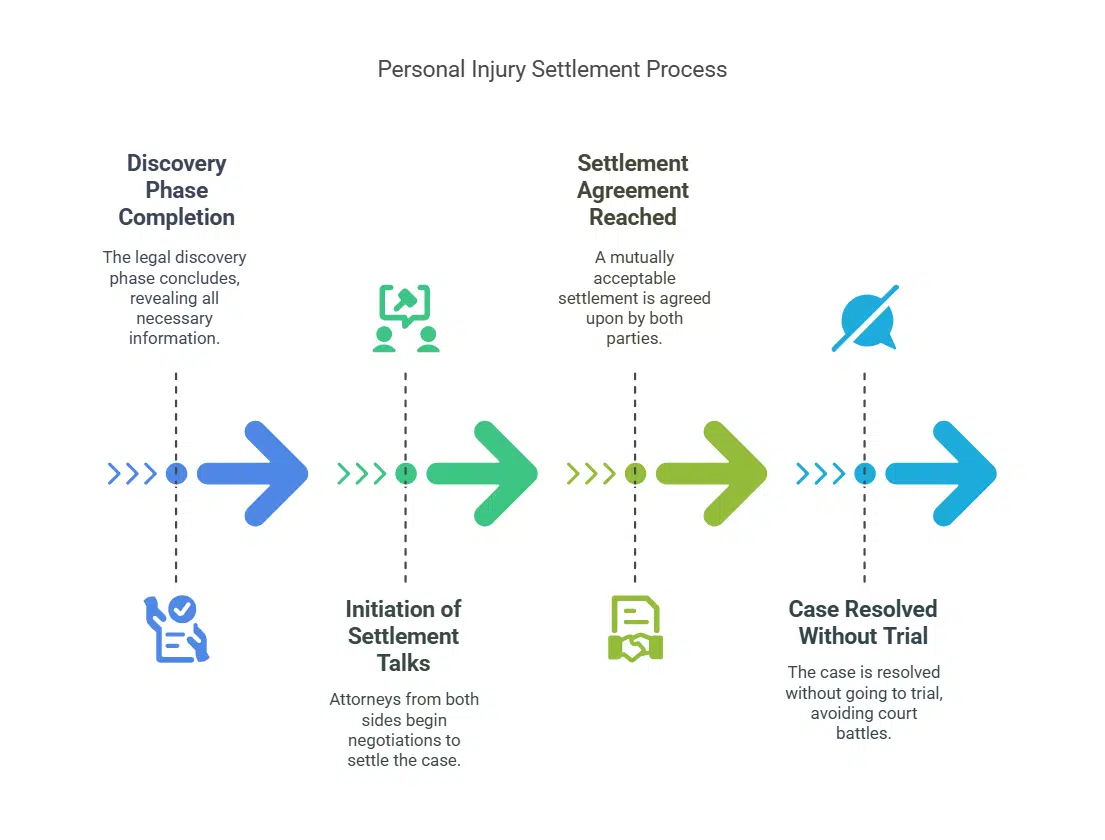
Negotiations and settlement talks often take place post-discovery. In most instances, settlements of personal injury cases occur without ever going to trial. The terms are negotiated by the attorneys on both sides, and a settlement is usually reached in which the injured party is compensated. This resolves the matter without the need for lengthy court battles. Settlements tend to resolve issues faster and with less stress and expense than litigation.
Trial Preparation
When settlement is not possible, it is time to prepare for trial. Lawyers prepare evidence, devise plans, and research specialists. At this stage, one requires a high level of attention to detail to prepare them for battle in court. Trial preparation is one of the most important stages of personal injury litigation, as a party with a strong case has a better chance of succeeding.
Court Proceedings
If a case goes to trial, it may be held in a courtroom. In this process, each side makes their argument and presents evidence and witnesses. Judges or juries consider the evidence and make decisions about the case. While trials are long and uncertain, when represented by an experienced attorney, you are far more likely to get the verdict you are hoping for.
Post-Trial Actions
At this point, the trial is over, but there may be post-trial activities, such as appeals or motions for a new trial. These actions enable parties to challenge the findings or obtain modifications, thus facilitating the pursuit of justice. Although they can prolong the litigation, they also allow for a more detailed examination of the case and a chance to fix mistakes made in the trial.
Receiving Compensation
The final step of a favorable settlement is receiving compensation. In this phase, it is time to pay out settlement funds or award damages to the injured party. Compensation is intended to pay for medical bills, lost wages, and other damages associated with the injury. If this stage is handled efficiently, the affected person will get the help needed to recover and move on.
Conclusion
Understanding how each part of the personal injury legal process works and what to expect from it can better prepare you for entering the legal system. Each stage, from initial consultations to discovery and compensation, is best navigated with care and attention from legal professionals. Understanding these processes helps people manage their expectations, make more informed choices, and find justice. The suggestion of an experienced personal injury lawyer is priceless, allowing for a smooth journey despite the complexities of the legal system.