
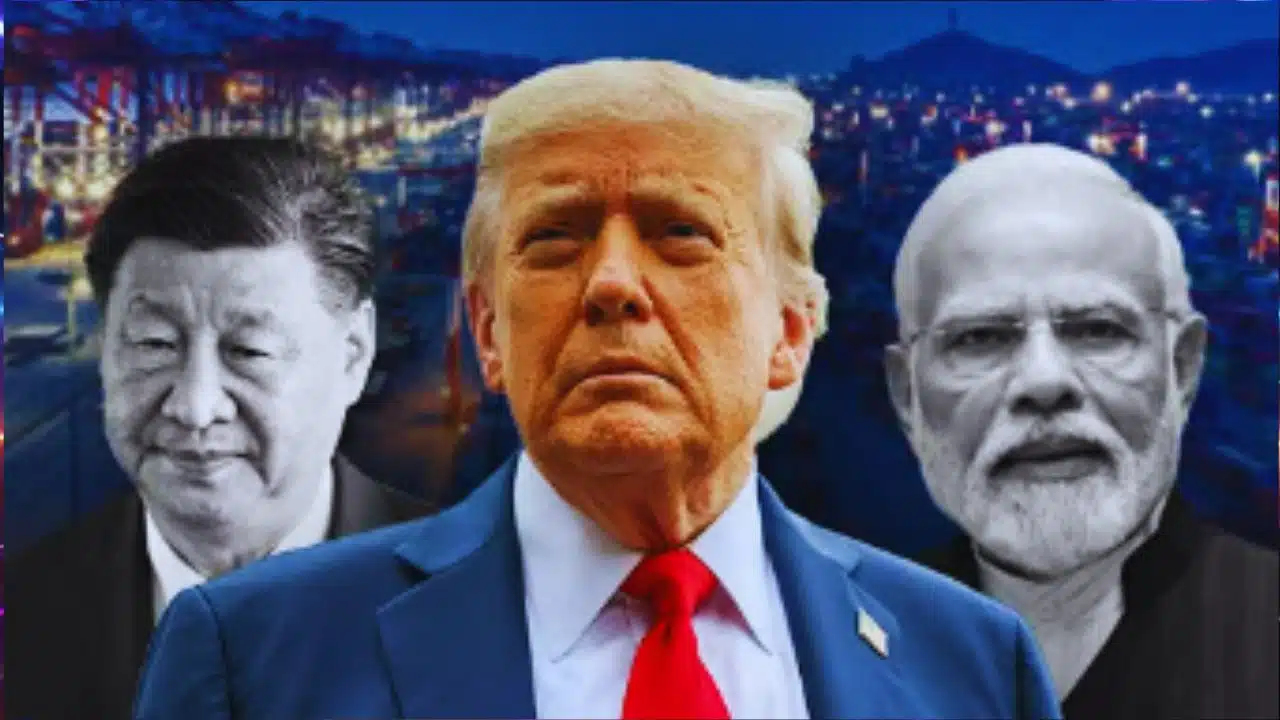
U.S. President Donald Trump has renewed his push to end the war in Ukraine by urging America’s allies in the European Union and NATO to impose steep tariffs—ranging between 50% and 100%—on imports from China and India. According to reports first published in the Financial Times, Trump made this demand during a high-level meeting last week between U.S. and EU officials in Brussels.
Trump argues that Beijing and New Delhi are helping Moscow withstand Western sanctions by continuing to purchase large volumes of Russian oil and energy products. By raising tariffs on Chinese and Indian exports, Trump hopes to reduce their ability to finance Russia and, in turn, force President Vladimir Putin to the negotiating table.
This approach fits Trump’s earlier pledge to end the conflict “on day one” of his presidency, though his critics argue that trade measures of this scale could destabilize global markets and strain relations with key partners.
Why Trump is Targeting China and India
China’s Role in Russia’s Oil Revenues
China remains Russia’s single largest energy customer. According to Chinese customs data, Beijing imported around 109 million tonnes of Russian crude oil in 2024, which represented about 20% of China’s overall oil imports. These purchases have helped Russia maintain revenue flows despite EU and U.S. sanctions.
India’s Growing Energy Ties with Russia
India has also emerged as a major buyer of Russian oil. In 2024, New Delhi imported 88 million tonnes of crude, accounting for roughly 35% of its total oil imports. Much of this oil is processed in Indian refineries and then re-exported as petroleum products, often to European markets, further complicating sanctions enforcement.
Trump already slapped a 25% tariff on Indian imports linked to Russian crude earlier this year, but he has so far refrained from applying similar measures on China, given Washington’s delicate trade truce with Beijing. By shifting the burden to NATO and the EU, Trump appears to be testing how far allies are willing to go to support his strategy.
The EU’s Complex Trade Position
EU–China Trade Relations
The EU is heavily dependent on Chinese imports. In 2024, bilateral trade in goods between Brussels and Beijing reached €732 billion ($860 billion). The EU recorded a trade deficit of €305.8 billion ($359 billion) with China, making Beijing its largest import partner. Nearly 40% of imports from China are consumer electronics, followed by heavy machinery, clothing, and accessories.
EU–India Trade Relations
By contrast, trade with India is relatively modest. In 2024, the EU ran a goods trade deficit of €22.5 billion ($26 billion) with India, primarily due to imports of pharmaceuticals, electronic equipment, and base metals such as iron and steel. While India is an important partner, its role in EU supply chains is far smaller compared to China.
Why 50–100% Tariffs Would Be Problematic
If the EU were to suddenly impose tariffs at Trump’s proposed levels, the consequences could be dramatic:
- Manufacturing costs in Europe would rise sharply, particularly in sectors reliant on Chinese electronics and machinery.
- Consumer prices would increase across the bloc, adding to inflationary pressures.
- Supply chains could be disrupted, given Europe’s reliance on Chinese inputs.
This explains why EU policymakers are cautious. While they support sanctions targeting Russia, many fear that sweeping tariffs on China and India could backfire economically.
NATO’s Limited Role
Trump’s demand also raises questions about NATO’s powers. As a military alliance, NATO does not have authority to set trade policy or impose tariffs. Instead, trade measures fall under the jurisdiction of member states and, in Europe’s case, the EU.
What Trump is effectively asking is for NATO members, especially the EU, to align their trade policies with Washington’s approach. This is politically complex, as NATO decisions require consensus, and EU trade policy requires approval by all 27 member states.
Legal and Institutional Barriers
WTO Trade Commitments
Under World Trade Organization (WTO) rules, members have “bound tariff rates” — ceilings on how high tariffs can go. To suddenly impose tariffs of 50–100% would likely breach those commitments unless justified under specific exceptions.
Security Exceptions
One possible loophole is the GATT Article XXI security exception, which allows members to impose trade restrictions for national security reasons. However, this has rarely been tested at such a large scale, and invoking it could lead to legal challenges at the WTO.
EU’s Existing Sanctions
The EU has already imposed targeted sanctions on Russian energy and on certain Chinese and Indian companies accused of helping Moscow. But extending this into blanket tariffs would require legal justification, unanimity among member states, and a willingness to face possible retaliation from China and India.
Wider Geopolitical Context
Russian Drone Incursions Raise Tensions
Trump’s tariff call comes against a backdrop of heightened military tensions. Last week, more than a dozen Russian drones entered Polish airspace, and another entered Romanian airspace. Both Poland and Romania are NATO members. Warsaw described the incursion as deliberate, while Bucharest scrambled fighter jets and condemned Russia’s “irresponsible actions.”
These incidents underline NATO’s growing confrontation with Russia and help explain Trump’s push for more aggressive economic measures.
France and Germany Step Up NATO Commitments
In parallel, France and Germany announced they will relocate military assets eastward as part of a new NATO mission to reinforce the alliance’s eastern flank. Trump has expressed frustration with Putin’s continued escalation, including Russia’s largest air attack on Ukraine earlier this month.
Reactions from China and India
China quickly rejected Trump’s call. Foreign Minister Wang Yi said Beijing does not participate in wars and warned that sanctions “complicate” conflicts rather than resolve them. China insists its trade with Russia is legitimate under international law.
India has taken a softer stance. Prime Minister Narendra Modi recently described the U.S. as a “close friend and natural partner,” signaling that New Delhi is keen to maintain stable ties with Washington. Trade talks between the two sides are ongoing, with both Trump and Modi expressing optimism about reaching a successful conclusion.
What Happens Next?
- Talks with China: U.S. Treasury Secretary Scott Bessent is set to meet Chinese Vice Premier He Lifeng in Madrid to discuss de-escalating trade tensions.
- Talks with India: Trump plans to speak with Modi in the coming weeks to address trade barriers and possibly coordinate a compromise.
- EU’s Position: Finance ministers from the G7 (including France, Germany, and Italy) have already discussed targeted sanctions on countries seen as enabling Russia’s war effort, but full-scale tariffs remain unlikely.
- Legal Decision in the U.S.: Trump’s own tariff powers are under legal review. A U.S. trade court ruled earlier this year that his tariffs exceeded presidential authority under the International Emergency Economic Powers Act (IEEPA). The case now sits with the Supreme Court, which will decide in November whether Trump can continue imposing unilateral tariffs.
Trump’s push for 50–100% tariffs on Chinese and Indian goods is politically bold but legally and economically fraught. The EU’s dependence on Chinese imports makes such tariffs highly disruptive, while NATO lacks the authority to enforce them.
While allies may continue to tighten targeted sanctions against entities tied to Russia, blanket tariffs of the scale Trump envisions remain improbable. For now, the debate highlights the widening gap between U.S. demands and European caution as the Ukraine war grinds on.
The Information is Collected from BBC and CNBC.