

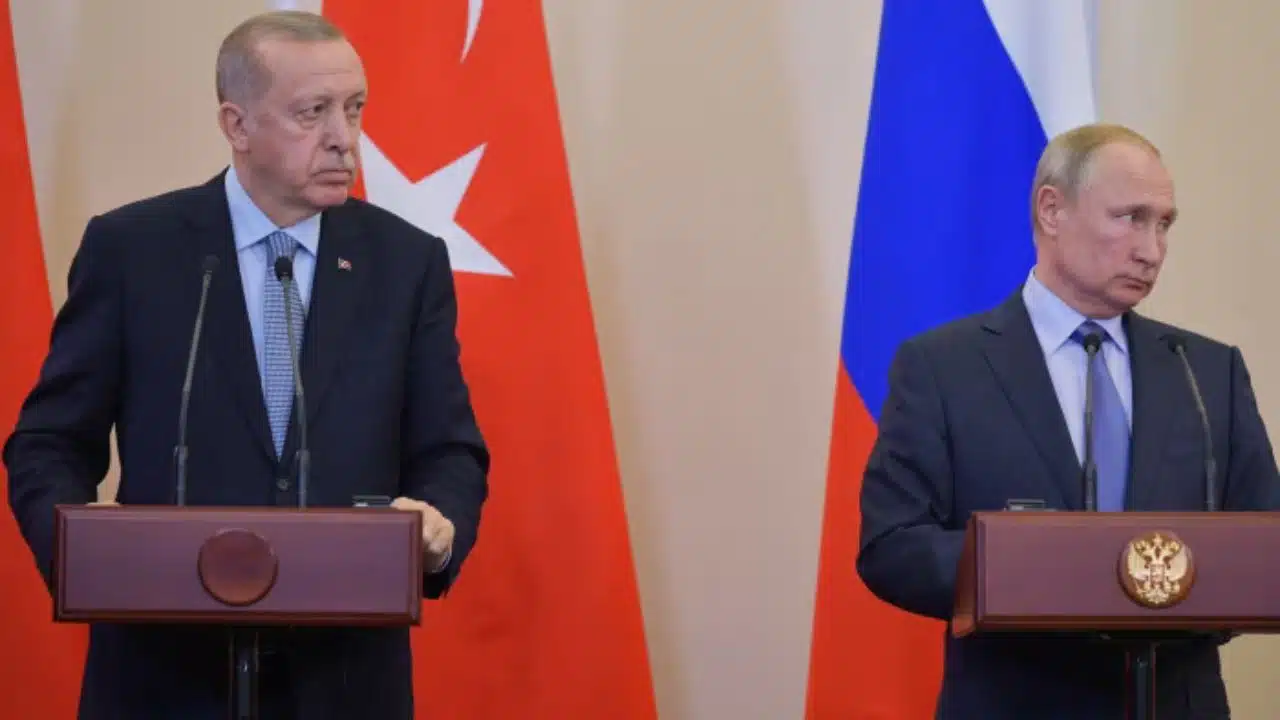
Turkish President Recep Tayyip Erdogan has issued a stark warning that the protracted Russia-Ukraine war, now in its fourth year, has escalated to directly imperil vital trade routes in the Black Sea. Speaking at an event unveiling Türkiye’s 2025 export figures on January 2, 2026, Erdogan emphasized Ankara’s commitment to safeguarding regional commerce while pushing for a just peace. His remarks underscore Türkiye’s precarious balancing act as a NATO member bordering both belligerents, amid a surge in maritime attacks that have rattled global supply chains.
Escalating Attacks on Commercial Shipping
Recent months have witnessed a dangerous uptick in strikes targeting civilian vessels in the Black Sea, transforming a key commercial artery into a zone of peril. On December 30, 2025, Russian drones attacked two Panama-flagged civilian ships, Emmakris III and Captain Karam, as they approached Ukrainian ports, highlighting Moscow’s intensified campaign against Odesa-region infrastructure. Ukrainian forces, in turn, have ramped up operations against Russia’s “shadow fleet” of oil tankers evading Western sanctions, with Sea Baby maritime drones striking vessels like the Virat, Kairos, and Dashan near Türkiye’s exclusive economic zone in late November and December 2025.
These reciprocal assaults have not spared neutral parties. A Turkish-owned vessel, VIVA, carrying sunflower oil to Egypt, fell victim to a Russian drone strike near Ukraine’s Chornomorsk port on December 12, 2025, shortly after Erdogan’s call with Putin for a port-energy ceasefire. Days earlier, the CENK-T, another Turkish ro-ro cargo ship, was hit in apparent retaliation for Ukraine’s tanker attacks, escalating risks to third-country shipping. Erdogan condemned these incidents as threats to “navigational safety, life, and the environment,” particularly within Türkiye’s waters, and issued direct warnings to Kyiv and Moscow.
The pattern of attacks traces back to Ukraine’s bold naval drone campaigns, which have disabled multiple Russian-linked tankers, disrupting oil exports that fund Moscow’s war machine. Russia has responded with port barrages and vows to sever Ukraine’s sea access, as stated by Putin. By mid-December 2025, Erdogan addressed the 16th Ambassadors Conference in Ankara, declaring that “targeting commercial and civilian ships benefits no one,” and confirming Türkiye’s firm messages to both sides.
Erdogan’s Direct Rebuke and Diplomatic Push
Erdogan’s January 2026 statement marks a culmination of months of escalating rhetoric. “This war has now reached the stage of threatening Black Sea trade. Of course, we are taking the necessary measures to prevent this,” he declared, noting the conflict’s toll of “hundreds of thousands dead, wounded, and displaced.” He positioned Türkiye as ready “to assume full responsibility to open [the path] to just peace,” echoing prior mediation efforts like the 2022 Black Sea Grain Initiative.
In his December 15 address, Erdogan highlighted Türkiye’s strict enforcement of the Montreux Convention, which has kept the war from fully spilling into the sea: “We have prevented the war from spreading to the Black Sea… However, recent reciprocal attacks seriously threaten navigation safety.” Foreign Minister Hakan Fidan echoed this in early December, calling Ukrainian strikes on Russian tankers “very scary” and a sign of the war’s expanding reach. Ankara’s dual-track approach—condemning attacks while maintaining ties with both capitals—reflects its strategic imperative to protect 1,200 miles of Black Sea coastline.
Erdogan has repeatedly invoked humanitarian and economic stakes. During a flight from Turkmenistan on December 13, 2025, he urged: “The Black Sea should not be seen as an area of confrontation. This would not benefit Russia or Ukraine. Everyone needs safe navigation.” His warnings align with Türkiye’s role in prisoner swaps and grain deals, positioning Ankara as an indispensable broker.
The Strategic Black Sea Lifeline Under Siege
The Black Sea handles immense trade volumes, making it a linchpin for global food and energy security. Pre-war, Russian Azov-Black Sea ports managed 256.8 million tons annually in 2021, with Novorossiysk alone at 142.8 million tons—30% of Russia’s total cargo. Ukraine relied on sea routes for nearly 62% of exports ($42 billion in 2021), including critical grains and oilseeds; by 2024, this rebounded to 50% ($20.8 billion) despite disruptions.
The war has reshaped flows. Ukraine’s 2024 port volumes surged 77% year-over-year, with projections for 2025 container traffic exceeding 3.2 million TEU (up 8-10%), driven by southern terminal recoveries. Yet, Solidarity Lanes data for June 2025 shows Black Sea routes still vital: 80% of Ukrainian grain/oilseed exports, 40% non-agri exports, and 20% imports. Intra-regional trade plummeted 20.5% in 2023, forcing shifts to rail and alternative paths.
Energy transit amplifies vulnerabilities. Russia’s shadow fleet—hundreds of aging tankers under flags of convenience—circumvents sanctions, shipping oil from Novorossiysk and other hubs. Ukraine’s strikes aim to choke this revenue, but collateral hits like the VIVA threaten neutral carriers, including Turkish firms integral to Egypt-bound agri shipments. Escalation risks oil spills, environmental catastrophe, and insurance spikes, already deterring shippers.
| Key Black Sea Trade Metrics | Pre-War (2021) | 2024 | 2025 Proj. |
|---|---|---|---|
| Ukraine Sea Exports (% of total value) | 62% ($42B) | 50% ($20.8B) | Stable amid threats |
| Russian Azov-Black Sea Cargo (M tons) | 256.8 | Declined | N/A |
| Ukraine Port Container Growth | N/A | +77% YoY | +8-10% to 3.2M TEU |
| Grain/Oilseed via Black Sea (Ukraine) | Dominant | 80% exports | Vulnerable |
Türkiye’s Montreux Shield and Mediation Legacy
Türkiye’s control of the Bosphorus and Dardanelles via the 1936 Montreux Convention grants Ankara decisive leverage. Article 19 empowers closure to belligerent warships during conflict, a step invoked since February 2022 to bar Russian reinforcements while allowing pre-war Black Sea-based fleets. Erdogan credits this with containing the naval war: “We have strictly enforced the Montreux Convention.”
Ankara has warned off non-belligerent navies too, averting NATO-Russia clashes. Yet gaps persist—Russia uses civilian vessels for logistics, blurring lines. Türkiye’s mediation history shines through the Black Sea Grain Initiative (2022), which exported millions of tons before collapsing, and recent Istanbul talks. Erdogan positions Türkiye as “strong” to defend interests and aid “brothers,” balancing NATO duties with Moscow ties.
Global Ripples and Economic Fallout
Disruptions cascade worldwide. Ukraine’s grain corridor underpins 20-80% of agri-exports; hits risk food inflation, echoing 2022 crises. Russia’s oil shadow fleet sustains budgets despite sanctions; Ukrainian drones have “disabled” key tankers, prompting Putin’s sea blockade threats. Global chains face delays, higher premiums, and spills—VIVA’s strike alone imperiled Egyptian food security.
For Türkiye, Black Sea trade is existential: exports grew despite headwinds, but attacks hit its fleet. Europe eyes alternatives like Solidarity Lanes (60% non-agri exports by rail/road), yet sea remains irreplaceable. As Erdogan noted, the war’s four-year grind demands resolution.
Calls for Restraint and Path Forward
Erdogan’s warnings demand immediate de-escalation. Türkiye urges port-energy ceasefires and safe corridors, leveraging Montreux and diplomacy. With NATO ally status and Russian energy dependence, Ankara alone can broker calm. A just peace, as Erdogan pledges, hinges on restraint—lest Black Sea trade grinds to halt, amplifying global woes. Stakeholders must heed: navigation safety benefits all.





















