You send emails every day, but they often sit unopened in crowded inboxes. Imagine: your message lands among hundreds of others, fighting for attention like a needle in a haystack.
Frustrating, right? Many folks in email marketing face this issue, watching open rates drop because subject lines fail to grab readers. It feels like shouting into the void, especially for sales pros using tools like Salesloft or Mailchimp in their campaigns.
Nearly 400 billion emails fly around daily, creating tough competition that demands standout email subject lines for better visibility. This guide breaks it down with best practices, like personalization and A/B testing, to boost your open rates and customer engagement.
You’ll learn strategies for cold emails, follow-up emails, and even mobile optimization. Ready to transform your inbox game?
Why Email Subject Lines Matter
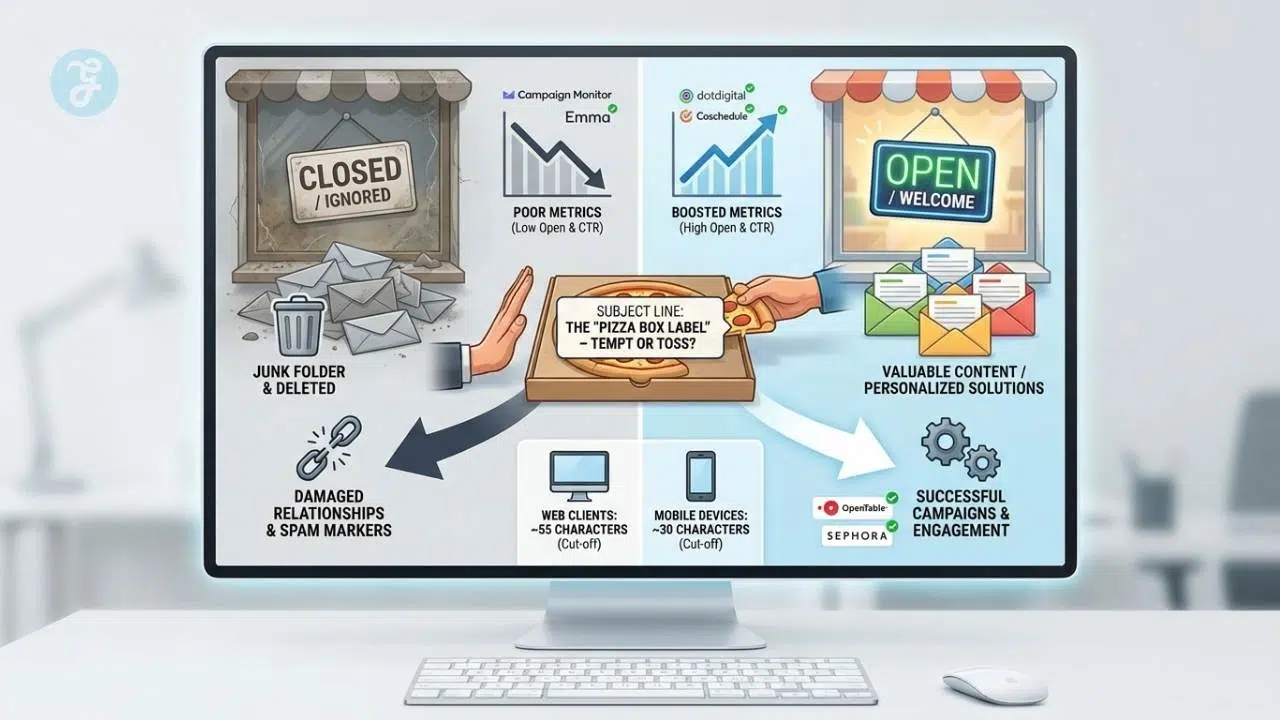
Email subject lines act as the first impression in your email campaigns. They decide if readers open your message or skip it. A strong one boosts open rates and click-through rates, driving engagement in audience targeting.
Tools like Campaign Monitor and Emma show this through analytics. Poor subject lines send emails to the junk folder, ignored or deleted. They harm prospecting efforts, like those for nonprofits or social media snippets.
Misleading lines damage relationships and get marked as spam. Think of it as a shop window; it pulls folks in or turns them away.
Subject lines influence decisions right away, as the first thing recipients spot. Compelling ones stand out in crowded inboxes, hinting at valuable content with personalized solutions.
They make the difference between successful campaigns and missed opportunities. Web-based clients cut lines after 55 characters, mobile devices at 30. This matters for tools like Dotdigital or Coschedule.
OpenTable and Sephora nail this, lifting engagement metrics. Your email as a pizza from Pizza Hut; the box label tempts you to dig in, or you toss it aside.
Best Practices for Crafting Effective Email Subject Lines
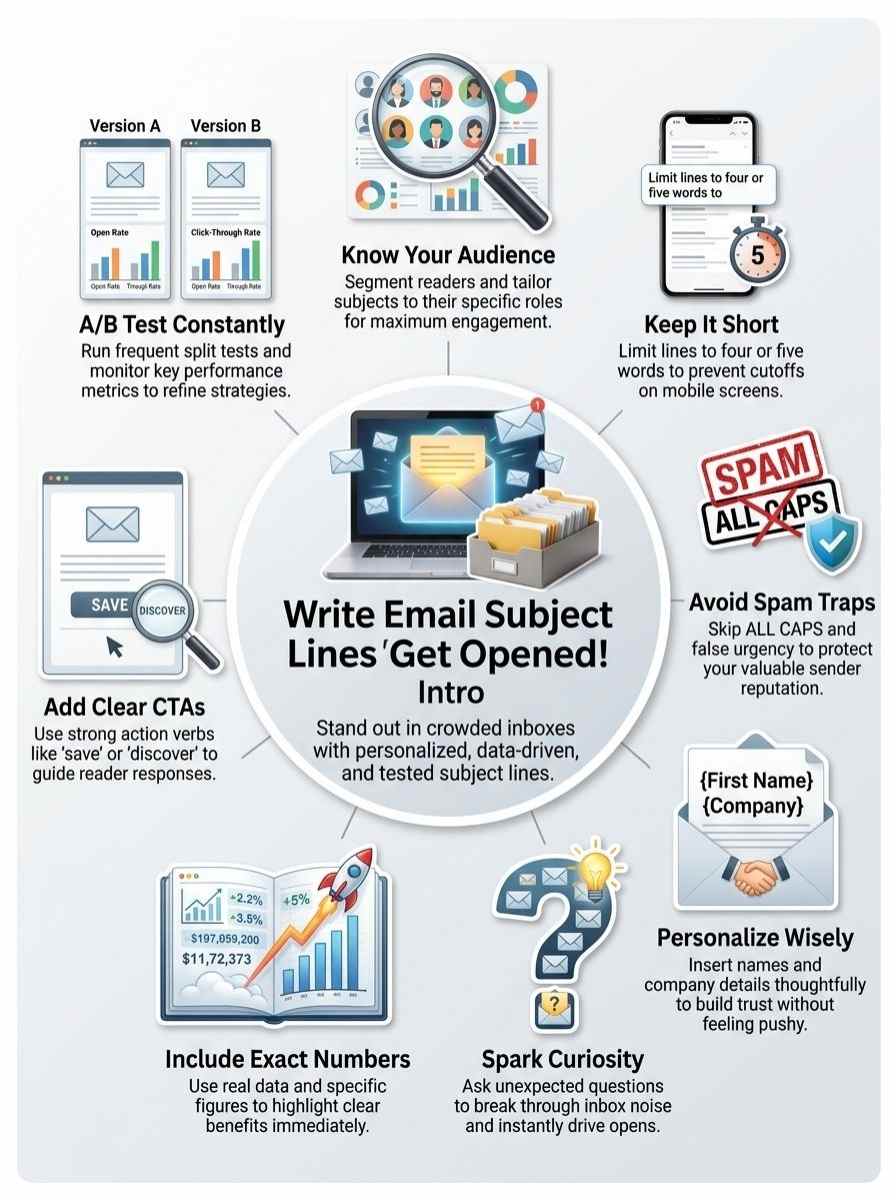
You know that feeling when an email pops up and you just have to click it, right? Start by tapping into tools like Trello for organizing your ideas, or even insights from McKinsey reports, to tailor lines that speak straight to your crowd, sparking that instant curiosity without the spam vibes.
Know your audience
Understanding your audience forms the base for email subject lines that grab attention. Tailor messages to match what readers know, and engagement jumps. Segment groups for targeted lines, like one for sales leaders on Drift or Gainsight, another for IT directors at McKinsey.
This step lifts open and conversion rates. Align subjects with professional roles; a vague one erodes trust and drops involvement. Irrelevant words turn readers off fast.
Monitor campaign reports to spot devices, such as mobiles for Trello users or desktops for Rhythm fans. Track open rates and clicks to sharpen segments. Adapt to trends, like AI shifts in Conversations or Cadences at Dreamforce.
Cherilynn Castleman from CGI Executive Coaching points out how Whole Whale or Groupon nails this with Oribe and merge tags via Rebrandly. Deals & forecast data from Convince&Convert shows continual tweaks keep things fresh.
Know your people inside out, or watch your emails drift into the spam folder. – Cherilynn Castleman
Keep it short and concise
Email senders, aim for subject lines with four to five words. This keeps them from getting cut off on small screens. Gmail and Yahoo trim lines after 55 characters. Mobile inboxes cut them at 30.
Half of all emails open on phones. Short lines appeal more to folks scrolling fast.
Pick strong words to start, grab that quick glance. Try both super short and a bit longer ones, see what clicks. Skip fancy adjectives, just say what’s inside clearly. Craft your line last, once the email’s ready.
Tools like artificial intelligence can help test these tweaks for better opens.
Avoid spammy words
Spam filters catch certain words and send your emails straight to junk folders. You want better deliverability, so steer clear of these traps. Common spam triggers include phrases like “100% satisfied” and “earn money.” Watch out for ALL CAPS too.
Add in things like no unsubscribe button or questionable links, and you’re asking for trouble. Unreadable font styles, tiny sizes, too many exclamation marks, and currency signs also raise red flags.
Think of it like dodging potholes on a road trip; skip them to keep your message rolling.
Examples of spam words hit hard: “number one,” “satisfaction guaranteed,” “act now,” “limited time offer,” “cancel anytime,” “no hidden charges,” “as seen on,” “bonus,” and “cheap.” False urgency flops, as a global benchmark report shows.
In retail emails, terms like “exclusive,” “ends,” “save,” “extra,” and “last” often fail. Track your spam complaint rate, folks; high numbers wreck your sender reputation. Ditch misleading tactics, such as “RE:” pretending it’s a reply.
Skip exaggerated claims or urgency words to cut the risk of getting flagged as spam.
Use personalization wisely
Personalization boosts open rates in emails. Insert names or locations to make subject lines feel direct. You see this in lines like “Josh, your October campaign results are in.” Thoughtful touches treat people as individuals, not just data points.
Sales teams shine here, pairing company names with prospect names for impact. Imagine dropping “{COMPANY NAME} + {PROSPECT NAME}” to spark real interest.
Overuse turns personalization generic or pushy, so keep it smart. Skip lazy name drops that ring hollow. Opt for genuine nods, like “Your customers are holiday-ready, are your automations?” Or try “Thanks for joining us, Josh.” These build trust without tricks.
Sales contexts love this approach; it draws folks in like a warm handshake.
Leverage urgency or scarcity
Leverage urgency or scarcity to make your email subject lines pop. People often act fast when they sense time running out. Boost open rates with real deadlines or limited spots, but keep it honest.
Fake scarcity backfires, as benchmark reports show. Skip words like “exclusive,” “ends,” “save,” “extra,” and “last” if they ring false. Tie urgency to true value instead. Pair it with relevance for the best punch.
Spark curiosity about rivals to grab attention. Try a line like “YOUR COMPETITORS ARE DOING THIS TO BOUNCE BACK.” That simple tweak lifts open rates from 3% to 12%. Go for low-key nudges, such as “REACHING OUT ONE LAST TIME (LMK IF I CAN HELP).” Match the email’s content to that promise.
Build trust that way. Combine these tactics with clear benefits to keep readers hooked.
Strategies to Write Attention-Grabbing Subject Lines
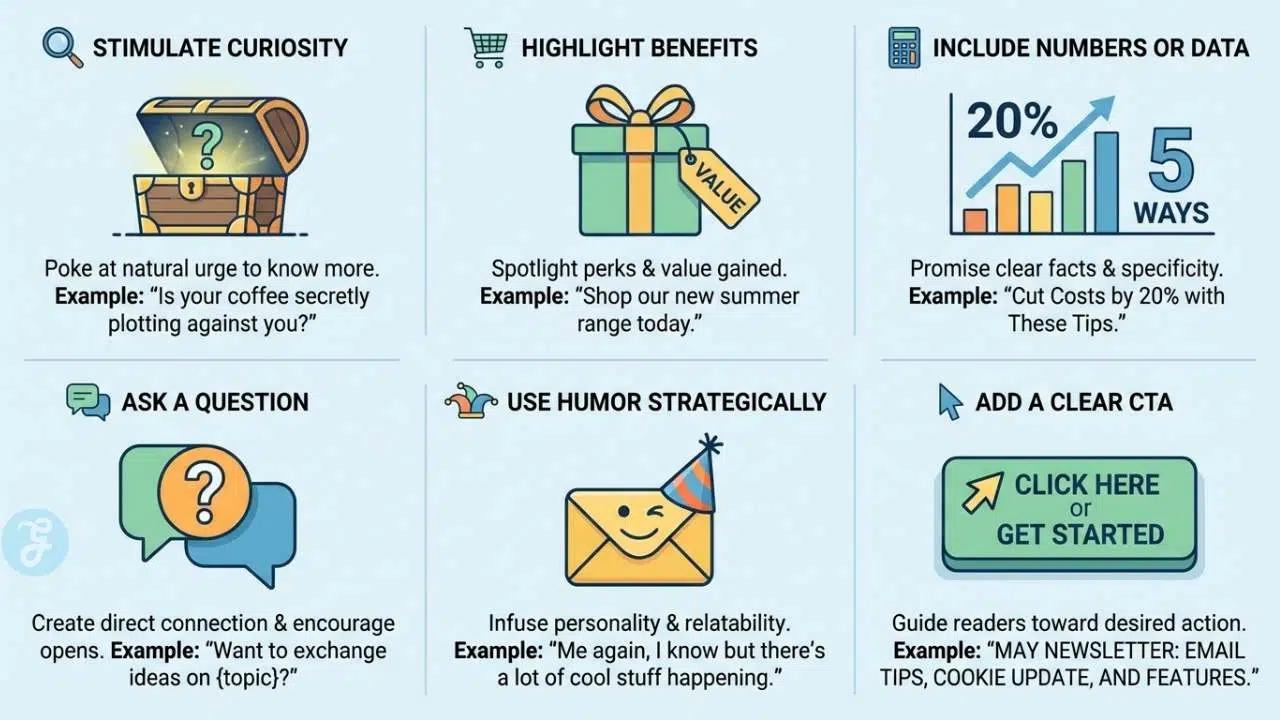
Ever feel like your emails vanish into the void, like a whisper in a crowded room? Grab readers’ eyes with clever tricks that spark interest, promise real value, and even toss in a dash of fun to make them click without a second thought.
Stimulate curiosity
Curiosity sparks action in email marketing. Questions in subject lines poke at that natural urge to know more. They boost open rates by making people pause and click. Take “Want to see our new collection?” as an example.
It dangles a peek without giving away the goods. Or try “Do you want 20% off your next order?” That one pulls readers in with a direct hook.
Go for unusual questions to shake up the inbox routine. Something unexpected, like “Is your coffee secretly plotting against you?” creates real intrigue. Marketers use this tactic to break through the noise.
Readers feel that itch to find out what’s inside. Mix in these twists, and watch engagement climb.
Highlight the benefits
People love knowing what’s in it for them, so spotlight the perks right in your email subject line. Show the value they gain, like free shipping or student discounts, to spark interest fast.
Use action words such as “get yours,” “save,” or “book today” to stress those benefits. For instance, try “Shop our new summer range today” to draw clicks without overpromising.
Clarity in your lines builds trust, sets expectations, and keeps readers coming back. Focus on informing, not just selling, with words like “introducing,” “discover,” or “recent” that hint at fresh info.
Steer clear of misleading promises that the email can’t deliver. Lines like “Our new summer range is here, look and shop now” or “Available now: summer styles” inform honestly, boost authenticity, and encourage opens.
Include numbers or data
Numbers grab eyes fast in email subject lines. They promise clear facts and cut through the noise. Think of it like a scoreboard in a game, everyone checks it first. Subject lines with numbers or data capture attention and signal specificity.
For instance, “[X] OPTIONS TO GET STARTED” presents actionable steps succinctly, you see. It draws readers in, makes them curious about those exact choices. Try adding stats from your content, like “5 Ways to Boost Sales Today.” This tactic boosts open rates, keeps things real.
People love specifics, it feels like insider info without the guesswork.
Data adds punch, turns vague promises into solid hooks. Imagine sprinkling facts like salt on fries, it enhances the flavor. Use real figures to highlight benefits, say “Cut Costs by 20% with These Tips.” Readers spot the value right away, no fluff involved.
Mix in lists or percentages for that quick win. Your audience trusts the precision, opens more emails. Keep experimenting, watch what clicks.
Ask a question
Questions spark curiosity in email subject lines. They pull readers in, making them eager to click. Imagine your inbox full of bland titles; a question stands out like a beacon. It taps into that human urge to find answers.
You create a direct connection, almost like starting a chat. Questions encourage opens by promising quick value inside.
Try lines like “Do you want 20% off your next order?” This one teases a deal, drawing shoppers right away. Or go with “Want to exchange ideas on {topic}?” It invites discussion, perfect for networking.
For updates, use “How’s progress coming on [- project]?” These examples build intrigue without giving everything away. You keep it simple, focus on the reader’s needs. Mix in personalization for even better results.
Use humor strategically
Infuse personality into your subject lines to make emails more relatable and engaging. Playful or creative subject lines align with a brand’s voice, and they enhance engagement. Take the line “Me again, I know but there’s a lot of cool stuff happening.” It uses humor and acknowledges prior communication.
This approach adds levity, and it increases appeal without sacrificing professionalism.
Humor works best when it matches the recipient’s expectations and professional context. Use charm and humor to elicit responses from prospects who have not engaged at all. Consider titles like “Will you be my plus one?” They foster inclusivity and lightheartedness.
Apply humor and creativity judiciously to avoid misinterpretation.
Add a clear call to action (CTA)
Add a clear call to action in your email subject lines to guide readers toward desired responses. Action-oriented verbs like “get yours,” “discover,” “save,” “join us,” or “book today” spark that drive.
These verbs make your CTA effective, and they boost click-through and conversion rates. Your CTA must show what action you want the customer to take once they open the email. Picture a sales email that needs quick replies or meeting confirmations; CTAs shine here most.
Focus on key benefits in the CTA if you fear a spammy vibe, such as highlighting free shipping. Format your subject lines by starting with the email type, then adding specific content details for clarity.
Take “MAY NEWSLETTER: EMAIL TIPS, COOKIE UPDATE, AND FEATURES” as an example. You enhance appeal and clarity this way, maybe with emojis and those content specifics. Sales emails thrive on this approach, pulling readers in fast.
Testing and Optimizing Your Subject Lines
5. Testing and Optimizing Your Subject Lines: Run A/B tests on your subject lines with platforms like Mailchimp to track open rates and click-through rates, then tweak them based on what clicks with your crowd – stick around for the step-by-step tips!
A/B test your subject lines
Testing different subject lines through A/B testing gives you valuable insights into what resonates with your audience. A/B testing is crucial to measure the performance of subject lines, and it allows comparison of approaches.
- Segment your audience for more accurate A/B testing results, like splitting groups by age or interests, so you see clear patterns in opens and clicks.
- Brainstorm unconventional subject lines before refining them for A/B testing, think of wild ideas first, then polish two versions to pit against each other.
- Don’t assume what recipients expect, keep them surprised to encourage opens, because familiar stuff can feel like old news in their inbox.
- Monitor testing results to identify which types of subject lines yield the best outcomes, track metrics like open rates right after each test runs.
- Recipients may become desensitized to familiar formats, so avoid relying on previously successful subject lines, or your emails might blend into the crowd.
- What worked previously may not be effective in the future, continual testing is key, run fresh A/B tests every campaign to stay ahead of changing tastes.
Monitor key performance metrics
You track key performance metrics to boost your email success.
| Metric | What It Measures | Why It Matters |
|---|---|---|
| Open Rate | Percentage of recipients who opened the email. | Shows how well your subject line grabs attention, like a shop window drawing in customers. |
| Click-Through Rate (CTR) | Percentage of recipients who clicked links within the email. | Reveals if your content pulls people deeper, you know, like bait on a hook. |
| Click-to-Open Rate (CTOR) | Percentage of recipients who clicked a link out of those who opened the email. | Gauges engagement after the open, helping you spot what clicks with folks. |
| Conversion Rate | Percentage of recipients who completed the desired action post-click. | Tracks real results, such as sales or sign-ups, turning opens into wins. |
| Unsubscribe Rate | Percentage of recipients who opted out after a campaign. | Sudden spikes signal issues with subject lines or content, like a red flag waving. |
| Spam Complaint Rate | Percentage of recipients marking the email as spam. | High rates harm sender reputation, so watch this to stay in good graces. |
- Check these metrics often.
- They guide you to refine strategies.
- Boost open rates with smart tweaks.
- Picture your emails as arrows; metrics show if they hit the bullseye.
- Spot patterns in audience behavior.
- Use data from tools like Google Analytics or email platforms.
- Keep campaigns sharp and effective.
Adjust based on audience behavior
Track audience actions with campaign reports. Spot the devices they use to open emails, like phones or computers. This info lets you tweak subject lines for better fit. Experiment with different lengths through trial and error.
Aim for results that boost opens. Think one group loves short lines on mobile, another prefers details on desktops. Adapt your approach to these shifts.
Gather insights from data collection. Refine strategies over time to lift those open rates. Pull in CRM data for smart sales moves that connect with buyers. Segment your crowd into groups.
Personalize lines for each one to spark more clicks. Switch up language and tone based on their job world. Analyze all this with A/B tests. Watch key metrics closely. Keep improving as trends change.
Common Mistakes to Avoid
You craft that perfect subject line, but one slip-up sends your email straight to the trash. Imagine, you overload on smiley faces or fake names, and readers hit delete faster than you can say “oops.”
Misleading the reader
You craft a subject line that promises the moon, but your email delivers a pebble. Readers feel tricked, and trust crumbles fast. Avoid lines that promise more than the email delivers, like slapping “RE:” on a fresh message to fake a reply.
That old trick harms relationships, and folks mark those emails as spam in a heartbeat. Keep subject lines in sync with your content to match what readers expect; otherwise, vague or off-base ones erode trust and slash engagement.
Imagine: you bait with false urgency, tossing in words like “exclusive,” “ends,” “save,” “extra,” or “last.” Benchmark reports show these flops hard, and recipients unsubscribe or flag you as spam when they spot the deception.
Ouch, right? Stay honest to keep your audience hooked and happy.
Overusing emojis or personalization
Emojis boost visibility in emails, yet folks often go overboard. They shine for mobile users, adding a quick pop of color. But slap them in without thought, and you confuse readers.
Some icons show up wonky on different gadgets or apps. Others carry double meanings that muddle your point. Audiences might roll their eyes at too many, seeing them as unprofessional fluff.
Use them sparingly to keep things sharp and pro.
Personalization draws people in, like a friendly nod. Tie it to real context, and it works magic. Overdo it, though, and it feels fake or pushy. Skip dropping names in every note; that screams generic.
Blend it with relevance instead. Too much turns your message spammy, chasing folks away.
Relying on outdated techniques
Stick to fresh ideas in your email subject lines. Old tricks lose their punch fast. Recipients get desensitized to lines that worked before. For example, terms like “exclusive,” “ends,” “save,” “extra,” and “last” flop in retail emails now.
They feel worn out, like an old shoe that pinches. Refresh your style often, based on testing and what your audience says. Best practices change; yesterday’s hit might bomb today.
Ditch clichés and generic phrasing that bore readers. Skip repetitive stuff, such as “MAY NEWSLETTER.” Add details and emojis to spice it up instead. Steer clear of aggressive tones or hard sales pitches right off the bat.
Avoid spam trigger words too, like “100% satisfied,” “earn money,” “bonus,” or “cheap.” These flag your emails as junk. Test new approaches with A/B splits and watch metrics to stay sharp.
Final Thoughts
You’ve learned to craft email subject lines by knowing your audience, keeping them short, avoiding spam words, and using personalization smartly. These tips make your emails pop in crowded inboxes, simple as pie, and they boost open rates without much fuss.
What if you tried curiosity or a quick question in your next subject line? Great subject lines drive sales, as email beats social media by 40 times, per McKinsey research. Check out tools like A/B testing in Gmail or metrics trackers for more tweaks.
Go ahead, spark those opens, and watch your messages turn heads like a magnet.
Frequently Asked Questions (FAQs) About Email Subject Lines
1. What’s the secret to crafting email subject lines that boost open rates?
Keep them short and punchy, like a quick hook that grabs attention right away. Think of it as bait on a fishing line; you want folks curious enough to bite. Personalization, such as adding the recipient’s name, can make it feel like a chat with an old friend, bumping those opens way up.
2. How do I spark curiosity without misleading people?
Use questions or teasers that hint at value inside, but always deliver on the promise. For instance, “Ready to double your sales?” works if the email shares real tips.
3. Why should I add urgency to my subject lines?
Urgency pushes folks to act fast, like “Last chance for 50% off” that creates a fear of missing out. It taps into our natural impulse to grab deals before they vanish; just don’t overdo it, or you’ll sound like the boy who cried wolf.
4. Can humor help my email subject lines get opened more?
Absolutely, a dash of wit can stand out in a crowded inbox, turning a bland line into something memorable. Picture this: “Don’t open if you hate free stuff” – it’s playful and invites a click, as long as it fits your brand’s voice.