


Hey there, do you ever get annoyed waiting for a video to load on your phone? Maybe you’re trying to watch a funny clip or stream a cool show, and it just keeps buffering. It’s super frustrating, right, especially when you’re excited to see what happens next!
Guess what, though? The demand for fast internet is huge, and a group called TeleGeography found that global bandwidth needs almost doubled from 2020 to 2022, hitting a wild 3.8 Pbps.
That’s a ton of data zooming around the world, all to keep up with our love for streaming media and video streaming.
I’ve got some great news for you! This blog will show you five awesome ways edge networks, like those using edge servers and content delivery networks (CDNs), speed up global content delivery.
From cutting wait times to boosting streaming quality, we’ll cover it all. Stick around!
Key Takeaways
- Edge networks cut latency by up to 60% and drop load times by 40%, as per Cisco reports, making content delivery faster with edge caching.
- A global streaming service reduced load times by 55% worldwide using edge caching, showing real speed gains.
- Decentralized setups by companies like Qwilt, with over 180 ISP partners, boost reliability for nearly 2 billion subscribers.
- Edge networks enhance Security with AI and blockchain, cutting cyber risks, as noted by IBM Security.
- With 5G tech, latency drops to 1 millisecond, way faster than 4G’s 20-30 milliseconds, improving global content access.
Faster Content Delivery with Edge Caching
Edge caching is a game changer for speeding up content delivery, folks. It works by storing data closer to you, in nearby edge caches, instead of far-off data centers. Imagine grabbing a snack from your kitchen instead of driving to a store miles away.
That’s the kind of quickness we’re talking about, and it slashes waiting times big time. Stats show edge delivery cuts latency by up to 60% compared to traditional CDNs. Plus, load times can drop by 40%, as per a major security report from Cisco.
Now, let’s paint a picture with a real example. A global streaming service saw load times shrink by 55% worldwide using edge caching. Companies like Qwilt make this happen by teaming up with over 180 internet service providers.
They place infrastructure right inside ISP networks, shortening the last-mile trip for streaming content. It’s like having a shortcut to your favorite show, no buffering blues! With the CDN market set to hit $140.73 billion by 2032, driven by streaming growth, edge caching is paving the way for snappy global content delivery.
Enhanced Reliability Through Decentralized Infrastructure
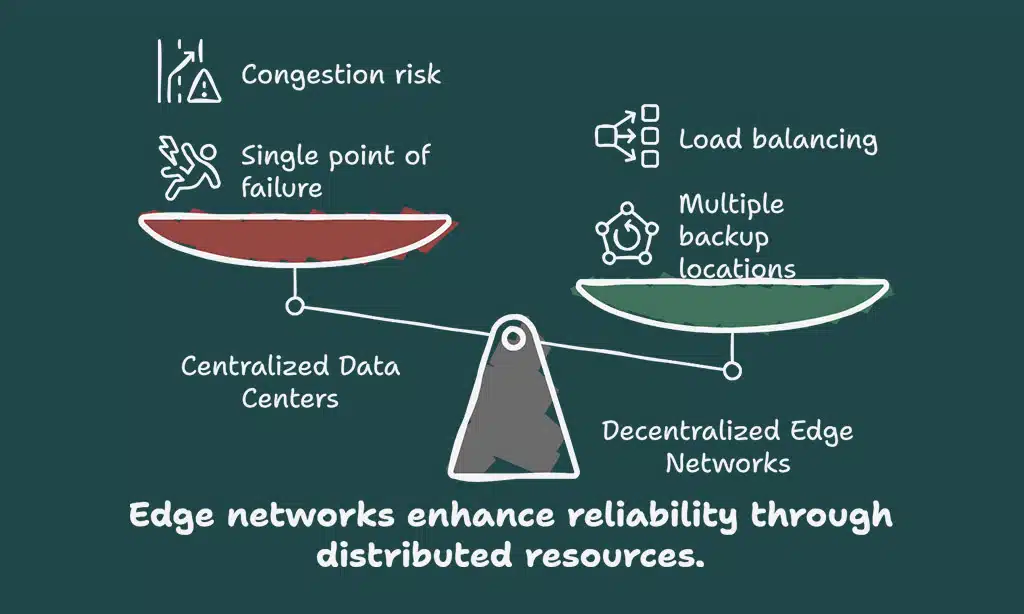
Hey there, Readers, let’s chat about how edge networks boost reliability with a spread-out setup. Instead of relying on one big data center, these systems scatter resources across many spots, like micro data centres and internet exchange points.
If one location fails, others pick up the slack, keeping your content delivery smooth. Think of it as having backup plans all over the globe, ready to jump in.
Take Qwilt, for instance, a true edge CDN that weaves its infrastructure right into ISP networks. With partnerships across over 180 service providers and nearly 2 billion connected subscribers, they show how decentralized setups cut risks.
Congestion control and load balancing help dodge issues like packet loss. Even in growing markets like Asia, where digital content demand soars, this approach keeps things steady. Plus, with global bandwidth needs hitting 3.8 Pbps from 2020 to 2022, per TeleGeography, spreading out makes total sense.
Improved Security for Content Distribution
Check this out, folks, edge networks are game-changers for keeping content safe. They spread data across many spots, not just one central hub. This setup, often tied to a content delivery network (CDN), cuts the risk of huge cyberattacks.
IBM Security found that such scattered safety measures slash breaches big time. Plus, with AI-powered CDNs, spotting weird stuff like DDoS attacks gets way easier. It’s like having a watchdog that never sleeps, guarding your digital goodies.
Now, let’s chat about another cool trick up their sleeve. Blockchain technology in CDNs boosts security and lets folks share content peer to peer. Imagine a lock so tough, no one can pick it.
That’s how it feels with these tools in play. They keep your data private, stop threats cold, and make sure prying eyes stay out. It’s all about giving you peace of mind while your favorite streaming video or site loads up safe and sound.
Optimized Performance for Dynamic Content Delivery
Hey there, let’s talk about how edge networks ensure dynamic content delivery runs incredibly smoothly. Think of dynamic content as material that updates quickly, like live sports scores or customized ads.
Edge networks, powered by edge computing at their core, bring this content nearer to you. They reduce delays through instant data processing. Pretty neat, right? A SaaS provider noticed user engagement soar by 40% after implementing edge caching.
Plus, they significantly cut bandwidth expenses. That’s a major victory!
Now, imagine AI-driven content distribution networks revolutionizing streaming services. They anticipate traffic trends to optimize caching using machine learning models. Serverless architectures also contribute, enabling rapid delivery of personalized content.
Think of fewer buffering issues, especially for media and gaming enthusiasts. Case studies reveal an impressive 50% reduction in buffering occurrences. So, whether it’s a live match or a trending show on streaming television, edge networks ensure seamless performance through the internet backbone.
Reduced Latency in Global Content Access
Cutting down wait times is a big deal for global content delivery, and edge networks make it happen. They bring data closer to you, slashing delays by up to 60% compared to old-school content-delivery networks.
Imagine streaming a show or browsing a site with almost no buffering, that’s the magic of edge computing at work. With 5G tech boosting performance, latency drops to as low as 1 millisecond, way faster than the 20 to 30 milliseconds in 4G.
Take a global streaming service, for instance, which cut load times by 55% worldwide using these systems. Tools like Amazon CloudFront help by caching content near your location, avoiding long trips across the internet.
Companies like Qwilt also play a role, teaming up with ISPs to place infrastructure right next to users, shrinking the last mile. It’s like having a pizza shop on your street instead of across town, quicker delivery every time!
Applications of Edge Networks in Content Delivery
Hey there, did you know edge networks are game-changers for streaming movies or shopping online? Keep reading to see how they power up your digital world!
Media and Entertainment
Folks, the landscape of movies and shows is thriving, and edge networks are the unsung champions powering your binge-watching joy. They accelerate content delivery for streaming giants, reducing load times by an impressive 55% worldwide, as demonstrated by a leading streaming service.
Imagine no more frustrating delays when you’re eager to see the next episode. Plus, in the U.S. and Europe, viewers demand high-quality 4K streaming, and edge caching ensures that sharp clarity is delivered seamlessly.
Now, let’s talk about some astonishing figures. Asia’s OTT video market is projected to exceed $73 billion by 2027, while Africa’s SVOD sector could reach 18 million subscriptions by 2029.
On top of that, U.S. households average 3.5 streaming plans as of April 2023. Edge networks reduce buffering by 50% for media sectors, ensuring your shows play without interruption.
With real-time data processing, dynamic content delivery, and solutions like Amazon CloudFront, these networks keep your entertainment flowing, no matter your location.
Online Gaming
Hey there, readers, let’s talk about how edge networks enhance online gaming. Imagine your favorite game lagging right before a big win, ugh, so frustrating! Edge computing cuts that delay by up to 60% compared to traditional content delivery methods.
It positions servers nearer to you, ensuring data moves quickly through cached content and smart routers. Plus, case studies reveal a massive 50% reduction in buffering issues for gaming fans.
That means smoother battles and fewer rage-quits!
Now, envision AI stepping in to protect your game from harmful DDoS attacks. These threats can disrupt your play, but machine learning identifies issues with precise anomaly detection.
Combine this with 5G tech, and you’ve got latency as low as 1 millisecond. Real-world tests also demonstrate that load times decrease significantly for gamers. So, with edge networks and tools like Amazon Cloudfront, your online gaming receives a major boost on global content delivery!
E-Commerce
E-commerce thrives on speed and trust, folks. Edge networks supercharge online shopping by slashing load times, sometimes by up to 40%, as noted in a major Cisco report. With faster content delivery through tools like Amazon Cloudfront, your favorite stores keep you clicking and buying without frustrating delays.
Now, imagine AI-powered systems routing products to your screen in a snap. These smart setups, vital for e-commerce, pair with blockchain tricks using smart contracts to automate deals.
Plus, a Gartner forecast says by 2026, 75% of business data will process at the edge, making shops more agile with real-time data processing. Isn’t it neat how tech keeps your cart just a click away?
The Role of AI and Machine Learning in Edge Networks

Hey there, let’s chat about how smart tech is changing edge networks for the better. Artificial intelligence and machine learning (ML) are like the brainy helpers in content delivery, making things faster and safer.
They power up tools like intelligent content routing and dynamic caching, figuring out the best paths for data to travel. Plus, AI-driven systems can predict traffic patterns, so they stash content closer to you via edge computing.
This cuts down wait times and boosts application performance, especially when you’re streaming or gaming.
Now, think of AI as your personal guard against online dangers. It spots nasty stuff like DDoS attacks before they hit, keeping global content delivery secure. With anomaly detection, these systems notice odd behavior and act fast to protect data privacy.
And here’s a cool stat, the global CDN market is set to jump from $21.7 billion in 2023 to $36.5 billion by 2030. That growth shows how vital AI is for optimizing content delivery, handling real-time data processing, and securing platforms like Amazon CloudFront.
Stick around, there’s more exciting stuff to explore!
Emerging Trends Shaping the Future of Edge Networks
Let’s chat about the cool shifts happening with edge networks, folks. Picture a world where your favorite streaming show loads in a snap, no buffering. That’s the magic of 5G technology boosting content delivery with super low latency and neat tricks like network slicing.
Plus, get this, Gartner forecasts that by 2026, a whopping 75% of business data will get processed right at the edge. This means faster real-time data processing for apps and IoT devices near you.
It’s like having a speedy chef right in your kitchen instead of waiting for delivery from across town.
Now, think about security and new ways to share stuff online. Blockchain is stepping up in edge computing, making global content delivery safer and letting peers share directly, no middleman needed.
Then there’s serverless functions, simplifying how we manage setups while handling dynamic content delivery in a flash. Also, watch for decentralized apps and real-time personalization shaping how we experience the web, all backed by top-notch safety protocols.
And with the CDN market possibly hitting $140.73 billion by 2032, driven by streaming growth, edge networks are set to power up even more.
Takeaways
Hey there, readers, wrap up this journey with me! Edge networks are changing the game for global content delivery, no doubt. They bring speed, safety, and smarts right to your screen.
Think of them as a trusty sidekick, always ready to boost your streaming or gaming fun. Drop a thought below, what’s your take on this tech magic?
FAQs
1. How do edge networks boost global content delivery?
Hey, let’s chat about this! Edge computing puts servers closer to you, slashing wait times for content delivery. It’s like having a pizza joint next door instead of across town, so your data, whether it’s dynamic content delivery or a quick Google search, loads in a snap.
2. Why are edge networks great for real-time data processing?
Picture this, edge networks are like a speedy chef whipping up your order on the spot. They handle real-time data processing right where you are, cutting delays on internet connections and keeping application performance top-notch with tools like Amazon Cloudfront.
3. Can edge networks fend off nasty DDoS attacks?
Absolutely, they’re like a tough bouncer at a club! Edge networks scatter traffic across multiple spots, using clustering and internet exchanges to dodge DDoS attacks, keeping your data availability solid even when hackers come knocking.
4. How do edge networks help with data privacy?
Listen up, pal, edge networks keep your info close to home. They cut the journey data takes across the core network, reducing risks on the way. With smart setups like proxy servers and DNS resolvers, your personal stuff stays safer from prying eyes.
5. What role does machine learning play in optimising content delivery with edge networks?
Alright, imagine edge networks as a brainy buddy using machine learning (ML) for pattern analysis. They learn via adaptive learning to predict cache misses, tweak IP addresses, and switch up delivery paths through global DNS, making sure your internet provider gets content to you faster than ever.
6. How do edge networks improve resilience for internet hiccups?
Hey, don’t sweat those pesky internet connection drops! Edge networks are like a trusty backup plan, spreading data across racks, disks, and HDD hardware near client and server setups. This clever spread, tied with DNS name tricks and proxied routes, keeps Discord chats or databases humming even if one spot falters.






















