In recent years, the demand for sustainable and environmentally friendly materials has skyrocketed across various industries. As consumers become more eco-conscious, businesses are adapting by incorporating green materials into their products and processes.
This shift is not only beneficial for the planet but also drives innovation and creates new market opportunities. In this comprehensive article, we’ll explore the top 10 eco-friendly materials transforming industries in different sectors, from construction to fashion.
Eco-Friendly Materials that Are Transforming Industries
Eco-friendly materials are spearheading the transformation of industries through sustainable innovation. From renewable resources to biodegradable alternatives, these green solutions are not just a trend—they’re the future. Industries such as construction, fashion, and technology are adopting materials that prioritize the environment without sacrificing performance.
Dive into how these groundbreaking advancements are setting new standards for sustainability and revolutionizing the way we create, build, and consume. Here are 10 eco-friendly materials that are transforming industries.
1. Bamboo: The Versatile Giant
Bamboo continues to revolutionize sustainable material use across industries. Its rapid growth rate and versatility make it an excellent eco-friendly choice for various applications.
Key Properties and Applications:
- Strength: Tensile strength comparable to steel
- Versatility: Used in flooring, wall paneling, and structural components
- Antibacterial: Natural properties ideal for kitchen utensils
- Textile: Soft, breathable fabric for clothing and bedding
Environmental Impact:
Bamboo absorbs up to twelve tonnes of CO2 per hectare per year, significantly contributing to carbon sequestration. Its rapid growth and minimal resource requirements make it an exceptionally sustainable crop.
|
Aspect |
Bamboo |
Traditional Materials |
| Growth Rate | Up to 91 cm per day | Varies (much slower) |
| Harvest Cycle | 3-5 years | 10-20 years (typical hardwoods) |
| Water Requirements | Minimal | Often high |
| Pesticide Use | None required | Often necessary |
| CO2 Absorption | Up to 12 tonnes/hectare/year | Varies (typically lower) |
Innovative Applications:
- Bamboo scaffolding in construction, particularly popular in Asian countries
- Durable and eco-friendly bamboo bicycles, combining sustainability with performance
- Biodegradable bamboo packaging materials as alternatives to plastic
2. Hemp: The Versatile Crop

Hemp is gaining traction across industries due to its minimal environmental impact and versatile applications.
Key Properties and Applications:
- Durability: Strong fibers suitable for clothing and accessories
- Comfort: Breathable, absorbent fabric that softens with use
- Construction: Hempcrete serves as a lightweight, insulating building material
- Carbon-negative: Absorbs more CO2 during growth than emitted during production
Environmental Impact:
Hemp requires significantly less water compared to cotton—only 4.23 liters of H2Oe versus cotton’s 57.1 liters for the same amount of production. This makes it a more sustainable choice for textile production.
| Aspect | Hemp | Cotton |
| Water Requirement | 4.23 liters H2Oe | 57.1 liters H2Oe |
| Yield (fiber/hectare) | 1200-2000 kg | 300-1100 kg |
| Pesticide Use | Minimal to none | Often high |
| Land Use Efficiency | High | Lower |
Innovative Applications:
- Hemp bioplastics as alternatives to petroleum-based plastics, reducing reliance on fossil fuels
- Hemp supercapacitors for high-performance energy storage, potentially revolutionizing the energy sector
- Hemp-based building materials, including insulation and fiberboard, offer sustainable alternatives in construction.
3. Cork: Nature’s Sustainable Wonder
Cork stands out for its unique properties and sustainable harvesting methods.
Key Properties and Applications:
- Insulation: Excellent thermal and acoustic properties
- Water-resistant: Ideal for flooring and wall coverings
- Fire-retardant: Natural fire-resistant properties
- Fashion: Vegan leather alternatives for bags, shoes, and wallets
Environmental Impact:
Cork oak forests play a crucial role in biodiversity conservation, providing habitats for endangered species like the Iberian Lynx and Barbary Macaque. The harvesting process does not harm the trees, making it a truly renewable resource.
| Aspect | Cork | Traditional Materials |
| Harvesting Method | Bark stripped, tree unharmed | Often requires tree felling |
| Harvest Cycle | Every 9 years | Varies (often longer) |
| Biodiversity Impact | Positive (habitat preservation) | Often negative |
| Water Conservation | Acts as a natural watershed | Varies |
| Fire Resistance | Natural fire retardant | Often requires treatment |
Innovative Applications:
- Thermal protection systems for spacecraft, leveraging cork’s unique properties
- High-end sustainable fashion items, offering a luxurious yet eco-friendly alternative to leather
- Sustainable packaging solutions for wine bottles, extending beyond traditional cork stoppers
4. Mycelium: The Fungal Revolution
Mycelium is gaining attention for its sustainable properties and innovative applications.
Key Properties and Applications:
- Biodegradable: Fully biodegradable products
- Flame-resistant: Natural properties suitable for insulation
- Versatile: Used for insulation panels, bricks, and furniture
- Low energy input: Grows in the dark with minimal energy requirements
Environmental Impact:
Mycelium-based materials contribute significantly to reducing the construction industry’s carbon footprint, utilizing agricultural waste and capturing carbon during growth. This makes it a promising material for sustainable building practices.
| Aspect | Mycelium | Traditional Materials |
| Growth Medium | Agricultural waste | Often virgin resources |
| Energy Requirements | Minimal | Often high |
| Carbon Footprint | Carbon-negative | Often carbon-positive |
| Biodegradability | Fully biodegradable | Often non-biodegradable |
| Production Process | Low-impact, controlled environment | Often resource-intensive |
Innovative Applications:
- Biodegradable packaging materials as Styrofoam alternatives, reducing plastic waste
- Unique, sustainable architectural features, allowing for creative and eco-friendly designs
- Research into mycelium-based textiles for the fashion industry, potentially revolutionizing sustainable clothing
5. Recycled Plastics: Giving Waste a New Life
Recycled plastics play an increasingly important role in sustainable manufacturing across industries.
Key Properties and Applications:
- Durability: Retains properties of virgin plastics
- Versatility: Used in construction for siding, decking, and flooring
- Cost-effective: Often more economical than virgin plastics
- Reduces waste: Diverts plastic from landfills and oceans
Environmental Impact:
According to the Association of Plastic Recyclers (APR), using recycled plastic products significantly reduces energy consumption and greenhouse gas emissions compared to virgin materials.
| Material | Energy Reduction | Emissions Reduction |
| PET | 79% | 67% |
| HDPE | 88% | 71% |
| PP | 88% | 71% |
Innovative Applications:
- Recycled plastic in road construction for improved durability and waste reduction
- 3D printing filaments promoting sustainable manufacturing and reducing material waste
- Recycled plastic fibers in clothing and accessories, addressing the environmental impact of the fashion industry
6. Bendable Concrete: Revolutionizing Construction
Also known as engineered cementitious composite (ECC), bendable concrete addresses some of the environmental concerns associated with traditional concrete production.
Key Properties and Applications:
- Flexibility: Can bend without breaking, reducing the need for repairs and replacement
- CO2 sequestration: Incorporates sequestered CO2 from other applications
- Durability: High ductility and tensile strength lead to longer-lasting structures.
- Reduced material use: Its properties allow for thinner, lighter structures.
Environmental Impact:
Bendable concrete can reduce carbon emissions by up to 50% compared to traditional concrete. This aligns with the Global Cement and Concrete Association’s goal of cutting CO2 emissions from the cement industry by a quarter by 2030.
| Aspect | Bendable Concrete | Traditional Concrete |
| Flexibility | Can withstand strains up to 3% | Typically brittle |
| CO2 Emissions | Up to 50% reduction | Higher emissions |
| Lifespan | Longer due to self-healing properties | Shorter, requires more maintenance |
| Material Use | Less material needed for the same strength | More material required |
Innovative Applications:
- Earthquake-resistant structures, improving building safety in seismic zones
- Infrastructure repair, utilizing self-healing properties for longer-lasting repairs
- Thin-shell structures, allowing for innovative and lightweight architectural designs
7. Algae-Based Materials: Harnessing Nature’s Potential
Algae are emerging as a promising source of sustainable materials, particularly in the fields of bioplastics and textiles.
Key Properties and Applications:
- Biodegradable: Algae-based materials are fully biodegradable.
- Versatile: Can be used to create bioplastics, textiles, and even building materials.
- Carbon-negative: Algae absorb CO2 during growth, potentially offsetting emissions from production.
- Renewable: Algae can be grown quickly and with minimal resources.
Environmental Impact:
Algae cultivation doesn’t compete with food crops for land or resources, making it a sustainable choice for material production. Some species of algae can be used to clean wastewater or absorb excess nutrients from agricultural runoff.
| Aspect | Algae-Based Materials | Traditional Materials |
| Land Use | Minimal, can be grown in water | Often requires significant land |
| Water Purification | Can clean wastewater | No purification properties |
| Growth Rate | Rapid | Varies, often slower |
| Carbon Footprint | Potentially carbon-negative | Often carbon-positive |
Innovative Applications:
- Bioplastics: Algae-based plastics as biodegradable alternatives to traditional plastics
- Textiles: Algae fibers explored for use in clothing and other textile applications
- Building materials: Research into algae-based sustainable insulation and bricks
8. Soy-Based Materials: From Field to Factory
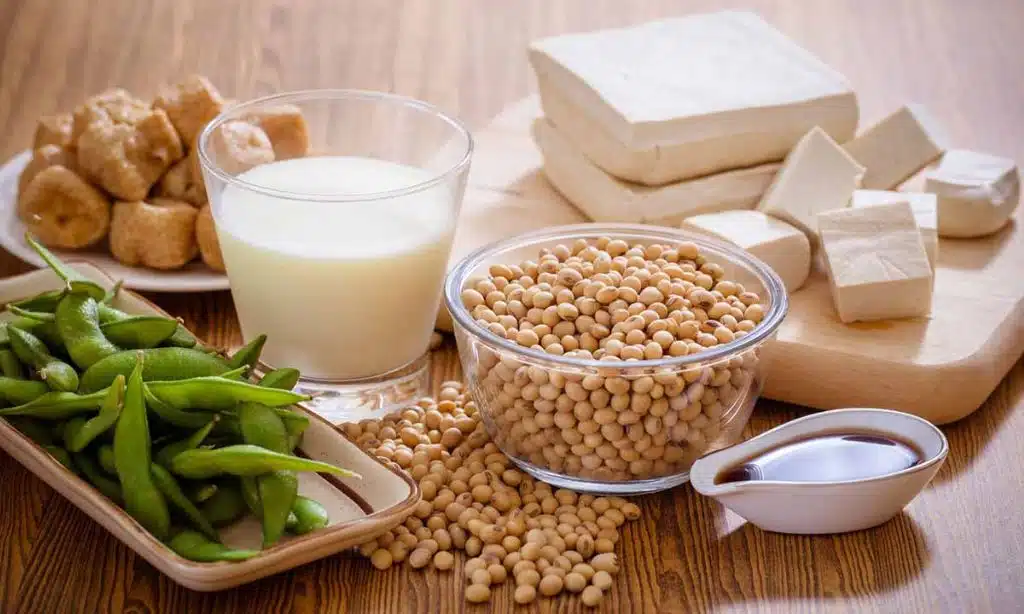
Soy-based materials are being developed as alternatives to petroleum-based products in various industries.
Key Properties and Applications:
- Biodegradable: Soy-based materials are often biodegradable.
- Versatile: Used in the production of bioplastics, foams, and adhesives
- Renewable: Soy is an annually renewable crop
- Reduced environmental impact: Can replace petroleum-based products, reducing reliance on fossil fuels
Environmental Impact:
Soy-based materials offer a renewable alternative to petroleum-based products, reducing the carbon footprint of various industries. The cultivation of soybeans also helps in carbon sequestration and soil health improvement when proper agricultural practices are followed.
| Aspect | Soy-Based Materials | Petroleum-Based Materials |
| Renewability | Annually renewable | Non-renewable |
| Biodegradability | Often biodegradable | Typically non-biodegradable |
| Carbon Footprint | Lower potential for carbon sequestration | Higher, contributes to fossil fuel depletion |
| Soil Health | Can improve soil health when properly managed | No soil benefits |
Innovative Applications:
- Automotive industry: Soy-based foams used in car seats and other interior components
- Construction: Soy-based adhesives and insulation materials for sustainable building practices
- Packaging: Biodegradable packaging materials made from soy as alternatives to traditional plastics
9. Recycled Steel: Giving Metal a Second Life
Recycled steel offers a more sustainable alternative to new steel production, which is energy-intensive and emits significant amounts of CO2.
Key Properties and Applications:
- Strength: Recycled steel retains the strength and durability of virgin steel
- Infinitely recyclable: Steel can be recycled indefinitely without losing its properties
- Reduced emissions: Using recycled steel significantly reduces CO2 emissions compared to new steel production
- Versatile: Used in construction, automotive manufacturing, and various other industries
Environmental Impact:
According to the World Steel Association, every ton of steel recycled saves 1.5 tons of CO2 emissions, 1.4 tons of iron ore, and 740 kg of coal.
| Aspect | Recycled Steel | Virgin Steel |
| CO2 Emissions | 1.5 tons saved per ton recycled | Higher emissions |
| Resource Conservation | Saves 1.4 tons iron ore and 740 kg coal per ton | Requires new resource extraction |
| Energy Use | Lower energy requirements | Higher energy requirements |
| Recyclability | Infinitely recyclable | Recyclable, but often not recycled |
Innovative Applications:
- 3D-printed structures: Recycled steel powder used in metal 3D printing for complex, customized parts
- Green buildings: Architects incorporating recycled steel into sustainable building designs
- Art and sculpture: Artists using recycled steel to create eco-friendly public art installations
10. Sheep’s Wool: Nature’s Insulator
Sheep’s wool offers a natural, renewable alternative to synthetic insulation materials.
Key Properties and Applications:
- Insulation: Excellent thermal and acoustic insulation properties
- Moisture management: Wool can absorb and release moisture without losing its insulating properties
- Renewable: Sheep can be shorn annually, providing a continuous supply of wool
- Biodegradable: Wool is fully biodegradable at the end of its life cycle
Environmental Impact:
Sheep’s wool is a renewable resource that requires less energy to produce than synthetic insulation materials. It’s also biodegradable, reducing waste at the end of its life cycle.
| Aspect | Sheep’s Wool | Synthetic Insulation |
| Renewability | Annually renewable | Non-renewable (petroleum-based) |
| Biodegradability | Fully biodegradable | Often non-biodegradable |
| Moisture Management | Excellent moisture absorption and release | Often poor moisture management |
| Fire Resistance | Naturally fire-resistant | Often requires chemical treatments |
Innovative Applications:
- Passive house design: Wool insulation incorporated into highly energy-efficient passive house designs
- Acoustic panels: Wool-based acoustic panels used in offices and public spaces for sound management
- Packaging: Some companies exploring the use of wool as a biodegradable packaging material for fragile items
Takeaways
The future of sustainable materials looks promising, with ongoing research and development likely to uncover even more innovative solutions. As consumers, businesses, and governments increasingly prioritize sustainability, we can expect to see wider adoption of these materials and the emergence of new, even more sustainable options.
By choosing products made from these eco-friendly materials, we can all contribute to a more sustainable future. Whether it’s opting for bamboo flooring in our homes, wearing hemp clothing, or supporting companies that use recycled materials, every choice makes a difference. As we move forward, the integration of these sustainable materials into our daily lives will play a crucial role in building a more environmentally friendly world.